

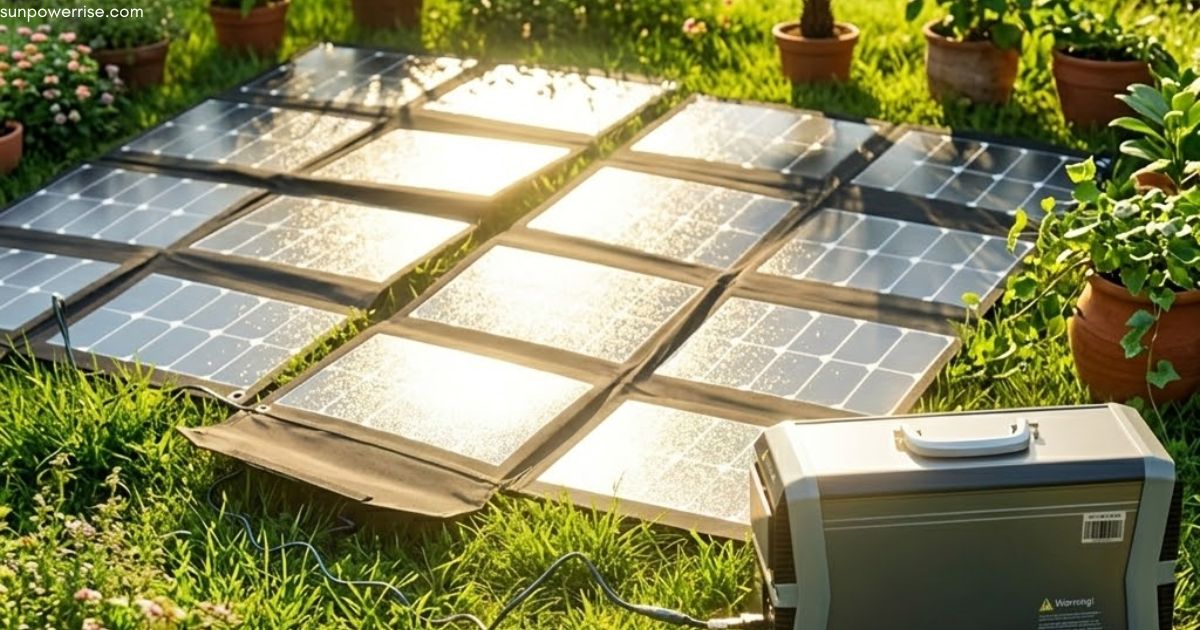
Portable solar panels in the UK have changed the conversation entirely no more full roof systems, inverters, or lofts required just to keep your phones charged on a weekend camping trip.
Today, a foldable, lightweight panel pairs effortlessly with laptops, camping batteries, and portable power stations without any grid drama or bothering a neighbour.
Whether you park a campervan beside a forest, run a garden office, or need dependable emergency backup, these panels handle small-scale power, travel, and backup needs without permanent installation.
Across Europe, campers, caravanners, and motorhomes now treat electrically-powered devices as road essentials, with the sun and wind serving as practical fuel rather than idealistic ones.
Brands like ZUPW have pushed that shift forward with their 350W panel built on Topcon cells, featuring a rigid frame, fiberglass backer, and ETF coating instead of glass, making it far lighter than expected. If their 450W or Bifold 180W felt too large before, this smaller format at a more affordable price point change everything.
Portable Solar Panels UK Comparison Table
Shopping for portable solar panels in the UK feels overwhelming fast 100W panels sit beside 28W ones, brand ecosystems compete for your budget, and price gaps seem impossible to justify.
This table cuts through that noise, comparing the top models across camping, emergency charging, and backup power needs so you can decide quickly.
The Jackery SolarSaga 100W pairs best with Jackery Explorer power stations its foldable, practical build suits weekend trips well, though always verify compatibility before using it with non-Jackery hardware.
The EcoFlow 110W fits cleanly into the EcoFlow River and Delta ecosystem, delivering strong ecosystem fit, though it runs noticeably pricier than basic alternatives outside that brand. T
he Anker 625 offers trusted, foldable performance from a recognised charging brand, while the BigBlue 28W stays lightweight and affordable ideal for phones, power banks, and festivals, but unsuitable for appliances or large batteries.
What Are Portable Solar Panels?
Portable solar panels are moveable photovoltaic panels that pull sunlight and convert it directly into usable electricity and once you understand that simple chain, everything else makes sense. Unlike fixed solar panels or rooftop solar panels, these are built to be carried, folded, and packed away between uses.
They come in foldable and suitcase-style designs, sized anywhere from 20W right up to 400W and beyond, and they pair with phones, laptops, camping batteries, and portable power stations without any permanent installation.
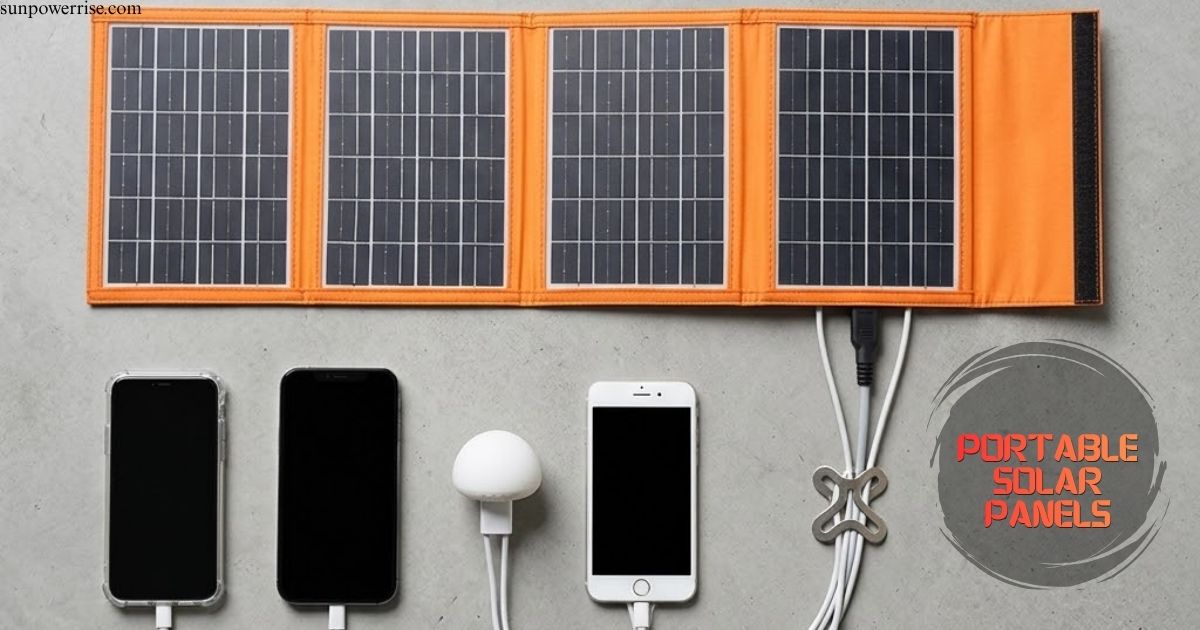
The British weather will always be part of the conversation when you use these panels in the UK, but that is not a reason to dismiss them it is simply a reason to buy the right size for your needs. A well-chosen panel gives you real flexibility, whether you are powering devices at a campsite, charging gear in a van, or keeping a backup battery topped up at home.
How Does a Photovoltaic (PV) Solar Panel Work?
At the core of every portable solar panel sits a layer of photovoltaic cells usually made from silicon that exploit the photoelectric effect to release electrons when light strikes their surface.
Those free electrons move through the panel’s circuit as an electric current, which the panel then channels as DC electricity toward whatever you have connected.
On cloudy days the process still works, just at a reduced rate so electricity generation does not switch off the moment a cloud passes overhead, it simply slows down.
In a practical setup, that direct current flows into a charge controller before reaching your battery, which regulates the input and protects the battery from damage. Many portable power stations have this charge controller built directly into the unit, making the whole system cleaner and simpler to use.
A Quick Reality Check on Wattage
Every portable solar panel carries a wattage rating on its label, and that number refers to performance under Standard Test Conditions a specific set of laboratory conditions that rarely match real life.
A 100W panel will not consistently deliver 100W throughout the day, especially in the UK, where cloud cover, low winter sun, and awkward rooftop angles all chip away at your actual output. The STC figure is a useful benchmark for comparing panels, but you should treat it as a ceiling, not a guarantee.
In practice, your real output drops because of shade, a poor panel angle, a dirty panel surface, cable losses, and the solar input limits of your power station. Think about it this way a 4W panel should produce the same output as another 4W panel under identical conditions, and roughly a fifth of what a 20W panel produces.
But neither of them will hit those numbers consistently across a full day, which is why sizing your panel generously relative to your actual needs always pays off.
Popular Portable Solar Panel Models
Choosing the right portable solar panel starts with matching the panel to your actual use case today’s market covers everything from compact USB chargers to serious off-grid powerhouses, so always verify prices, availability, and specifications before buying.
The Jackery SolarSaga 100W remains one of the most recognised names in UK portable solar panels foldable, naturally paired with Jackery Explorer power stations, and well suited to camping and emergency charging, though compatibility needs checking outside the Jackery ecosystem. The EcoFlow 110W slots cleanly into the EcoFlow River and Delta ecosystem, making it a strong pick for camping, vans, and backup power the higher cost justifies itself if you already own EcoFlow hardware.
The Anker 625 brings premium build reliability to portable solar, though it runs heavier than smaller alternatives and suits Anker power stations users best. The BigBlue 28W stays firmly lightweight and budget-friendly perfect for hiking, festivals, phones, and USB devices, but not built for serious power banks or meaningful appliances.
Step up to the Bluetti PV-series and you enter 120W to 200W territory, designed for campervans, motorhomes, larger batteries, and extended off-grid trips, though connectors and compatibility still need confirming.
The ZUPW 350W is the standout built on Topcon cells with a quad fold design, aluminum frame, fiberglass backer, and ETF coating, it ships with a padded carrying case, ground anchors, MC4 extension cable, and an adapter cable covering 5521, XT60, Anderson Powerpole, 7909, and 8020 connectors for plug-and-play use with older and newer Jackery stations and beyond.
At 60V compatibility, it works across a wide range of charge controllers. Real-world testing delivered 323W roughly 92% of rated output under early autumn midday sun at 85°F, while a partial shade test with two of four panels covered held output at 182W, well above 50%, thanks to parallel wiring across the quad fold design.
Waterproof protection, outstanding build quality, and a price of approximately $1 per watt at $350 make it a serious choice for van life, emergency backup, and heavy camping use just adjust the kickstands manually later in the year when the sun sits lower than peak summer position.
What Can Portable Solar Panels Power?
The most important thing to understand about portable solar panels is that the panel collects energy, the battery or power station stores it, and your devices draw from that stored reserve never directly from the panel.
A leisure battery or portable power station sits between the panel and your appliances, while the inverter converts 12V DC to 230V AC for standard household use, and a solar charger tops the system up steadily throughout the day.
Small panels in the 20W to 60W range keep the essentials alive phones, head torches, USB devices, power banks, camping lights, radios, and action cameras but cannot touch kettles, electric heaters, fridges, microwaves, or hairdryers.
Medium panels from 100W to 200W open things up considerably, handling laptops, camera gear, drone batteries, and camping fridges on longer trips away from mains power.
At the top end, larger panels from 200W to 400W and beyond suit van-life setups, motorhomes, emergency home backup, off-grid workstations, field work, and anyone running high-capacity batteries that need serious daily replenishment.
FAQs
Is it worth getting a portable solar panel?
Yes, a portable solar panel is absolutely worth it. It gives you free energy, reduces electricity bills, and powers your devices anywhere, making it a smart, eco-friendly investment.
Is plug-in solar legal in the UK?
Yes, plug-in solar is legal in the UK, but you must notify your DNO (Distribution Network Operator) and ensure your system meets G98 or G99 regulations for safe grid connection.
What can you run off a portable solar panel?
A portable solar panel can power phones, laptops, LED lights, fans, tablets, and small camping appliances, perfect for off-grid living, travel, or emergency backup power.
Will a 400W solar panel run a fridge?
Yes, a 400W solar panel can run a fridge and most modern refrigerators consume between 100W–200W, so a 400W panel provides more than enough power output to keep it running efficiently.
Do portable solar panels work in winter?
Yes, portable solar panels still work in winter. They generate electricity from daylight, not heat, though reduced sunlight hours and low sun angles do lower power output compared to summer months.