

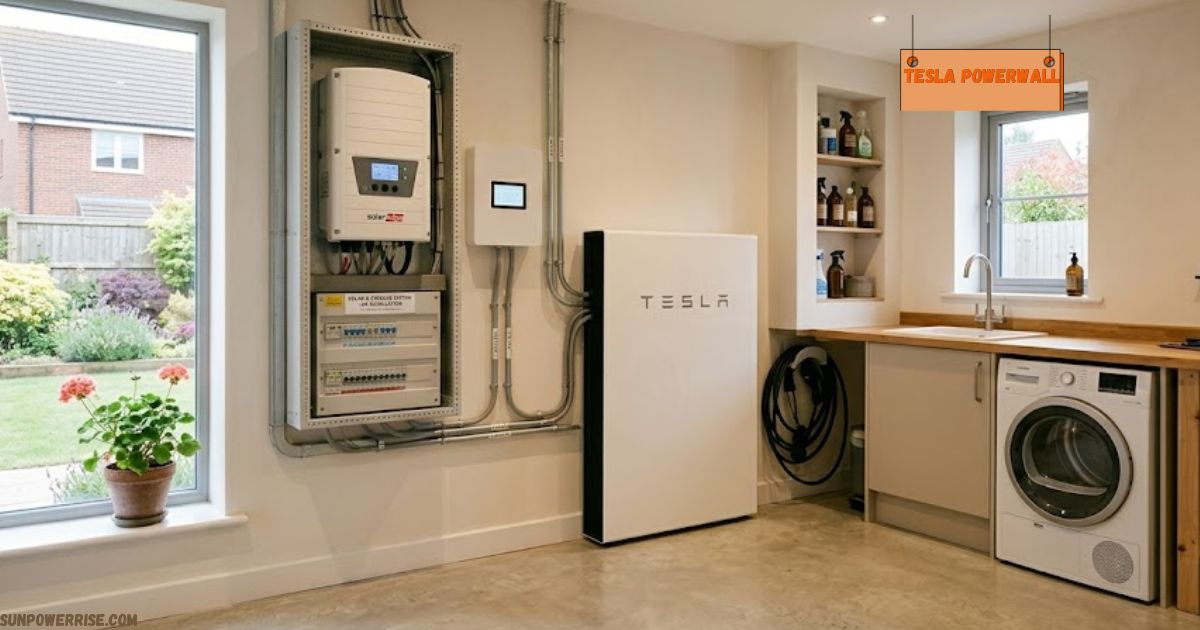
When I first started helping homeowners explore energy-independent living, the Tesla Powerwall kept coming up in almost every conversation. People searching for ways to escape rising energy bills and get more from their solar panels consistently landed on this one product.
Being well-known in the home battery world does not automatically make the Tesla Powerwall the right fit for every home. The cutting-edge system helps you manage electricity demand, slash energy costs, and protect your household during power outages.
What genuinely sets the Powerwall apart in the UK battery technology space is its ability to store energy during peak daylight hours and release it in the evenings or during power cuts.
It works as your own private uninterruptible power supply, and over time, it can even increase your property value. The system supports lights, outlets, and appliances across the home, working seamlessly as a residential and light commercial energy solution.
Tesla has released several variants of Powerwall: Powerwall 1 (now discontinued), Powerwall 2, Powerwall +, and the newer Powerwall 3.
What Is A Tesla Powerwall
At its core, the Tesla Powerwall is a home battery system that captures and stores electricity so you can use it on your own schedule rather than the grid’s.
It pairs beautifully with solar panels, pulling in excess solar energy during the day and holding it until the evening when your household actually needs power most.
If you sit on a time-of-use tariff with lower overnight rates, the system can also charge directly from the grid, a smart move that many households overlook entirely.
The capacity, power output, software, and depth of integration vary across battery brands, but the fundamental flow stays the same: generate or receive energy, store what you do not use immediately, then draw on it later to reduce what you pull from your energy supplier.
The Powerwall handles this with a level of sophistication most competing systems simply cannot match. Its AC-coupled design means it works with a wide range of solar PV inverter designs, making integration with both new and existing setups genuinely straightforward.
During colder months when solar energy production naturally drops, the Powerwall shifts to charging on cheaper nighttime electricity, keeping your home powered without leaning heavily on your energy supplier.
This versatile approach to energy storage makes it a practical choice for residential use across the UK, whether you want backup power during outages or simply want to reduce your daily draw from the national grid.
How a Tesla Powerwall Works
During the daytime, your solar panels or roof tiles push electricity into your home. Whatever your household does not immediately use, the Powerwall captures and stores, holding that excess solar energy until evening arrives and demand picks back up.
On cloudy days, the stored reserve steps in automatically, keeping your electricity bills lower without you lifting a finger. The system also watches your energy usage patterns over time, learning when you draw the most power and adjusting accordingly.
During power outages, it switches over instantly, maintaining an uninterrupted power supply to your appliances and essential circuits.
If your panels are not generating enough, especially during winter, the unit draws cheaper night-time electricity from the grid through a time-of-use tariff, so you always have a charged reserve ready by morning.
What makes the Powerwall especially practical is its AC-coupled architecture. This means it connects cleanly to most solar PV inverter designs already on the market, which matters enormously if you want to retrofit without replacing existing equipment.
The system manages the constant cycle of daytime generation, storage, and evening discharge with no manual input required. It simply runs, learns, and optimises your home energy usage around the clock.
Tesla Powerwall Specifications
The Powerwall 3 arrives as a state-of-the-art lithium-ion home storage battery, built specifically to store energy from solar panels and roof tiles and deliver it exactly when your home needs it most.
The Hybrid Inverter Advantage
It’s built-in hybrid solar inverter removes the need for a separate unit, allowing it to pair cleanly with larger solar systems and dramatically improving overall efficiency and versatility.
During blackouts, it keeps your home running and continues working to reduce your electricity bills day after day.
Doubled Output & Safer LFP Chemistry
Where the Powerwall 3 really separates itself from the Powerwall 2 is in raw output. The continuous output rating of 11.5 kW dwarfs the 5.8 kW of its predecessor, meaning it handles far heavier energy loads without breaking a sweat, ideal for larger homes or households with genuinely higher energy demands.
The shift to lithium iron phosphate battery cells also brings real benefits: these LFP cells are measurably safer and less toxic than the NMC cells used in the Powerwall 2, which adds an important layer of environmental responsibility to your purchase.
Scalable Capacity & Top-Tier UK Performance
On the numbers side, both units offer 13.5 kWh of usable storage, with the Powerwall 3 delivering between 3.68kW and 11.04kW of continuous power output.
Households that need more capacity can simply stack multiple Powerwall units together, scaling storage to match demand.
The advanced specifications make the system fully capable of powering your home through grid outages, and the overall energy capacity positions it as one of the strongest residential home storage battery options available in the UK today.
Tesla Powerwall Cost in the UK
The True Ticket: Sticker vs. Fully Loaded
Understanding Tesla Powerwall cost in the UK means looking beyond the sticker price and considering what the complete system actually includes.
The battery unit alone typically runs between £6,500 and £8,500, with installation and hardware adding another £1,000 to £3,000 on top, bringing the total installed cost to somewhere between £8,000 and £11,500, depending on your specific setup.
Because every job requires a certified Tesla-approved installer, you have less room to negotiate on labour costs than you might expect.
The Scottish Shift: Complexities & Assured Lifespans
For Scottish homeowners, the picture looks slightly different. The basic unit runs between £6,300 and £10,000, installation adds roughly £2,000, and the essential gateway unit contributes another £800 to the bill.
When you factor everything together, the total Tesla Powerwall installation cost lands between £9,100 and £12,800, depending on complexity, how many Tesla Powerwalls you install, and how deeply the system needs to integrate with your existing solar array and home energy consumption patterns.
The good news is that Tesla backs the system with an unlimited cycle warranty for ten years, which adds genuine long-term confidence to the investment.
Unpacking Powerwall 3: Base Rates, Gateways, and Global Parity
Looking at the most current UK pricing, a single Powerwall 3 without the Gateway costs £5,000, while adding the Gateway brings that to £5,975. Pairing a Powerwall 3 with an expansion unit pushes the price to £9,000 without the Gateway or £9,975 with it. None of these pricing figures includes VAT, delivery, or additional installation fees.
Your final number comes from a certified installer. Buy alongside solar panels, and you pay 0% VAT, which represents a meaningful saving.
The Gateway is not optional; it acts as the communications hub connecting the system to the internet, Tesla servers, and your home, while also isolating the house from the electricity grid so the inverter operates safely and legally.
For US context, the same unit runs around $9,300 (roughly £6,978.08) with installation costs between $1,000 (£750) and $3,000 (£2,251). You can buy multiple units, though UK buyers see no bulk savings beyond reducing one-off costs like the Gateway itself.
Tesla Powerwall Pros and System Benefits
The Tesla Powerwall delivers something that very few home energy products can genuinely claim: true energy independence.
Once installed, your home stops leaning so heavily on the national grid, which means rising tariffs and grid outages stop dictating how you live.
The system stores excess energy from your solar panels and releases it exactly when you need it, making your renewable energy investment work harder every single day rather than sitting idle overnight.
Instant ROI & Winter-Proof Backup Security
From a financial angle, the reduction in your electricity bill starts almost immediately after installation.
The system keeps your home running through power cuts and grid outage events without interruption, acting as a private UPS that you control entirely. It also protects you from power cuts in a way that no energy tariff ever could.
There is a real difference between saving money in calm conditions and maintaining power when the grid goes down at 2 am in January. That reliability is part of what investors feel is worthwhile beyond the raw numbers.
Low Maintenance, Weatherproof Build
Beyond savings and security, the Tesla Powerwall brings genuine lifestyle benefits that I think many buyer’s underestimate. The app gives you complete visibility over home energy management in real time.
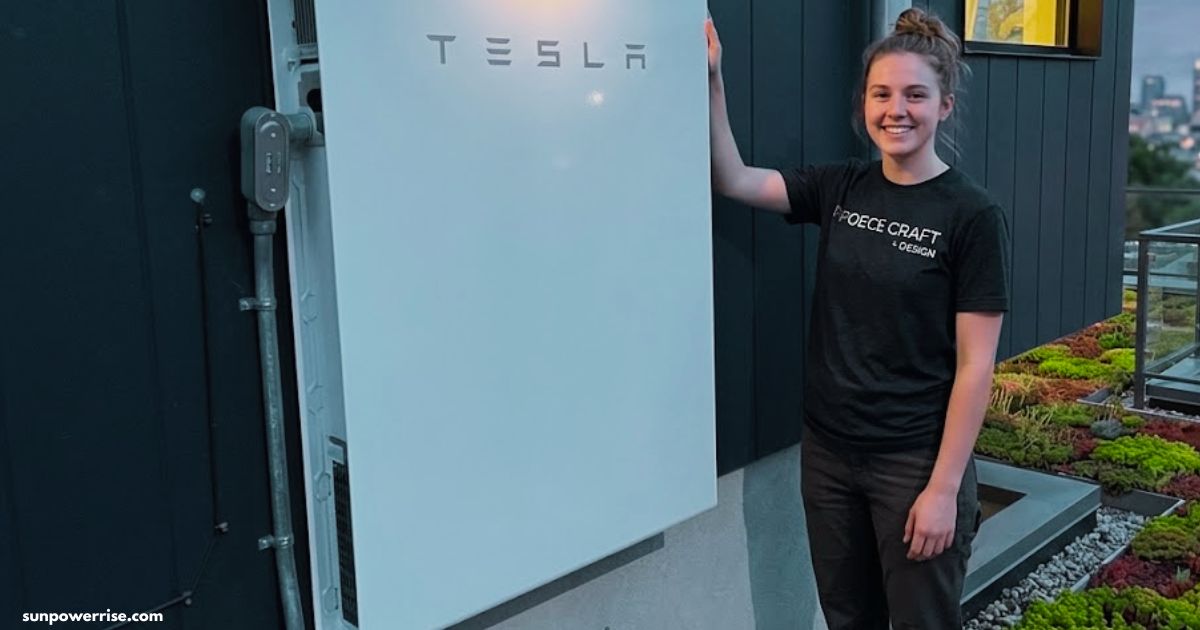
The hardware itself is weatherproof, handles the elements without complaint, and installs cleanly whether you choose indoor or outdoor placement.
It integrates smoothly as part of your wider solar panel system, and its low-maintenance design means once it is running, it largely takes care of itself, working as a genuinely autonomous energy helper without demanding constant attention.
Faqs
What is a Tesla Powerwall and what does it do?
The Tesla Powerwall is a home battery system that stores electricity from your solar panels or the grid for use during the evenings, power outages, or periods of high energy demand.
How much does a Tesla Powerwall cost in the UK?
A Tesla Powerwall 3 costs around £7,995 for the unit, with installation and hardware adding between £1,000 and £2,800, bringing the total installed cost to roughly £8,000–£11,500 depending on your setup.
What is the difference between Powerwall 2 and Powerwall 3?
The Powerwall 3 features a built-in hybrid inverter, LFP battery cells, and a significantly higher continuous output of 11.5 kW, while the Powerwall 2 uses an external inverter, NMC cells, and delivers around 5 kW of power output.
Can I use a Tesla Powerwall without solar panels?
Yes, the Powerwall can charge directly from the national grid, making it useful for households on a time-of-use tariff that offers cheaper overnight rates even without solar panels installed.
How long does a Tesla Powerwall last?
It has a working lifespan of at least 10 years, handling up to 4,000 charge cycles before meaningful degradation occurs, provided the system stays properly serviced and maintained throughout.