

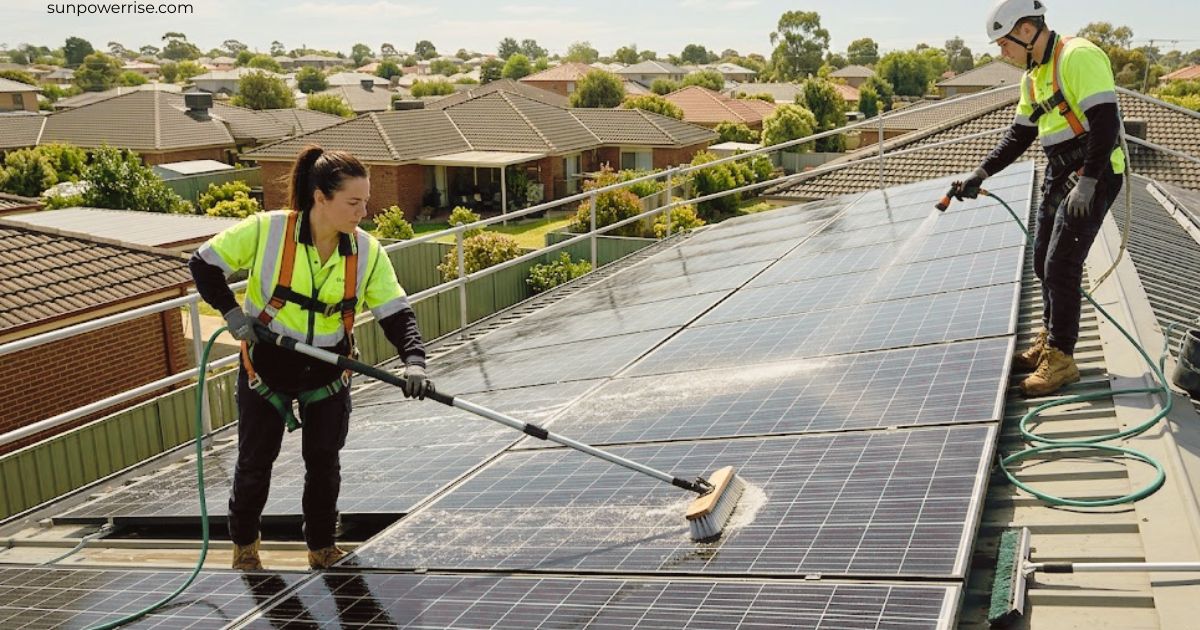
To clean solar panels safely: rinse away loose dust and debris with a hose or bucket of water, then gently wipe the surface with a soft brush or cloth using plain water or a mild, non-abrasive solution; never a pressure washer, never use abrasive tools, and never clean while the panels are hot or the system is switched on.
Most UK homeowners only need to do this once every 12 to 18 months, since rainfall handles the rest. That’s the short version. Here’s what I actually learned doing it myself.
I looked into how to clean solar panels after noticing my system wasn’t producing as much as usual. A quick inspection showed weeks of quietly accumulated dirt and dust sitting on the surface, cutting into output without me noticing until the numbers dropped.
Key Points on How to Clean Solar Panels
Before you grab a bucket and start scrubbing, it’s worth understanding a few ground rules regarding how to clean solar panels safely and effectively. Always follow your manufacturer’s guidelines for specific cleaning instructions, since every panel brand has its own recommendations.
I learned this the hard way skipping the manual cost me a scratched panel surface that affected optimal performance for months.
Why Solar Panels Get Dirty in the First Place
Most panels are manufactured with a coating designed to repel water and surface grime it’s why rain often does most of the cleaning for you. When a raindrop lands on a properly maintained panel, it should bead up and roll off, taking loose dust with it rather than smearing it around. That’s the theory, anyway.
In practice, that coating has limits. It handles light dust fine. It doesn’t do much against a determined pigeon, sticky pollen in spring, or the fine grime that builds up near a main road.
I’ve seen systems fall well short of their rated output simply because nobody checked on them for a year or more. Left untreated, that buildup doesn’t just look bad it blocks light from reaching the cells underneath, and the panel generates less electricity for every hour of sun it gets.
When You Actually Need to Clean Them
The golden rule most installers give is every 12 to 18 months for a typical pitched roof and I stick to that schedule myself. Roof-mounted panels benefit from their angle, since rain and gravity work together to slide dust and droppings off. Ground-mounted panels, or anything sitting under trees with overhanging branches, need checking more often through the year.
A few things push that schedule forward. If your panels sit at a tilt of less than 5 degrees, water pools instead of running off, so grime settles rather than washing away. The same goes for flat commercial-style roofs.
Homes in drier areas, near farmland, or close to a chimney or extractor vent also collect residue faster than rainfall can clear it. I don’t wait for a visible problem in these cases I check proactively, because by the time dirt is obvious from the ground, it’s usually been cutting into output for a while.
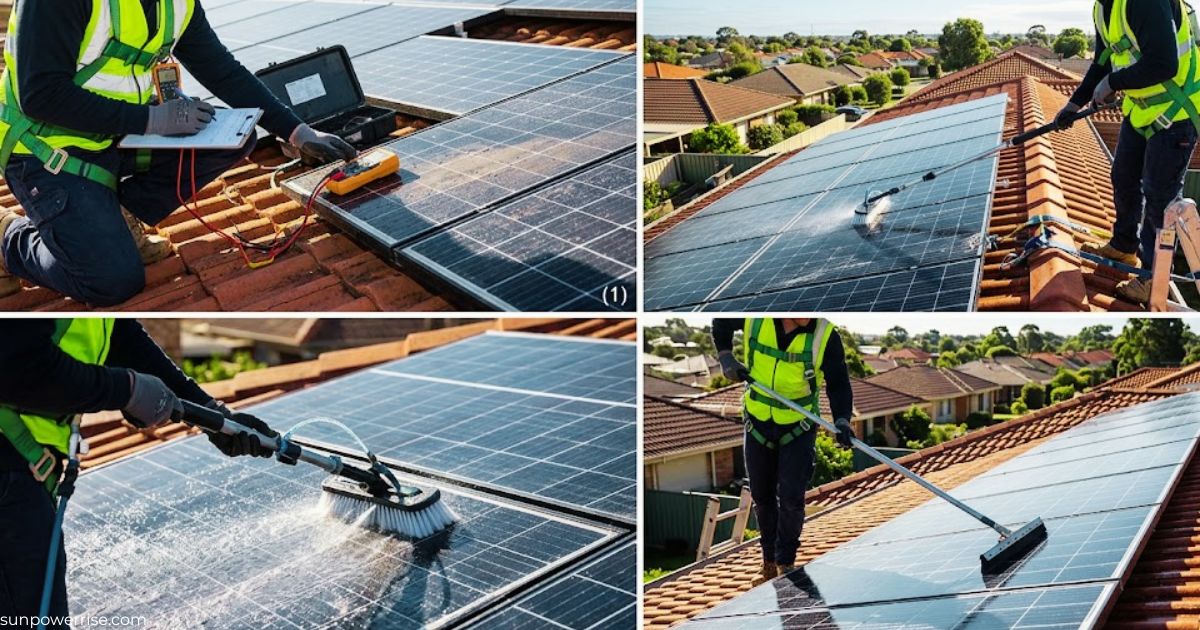
One thing worth doing before you clean anything: compare your system’s actual generation against what it was producing when it was new, or against the estimate your installer gave you. If output is only a few percent down, you’re most likely looking at a cosmetic issue rather than a real problem, and cleaning is genuinely optional rather than urgent.
Soiling-related losses in the UK tend to sit in the low single digits, often somewhere around 3–7%, and most of that recovers within a couple of percent of normal once the panels are cleaned. If the drop is bigger than that, it’s worth getting a professional to look at the system itself before you assume it’s just dirt.
Best Time to Clean
Plan for a dry, cool morning or early evening, never when the panels are hot from direct sun. From personal experience, mornings with a light dew work especially well, since the moisture softens built-up grime and makes the job faster.
Seasonally, late spring tends to be the better window: pollen and winter grime have settled, but you’re not immediately heading into the wetter, dirtier months of late autumn and winter, which tend to undo the work within weeks.
Can You Clean Them Yourself?
I understand the temptation to grab a sponge the moment you spot a dirty patch. I’d urge you to pause first. Cleaning the wrong way can void your warranty, damage the panel, and put you at real risk if you’re working at height without training.
Ground-mounted panels are the more reasonable DIY job stay on the ground, use an extendable brush, and make sure the system is switched off before you start. Touching live components carries a genuine electrocution risk, and even light contact with internal wiring can cause damage you won’t notice until later.
For roof-mounted panels, I follow the same advice most trained professionals give: clean from ground level only, using a telescopic pole, and never climb onto the roof itself. If your setup doesn’t allow that safely, it’s not worth the risk call a professional instead.
Step-by-Step Technique
Sweep away loose dirt and leaves with a soft brush. Rinse the surface with a hose on low pressure, or a telescopic lance from the ground.
For stubborn marks, use a mixture of biodegradable soap and cool water applied with a soft cloth or solar panel wiper. Check for any damaged cabling as you go; stop immediately and call your installer if you spot any, since it’s a genuine shock hazard.
Finish with a clean wiper or squeegee to remove trailing water and prevent streaking. Avoid pressure jets, abrasive brushes, and anything that could scratch the glass. Scratches don’t just look bad; they affect how water runs off afterwards, which makes the panel dirtier faster next time.
What It Costs to Hire a Professional
Professional cleaning typically runs £5 to £15 per panel. For a household system, that works out roughly as: four panels, £20–£60; six panels, £30–£90; eight panels, £40–£120; ten panels, £50–£150; twelve panels, £60–£180. Most domestic jobs land somewhere between £20 and £200 depending on system size and access.
Labour rates vary by region: Northern England, Scotland, and Northern Ireland tend to sit below the national average, while the Southeast, and London especially, run higher.
Some companies also offer a fuller system health check alongside the clean, which costs more than a basic wash since it includes a proper performance diagnosis rather than just a surface clean, worth considering if your output has dropped more than a simple soiling issue would explain. Always get more than one quote, and confirm whoever you hire has the right experience and insurance for working at height.
Solar Panel Maintenance Checklist
Clean thoroughly every 12–18 months, or sooner for low-pitch, ground-mounted, or tree-shaded systems. Inspect visually every one to two years for wear, wiring issues, or water damage.
Check output against your original estimate before booking a clean it might just be cosmetic. Never clean hot panels, never use a pressure washer, and never walk on the panels themselves.
FAQs
What is the best thing to clean a solar panel with?
The best things of how to clean solar panels with are lukewarm water, a soft brush, a non-abrasive sponge, and biodegradable soap gentle tools protect the panel coating while removing dirt and debris effectively.
Can you clean solar panels by yourself?
Yes, you can clean solar panels yourself if they are ground-mounted or safely accessible use an extendable brush, soft cloth, and low-pressure water, but always turn off your solar system first.
Is there need of turning off solar panels before cleaning?
Yes, always turn off your solar panel system before cleaning this protects you from electrocution, prevents electrical damage, and keeps both you and your panels completely safe throughout the process.
Can I use fairy liquid to clean solar panels?
It is best to avoid fairy liquid on solar panels. It leaves a sticky film, attracts dust build-up, and its harsh chemicals can damage the protective panel coating over time. Stick to biodegradable soap instead.
What month should I clean solar panels?
The best months to clean solar panels in the UK are March and September. Spring cleaning removes winter debris while an autumn clean clears pollen, bird droppings, and dust before reduced sunlight winter months arrive.