

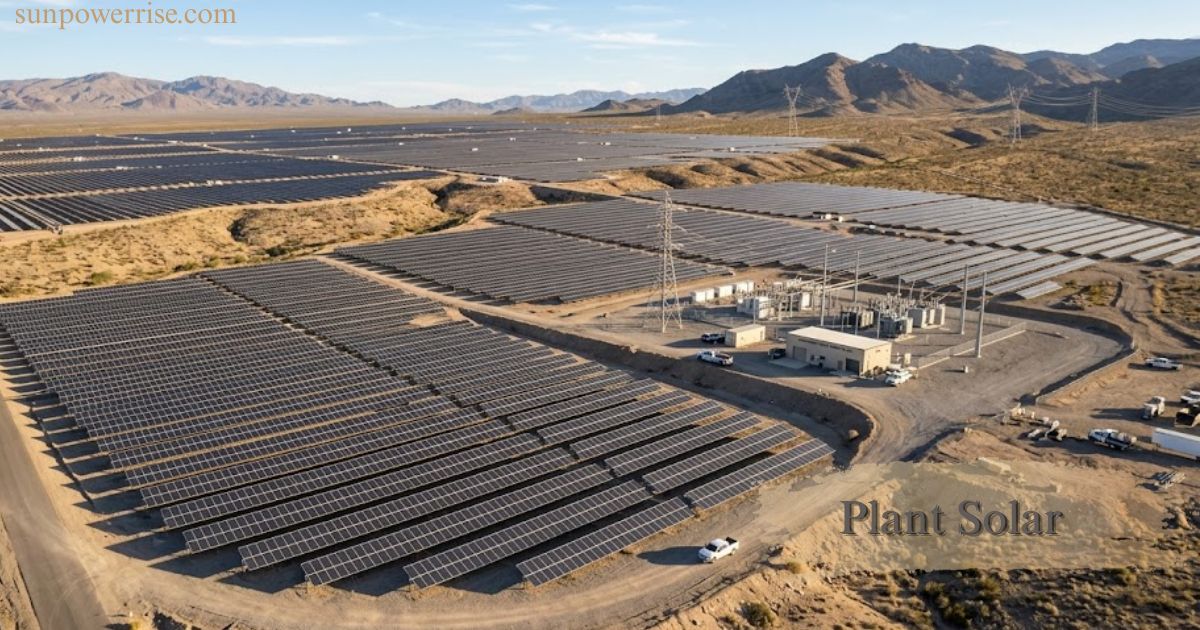
My city still leans on coal, diesel, and natural gas to keep the lights on, but as we plan to plant solar options, watching steam turbines grind away for electricity always made me nervous about what happens once these fuels run dry.
That’s the real danger when fossil fuels run out, and it’s why long blackouts threaten our growing cities. But the sun gives us a way out, and learning to harness its energy is what inspired this guide on solar power plant projects.
This guide walks you through the whole process from picking the right site and handling installation costs to connecting to the grid, choosing the right system, and making sure your investment actually pays off.
What Is a Plant Solar
At its core, a solar power plant is a facility that turns solar radiation into usable electricity for homes and industries, and doing it without polluting elements is what makes the whole process ecological and genuinely eco-friendly.
I’ve come to see this electricity production as one of the smartest modern energy sources available today, since the advantages of solar energy stack up so clearly against conventional fuels and other non-renewable sources; it’s become a key tool for building a sustainable production model that lasts.
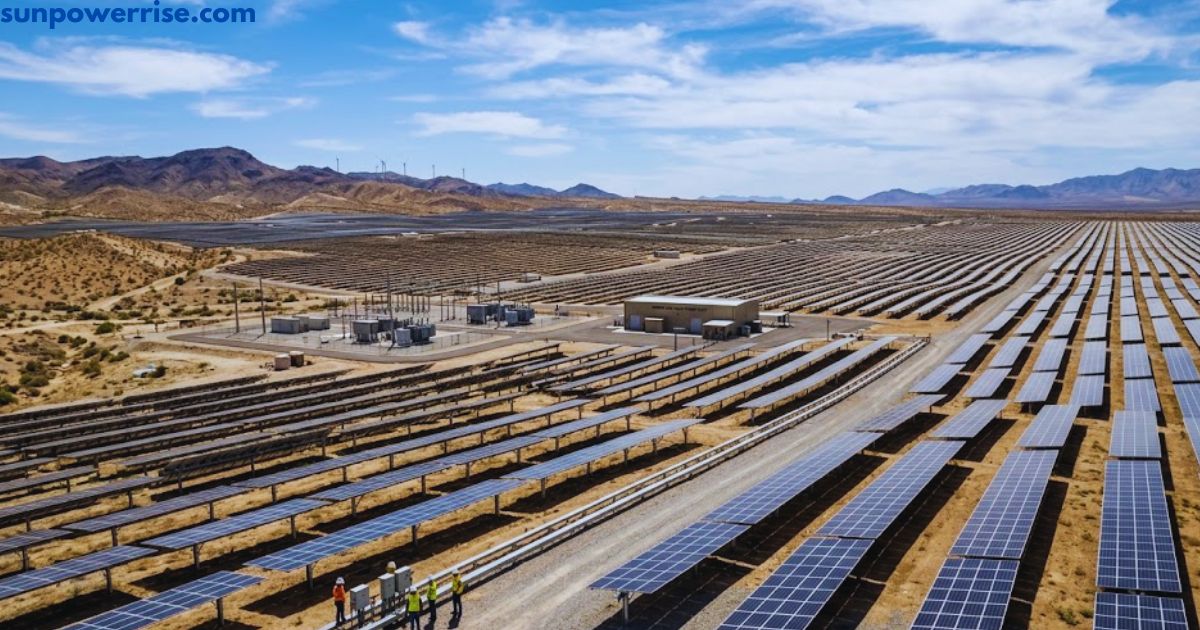
From an engineering standpoint, though, a solar energy power plant is never just a box that makes power; it’s a complex integration of solar panels, electrical infrastructure, and grid connection systems, all working as one generation facility.
Getting the design and planning right, whether for utility-scale solar farms or industrial solar power systems, decides how much efficiency and return on investment the project delivers, and that’s the real commercial perspective behind every cornerstone project I’ve studied.
Types of Solar Power Plants
Solar Photovoltaic (PV) Power Plants
There are really two families worth knowing here. Solar photovoltaic (PV) power plants rely on semiconductor-based solar panels and win points for high scalability and lower operational cost, which is why so many modern solar power projects think utility-scale solar farms and commercial rooftop systems lean on them.
Concentrated Solar Power (CSP) Systems
On the other side sits the CSP solar power plant, or concentrated solar power setup, which uses mirrors and lenses to focus sunlight into thermal energy before turning it into electricity through power tower systems or parabolic trough systems; what I find fascinating is that thermal storage lets these plants keep electricity generation going even after sundown.
Hybrid Solar Power
Some sites go further with hybrid solar power systems, blending PV with diesel, wind, or storage systems to guarantee a continuous power supply, and depending on the setup, efficiency ranges from 15%–23% up to 25%–35%, with cost sitting anywhere from medium to high or medium-high.
Solar Thermal Energy Fundamentals
Digging deeper into how solar thermal plants actually work, a solar thermal power plant uses a conventional thermodynamic cycle, but unlike ordinary thermal power plants burning conventional fuels, it relies on an eco-friendly energy source: plain sunlight and that technology difference changes everything about its operating system.
It concentrates solar radiation to heat a thermally conductive fluid, raising its temperature until it becomes steam, which spins a turbine, converts to mechanical energy, and reaches an alternator to finish the thermodynamic cycle before the steam cools in a condenser and returns to its liquid state.
Thermal Storage and Solar Thermal Plant Designs
Since efficiency depends on hours of sunshine and weather conditions, these plants also keep a storage tank to bank energy for later, and they come in two shapes.
The central tower solar thermal power plant, which uses heliostats to focus light on one point, and the collector solar thermal power plant, which uses concave mirrors and a structure built from concentrating collectors and high-temperature collectors to track solar radiation intensity past 250°C.
Photovoltaic Technology and Applications
Meanwhile, a solar photovoltaic power plant runs on photons and light energy captured by solar panels made from photovoltaic solar cells, built with silicon in monocrystalline or polycrystalline solar panel form, or sometimes amorphous solar panels.
Beyond the big installations, rooftop setups known as solar communities support self-consumption and cut energy costs, while open-field solar farms remain the classic example of this branch of photovoltaic power plants.
The same idea plays out in photovoltaic cells: sunlight, or radiation, hits them, and cells get connected in series to form photovoltaic panels, which are then connected in parallel into strings feeding a current inverter that turns direct current into alternating energy, adjusted for voltage and intensity before travelling along electrical grid lines to consumption centres.
Engineering & Design Process
Good engineering starts with a multidisciplinary engineering approach, and site selection always comes first, weighing solar irradiance levels, land availability, and environmental conditions before anyone touches a shovel.
Next comes system layout, sorting out panel orientation, tilt, string configuration, and cable routing, followed by electrical design choices around voltage levels, transformer selection, and grid connection requirements, all aimed at performance optimisation that will minimise losses and maximise energy yield across the whole plant lifecycle.
Key Technical Parameters
The key technical parameters back this up: solar irradiance 4–7 kWh/m²/day as the site selection factor, system voltage 400V–220kV for grid requirement and transmission efficiency, panel efficiency 15%–23% tied to panel technology and power generation capacity.
Temperature coefficient of -0.3% to -0.5%/°C governing climate sensitivity and output stability, cable loss <2% reflecting solar cable quality and energy efficiency, transformer efficiency >98% driving loss reduction, and a system lifetime 20–25 years resting on component quality, ROI, and durability.
Financial Overview: CAPEX & OPEX
Money matters too, and solar power plant cost shapes project feasibility from day one. Capital expenditure, or CAPEX, covers solar panels as the largest cost component, plus inverters, solar transformers, installation, and civil works, while operational expenditure, or OPEX, covers ongoing maintenance, cleaning, and monitoring systems.
The cost range for utility-scale typically lands between $800,000–$1.5M per MW depending on location and technology, and the ROI consideration usually points to payback within 5–8 years, shaped by local energy tariffs and incentives.
Real-World Examples
Numbers make this real for me as we plant solar initiatives, so consider the Rizal solar power plant in Mexico, Pampanga it produces about 10 megawatts of electricity, enough to light up close to 9,000 households, or five barangays, without the baggage of fossil-fueled plants that get depleted and pump out carbon emissions that hurt the environment; instead it runs on pure 100% renewable energy from the sun.
Over in Spain, Repsol shows the same story at a larger scale through its photovoltaic projects: Kappa in Manzanares, Ciudad Real powers 71,000 homes, Valdesolar in Badajoz stands as the biggest photovoltaic plant in Spain and supplies 140,000 homes, and Sigma in Cadiz delivers a production capacity of 204 MW.
These are not small pilot projects; they’re proof that plant solar technology already powers whole regions.
FAQs
What is a solar plant?
A solar plant is a large-scale power station that converts sunlight into electricity using thousands of solar panels, quietly harnessing nature’s own energy to light up our lives.
Which solar plant is best?
The best solar plant depends on your needs, but utility-scale photovoltaic (PV) plants are generally favored for their high efficiency, scalability, and strong return on investment.
How to make a solar plant?
Building a solar plant involves selecting a sunny site, installing solar panels, connecting them to an inverter, and linking the system to the power grid, turning empty land into a source of clean, renewable hope.
What is the biggest problem with solar energy?
The biggest challenge is intermittency. Solar power depends on sunlight availability, making energy storage (like batteries) essential for consistent, round-the-clock supply.