

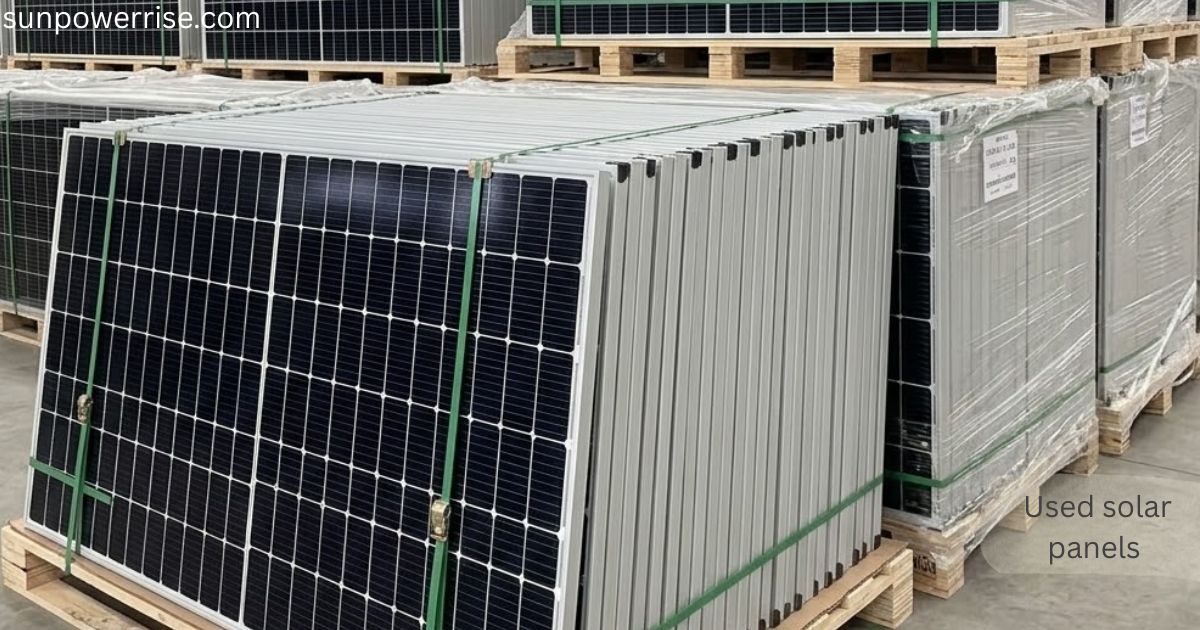
I’ll be honest, the first time I looked at a pallet of used solar panels sitting in someone’s driveway, I had no idea what I was looking at.
While prices for brand-new systems are getting easier to swallow every year, writing that initial big check is still a massive hurdle, which is exactly why plenty of homeowners start eyeing the second-hand market instead. It is entirely possible to save real money this way without ending up with junk on your roof.
What Are Used Solar Panels?
When I first started shopping, I learned fast that the term used solar panels cover a lot of ground. A panel counts as previously owned the moment someone else or a business has held it, and that includes a person who purchased a panel, took it out of the box, and never installed it on a rooftop.
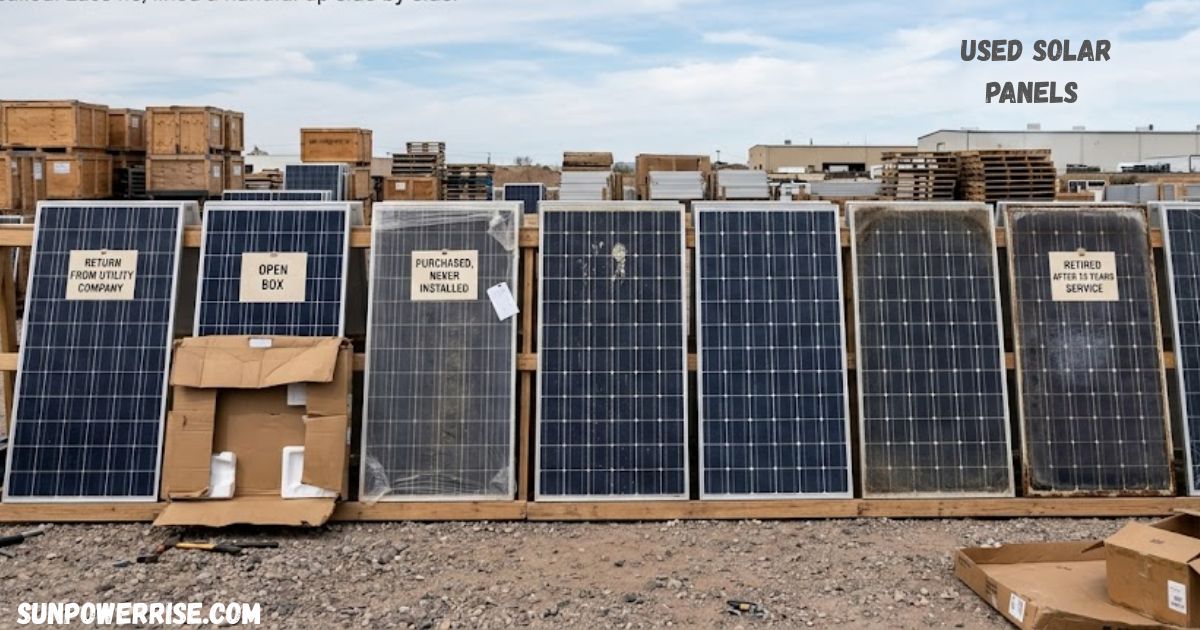
Even a panel that sat in an open box or came back as a return from a utility company falls under this wide definition, and I quickly saw that not all used solar panels are equal once I lined a handful up side by side.
Companies like SanTan Solar pull stock from other sources such as decommissioned solar farms, end-of-lease contracts, and the inventories of other businesses, which is why the used market offers such a mix of quality.
Some used products are new-in-box and barely touched, while a barely used product can look and feel almost like new, sitting close to what performs like new solar panel territory looks like. Others carry 15-plus years of wear and show worn-out frames or broken cells, and these should cost less than a panel in better shape.
Refurbished vs. Used Solar Panels
There are main differences between refurbished solar panels and plain used solar panels, and knowing them protects your budget.
A refurbishing team takes panels showing degraded performance, replaces faulty parts, and gets them restored to an acceptable condition or standard, so the system performance comes close to a new panel. Used panels don’t get that same extra care, so they tend to break faster and never quite operate like new again.
Efficiency
Efficiency loss is normal for every panel, refurbished or not. In the first year, a panel can lose 1% to 3% of its output; in the second year, it drops by roughly half a percent; after that, most settle into losing about a third of a percent each year, which is degradation.
By the 25-year mark, most panels, even a 5-year-old panel bought used, still run at 80% to 90% efficiency, and if a used panel still hits 95%, 96%, or even 97%, that’s a good deal worth taking.
Newer panels, especially bifacial panels, use better technology and produce more per square foot, which matters if you’re working with a tight area or limited space, like a small home rooftop or a carport.
If you have room to spare, buying used still makes plenty of sense. But if space is tight, ask the manufacturer for specs before you commit, because worn-out parts on cheaper second-hand solar panels won’t always last as long with replaced components crammed onto a small rooftop.
Warranty
A lot of buyers worry about warranty coverage before they commit to used gear. New panels usually ship with a 25-year warranty, but that protection is only good for the original purchaser, so once a panel changes hands, most sellers offer no warranty at all.
Some dealers, like SanTan Solar, still back their stock with a one-year warranty, and a refurbished warranty is common too, though it usually comes with shorter coverage periods, anywhere from three months to nine years, depending on who’s selling.
A transferable warranty is one of the best things a buyer can stumble on, since warranty transfers often happen during a home sale, when a new buyer takes over a full solar power system along with the roof it sits on.
From my own experience, I don’t lose sleep over panel issues on used gear, and here’s why: solar panels are simple systems, nothing like the appliances in a kitchen or the parts under the hood of a car that seem to fail every couple of years.
Inverters and batteries wear out with a much shorter life expectancy than the panels themselves, and normal efficiency loss happens slowly and predictably.
Cost and Money
Cost is the number one reason people look at used panels in the first place. You can expect second-hand solar panels to run 50% to 70% less than new panels, or roughly $0.10 to $0.60 per watt, and that wide price range simply reflects the condition of what’s on the market, everything from like-new used panels down to heavily used panels.
A refurbished unit usually sits toward the top of that range because of the work put into it, and even so, expect usable levels of power and plenty of usable life left in a well-chosen panel.
Watch out for listings priced very low; that’s often a fishy sign of damaged wiring, worn solar cells, or decreased power output that the seller is trying to hide, and a listing without clear pictures or detailed descriptions deserves extra caution.
On the flip side, a real discount can be a smart move. Say you find panels four years or five years old at 50% off, which is basically 50 cents on the dollar.
Here’s how the math worked out for a friend of mine. A pallet priced at $10,000 new dropped to $5,000 used, and on paper, that looks like a no-brainer. But factor in the 30% tax credit, which knocks the new price down to $7,000, and the gap shrinks fast.
That credit only helps if you have enough taxable income to offset your tax bill, and even then, you’re waiting six months to eighteen months after filing your taxes to see the money.
Panel Age and Usage Time
Before buying, think about the usage time on any panel you’re considering, since that tells you a lot about the wear and tear it has taken and its likely performance going forward.
Check the extent of blemishes too, because some impact performance enough that the price should show a fair cost reflection. Your own solar power needs should guide whether older used panels make sense for your project.
Most panels carry an average lifespan of 25 years, and plenty of used panels for sale still have 10 to 15+ years of good service left in them. That makes them a smart pick for off-grid setups and small DIY projects, where the cost factor often matters more than squeezing out every last watt of output.
Length of Service
Length of service tells you how long the modules spent generating solar power on a rooftop before they were removed for sale on the market.
A short service period usually means fewer worn-out parts, while a long service period is a fair reason to ask for a bargain. If you spot lower prices tied to years of hard use, don’t be afraid to bring it up with the seller; a little negotiation can go a long way.
Reason for Selling
The reason for selling a panel gives you a quick glimpse into its true condition. If someone is upgrading to a more powerful panel or just moving homes, the panel they’re letting go of is probably still in good working condition.
Be more careful when a seller mentions storms, damaged parts, or ongoing performance issues, since those point to real trouble underneath.
Installation
Finding a solar installer willing to take on projects built around second-hand PV modules isn’t easy.
DIY solar installations using second-hand panels carry their own risks. Make sure it’s legal to connect to the local grid in your area, pull the right permits, and bring in a local inspector for compliance, even for small solar installations.
You’ll also need real technical knowledge to install, troubleshoot, maintain, and repair the system over the long term, because defective second-hand panels can turn a simple setup into a mess of faulty system components.
Where to Buy Used Solar Panels
Sunhub gives buyers detailed information in every listing, right down to the age and stock of each item, and you can even download spec sheets straight from the site.
You can filter listings by brand, panel type, and shipping type, and since Sunhub works as a one-stop-shop, it also sells microinverters, batteries, and full solar kits the only downside is there’s no mobile app.
Great Solar Panels is a national-used solar panel seller built for US-based buyers hunting for used solar panel equipment.
Its straightforward listings show exactly how much stock is available, which matters since most setups need several panels, making it a strong pick for DIY solar enthusiasts just expect limited variety and lower stock than bigger sites.
SecondSol focuses on used panels from reputable manufacturers like Canadian Solar and Sunpower, serving global buyers and sellers, so watch for local currency conversions on some international listings; it also has a handy mobile app.
And eBay, with decades of experience moving second-hand goods, offers solid search tools that let you filter by panel wattage and volts to find exactly what you need.
FAQs
What is the 120% rule for solar panels?
It’s a US electrical code requiring that the sum of your main breaker and solar breaker ratings not exceed 120% of the busbar’s rated capacity, ensuring electrical safety.
Can you buy refurbished solar panels?
Yes, refurbished panels are tested, cleaned, and resold at lower prices, offering a budget-friendly path to renewable energy with slightly reduced efficiency.
Can I buy second-hand solar panels?
Yes, second-hand panels are available through resellers and auctions, offering affordability but requiring careful checks on condition and remaining lifespan.
Why is it harder to sell a house with solar panels?
Buyers often hesitate due to leased systems, unclear ownership terms, or added maintenance concerns, creating friction during the home-selling process.