

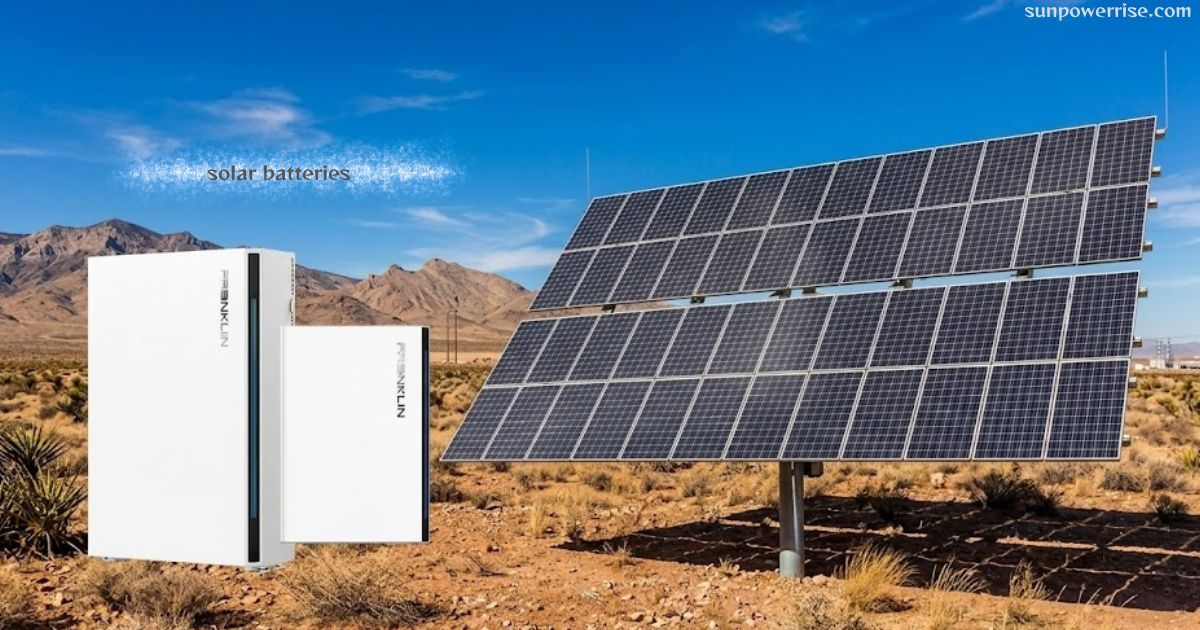
Solar batteries store the extra electricity your solar panels generate during the day so you can use it later at night, on a cloudy afternoon, or during a power cut instead of sending it back to the grid for a few pence and buying it back at full price in the evening.
In the UK, a typical home battery costs somewhere between £1,500 and £10,000 installed, with a popular 5kWh system landing around £4,600. The right size and type depends on how much electricity your household uses, how much your panels generate, and whether you also want backup power if the grid goes down.
This guide covers home battery storage in detail: how the main options compare, what the numbers on the spec sheet actually mean, and the newer options (renter-friendly plug-in batteries, battery-without-solar setups) that most buying guides still gloss over. We also touch briefly on solar car battery chargers (Screwfix, Halfords, OBD2) for anyone who landed here looking for something smaller.
How the Leading Solar Batteries Compare
Before you get into brand names, it helps to see the numbers side by side. Two figures matter more than most marketing copy suggests: depth of discharge (how much of the stated capacity you can actually use before the battery needs to recharge) and cycle life (roughly how many full charge/discharge cycles it’s built to handle before capacity starts dropping off).
|
Battery |
Usable Capacity |
Depth of Discharge |
Cycle Life |
Warranty |
|
Tesla Powerwall 3 |
13.5 kWh |
100% |
~10,000 cycles |
10 years |
|
Fox ESS EP5 |
5.18 kWh |
90% |
~6,000 cycles |
10 years |
|
Duracell Energy Dura5 |
4.6 kWh usable |
90% |
~8,000 cycles |
10 years |
|
LG Chem Resu16H Prime |
16 kWh |
95%+ |
~6,000 cycles |
10 years (70% capacity retained) |
|
Sigenergy SigenStor |
5.2–8.76 kWh per module |
100% |
~10,000 cycles |
10 years (extendable to 15) |
A battery with a 90% depth of discharge and a 5kWh rating effectively gives you 4.5kWh you can draw on day to day that gap is worth knowing before you compare prices, because two batteries with the same headline capacity can deliver noticeably different amounts of usable power.
Batteries for Solar Panels
Batteries for solar panels store the surplus your panels generate during daylight so it’s available when generation drops overnight, in winter, or during a cloudy spell. Lithium-ion is the dominant chemistry in UK homes today, prized for its higher energy density and longer service life, though it isn’t the only option worth knowing about:
- Lithium-ion (including LiFePO4): the standard choice for most UK installs compact, efficient, typically rated for 10+ years.
- Lead-acid: cheaper upfront but bulkier, needs more maintenance, and tends to need replacing sooner.
- Flow batteries: less common in homes, but able to discharge fully without the same wear-and-tear penalty currently more of an industrial/large-scale solution.
Battery storage also plays well with smart tariffs and time-of-use pricing: many systems can charge from the grid overnight when electricity is cheap, then release that stored power during peak hours useful even on days when solar generation is low.
Solar Batteries 5kW
A 5kWh system remains one of the most common sizes for UK homes, averaging around £4,600 installed. It suits an average household well enough stored energy to cover typical overnight usage and tends to offer a sensible balance between upfront cost and the 10–12 year lifespan most manufacturers design for. If your household runs heavier loads (electric heating, an EV charged at home, several people working from home), it’s worth sizing up rather than defaulting to 5kWh out of habit.
Best Batteries for Solar Panels
Among the most talked-about options in the UK market: the Tesla Powerwall 3, Sigenergy SigenStor, and SolarEdge Home Battery each strong in a different area rather than one simply beating the others outright.
- Tesla Powerwall 3 best suited to homes wanting maximum usable capacity and full backup from a single, well-supported unit.
- Sigenergy SigenStor best for households that want a wide feature set (EV charging integration, stackable modules) and are happy to configure a more bespoke system.
- SolarEdge Home Battery a solid fit if you’re already on a SolarEdge inverter and want a tightly integrated setup.
Round-trip efficiency across these systems generally sits in the 94.5%–98% range, meaning you lose only a small amount of the energy you store the rest is about matching capacity, scalability, and app usability to your actual household, not just picking the biggest number.
Home & Location-Specific Solar Storage
Home Solar Storage
A home battery lets you store daytime solar generation and draw on it during peak-rate hours, overnight, or on grey days reducing how often you’re paying grid prices. Most wall-mounted units are roughly 100cm x 60cm x 25cm and get fitted in a garage, utility room, or on an external wall by a certified installer.
Tesla Powerwall 3
The Powerwall 3 bundles its own solar inverter (97.5% efficient) straight into the unit, so there’s less separate hardware to install. It holds 13.5kWh of usable capacity, can output up to 11.04kW, and you can link up to four units together if one isn’t enough. The Tesla app gives you real-time visibility into generation, storage, and household usage, with scheduling to control when it charges and discharges.
First launched in 2015, the Powerwall has had several years to mature into one of the most recognised home battery brands in the UK, and it now ties into Tesla’s EV charging ecosystem for households running an electric car as well.
UK Market Focus
Reputable UK solar batteries are built to the PAS 63100 safety standard, come from traceable, ethically-sourced supply chains, and typically carry 10-year warranties.
On the financial side:
- The Warm Homes Plan has earmarked £15 billion to support battery storage uptake, including zero-interest loan options for eligible homeowners.
- Through the Smart Export Guarantee (SEG), households can sell surplus electricity back to the grid typically worth around £220 a year in Great Britain, though rates vary by tariff provider.
- Standalone battery storage installed in Great Britain currently qualifies for 0% VAT, the same relief that applies to solar panel installations a saving worth factoring into your quote, since not every installer flags it upfront.
Can You Get a Solar Battery Without Solar Panels?
Yes and this trips a lot of people up. A battery doesn’t have to be paired with panels to be useful. On its own, a home battery can charge from the grid overnight on a cheap off-peak tariff and discharge during expensive peak hours, effectively arbitraging the price difference. It’s a smaller saving than pairing a battery with solar, but it’s a genuine option for renters, flat-dwellers, or anyone whose roof isn’t suitable for panels but who’s still on a time-of-use tariff.
One to Watch: Plug-In Batteries for Renters
Most of the market still assumes you own your roof and can get a wall-mounted unit professionally installed which shuts out the large share of UK households who rent. That’s starting to change.
Energy suppliers have begun launching plug-in battery products aimed specifically at this gap: compact units (around 2kWh per unit) that connect to a standard wall socket, get controlled through an app, and can be chained together for more storage, alongside larger wall-mounted options for homeowners who want to scale up to 30kWh+.
These are new enough that independent, long-term performance data isn’t really available yet, but they’re worth flagging if you’ve been priced out of battery storage because you rent rather than own.
How to Choose the Right Solar Battery
Once you get past the brand names, the decision really comes down to seven things:
- Capacity vs. power rating kWh tells you how much energy it stores; kW tells you how fast it can deliver that energy. A battery can have plenty of capacity but a low power rating that can’t cover a kettle and an EV charger running at once.
- Depth of discharge the higher this is, the more of the stated capacity you actually get to use.
- Round-trip efficiency how much of what you store you actually get back; most modern lithium batteries sit in the 90–98% range.
- Lifespan and warranty look for at least a 10-year warranty, and check what capacity retention is guaranteed at the end of it (70% is a common benchmark).
- Scalability can you add another module later if your usage grows, or are you locked into the size you buy now?
- Compatibility does it work with your existing inverter and solar panels, or does it need a hybrid inverter swap?
- Cost vs. realistic ROI weigh the upfront price against actual projected savings from self-consumption and export income, not just the sticker price.
Solar Car Battery Chargers (Screwfix, Halfords, OBD2)
If you landed here looking for something smaller-scale, this is a different category from home battery storage but related in principle. Solar car battery chargers use a panel to trickle-charge a 12V battery, which is handy for vehicles that sit parked for long stretches.
- 12V chargers generally come in 100W (fine for small, low-demand setups) and 200W (better for higher-draw needs) versions.
- OBD2 chargers plug straight into your car’s diagnostic port, so there’s no need to access the battery terminals directly.
- Look for overcharge protection on any model it stops the battery being damaged by excess charge during long spells in direct sun.
- Retail options from Screwfix and Halfords are widely available and straightforward to order across the UK, and compact foldable maintainers (like the 8W PV Logic) are a popular lightweight option for travel or storage.
FAQs
What type of batteries are best for solar?
Lithium-ion batteries particularly LiFePO4 are the most common choice for solar storage, thanks to long cycle life, strong efficiency, and reliable deep-discharge performance.
How much does a 10kW solar battery cost in the UK?
Typically £4,000–£8,000, depending on brand, installation complexity, and whether a compatible inverter is already in place.
Is it worth getting a battery for your solar panels?
For most households, yes it boosts self-consumption, cuts grid dependency, and becomes more valuable as electricity tariffs rise. The payback period varies, so it’s worth running the numbers against your own usage rather than assuming a blanket answer.
What is the best battery for solar panels?
There’s no single universal “best” the Tesla Powerwall, Sigenergy SigenStor, and SolarEdge batteries each lead in different areas (capacity, features, and inverter integration respectively), so the right pick depends on your home and setup.
How long will a 10kWh battery last?
Roughly 12–24 hours of average household power, depending on what’s running and the battery’s depth of discharge and typically 10+ years of service life before capacity starts meaningfully declining.
Can I get a solar battery without solar panels?
Yes it can still save you money by charging cheaply off-peak and discharging during expensive hours, though savings are generally smaller than when paired with solar.