

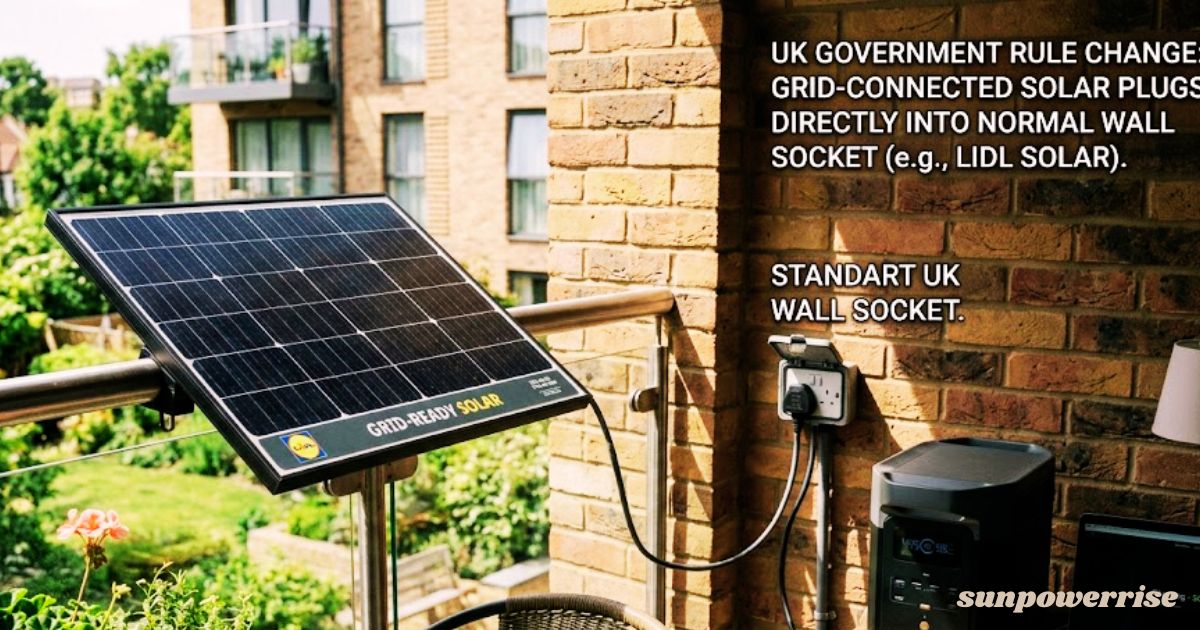
The UK government confirmed that grid-connected plug-in solar, like the highly anticipated lidl solar panels, could soon plug straight into a normal wall socket instead of needing domestic fixed wiring, and that single rule change opened the door for brands like EcoFlow, Jackery, and Anker to sell portable solar panels alongside a battery power station for use on a balcony, patio, or garden wall.
These are not the big rooftop solar panels that get professionally installed; a 400W plug-in solar panel sits next to a 3kW or 5kW rooftop system the way a bicycle sits next to a car, useful but smaller in scope, and MCS-certified solar panel installation still comes with a fixed price and free design for anyone who wants the bigger setup.
On the launch date, Lidl GB had not signed a final contract or fixed a price, though the brand is openly exploring the possibility of stocking these kits, possibly through a supplier deal or a one-off product listing rather than a firm timeline.
What Are Lidl Solar Panels?
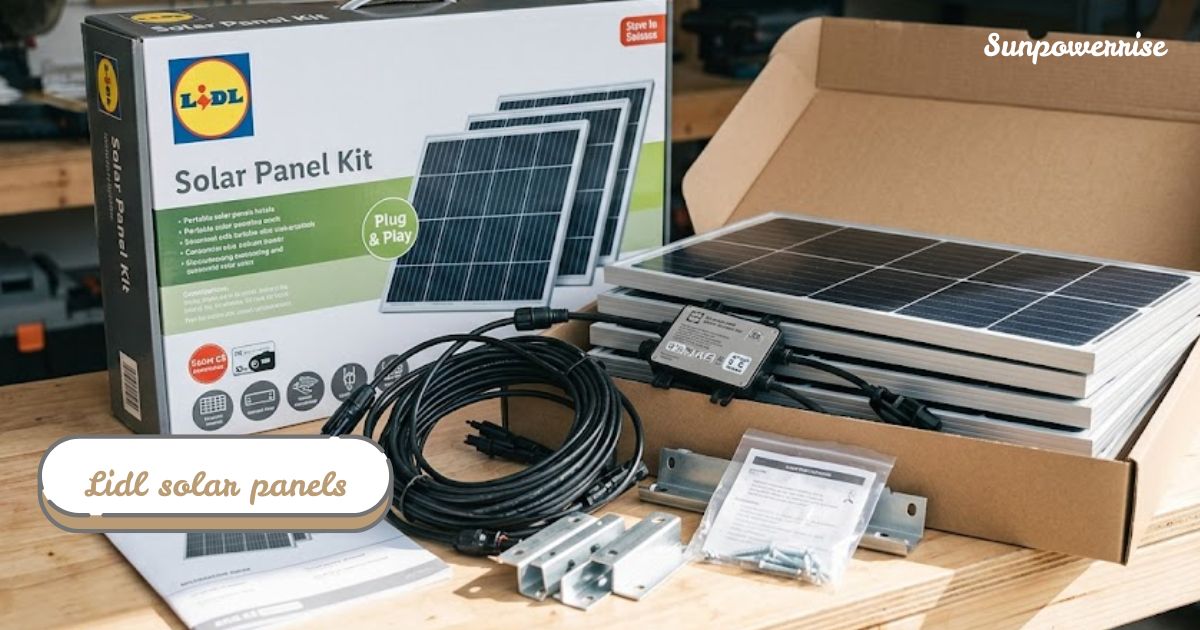
Picture a small box of lidl solar panels and solar kits built for ordinary households: a micro-inverter, a tangle of cables, and basic mounting equipment, all designed for a simple plug-in connection rather than a full rooftop job.
A 400W or 800W unit is nowhere near a traditional rooftop solar system, which can run to 3kW or 5kW, and it skips MCS certification and DNO paperwork along with the usual commissioning steps, which keeps the cost lower and makes it genuinely easier to install.
That convenience is exactly why flat owners, renters, and people with limited roof space or shaded roofs and other unsuitable roofs see this as a lower-cost first step rather than the finish line.
These balcony solar panels have already proven popular across Europe, and now retailers such as Lidl and Amazon are reacting to the government and its March 2026 announcement by stocking similar kits in shops as ready-made plug-and-play kits.
The whole point is to generate electricity from a standard plug socket, whether the panel sits in a garden, hangs from a balcony, leans on a patio, or rests on a shed roof that catches direct sunlight for most of the day.
Inside the box, you usually find a microinverter, mounting brackets, a frame, a cable, and a plug, enough to power a fridge or TV and trim everyday electricity use through a low-cost, quick way to dip a toe into solar at a smaller size than people expect.
Products Currently Available
Right now, before any Lidl solar panels box appears, the EcoFlow River 2 Pro is a popular portable power station that doubles as backup power for camping or small appliances, and it supports solar charging from a panel you already own.
Step up and you reach the EcoFlow Delta 2 or the larger EcoFlow Delta 3 for proper home backup with higher storage, while the EcoFlow Stream Ultra offers a neat balcony-style solar setup as a genuine battery product for flats, and the EcoFlow Stream 800W Microinverter is the actual plug-in solar component that should reach UK shelves around April 2026.
I have listed approximate RRPs below, and yes, some of these come through affiliate links that may earn a small commission alone for around £209, or pick up a single 400W Rigid Solar Panel for about £299 from specialist retailers, Amazon UK, or the EcoFlow UK store.
Anker SOLIX kits sit in the £600 to £800 range with a built-in battery, Zendure undercuts that slightly at £500 to £700 with smart tariff optimisation, and the budget DIY route through Hoymiles starts at just £270 to £450, the lowest-cost option in this whole brand comparison.
Are Plug-In Lidl Solar Panels Worth It?
In my experience testing similar kits, a plug-in panel never matches rooftop solar for raw output, but if you live in a flat with a sliver of outdoor space and no chance of landlord permission for anything bigger, it still earns its keep through daytime electricity use.
You get low-cost power and modest savings, nothing more, and that’s fine as long as the kit carries certified UK use approval; a heavily shaded balcony will never deliver full solar-panel-level savings, because the panel simply needs daylight and clear mounting safety to perform.
Anyone renting should check with the freeholder about building permission before drilling a single bracket, and I’d treat any bold payback claim with suspicion since most numbers assume perfect conditions that rarely happen in a British winter.
Think of this as an entry-level product, not a rooftop solar PV system; it brings a small saving on the electricity bills, stays simple and lower-cost, and taps a little genuine solar energy during daytime energy use. For a full installation and real long-term energy costs reduction, speak to a proper solar panel installer such as Glow Green for a proper solar installation, and treat the plug-in box only as a starting point.
Why Has the UK Been Cautious About Plug-In Solar?
Electricity is unforgiving, and engineers worry about anti-islanding failures during a power cut, where a careless panel could energise wiring that linemen believe is dead, alongside risks of circuit overload from unmonitored domestic circuits taking on extra generation.
The technical term is back-feeding, and poor inverter quality from cheap inverters or uncertified inverters makes that risk worse, which is exactly why DNO requirements exist and why local network operators track generation flowing onto the grid so carefully.
There’s also a simpler, human risk of mounting safety on balconies and flats in exposed areas, and only once regulators build a safe framework for household sockets will the government feel comfortable giving the full green light.
Benefits of Plug-In Solar Panels
The biggest draw is the lower upfront cost, which brings real affordability next to traditional rooftop systems and makes solar an accessible option for ordinary households. Easy installation and a quick setup mean nobody needs to wait for an electrician; the unit simply plugs into a socket, which is a relief for renters who can’t make permanent changes as tenants.
Because the panel is portable, it offers flexible placement that fixed roof-mounted systems simply cannot match, whether that means a garden, a balcony, or a patio, chasing the best sunlight through the day with smart positioning.
Defects in Plug-In Solar Panels
Nothing is perfect, and the honest drawback is limited energy output from smaller systems, meaning less electricity reaches the home compared with a full energy use offset, which leads to slower savings and a longer return on investment.
There are also practical socket considerations and safety considerations to weigh, plus lingering compliance concerns until the UK guidance fully settles, and don’t expect export payments through the Smart Export Guarantee, or SEG, since these small kits rarely generate enough excess electricity to qualify.
Will Plug-In Solar Panels Cut Energy Costs?
Yes, but modestly, and I think that honesty matters here. A plug-in kit trims energy costs by a smaller amount of electricity than a full solar panel system, so expect modest savings mainly on everyday appliances used during the daytime.
For anyone wanting a serious dent in their electricity bills, a proper rooftop installation remains the answer, and I’d suggest contacting a solar panel installer such as Glow Green for a quote and a thorough home assessment before treating either route as a guaranteed long-term option.
The Cost of Waiting for Lidl
For families in Northern Ireland, where electricity prices bite harder, waiting has a real cost. An 800W system can deliver useful monthly generation, and against a monthly cost based on 24p/kWh or 33p/kWh under the Power NI standard, or 39p/kWh with Click Energy, that typically nets 50-70 kWh, worth roughly £12 to £17, or £23 against £20 to £27 depending on the supplier.
If Lidl stock genuinely doesn’t appear until November 2026, choosing an EcoFlow STREAM today at around £100 more than waiting could still make sense, since six months of foregone generation at NI rates can outweigh that gap; the net saving swings from £0 to roughly £30 once you factor in a potentially higher electricity bill, and even a £200 difference against German pricing rarely beats locking in a confirmed price now.
Government and Further Retail Support for Plug-In Solar
The government has clear plans to normalise this across the UK, moving plug-in solar from a niche idea to a common feature of ordinary homes.
Several retailers, not only Lidl but also B&Q, Currys, and Amazon, are eyeing the growing plug-in solar market.
What everyone wants is a clear framework and a safe framework that gives consumers real confidence that this is not a passing trend but a genuine emerging option, a point reinforced by an official press release published on gov.uk.
What Lidl Has Actually Said
Lidl solar panels are part of the broader conversation as Lidl GB’s Georgina Hall, Corporate Affairs Director, has spoken about supporting sustainable living and working alongside the Government as regulations modernisation continues, though she stopped short of confirming a launch date, pricing, or a named supplier.
There’s no promise yet of a permanent line; it could arrive through a one-off Middle of Lidl promotion or a smaller regional pilot rather than a full commitment. Lidl is genuinely exploring the possibility, working through a possible supplier contract, weighing the right price point, and deciding how much shelf space this new category deserves.
FAQs
When will Lidl solar panels launch in the UK?
There’s no confirmed launch date yet; Lidl GB is still exploring the possibility ahead of new rules expected by summer 2026.
How much will Lidl solar panels cost?
Reports point to around £400 for a basic plug-in kit, though this headline price is an estimated price, not a confirmed price from Lidl.
Can plug-in solar panels actually cut electricity bills?
Yes, but only with modest savings, since an 800W system offsets daytime electricity use rather than replacing a full rooftop solar system.
Are Lidl solar panels worth buying compared to rooftop solar?
For renters and flat owners with limited roof space, they’re a useful lower-cost first step, but a professionally installed rooftop solar system still delivers far greater long-term energy cost savings.