

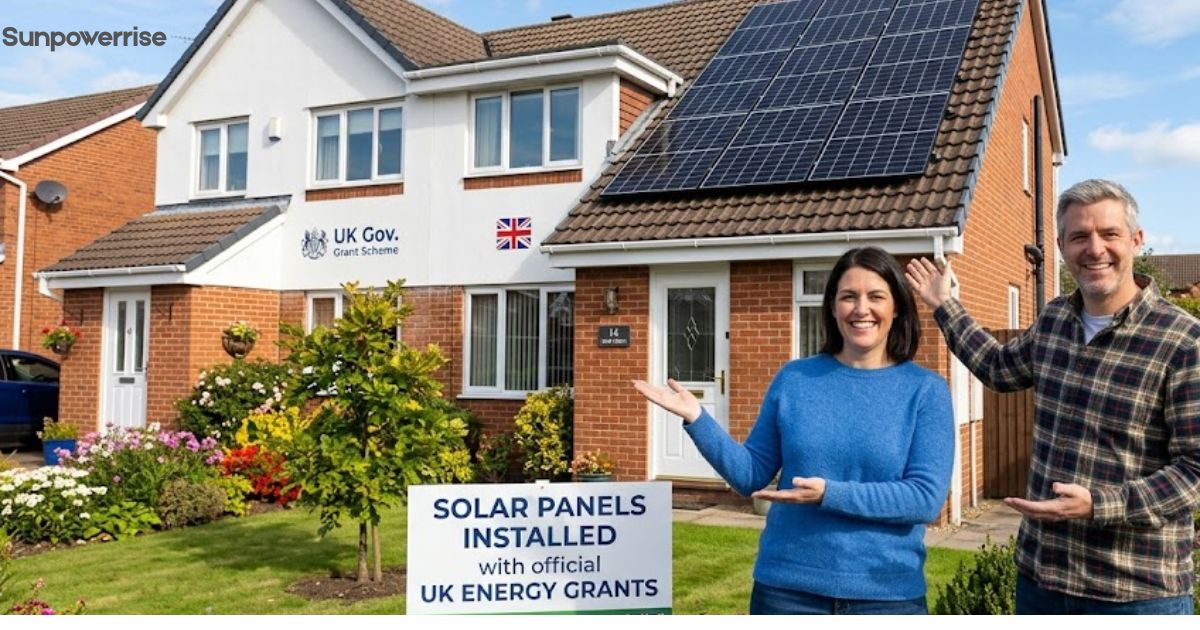
Grant money for solar panels has become a major focus since 2022, as the UK government pushes hard toward net zero with a firm target set for 2050. As part of this renewable journey, many households across Scotland and beyond now find real avenues to go green without paying the full cost upfront.
Companies like Heatable even put together a video to help people navigate the maze of grants and schemes on offer, and by 2025, the number of homeowners applying for grant funding kept climbing fast. Some of these programs run on a countdown, so it pays to check the TAT (the turnaround time for approval) before a window closes.
Grant Money for Solar Panels
The Free Solar Panel Grant Scotland initiative, alongside the ECO4 scheme (also called the ECO4 grant scheme), gives eligible lower-income families access to free installations of roof-mounted solar panels and battery systems.
The grant money for solar panels can cover up to 100% of the funds needed, especially once a means-tested benefit applies to the household.
The benefits don’t stop there: heat pumps often get bundled in too, helping families save money and reduce energy bills through ongoing payments that stay affordable long after the crew packs up, right through 2026 and beyond.
ECO4 Scheme
The ECO4 scheme is a government-run energy efficiency scheme covering Great Britain, including Scotland. People often just call it ECO, short for Energy Company Obligation.
Backed by a pot worth around £4 billion, this government-backed strategy launched in April 2022 to run for 10 years, and it will stay active through 2026.
Energy companies pay into the pot through a levy, and that money becomes grant funding for low-income households and lower-income families who need home improvements.
If your Scottish home runs on gas, electricity, LPG, or oil, and someone in the property claims Universal Credit or Pension Credit, you likely meet the eligibility criteria to qualify for Eco4 support.
Eligible households can receive retrofit solutions such as free insulation, replacement boilers, air source heat pumps, electric central heating, electric storage heaters, and even batteries or solar systems, most of it heavily subsidised or entirely free.
Swapping old fossil fuel boilers for new technologies and renewable energy sources trims the energy bill and lowers costs over time.
Once you check the ECO4 scheme of grant money for solar panels for benefits and confirm your solar panels fit the funding criteria, an assessor walks you through the rest, no complicated jargon, just clear steps toward a warmer, cheaper-to-run home.
0% VAT on Solar Panels
Here’s a bonus most people miss: solar comes with a tax break of its own. Across the UK, the standard VAT rate sits at 20%, but the government dropped this to 0% VAT for solar panels, battery storage, and inverter equipment. This VAT-free deal runs UK-wide and stays in place until March 2027.
Picture a full solar system with an installation cost of £10,000; that reduction alone saves £2,000 straight away, since nothing extra gets added on top.
Even a bigger setup priced near £12,000, complete with battery backup and panels, sees the same kind of savings. There’s no separate grant application needed here; the price you’re quoted already reflects the tax cut.
Home Energy Scotland Grants & Loans
This government-funded scheme, backed by direct government funding, offers homeowners a non-repayable grant of up to £7500, plus an interest-free loan on top, pushing total financial help as high as £9000 in many areas or £6,000 to £5,000 depending on the setup, and even up to £11,000 in a rural area off the gas grid.
This accessible grant covers air source heat pumps, home insulation, and a solar PV electricity system, each counted as a valid energy-saving measure.
If your solar installation cost runs to £11,000, the grant scheme might fund 75% of that through a combination of grant and loan, leaving only a small remaining balance for repayment, usually at low cost regardless of your income.
Households across Scotland feel the benefits fast: lower heating bills and lower electricity bills, month after month, once the system is up and running.
Smart Export Guarantee (SEG)
Once your panels are up, you can earn money back through the Smart Export Guarantee, known as SEG. This scheme, built on government support and formal legislation, pays homeowners for any spare electricity their systems send to the grid.
Energy companies in the market, including big names like British Gas, must offer a minimum rate to their energy customers, though this can sit as low as 5 pence per kilowatt hour.
Some providers pay closer to 15 pence, often written as 15p, for every unit sent back. The exact rates vary a lot, so it’s worth comparing 10 or 12 different suppliers before picking one.
This isn’t a one-off payment; it turns into an ongoing income stream for up to 20 years, keeping the household affordable to run while you sell exported energy back through the wider Warm Homes Plan framework that supports the whole SEG system.
Welsh Government Warm Homes Nest Scheme
Over in Wales, the Welsh Government runs its own version of support called the Warm Homes Nest Scheme, often shortened to the Welsh Nest scheme.
This means-tested program checks your household income, generally under £30,000, before offering homeowners up to £4,000 toward solar panels and other upgrades, free of charge to those who qualify.
Northern Ireland Solar PV Grant
Homeowners in Northern Ireland have their own dedicated scheme too. The Northern Ireland Solar PV Grant helps cover the cost of a solar panel installation and a battery storage system for the home.
Since the scheme for grant money for solar panels opened, over 170,000 people across the region have checked their eligibility through the official government website, and the program runs under its own legislation, separate from schemes in England, Scotland, or Wales.
Greener Homes Plan
Looking ahead, the government has shared an outline proposal known as the Greener Homes Plan, expected to roll out from April 2025. This framework sets out minimum criteria for homes to follow, encouraging renewable technologies in both existing homes and new-build properties. It builds on lessons learned from Eco4, pushing more households toward an eco-friendly future.
Future Homes Standard
New properties face stricter rules too, under the Future Homes Standard. This legislation forms part of the same regulatory framework, setting minimum criteria for energy performance so every new home meets a higher bar before anyone moves in.
Making Homes Sustainable and Energy Efficient
Solar panels work best as part of a bigger picture. A home that’s properly insulated, rather than one stuck with a lower energy rating, gets far more value from every upgrade. The ECO grant money for solar panels scheme often bundles in Cavity Wall Insulation, Solid Wall Insulation, Room-in-Roof insulation, and Loft insulation, alongside Air Source Heat Pumps and smart Heating Controls.
Companies like Heatable specialise in matching households with the right air source heat pump and insulation combination, so the whole home works together sealed, warm, and efficient, not just sitting under solar panels that can’t reach their full potential.
Financing Options
While grant money for solar panels can help cover upfront costs, not everyone wants to pay cash or relies solely on government funds and that’s completely fine, as plenty of financing options exist. Some mortgage providers, including Barclays, offer a top-up loan with no interest attached, sometimes structured as 0% APR finance (or 0% APR for short) folded straight into a mortgage as part of a wider mortgage product. Independent lenders also offer competitive deals outside the big banks.
Costs vary by system size: a small setup might run £2,500, or £500 for extras, while a full battery package deal could reach £10,000 or even £15,000 for larger renewable projects.
Some banks also offer a savings scheme or investment products tied to green home upgrades, letting a household build a portfolio of eco-friendly assets alongside accelerators designed to speed up the return on investment.
FAQs
How much should a 6.6 kW solar system cost?
A solar system of that size typically runs somewhere between £8,000 and £12,000, though grant funding or 0% VAT can bring the real cost down nicely.
Are solar grants worth it?
For most eligible households,the benefits of free installations, lower energy bills, and real peace of mind make solar grants a genuinely smart move for the future.
How do the grants work?
The process starts with an energy assessment, sometimes called a home energy assessment, carried out by a government-approved surveyor. They visit the property, check the heating type, look at the roof, and review the current insulation and heating setup.
Are there any other government and grant money for solar panels in Scotland?
Beyond ECO4, the Home Energy Scotland Grant & Loan Scheme is worth checking too. It’s a government-funded scheme offering financial help through direct government funding a non-repayable grant of up to £7500, or as much as £9000 total when paired with an interest-free loan.