

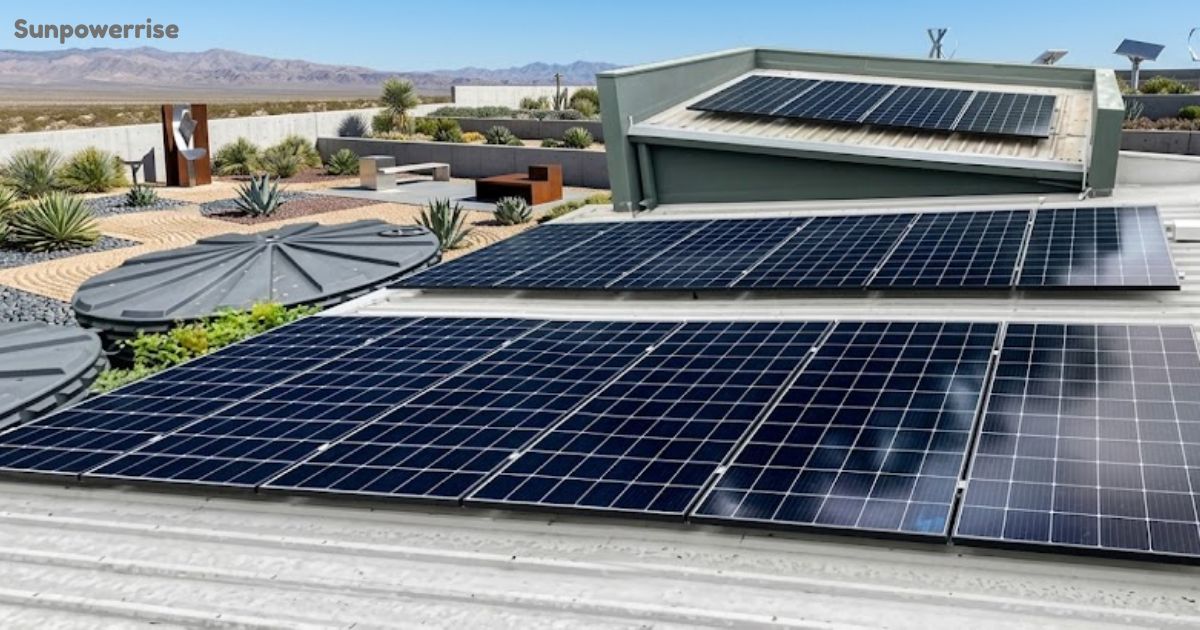
Solar panels, also called photovoltaics or PV, turn sunlight into usable power for your solar panelled home.
A solar array on your roof can capture the sun’s energy and change it into clean electricity that runs your appliances, lights your lamps, and even charges your laptops and phones.
You can store this power in a battery for later use, or sell extra electricity back to the grid and earn money from it.
Across the UK, UK Government data shows over 1.7 million installations already installing power into homes, proving this is far from a fringe idea. If your budget is tight, even an ultra-budget solar setup built for around $100 using basic DIY solar equipment can give you a taste of free, renewable power before you commit to a bigger system.
How Will the Warm Homes Plan Impact Solar Panelled?
The government recently announced a plan that could change how many families can afford solar panels. This Warm Homes Plan will invest close to £15 billion across the UK’s homes, aiming to cut energy bills for ordinary households. Families on low incomes stand to gain the most from this move.
For those struggling financially, there will be fully funded government support to install solar panels without paying anything upfront.
On top of that, homeowners with any level of income can apply for zero-interest loans or low-interest loans to spread out the cost. This kind of backing removes one of the biggest hurdles people mention when I talk to them about solar panelled.
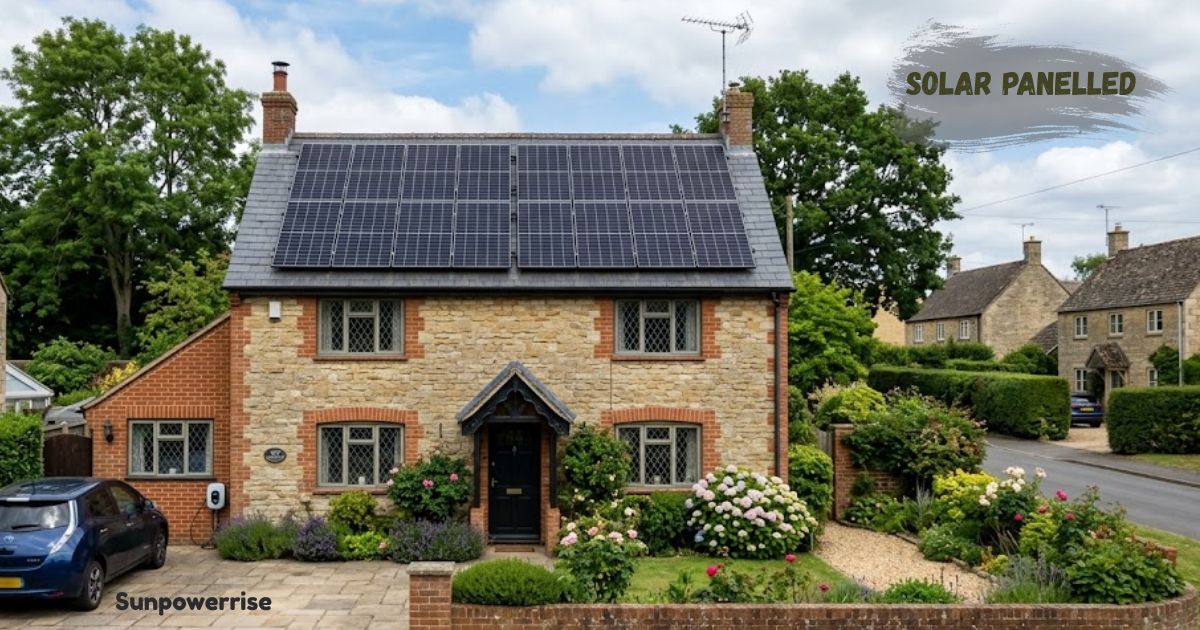
How Do I Get Solar Panels?
Getting started feels overwhelming at first, but breaking it into steps makes it manageable. Begin with a solar panel calculator to work out roughly what system size suits your home, then gather quotes from at least three MCS-certified installers. Getting battery quotes at the same time saves you a second round of calls later.
Once you settle on a provider, agree on the price and lock in an installation date that works for your schedule.
The team will handle scaffolding, fit the mounts, and secure the panels before the battery and inverter get connected to your home’s supply. Afterwards, the crew tests everything thoroughly before handing the keys, so to speak, back to you.
Series vs. Parallel Solar Panel Wiring
Wiring choices sound technical, but the core idea is genuinely simple once explained properly. In a series wiring setup, you connect panels through daisy-chaining, joining positive to negative down the line, which adds up the volts while amps stay the same.
This method is the simplest and cheapest, making it the cheapest starting point for most small builds, though a fault or shade on one string can drag down the entire array.
Parallel wiring flips that logic by joining all positives together and all negatives together, which raises amps while voltage holds steady.
This setup brings real flexibility, since faults or shade on one panel leave the rest to operate independently and unaffected. The trade-off is added complexity, requiring thicker cables, branch connectors, and proper fuses, all of which push up cost.
For larger builds, a series-parallel combination often solves the puzzle, such as wiring six 200W panels into two strings of three panels each, reaching 25V before combining for higher amperage limits.
Matching this to your charge controller correctly, sometimes with a 10A fuse for safety, lets you pick a smaller charge controller and trim your budget. Yes, this route is more expensive in parts and slightly more complex to plan, but understanding the maths behind your own setup is genuinely satisfying once it clicks.
Ultra-Budget DIY Solar Setup ($100 Build)
I love stories about people building small systems on a shoestring, because they prove solar is not only for wealthy homeowners.
One popular budget build combined a 20W solar panel kit, a basic PWM charge controller, and a sealed lead-acid battery rated at 18Ah, all for a total cost close to $105 after tax. That is barely over the original $100 target.
The build used a 150W inverter offering one outlet and two USB ports, connected through an adapter cable limited by a 10A fuse, capping the real usable output at 120W rather than the full rating.
Despite that limit, the kit handled charging a phone, charging a laptop, and even running a 6W LED lamp for roughly 18 hours off a single full charge.
A 12V mini fridge also worked fine through the 12V socket, though a full kitchen fridge or AC unit, both pulling near 300W, would simply blow the fuse.
Builders chose a lead-acid battery partly for price and partly because lithium iron phosphate cells struggle in freezing conditions, unlike lithium batteries in general.
As a rough charging time estimate, a small 20W panel typically produces around 2-3 watt-hours of energy per watt on an average day, working out to roughly 40-60 watt-hours per day, and taking about 2-3 days to charge the battery from empty fully.
Sticking to a conservative estimate like this avoids disappointment, since the rated output on the box rarely matches real-world power anyway.
Are Solar Panels Right for Me?
Before spending a penny, it helps to ask a few honest questions about your own home. A good solar panel calculator can give you a rough idea of what system would actually suit your roof and your energy habits. This single step saves a lot of guesswork later.
Start by checking whether you have enough space for the panels you want, since cramped roofs limit your options.
Next, consider whether your roof will face the right way to catch the lightest throughout the day, and whether nearby trees or buildings cause shade that cuts your output. These two factors alone can make or break your expected savings.
Finally, check if you need permission to install a solar panelled system, especially if you live in a listed building or a conservation area.
I learned this the hard way when a friend had to pause his project for weeks just to get local approval. A quick call to your council early on avoids that headache completely.
Where Can I Install Solar Panels?
Most people picture panels sitting neatly on a sloping roof, and honestly, that remains the ideal place for them.
When panels are angled correctly toward the sun, they simply perform better than flat setups. This is why installers always ask about your roof pitch first.
That said, not everyone has a sloped roof ready to go, and that is perfectly fine. A flat roof installation works well with the right mounting frames, and a garden installation suits homes with more outdoor space than roof space. Even a garage installation or shed can hold a smaller system if your main roof is not suitable.
I have visited homes where the owner simply could not use their roof, yet they still managed to install panels successfully in the garden instead. Creativity with placement matters just as much as the panels themselves. There is almost always a workaround if your first choice does not fit.
How Much Do Solar Panels Cost to Install?
Money questions come up in almost every conversation I have about solar, so let’s tackle them directly. A typical domestic solar panelled system setup runs around 4.5 kWp and costs roughly £6,100, though your final number will shift based on several details. The size of the system you choose plays the biggest role in that final figure.
Other factors include the difficulty of accessing roof space, whether you pick panels vs tiles, and whether the system gets integrated directly into the building rather than mounted on top. You might also need to renew work if your roof covering is old or damaged before installation begins. If you already have scaffolding up for roof repairs, or you are working on a brand-new house, your costs can drop noticeably.
Ground-mounted systems add their own set of variables, including the type of mounting frame type used and the distance between the array and your house. I always recommend getting a written breakdown from installers so nothing sneaky gets hidden in the final invoice. Transparency here saves arguments down the line.
Can I Get a Solar Panel Grant?
Sadly, there is no single pot of money labelled solar panelled grants waiting from the UK Government, so you have to dig a little for support. Several regional schemes and supplier offers can still soften the blow, though.
In England and Wales, ask your local council or energy supplier about help through the Energy Company Obligation, known as the ECO scheme. In Scotland, dedicated renewable energy funding exists for Scottish residents, and it is worth a proper search before ruling anything out. Northern Ireland households should instead contact NI Energy Advice for guidance tailored to their situation.
How Much Will I Save With a Solar Panel System?
Savings vary quite a bit from house to house, which surprises a lot of first-time buyers. How much you save depends heavily on your location, since areas further south usually get more direct sunlight throughout the year. Whether you sign up for export payments also changes your final numbers.
Looking at real payback period figures based on fuel prices from July 2026, homes in London typically pay back their system in 9 years, while Manchester takes 10 years, or up to 11 years if the house is empty during the day.
Solar panelled homes in Aberystwyth sit close to London’s pace, and Stirling in Scotland’s cooler climate takes the longest at up to 12 years. Solar electricity clearly rewards patience, but the wait is rarely as long as people first assume.
FAQs
What does “solar panelled” mean?
It simply means a home or roof has solar panels fitted, turning sunlight into clean electricity for your appliances. It’s a small change that quietly powers your everyday life.
Is solar panelling worth it?
For most UK homes, yes, it cuts electricity costs and carbon dioxide emissions over time, often paying for itself within 9 to 12 years. Watching your bills drop each month genuinely feels rewarding.
What is the biggest downside of solar panels?
The initial installation cost remains the biggest hurdle, alongside the fact that output drops on cloudy days or when shade blocks the sun. It can feel like a big leap of faith before the savings show up.
How does solar panelled work?
Sunlight hits the solar cells, creating a direct current that a solar inverter changes into alternating current to run your household appliances. It’s a quiet, steady process happening right above your head every day.