

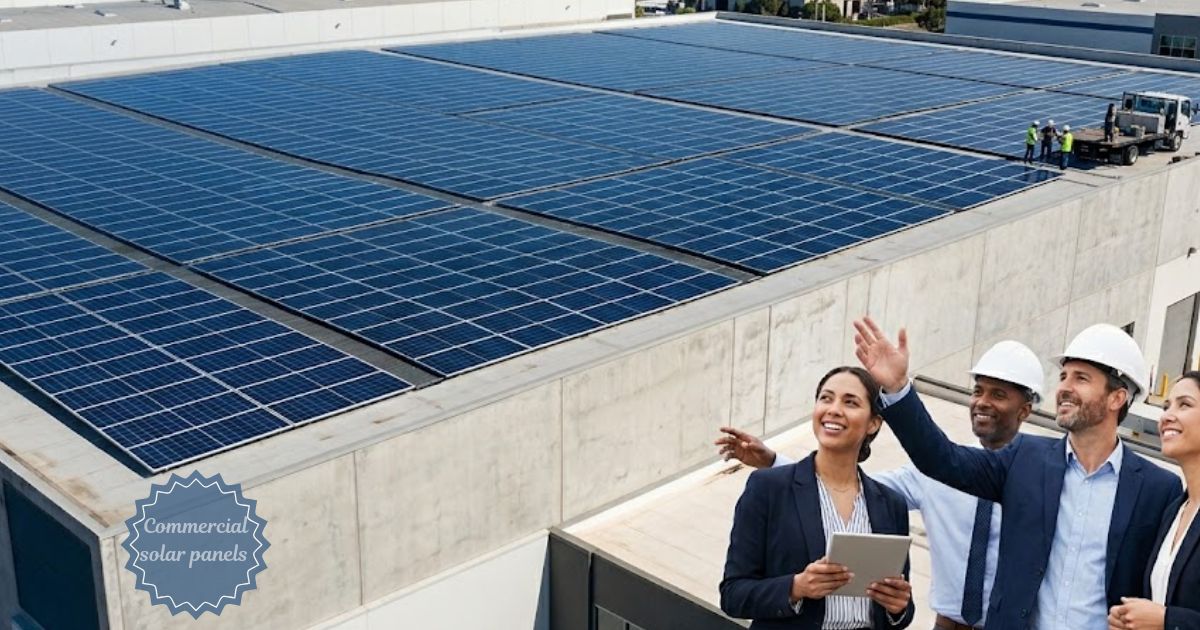
Commercial solar panels are photovoltaic (PV) systems fitted to a business’s roof, car park or land to generate electricity on-site and reduce what you buy from the grid. In the UK, a rooftop system typically costs around £650–£1,000 per kWp installed.
Each kWp produces roughly 800–900 kWh a year, and payback usually lands between 4 and 7 years, depending mostly on how much of the power you use yourself. Panels are warranted for 25–30 years.
You can pay upfront, borrow, lease, or have an investor fund the system through a PPA. Whether it works for you comes down to three things: your daytime electricity use, your roof, and your grid connection.
Which Properties Suit Commercial Solar Panels
Almost any building or plot can host a system, from a hospital with several roofs to a business park with spare ground. The catch is tenure. You need a freehold or a long lease, and if you rent, you’ll want the landlord’s written consent and clarity on who owns the equipment.
Plan to stay at least ten years. Solar pays for itself slowly and then runs almost free, so a short-term occupier gets the cost without the benefit. Get a proper site survey first, covering roof condition, structural loading, shading and access.
Why Businesses Install It
Lower electricity costs
Solar power generated on your roof costs roughly 4–6p per kWh over the system’s life. Grid electricity for business customers has recently sat in the mid-20s pence per kWh, though your contract rate will differ. Every unit you use on-site is a unit you don’t buy.
Resilience
Solar alone doesn’t keep you running in a blackout, because standard grid-tied systems shut down for safety. Add a battery and a suitable changeover setup, and critical loads can stay on. Batteries also let you choose whether to draw on stored power or the grid depending on price.
Export income
The Feed-in Tariff closed to new entrants on 31 March 2019. The Smart Export Guarantee (SEG) replaced it, and suppliers pay you for surplus power sent to the grid. Rates vary a lot between suppliers, so compare them instead of accepting the first offer. Registration needs an eligible installation and suitable export metering.
Brand and reporting
Solar supports net-zero targets and gives you real numbers for ESG and customer reporting.
What it really costs
The industry rule of thumb for a commercial solar panels rooftop is about £700 per kWp, moving with roof access, roof type, pitch and scale. A 50kWp system therefore lands around £35,000–£40,000 plus VAT. Smaller or unusual builds cost more per kWp. Solar thermal, which heats water, is a separate and cheaper product, starting from a few thousand pounds and suited to businesses with heavy hot-water demand.
Your quote should also show:
- Inverter replacement. Budget for at least one replacement over the system’s life, typically around year 10–15.
- Maintenance and cleaning. Small, but not zero.
- Scaffolding and roof repairs. These often decide whether a quote is at the low or high end.
Why Payback Ranges From 3 years to 7+
Quoted paybacks vary wildly because they depend on self-consumption, the share of your solar output you use on-site instead of exporting.
Here is a simple illustration for a 50kWp system costing £35,000, producing about 42,500 kWh a year. It assumes grid power at 25p and export at 10p; swap in your own rates:
Take a 50kWp system costing £35,000 that produces about 42,500 kWh a year, with grid power valued at 25p per kWh and exported power at 10p.
If the business uses 80% of that output on-site, the power it consumes is worth £8,500 a year, and the exported 20% earns another £850. That gives an annual benefit of £9,350 and a simple payback of about 3.7 years.
If the business uses only 40% on-site, the consumed power is worth £4,250 and the exported 60% brings in £2,550. The annual benefit falls to £6,800 and payback stretches to about 5.1 years. The same system can therefore pay back more than a year later purely because of when the building uses its electricity. Swap in your own tariff, export rate and system cost to see where your site would land.
A cautious blended assumption of about £110 saved per kWp a year, or £5,500 for 50kWp, gives a payback nearer 6–7 years. Both are legitimate, depending on the building. Ask any installer for a half-hourly load analysis instead of a headline figure.
Grid connection: the hidden bottleneck
Before you sign, ask who is handling the application to your Distribution Network Operator (DNO). Small systems go through a simple notification. Larger ones need a full application, and the network may restrict export or ask you to contribute to upgrade costs. This can take months and change the size of what you can build.
Funding options
Don’t assume you must pay cash.Best long-term return, and you own the asset. Spreads the cost. Repayments can be met from the savings.
Power Purchase Agreement (PPA). An investor funds and owns the system, and you buy the electricity at a discount to grid price. There’s no capital outlay, but the savings are smaller than owning it, and you should read the contract term, exit and roof-access clauses closely.
Tax relief. Companies can often claim capital allowances such as the Annual Investment Allowance or full expensing on qualifying equipment. Confirm your position with your accountant.
Who Honours The Warranty?
A 25–30 year warranty only matters if the company behind it is still around. Several well-known solar brands have restructured or left markets in recent years. Ask for the manufacturer’s tier and financial standing, and check whether your installer’s workmanship guarantee is insurance-backed. It matters too if the installer disappears.
Other Renewables
Solar isn’t the only option, but for most UK businesses it’s the most practical. Wind needs open land and planning. Biomass and anaerobic digestion suit sites with consistent organic waste or heat demand, such as farms and food processors. Heat pumps and CHP deal with heating loads rather than replacing solar. A mixed strategy can make sense, but start by pricing solar against your actual load.
FAQs
How much do commercial solar panels cost?
Commercial solar panels cost between £3,000 and £40,000+, depending on system size. A 50kWp rooftop system typically runs around £40,000 with a payback time of just 3-4 years.
Are commercial solar panels worth it?
Yes, for most businesses with steady daytime electricity use, a suitable roof and a 10+ year outlook. They turn a rising energy bill into a long-term asset, with payback typically in about 4-7 years, and after that the power is almost free.
What is the average cost of a commercial solar panel?
A single commercial panel usually costs around £150-£300, but businesses are normally quoted per kWp installed (about £650-£1,000) because inverters, mounting and labour make up the rest of the system cost.
Which solar panel is best for commercial use?
Monocrystalline panels from trusted, well-established manufacturers such as JA Solar, LONGi and Q Cells are the usual pick, thanks to their high efficiency, durability and 25-30 year warranties. Choose a brand that will still be around to honour that warranty.
How much do commercial solar panels cost in the UK?
Most UK businesses pay roughly £650-£1,000 per kWp, so a 50kWp rooftop system lands around £35,000-£40,000 plus VAT. The final price depends on roof access, system size and grid connection costs.