

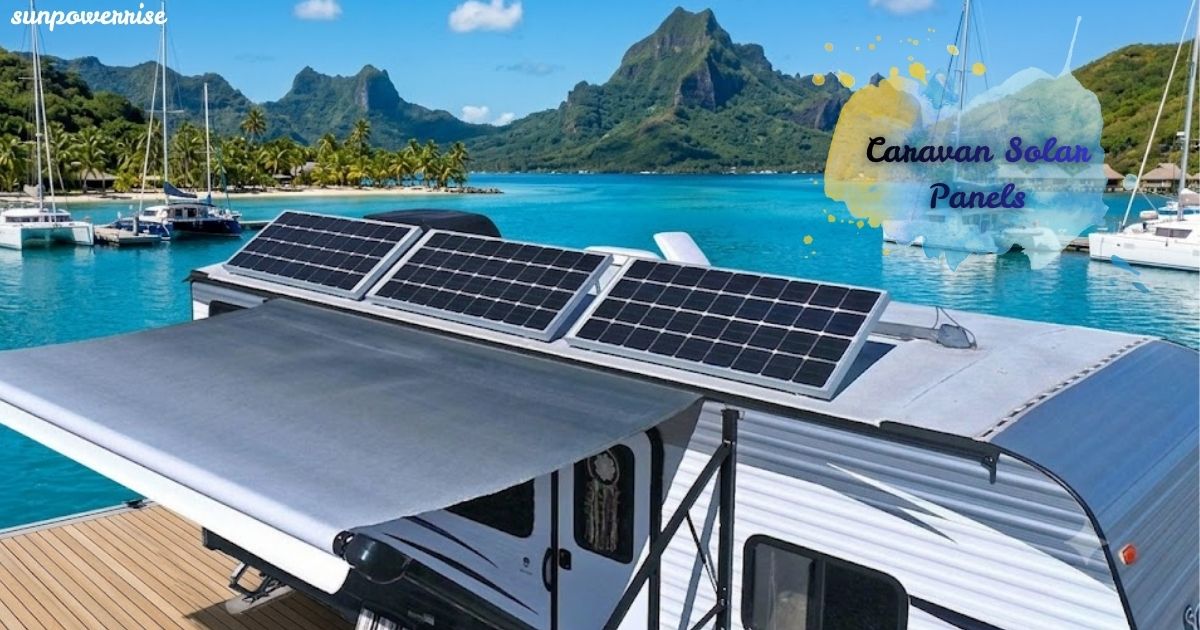
Every caravan owner dreams of using caravan solar panels to pull up to a stunning spot without worrying about finding an electric hook-up.
Solar panels make that dream a reality, giving caravanners, campers, and motorhomers across the UK a genuine shot at free electricity for a decade or more.
We have personally seen how a well-planned solar power generation setup transforms the whole camping experience, cutting ties with crowded campsites and opening up beautiful greenfield locations instead.
How Do Caravan Solar Panels Work?
The science behind a caravan solar panel starts with the photoelectric effect, a property found in materials like silicon that releases electrons when struck by light.
Each solar cell catches those free electrons and channels them into a usable electric current, which then travels toward your battery for controlled release whenever you need it.
Even on cloudy days, this process keeps ticking along and continues to generate electricity, just at a slightly reduced rate compared to brighter sunlight.
From Sunlight To Direct Current
Modern photovoltaic PV solar panels convert sunlight into usable electrical energy to keep your leisure battery charged and your 12V appliances running.
The silicon cells in every panel absorb sunlight, which excites electrons within the material and produces a flow of direct current.
That current does not go straight into your battery; it first passes through a charge controller, also called a regulator, which keeps the panel from sending too much power and leaving your battery overcharged or damaged.
Smart Regulation With MPPT Controllers
From the charge controller, regulated DC power flows into your van battery, keeping everything topped up whether the caravan is parked on a sunny roof pitch or tucked away in storage.
MPPT Maximum Power Point Tracking controllers handle varying light conditions far better than basic units, squeezing every usable watt out of the panel at any given moment.
Once stored, that energy powers your lights, water pumps, phone chargers, and TVs, with a wattmeter giving you a live read of power, voltage, and how much charge your system is generating at any time.
Wiring, Fuses, and Real-World Response
Connecting the system is straightforward: run a positive and negative feed from the solar panel into the controller, then another positive and negative pair from the controller to the battery, and add a load connection for any direct devices.
A 5-amp fuse between the panel and the battery compartment protects the whole setup, and the battery terminals need a solid, clean connection to keep resistance low.
When our own 50W panels in a suitcase configuration were connected this way, the voltage jumped from 13.15 volts at rest to 13.73 volts the moment the panel hit daylight, proving just how immediately the system responds, with 99% of solar panel kits arriving with a controller already included.
Protecting The Battery From Voltage Spikes
The solar panel can push voltage anywhere from 0 volts to around 20 volts, depending on conditions, which is exactly why a constant-voltage, stable, regulated supply matters so much for safe charging.
Without a controller to regulate and control the current, your battery would receive erratic power and suffer long-term damage to its capacity.
The blocking diode built into most controllers also stops any reverse flow back through the panel at night, while a separate alarm and tracker setup, complete with a web portal showing live battery condition, gives you complete confidence that your caravan is safe and your battery stays in good working order.
Weighing The Benefits And Drawbacks Of Caravan Solar Panels
Cutting The Cord For Ultimate Freedom
Ditching the 230V hook-up at campsites cuts your running costs in the medium term and hands you genuine freedom to explore pitches and greenfield locations that other caravanners simply cannot reach.
You become a truly self-contained camper, with your leisure batteries staying topped up through alternative sources rather than a cable plugged into a bollard.
Keeping your battery charged during storage is another major win, especially when you factor in the cost of replacing a battery that has been left flat all winter.
Navigating Payloads And Hardware Trade-Offs
Going solar does come with trade-offs, though, and being honest about them upfront saves disappointment later.
The system adds weight to your camping unit and eats into your user payload unless it was factory-installed, and running 230V appliances still requires a separate inverter to convert the panel’s DC output.
You also need to think carefully about capacity and power management; switching to LED lighting instead of standard bulbs, for example, makes a significant difference to how long your battery lasts each day.
Powering Remote Pitches And Vital Security
One of the biggest practical wins we have seen from going solar is the off-grid capability it unlocks, pitching at remote locations without needing an electric hook-up, whether that means wild camping or staying at a quiet CL with access to lighting, charging points, water pumps, and low-power appliances.
Spring and Summer are the prime seasons for topping up, with long daylight hours doing most of the heavy lifting, but even a freestanding panel angled correctly in winter keeps security systems alive.
We personally rely on solar to keep our alarm and tracker systems running during long storage periods because a flat battery does not just kill your power; it can void your insurance and leave your van far more vulnerable while unattended.
Managing Weather Limits And Theft Risks
The weather remains the biggest wild card, and winter caravanning or extended cloudy periods will see energy production drop noticeably.
Overcast conditions reduce output significantly, which risks undercharging your battery if you rely on solar alone during a poor week.
Roof space constraints, the risk of theft or vandalism targeting portable panels, the need for occasional cleaning when stored near trees, and the reality that opportunist theft targets unattended equipment are all factors worth weighing carefully before you commit to a freestanding panel setup.
Types Of Solar Panels
Choosing between amorphous, mono crystalline, and poly crystalline panels is one of the first real decisions any caravan solar buyer faces, and each type of crystalline technology brings its own strengths to the table.
Mono crystalline Panels
Mono crystalline panels use high-purity silicon and deliver the best performance in lower light conditions, making them the smarter pick for UK touring where sunshine is not always guaranteed.
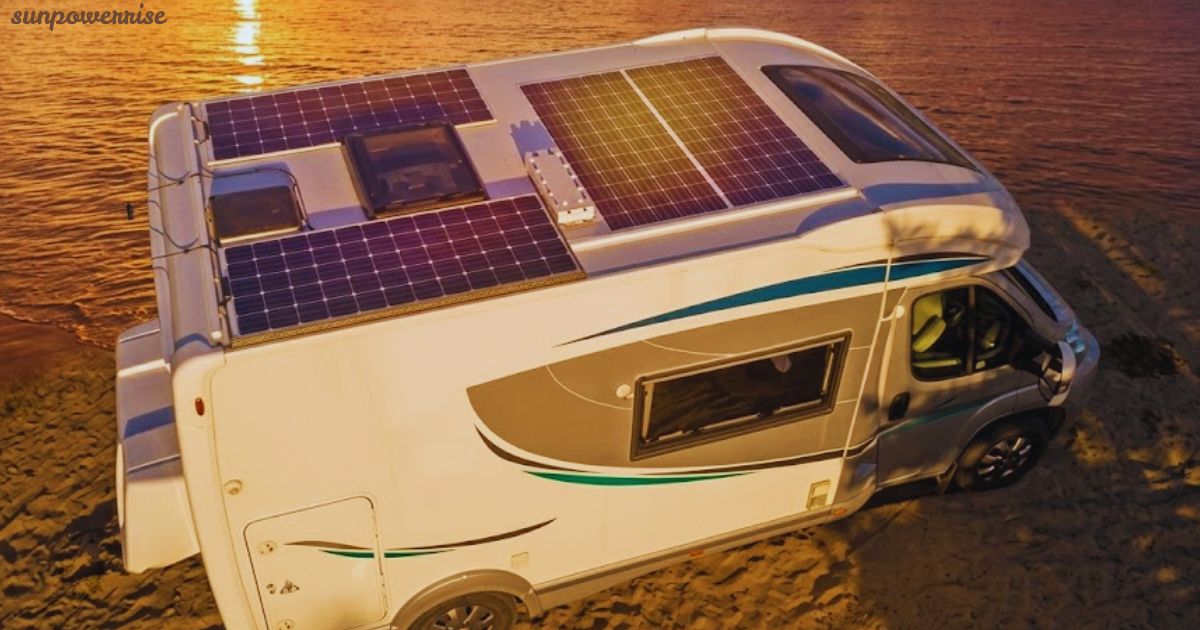
They also come in a smaller physical footprint for the same power rating, which matters enormously on a caravan roof where space is tight, and you will spot them easily because the corners of each cell are nipped off, giving the panel a distinctly darker look compared to the blue shimmer of a polycrystalline panel.
Poly crystalline Panels
Poly crystalline panels cost less, which appeals to anyone where budget is the priority and roof space is not a limiting factor, though their output per square metre sits slightly lower.
If you hold a poly crystalline panel up to the light, the cells display that familiar blue look of crushed crystal, a simple visual check that helps you identify the manufacturing processes used.
Rigid Panels
Rigid panels with an aluminium frame and protective glass top are the go-to for permanent roof installations; they are durable, long-lasting, and consistently efficient, even if they are heavy and more visible than the alternatives.
Flexible Panels
Flexible panels are lighter, slimmer, and can contour to the shape of a curved roof, bonded in place with modern adhesives that create a low-profile, discreet finish. Some modern flexi-panels are even robust enough to be walked on.
For a 100W system on a tight budget with limited roof real estate, the combination of a flexible panel bonded with quality adhesive and a good MPPT controller delivers a very capable setup.
Fixed Solar Panels Versus Portable Models
A permanently fixed panel on your caravan roof requires no setup time on arrival; simply park up, and your leisure battery starts receiving charge straight away through the connectors already wired in.
The downside is that once permanently secured with a fixing kit, the panel sits at whatever angle your roof dictates, which means it cannot track the arc of the sun through the day the way a repositioned portable unit can.
Always check before drilling that no satellite dish or TV aerial will cast a shade line across the panel during peak sunlight hours, and confirm the installation method will not void your water ingress warranty.
What to Look for When Buying Caravan Solar Panels
Powering Your Lifestyle: Wattage Matters
Power output measured in watts (W) tells you how much electricity the panel produces under ideal conditions, and getting this number right for your lifestyle is the most important buying decision you will make.
A panel in the 50W to 80W range handles the basics comfortably LED lighting and phone charging while stepping up to 100W or 150W opens the door to small appliances and proper leisure battery health across short trips.
Anyone planning regular off-grid stays and needing to run laptops, TVs, and water pumps should be looking at 150W to 200W or beyond, because undersizing your panel means you will never put a meaningful charge back into the battery fast enough to keep pace with your multiple devices.
Space, Efficiency, And Portability
Getting the wattage wrong in either direction creates problems: too small, and the panel delivers no meaningful charge; too large, and you carry excess capacity that adds cost and weight without real benefit.
Before measuring your roof space and shortlisting panels, account properly for vents and aerials so you know your actual usable area, then opt for a higher-efficiency panel if your smaller footprint rules out a bigger suitcase-style panel.
Portable caravan solar panels that sit on the ground and pack away when not in use are a smart alternative if the roof simply cannot accommodate a fixed system.
Placement, Build Quality, And Support
Sun exposure matters as much as panel size, so avoid positions shaded by roof features like AC units or satellite dishes, and on campsites, keep your van away from trees and buildings that block light.
Permanent roof mounting is convenient but locks the angle, while a portable panel that you can swing east before bed starts charging from first light in summer, which can add three to four hours of extra charge time daily.
Always check build quality, confirm the waterproof rating reaches IP65, look for UV-resistant and solidly constructed materials, and target brands offering 10 years warranty or longer.
Buying from a reputable dealer at an event like the NEC show beats rolling the dice on a false economy online purchase every time, and solid after-sales service is worth every penny when you need peace of mind on the road.
Silent Power For Off-Grid Adventures
What really makes caravan solar panels and photovoltaic PV technology so compelling for off-grid adventures is how quietly they work in the background.
Sunlight hits the panel, electrical energy flows into your leisure battery, and your 12V appliances just keep running through cloudy days, across windswept campsites, and even during those lazy summer mornings when you have not even stepped outside yet.
Pair that with thermal awareness and smart alternative power sources like wind turbines, and you have a truly eco-conscious setup built for proper adventures.
FAQs About Caravan Solar Panels
What size solar panel do I need for a caravan?
A panel between 100W and 150W suits most caravanners, covering LED lighting, water pumps, and leisure battery top-ups across regular trips.
Do caravan solar panels work in winter or on cloudy days?
Yes, caravan solar panels still generate electricity in overcast conditions and winter months, but output drops significantly compared to bright summer days.
Do I need a charge controller with my caravan solar panels?
Absolutely, a charge controller regulates voltage and current flowing into your leisure battery, preventing dangerous over-charging and long-term damage.
Can caravan solar panels run mains appliances?
Not directly. You need an inverter to convert DC power from your leisure battery into 230V Alternating Current (AC) before running standard mains devices.
What is the difference between MPPT and PWM charge controllers?
MPPT controllers extract more usable energy from the panel in varying light conditions, making them more efficient than basic PWM units, especially for larger systems.
Can I leave a solar panel connected to my caravan during storage?
Yes ,a connected solar panel will trickle-charge your leisure battery throughout storage, keeping your alarm, tracker, and security systems fully operational.