

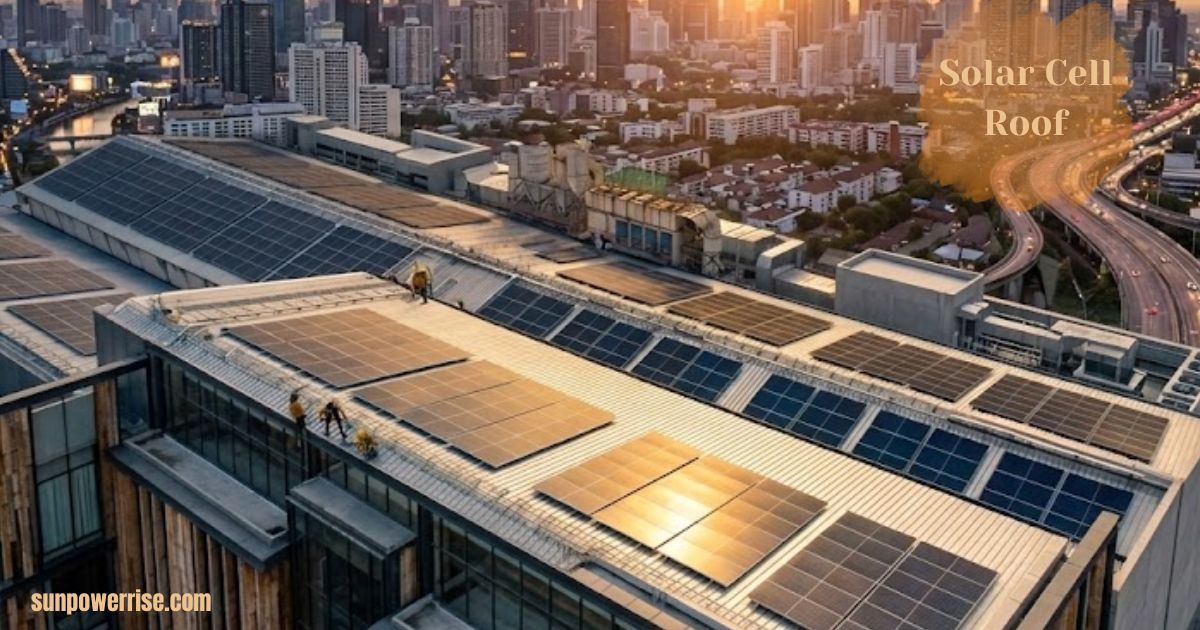
A complete solar cell roof turns your whole roof into a small power station instead of just carrying a handful of panels here and there.
A roof-integrated system replaced the existing tiles on a four-bedroom house near Millgate, Winchester and that single roof surface produced close to 6,000kWh of electricity every year, which works out to roughly a 10% return on investment over 20 years once you factor in the savings on energy bills.
Some homeowners choose a full integrated system that covers the entire roof area, while others prefer normal roof tiles mixed with solar roof tiles in one section, leaving the rest tiled conventionally.
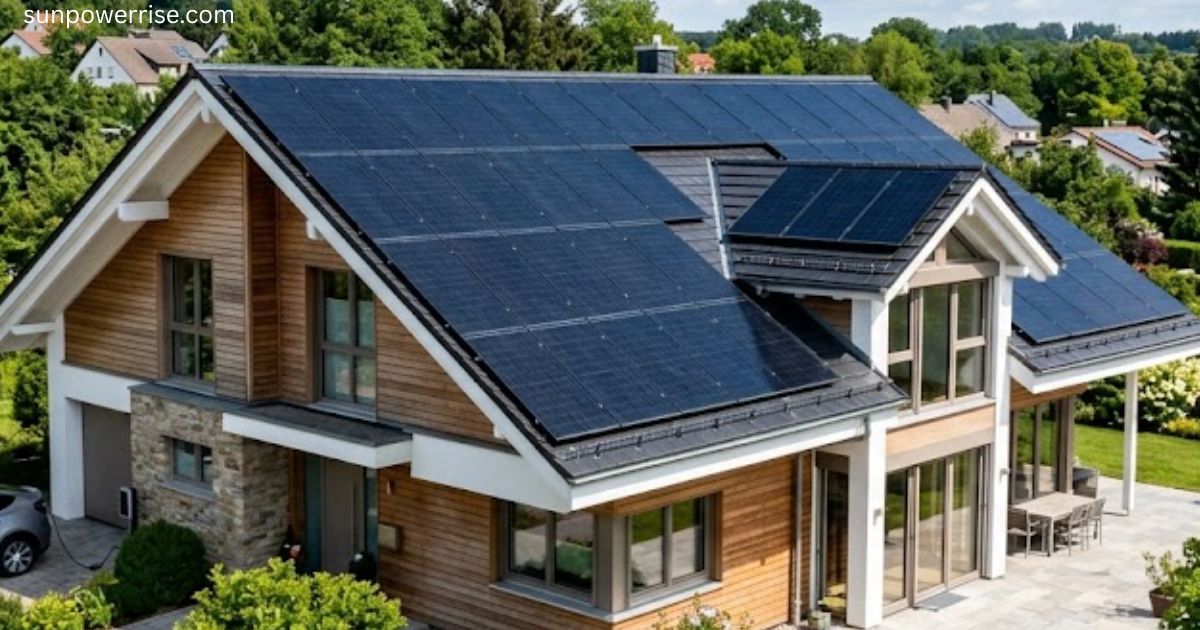
What I love about an integrated solar cell roof is that it doesn’t just sit on top of your existing roof it becomes the roof, which changes how you think about power generation long term.
GB-Sol Solar Cell Roof Integration
GB-Sol started out in 1994 as a spin-out from the Cardiff University solar test centre, and it still runs today as an independent UK company with a factory on the Treforest Industrial Estate near Cardiff.
Over the decades, the team built its name on manufacturing high-efficiency panels and mounting systems that don’t just sit on your roof, they become part of it.
Their roof-integrated system relies on solar panel laminates, where the mounting framework itself doubles as the panels’ structure, so there’s no bulky frame stealing attention from your roofing material.
Instead of screwing brackets on top of existing tiles, installers fit full-sized panels straight onto the roof battens using a hidden rail system, then bring the surrounding roofing material up flush against the edge.
The result is a low-profile finish that’s far less visually obtrusive than conventional on-roof mounting, which is exactly why I’d point anyone worried about kerb appeal toward this option. Because the setup stays well-ventilated, it sidesteps the efficiency losses that plague other in-roof integration systems and keeps solar performance steady across every season.
Every GB-Sol job comes backed by a 25-year warranty covering both power output and waterproofing, which offers real peace of mind if you’re comparing integrated solar cell roof systems side by side.
Benefits
This system suits both full roof coverage and partial roof coverage, and it plays nicely with almost any conventional roofing material you already have in mind.
You can pick portrait orientation or landscape orientation for the individual panels, and installers can even produce custom panel sizes to match complex roof shapes that would trip up a standard kit.
If extra daylight matters to you, double glazed units or triple glazed units can slot in as roof windows right alongside the array.
Everything is UK manufactured and checked by the Building Research Establishment, or BRE for short, using toughened glass, marine-grade aluminium, and stainless steel built to last.
In independent fire tests, the system earned EXT.S.AA, the highest fire resistance rating going, and that’s not a claim every roofing product can make. Best of all, there’s no cutting involved installers simply assemble the pieces on site, which saves time and cuts down on waste.
Easy Roof Evolution
The Easy Roof Evolution is a French-made integrated in-roof mounting system, originally developed by IRFTS Solar Solutions and now owned by the Edilians group, one of the biggest roofing manufacturers in Europe.
It’s MCS012-accredited and works as a ventilated in-roof mounting system, which matters because trapped heat is one of the biggest enemies of any solar panels.
Each panel mount behaves just like an ordinary tile, clicking into place through a patented interlocking process that keeps installation quick and consistent.
You can fit the mounts in portrait orientation or landscape orientation on a tiled roof or a shingle roof, and flashings create a watertight seal between the array and the adjoining tiles so water never finds a way in.
The mounts are made from 100% recyclable material and come with a 10-year warranty, which is solid reassurance for a product you’re trusting with your roof for years to come.
Because it suits residential roofs, commercial roofs, public roofs, agricultural roofs, and industrial roofs alike, it fits most of the market, giving you flexibility no matter what kind of building you’re working with.
Easy Roof + Velux® Windows
Designed through a partnership between IRFTS and Velux, this dedicated mounting system integrates a Velux roof window into your solar panel array, delivering both clean energy and natural illumination without sacrificing roof space.
It fits either the standard Velux MK06 at 780×1180mm or the larger Velux MK08 at 780×1400mm, both backed by the same 10-year warranty as the rest of the system. This combination works especially well for habitable loft spaces, where Velux roof windows bring in daylight without breaking up the clean look of the panels.
Pros and Cons of Solar cell roof
On the aesthetic side, Tesla solar roof tiles and a Dutch company called Zep with their patented designs have made huge progress; you can barely tell them apart from ordinary tiles now.
Durability
Durability is another strong point, since these tiles beat asphalt shingles by a wide margin, and some early testers even raised concerns about firefighters struggling to cut through them during an emergency.
Warranty
Warranty terms tell a similar story of confidence: most brands offer a 30-year warranty, well past the typical 25-year shingle warranty, and Tesla goes even further with a lifetime warranty against physical damage.
On the downside, price is the biggest complaint across the industry early promises claimed the cost would match a normal roof, but current estimates put Tesla solar cell roof tiles among the most expensive options, even pricier than framed solar panels.
Efficiency
Efficiency also takes a hit compared with a normal solar panel installation, not because the cells themselves are worse, but because so many electrical connections pack tightly together without the 3-4 inch gap that normally lets heat escape, and that missing gap quietly drags down output.
More connections also mean more points of failure, and reliability concerns aren’t hypothetical Suntech faced recalls over fire hazards and defects, while unverified rumors about a Tesla fire, mentioned in a Bloomberg article, still circulate online.
Nobody can fully answer what the real-world cost or lifespan will look like yet, since these are still emerging technologies. But if Suntegra and Tesla can nail the formula and bring prices down, this could genuinely be a game-changer for energy generation.
Differences From Solar Panel
Unlike bulky solar panels, individual roof tiles pack mini solar panel units into something that looks like ordinary tiles, and they’re built strong and resilient enough to handle the same knocks as normal roof tiles.
Standard panels can measure up to 1.9 metres by 1 metre on home roofs, sitting on a frame on top of your existing roof covering, which is usually made of tiles or slates.
Sometimes that frame replaces just a section, or part of roof, giving a cleaner appearance and a streamlined appearance, though it’s still fairly noticeable against the remaining roof tiles.
Solar tiles can be installed almost to the edge of the roof, then finished off with matching non-solar tiles supplied by the manufacturer, so the whole thing blends together and becomes barely distinguishable from a normal roof.
This makes them a smart pick for the entire roof, especially on angled roofs, roofs with eaves, or other complicated roofs where shape gets in the way. Thanks to their smaller size, they can cover a higher proportion of tricky or larger surfaces than standard panels ever could.
Are solar cell roof available in the UK?
Yes, solar tiles are sold across the UK, though not every one of them is registered with the Microgeneration Certification Scheme, known as MCS.
It’s worth sticking with solar panel installers who are MCS certified and who fit MCS-certified products, and you can search by postcode or region using the find an installer tool to locate local certified solar panel installers.
There’s also a products directory tool to double-check certification, and I’d always suggest getting quotes from three different installers to land on the best value.
Choosing an MCS certified installer isn’t just good practice it’s often a requirement if you want to claim export tariffs for your Solar PV.
Cost Of Installation
A typical 4 kilowatt-peak system, or kWp setup, costs around £12,000 as of November 2025, which sits above the usual price for solar panels fitted onto or into a roof.
The cost covers the installation itself, but keep in mind this doesn’t include scaffolding costs or the work of removing existing tiles before the new solar cell roof goes on.
Because tiles replace what you’d already be buying during a renovating roof project, you often save on separate material costs and installation costs elsewhere.
FAQs
What is a solar cell roof?
A solar cell roof replaces or covers your entire roof surface with integrated solar panels or tiles to generate electricity.
Are solar roof tiles better than traditional solar panels?
Solar roof tiles look more aesthetic and blend into the roof, but traditional solar panels are usually more cost effective and efficient.
How much does a solar roof cost to install?
A typical 4 kilowatt-peak installation costs around £12,000, though prices vary based on roof size and material.
How long do solar roof tiles last?
Most solar roof tiles are designed to last around 40 years, backed by a 25-year warranty.
Is a solar cell roof worth it if I’m not renovating?
No, solar roof tiles are only truly cost effective when paired with a renovating roof or new build project.