

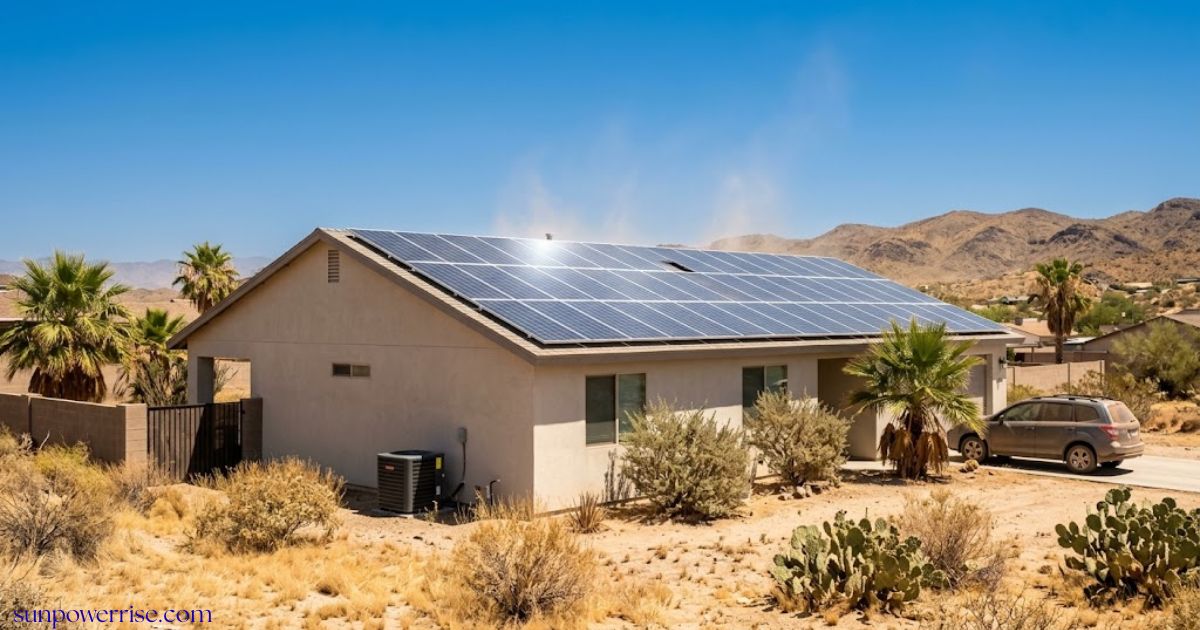
Do solar panels fail in hot weather? That’s the question I hear most often, and every summer, I get calls from homeowners across Essex, Suffolk, and Kent asking the same nervous question: will their solar panels melt on the hottest day of the year?
I want to give a short answer before we get into the important details. Rising energy prices are pushing more people to invest in a solar array, hoping to cut bills and reduce carbon emissions at the same time.
I have fitted systems on family homes and on a commercial estate where the business operator cared just as much about uptime as about saving money, and the questions were always the same.
So if you are wondering whether solar panels actually perform well once summer temperatures climb, through heatwaves and ordinary sunny weeks alike, you are in the right place. A properly designed and maintained system is built with all of this in mind from the very first day it goes on the roof.
Do Solar Panels Fail in Hot Weather? (Overview)
I still remember explaining this to a client near Birmingham who thought his panels needed real heat, not just sunlight, to work. That is a common misconception.
Panels turn light into power, and Solar Energy UK Chief Executive Chris Hewett has pointed out that solar power works fine even in the Saudi Arabian desert, using the same solar panel system you would find on rooftops in the UK.
On bright, clear summer days, a system will generate electricity at a strong rate, though extreme heat can slightly reduce efficiency. Even during the warmest summer temperatures, when the temperature outside climbs, the drop in power output stays modest, and around 40% of a typical year’s energy still comes from warmer months.
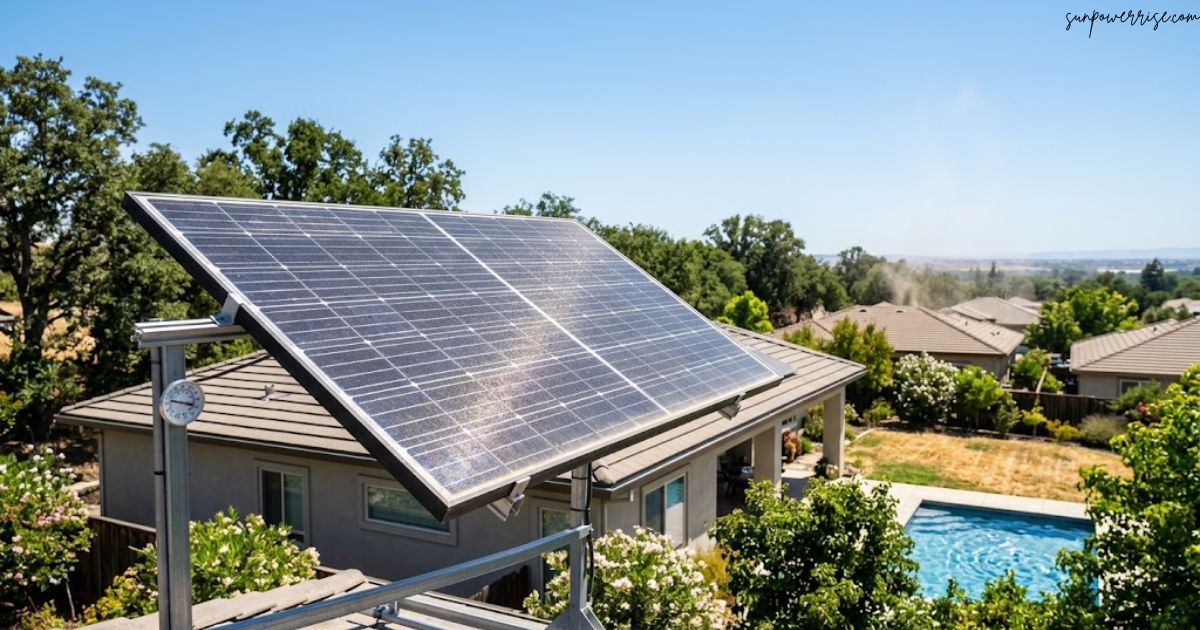
Only if the world somehow reached 100°C, near boiling point, would you see a reduction of roughly 20%, which is a scenario nobody living in Oxfordshire or anywhere else in the country needs to plan for.
Under normal conditions, panels keep working steadily, and the efficiency loss from high temperatures is small next to the gain from long, bright days. That is the honest picture behind do solar panels fail in hot weather, built on real data rather than fear.
How Heat Affects Solar Panel Performance
Modern solar panels are tough. Andrei Stavila, Technical Manager at Sunsave and an electrical engineer with 17+ years in residential solar installation, explains that standard conditions are measured at 25°C, or degree Celsius, and that cell temperature rising above this point causes a temperature coefficient effect.
This is simply a measure of how much electrical output falls for every additional degree, and the best panels today lose only about -0.32%, roughly 0.3%-0.5%, per degree, meaning a rise to 35°C trims output by about 3.2%.
The silicon cells inside every module are excellent conductors of heat, and the metal frames and other construction materials used in solar modules absorb warmth from direct sunlight, which is why the panel’s own surface temperatures can sit well above the air around it.
As silicon heats up, its electrical characteristics shift, converting sunlight into power becomes slightly less effective, and voltage starts to ease back; this voltage drops effect is what actually drives the decrease in output capacity.
Even so, this performance characteristic rarely causes serious harm to a primary material like silicon, and the module stays efficient across most climates clear proof that do solar panels fail in hot weather has a reassuring answer at the cell level too.
Do Solar Panels Still Perform Well in UK Heatwaves?
Yes, and this is where the UK climate actually helps rather than hurts. Even through hotter periods, Systems keep running at around 85%-95% efficiency, which is far above what you would see on cloudy days or winter days, and the output stays strong enough to generate significant amounts of electricity for the whole household.
Solar panels rarely reach the extremes that would create meaningful performance issues, so once panels heat up on a warm afternoon, they simply keep working with barely a dip.
Even under warmer conditions, a well-fitted system will operate smoothly from morning to evening, which is really the clearest evidence you need when weighing up do solar panels fail in hot weather.
Can Solar Panels Overheat or Get Damaged?
Debunking the Explosion Myth
Let me be blunt, because I have heard the word “explosion” thrown around too often: a panel is a sealed assembly of glass, an aluminium frame, and silicon cells, with no fuel and no pressurised vessel inside, so there is no real mechanism for panel-detonating drama, no matter what myths circulate.
Industry bodies, including Solar Energy UK are clear that technology’s resilience across hot climates, even deserts, proves panels do not fail catastrophically simply from weather.
The confusion usually comes from mixing up rare fire incidents with an imaginary explosion, and that mix-up is the real hazard to public understanding.
Electrical Fire Risks
UK research from the Building Research Establishment, known as BRE, alongside government-commissioned investigations, found that fires linked to PV systems are uncommon, and that a PV system fire behaves much like any other issue involving live electrics.
Where a fire does happen, the cause almost always sits with DC isolators and connectors: water ingress, poorly mounted or badly sited hardware, and loose DC connectors create PV faults, and Arcing at a loose connection builds up heat until it becomes a genuine risk.
Hardware Faults
Cheap parts make this worse. Low-cost inverters with thin safety margins are more likely to fail unsafely, while Quality units, properly ventilated and installed, are built to fail safe instead, and this is where component quality truly matters.
Installation quality covers everything from cable routing and Cable management to correct torque on every fitting and compliant DC isolation; faulty wiring, poor installation practices, and the competence of the installer decide whether a system stays safe or becomes a source of preventable risk.
Battery storage, especially Lithium-ion systems, brings its own thermal-runaway considerations, yet certified equipment, correct siting, and proper commissioning keep commercial battery storage stable, which shows why connections, not sunshine, drive real problems.
I have walked plenty of solar farms and rooftops built by a responsible operator, and the pattern never changes: durable, properly installed solar PV systems rely on electrical properties that are well understood, and overheating is technically possible but genuinely rare.
So when people ask do solar panels fail in hot weather, the honest answer is that failure is almost always linked to poor workmanship and neglected maintenance rather than sunshine,
Why Professional Installation Matters
Experienced, MCS-accredited installers make the real difference between a system that copes with warmer weather and one that struggles.
Good Systems are designed for the specific home, with Optimised panel placement for maximum airflow, and that quality of installation plays a critical role in how well panels perform.
The kind of care keeps efficiency high and ensures the system keeps performing efficiently across the seasons, not only during ideal conditions on a mild spring afternoon, but year-round.
What Temperature Is Too Hot for Solar Panels?
Panels handle moderate temperatures with ease, and even high temperatures rarely cause serious trouble.
It takes extremely high temperatures, somewhere around 85°C, before a panel would even approach a complete shutdown, and this level of heat sits far beyond anything the real world ever experiences outdoors, so Solar panels almost never stop generating electricity altogether.
This is really the core of do solar panels fail in hot weather: during a significant heatwave, you should expect reduced output rather than any dramatic failure; the hotter the day, the less effective the cells become, but a significant loss is unlikely.
As a chart of Typical solar panel output loss shows, even once a panel’s own solar panel’s temperature climbs to 50°C, it keeps operating at around 92% of its original output level, and that comes down to increased electrical resistance in the materials rather than anything more dramatic.
Is a Solar Panel’s Temperature Coefficient Important in the UK?
Honestly, for most UK homes, the temperature coefficient matters less than people assume, because our typical UK weather, even through summer, rarely reaches hotter climates territory that would trigger substantial efficiency losses.
It remains a genuine technical concern in places built for extreme heat, but it should not be your biggest meaningful factors when comparing systems.
Given the cost of solar panels and the significant outlay involved, I always tell clients to put their research into panel efficiency, installation quality, and warranty terms instead, since these choices affect solar panels far more than a moderate shift in local temperature ever will.
What’s the Best Temperature for a Solar Panel?
The optimum temperature range for any solar panel sits between 20°C and 25°C, which is the sweet spot where output peaks and cells produce electricity most effectively.
Once the temperature exceeds that range, efficiency decreases because of shifts in the semiconductor properties inside the cells, a pattern the temperature coefficient captures precisely.
The perfect temperature is not fixed for every product, since specific design, the materials used, how the panels are angled on a roof, and even the angle of the sun all shape real-world results.
A silicon cell is not truly vulnerable in the way people imagine; the drop in efficiency it shows under heat is small, and even a real-world loss in the low tens of a percent on the hottest afternoon is a manageable percentage, not a failure.
Like any piece of electrical equipment placed outdoors, a panel’s operating environment simply calls for smart design, not worry and that, in the end, is the real answer to whether solar panels fail in hot weather.
FAQs
What is too hot for solar panels?
Panels only reach real trouble near 85°C, and that level of extreme heat almost never happens outdoors, so most high temperatures just cause a small dip in efficiency, nothing more.
What is the biggest drawback of solar panels?
The honest answer is the upfront cost of solar panels, since the installation quality and equipment can feel like a significant outlay before the savings ever kick in.
Do solar panels stop working after 25 years?
No, they do not just switch off. Most solar panels keep generating electricity well past 25 years, just at a slightly lower efficiency than their first bright summer.
What’s the average lifespan of a solar panel?
Most solar panels are built to last 25 to 30 years, and with good installation quality and light care, many keep quietly powering a home even longer.
How to cool down solar panels?
Good airflow behind the array, proper rooftop spacing, and ventilated mounting all help panels shed heat naturally, keeping output steady even on a scorching afternoon.