

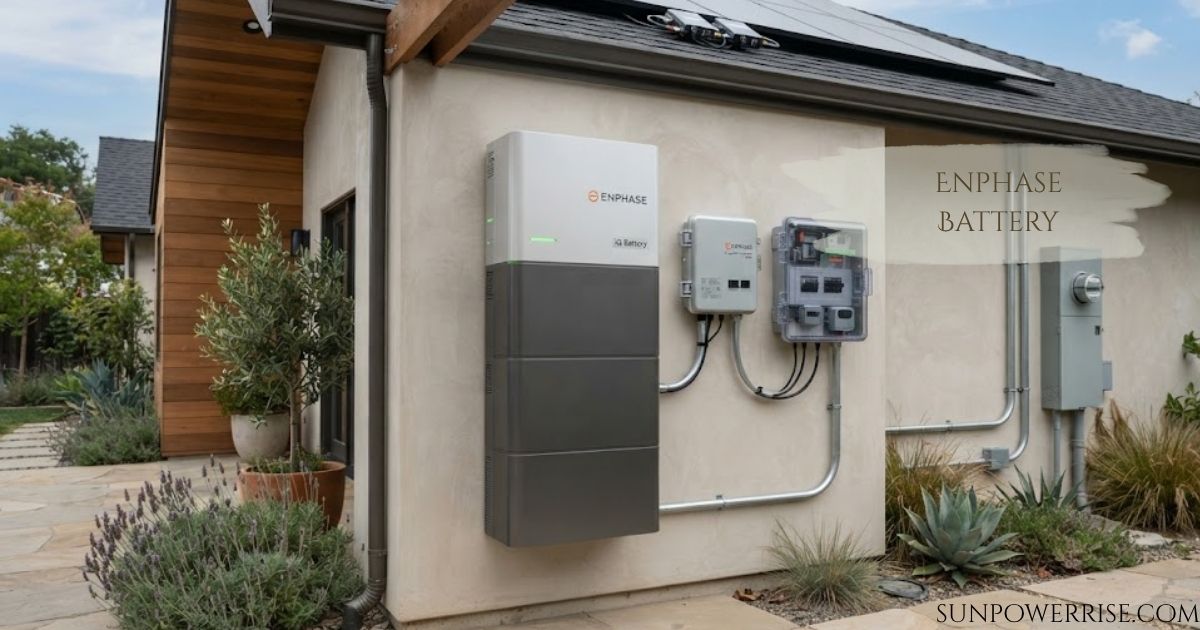
My interest in the Enphase IQ Battery 5P started with a simple question from a friend in Tampa, who wanted home energy storage that felt truly reliable. I spent a weekend comparing every model in the Enphase IQ range, reading the Enphase battery price sheets, and watching a video from Integrate Sun that laid out the real differences between the Enphase 5P batteries and the newer 10C.
What struck me first was the next-generation design, built on advanced technology and paired with seamless integration into an entire system that already runs on solar and honestly, this Enphase battery felt different from anything I had tested before.
For daily self-consumption, the battery quietly stores extra solar and hands back reliable backup power the moment the grid stumbles. As a brand, Enphase backs this compact unit with an industry-leading safety record, a 15-year warranty, and a promise of energy independence that most homeowners actually notice on their bills.
One homeowner we spoke to even mentioned an IQ system controller upgrade that added nearly $8,000 to his 2024 install, a detail worth knowing before you commit to any Enphase energy system setup. Every description on the company website backs these main features for the UK market, and honestly, once you see the trade-offs laid out clearly, the choice gets a lot easier.
Enphase Battery Overview & Specifications: The Enphase IQ Battery 5P
When I first opened the spec sheet for this Enphase battery, an AC-coupled energy storage system, the numbers told their own story about usable capacity and real-world continuous power.
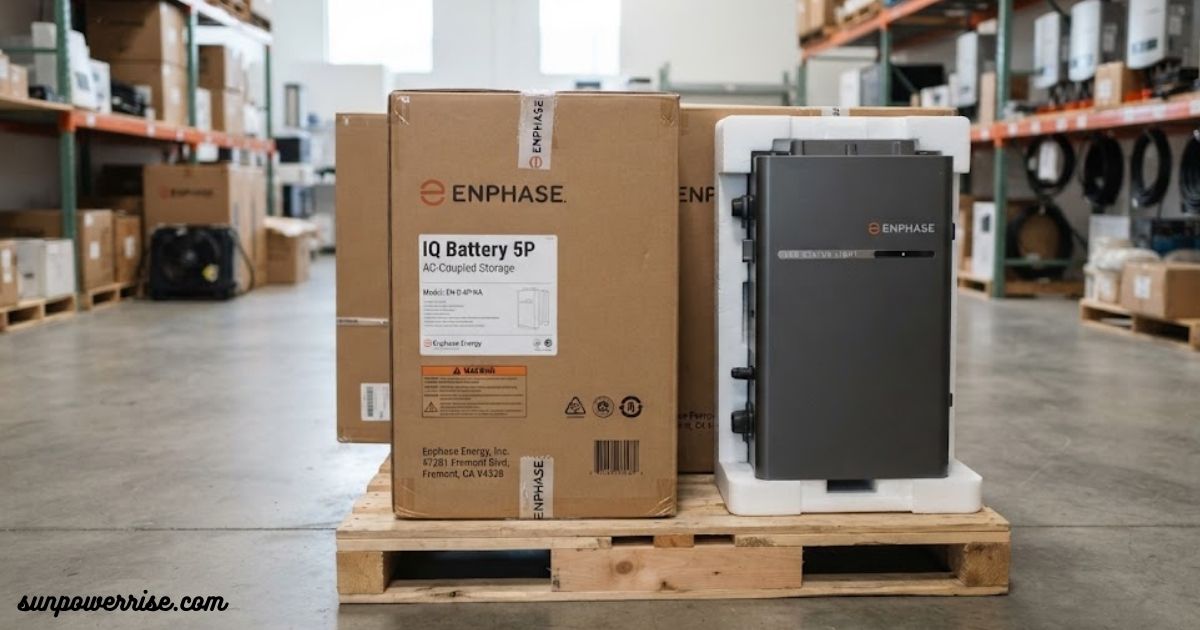
Power and Microinverter Performance
The unit pulls a continuous power output of 3.2 kVA, with a peak power output of 6.4 kVA for 3 seconds, or 5.12 kVA for 10 seconds, which covers most backup scenarios I have seen in a home.
Inside are six integrated IQ8D-BAT microinverters, working like six smart bidirectional microinverters to handle bidirectional energy conversion between Direct Current and Alternating Current without missing a beat.
Efficiency, Ratings, and Regional Output
I like that it keeps a round-trip efficiency near 90%, runs on passive cooling, and carries an IP55 environmental rating for both indoor installations and outdoor installations.
On the American side, the same AC battery offers 3.84 kW of continuous power and can surge up to 7.68 kW, enough to start a fridge, a sump pump, or a small AC unit without a hiccup.
Capacity, Chemistry, and Appliance Handling
It also handles 200% inrush current capability, so power-hungry appliances like air conditioners, water pumps, and geysers, along with everyday household appliances and inductive loads, all draw their starting current safely.
The battery stores 5 kilowatt-hours, or 5 kWh, of kilowatt hours worth of energy, and it uses lithium iron phosphate chemistry, widely seen as the safest and longest-lasting battery chemistry on the market today.
Design, Warranty, and Reliability
Its slim frame measures just 7.4 inches deep, which helps with space saving and aesthetics on any garage wall, while still meeting a wall-mount option by default. Every unit ships with a 15-year warranty and a 50% longer warranty than most rivals, and I trust its reliability, advanced safety, and performance for daily energy independence, plus single-phase power output that keeps the whole setup simple.
Power Output When Scaling
Stack three of these together, and this Enphase battery, an AC-coupled battery solution, shows its real muscle right away. Increase the number of batteries from one to 3 Enphase batteries, and you get 9.6 kVA of continuous power, thanks to simple math like 3.2 x 3 on the IQ Battery 5P line. Every extra unit adds to the total usable capacity too, not just the punch.
This power output boost matters most during a grid outage, when a home battery needs to start up heavy loads fast. I have watched a full bank of these handle energy-demanding appliances, including air conditioning units and pool pumps, without tripping once, and even a 3 to 5 ton central air conditioner falls within reach for the bigger 10C setup.
With a peak power output of 6.4 kVA for 3 seconds, this battery is powerful by design, ready for high usage appliances the moment the lights go dark.
Modular Design
Nobody wants to commit to a huge battery bank on day one, and this AC-coupled system never asks you to. You can start small, scale up later, or add multiple batteries whenever your budget allows, since the whole design stays truly modular.
Because of the IQ8 microinverters sitting under the solar panels, there is no fixed solar-to-battery ratio sizing rule, so you can add panels or add power without an upgrade inverter step getting in the way.
Each 5kWh battery in this flexible modular battery capacity setup feels easier to handle than older systems, needs no specialised equipment, and still delivers high power output on its own.
Homeowners can connect up to 12 units on a single system, giving them a scalable, future-ready solution that lets them increase backup and overall power output whenever life demands more. The installation itself stays simple because you can expand gradually, adding capacity step by step rather than all at once.
Safety Features (LFP Chemistry / Safety Standards)
Safety was the first thing I checked before recommending this Enphase battery to my own family, and the details held up well.
It runs on Lithium Iron Phosphate (LFP) chemistry, one of the safest lithium-ion technologies built for residential solar batteries, and this same lithium iron phosphate chemistry now counts as an industry standard across the field.
This stands as the first microinverter-based storage system to pass the strict UL 9540A unit-level test, which checks for thermal runaway and fire propagation protection inside residential wall-mounted installations.
Every IQ Microinverter unit works on a distributed architecture that boosts system resilience across the board. Because these are AC-coupled battery solutions rather than high-voltage DC battery systems, an arc cannot hold once a circuit breaks, which cuts down arc-fault fires at the source.
With no fans to fail thanks to passive cooling, and no exposed DC wiring left at ground level, this setup feels safer and smarter for installation safety and residential storage, building toward a secure energy future for alternating current systems everywhere.
Warranty
Most brands stop at a 10 year warranty, but this third-generation energy storage solution goes further, and I respect that kind of confidence.
The Enphase IQ Batteries line ships with a 15 Year product warranty, covering >60% capacity or 6000 cycles, whichever comes first, and that same figure reads as 6,000 cycles on other spec sheets too.
Compared to what the UK market usually offers, this industry-leading warranty runs 50% longer than competitors, and calling it industry leading feels fair given the numbers back it up. Buyers get up to 15 years of coverage under this 15-year warranty, which alone makes the decision easier for most households.
FAQs
Is an Enphase battery worth it?
For most homeowners chasing real energy independence and reliable backup power, yes the 15-year warranty and strong performance make it a safe bet for peace of mind.
How much does an Enphase battery cost?
The enphase battery price varies by model and installer, but expect a solid investment that pays back through energy independence and lower bills over time.
Can I add an Enphase battery to my existing system?
Yes, if you’re already on an existing setup, the 5P slides in smoothly, though mixing older and newer generations can mean extra hardware and labor costs.
Can I add a Tesla Powerwall to my Enphase system?
Not directly a Tesla Power Wall runs on its own communication protocols and hardware, so it won’t integrate into an Enphase systems setup without a separate installation.