

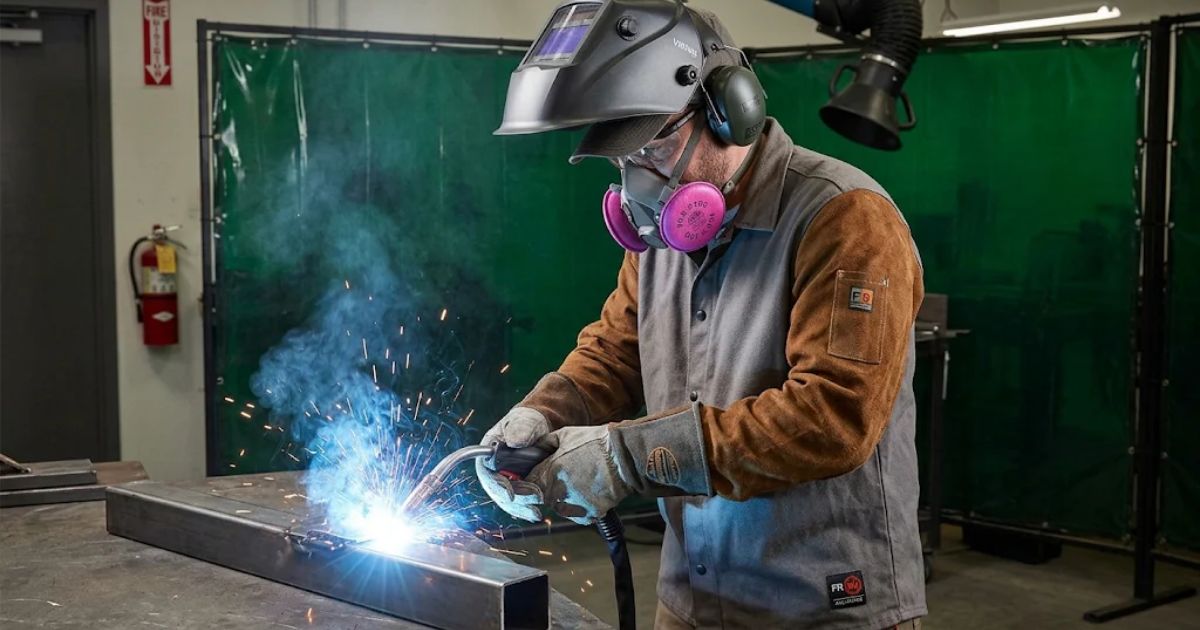
The best welding safety equipment covers your eyes, lungs, skin, hands, feet, and ears against the specific hazards of your process. A welding helmet with the right shade lens, welding gloves, and flame-resistant (FR) clothing form the core kit. Add a respirator and hearing protection, and you have the baseline most shops expect.
Each item answers one hazard: UV radiation and infrared radiation reach the eyes, sparks and spatter land on clothing, and welding fumes reach the lungs. Skipping any one layer leaves a gap that thermal burns, flash burn, or electric shock can exploit. Match the kit to your process, your material, and your workspace before you compare brands or prices.
Which Eye and Face Protection Do Welders Need?
Welders need an auto-darkening welding helmet or a fixed shade welding helmet, plus safety glasses worn underneath. A face shield or arc flash face shield adds coverage during prep work, while safety goggles suit grinding and cleanup. Wearers who need correction can choose prescription safety glasses instead of contact lenses.
Lens choice matters most, because a wrong shade lens lets too much light reach the eye even when the helmet looks intact. Look for UV/IR protection that stays active, a clear viewing area, and anti-fog safety glasses for humid shops. Any protective eyewear you choose should carry a clear impact rating and fit comfortably under the helmet.
How Does a Shade Number Work in a Helmet Lens?
A shade number rates how much light a filter blocks, and higher numbers block more. An auto-darkening welding helmet switches between a light state and the chosen shade, while a variable shade lens lets you set that level yourself. Fixed filters stay at one number all day.
Shade selection by amperage gives clear targets: for stick work below 60 amps, the Safety Evolution guide recommends shade 10, and for MIG work between 60 and 160 amps, it recommends shade 11. That guide urges welders to follow the recommended vs. minimum shade rule and pick the recommended number, because the minimum is only the legal floor. Plasma and oxygen work needs lighter numbers, so check the table for plasma cutting and oxy-fuel cutting.
Which Helmet Parts and Accessories Should You Check?
Check the cover lens, cheater lens, replacement helmet shell, and adjustable headgear before you check anything else. These parts wear out first, and a damaged one lowers protection long before the helmet itself fails. A lightweight helmet also reduces neck strain across a full shift.
The Safety Evolution guide describes a welder who kept working with a cracked helmet lens and ended up with a flash burn and three days off work. A sweatband, a hard hat adapter, and a helmet bag cost little, yet they keep the helmet comfortable, usable on busy sites, and protected in transit. Lincoln Electric makes the Lincoln VIKING line, and WeldingMart’s FAQ lists the 1840 with a 3.82 square inch viewing area and the 3350 with 12.5.
What Should You Look for in Welding Gloves?
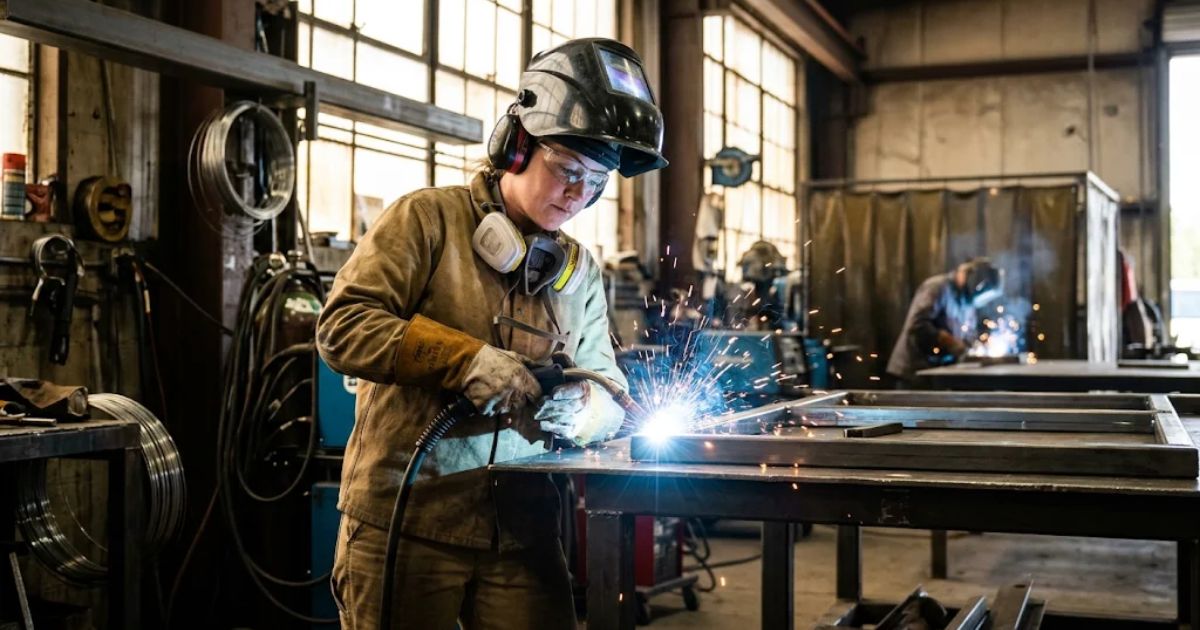
Choose welding gloves by process: TIG welding gloves favor thin leather for torch control, while MIG welding gloves and stick welding gloves use heavier hides. Leather gauntlet gloves extend past the wrist, which closes the gap between glove and sleeve. Good gloves also balance heat-resistant materials with dexterity.
Retailers describe goatskin gloves and kidskin gloves for fine TIG work, and cowhide gloves for spatter-heavy MIG and stick jobs. Cut-resistant gloves help when you handle sharp offcuts, and back-hand pads add protection for the top of the hand. WeldingMart’s FAQ advises regular TIG welders to add thin gloves separately when a bundle includes heavy ones.
Which Clothing Protects a Welder’s Body Best?
Wear an FR cotton welding jacket or a leather welding jacket over an FR shirt and FR pants. A split leather jacket suits heavy arc work, and arc-rated clothing adds a tested layer when electrical exposure matters. Add welding sleeves, a welding apron, or a welding bib for extra cover.
Fit details count, so choose no cuffs on pants and pockets flapped closed, because sparks collect in both. Wear a natural-fibre base layer, since synthetic fabric melting onto skin makes a burn far worse, and pick breathable fabric for long shifts. A flame-resistant welding cap or balaclava under the helmet protects the scalp and neck.
Are Welding Boots and a Welding Gear Pak Worth Buying?
Yes, welding boots are worth buying, because leather boots shield your feet from sparks, hot metal, and falling objects. Pick steel toe boots for impact, electrical hazard (EH) rated boots near live circuits, and metatarsal protection for heavy lifting. A welding gear pak bundles several items at once.
WeldingMart sells welding gear pak and welding safety kit bundles that include a helmet, gloves, jacket, and a bag. It also lists education welding gear for classrooms and women’s welding gear in sizes from extra small to extra large. Check each listing for the exact contents and sizes, since bundles differ by tier.
What Respiratory Protection Do Welders Need?
Most welders need at least a half-mask respirator with a P100 filter, because welding fumes carry metal particles. Stainless and galvanized steel release hexavalent chromium and zinc oxide fumes, so those jobs call for stronger protection. The Safety Evolution guide cites welding fumes as an IARC Group 1 carcinogen.
A full-face respirator or PAPR system with a PAPR helmet suits heavier exposure, and respirator cartridges must match the contaminant. In confined spaces, use a supplied-air respirator, because a half-mask respirator does not suffice, and add ventilation or a fume extractor where you can. Every wearer also needs respirator fit testing under a written respiratory protection program, as Alberta and British Columbia codes require.
How Do You Protect Ears and the Work Area?
Choose flame-resistant earmuffs over earplugs when sparks may reach the ear canal. Then shield the area with a welding blanket, welding screen, welding curtain, or welding booth so arcs and sparks stay contained. Keep a fire extinguisher within reach of every bay.
A first aid kit and an eyewash station belong near the work area, and a high-visibility vest helps colleagues see you in dim or busy yards. For cylinder safety, add a flashback arrestor on fuel-gas lines and secure cylinders upright. Noise from arc processes, grinding, and plasma cutting also makes hearing protection worth wearing.
What Hazards Does Welding PPE Guard Against?
Welding PPE guards against thermal burns, welder’s flash, harmful fumes, and electric shock. Welder’s flash, or photokeratitis, burns the cornea much like a sunburn burns skin, and it hurts. Eyes, lungs, skin, and feet each face a different threat, so one item never covers everything.
Molten metal and hot slag cause burns, flying debris and grinding sparks injure eyes, and cuts and abrasions come from handling sharp stock. An arc flash near live electrical gear adds a separate risk, which is why arc-rated clothing exists. Years of unprotected fume exposure can lead to chronic respiratory conditions.
Which Processes and Industries Change Your PPE Needs?
Stick welding (SMAW) throws heavy spatter, MIG welding (GMAW) produces harmful fumes, TIG welding (GTAW) demands finger control, and flux-cored welding (FCAW) combines fumes with spatter. Each process shifts which glove, filter, and respirator you should favor. Then adjust for the job site.
In construction, welders often work in confined spaces and at heights, while shipbuilding exposes them to harsh conditions and calls for heavy-duty gear. Automotive work needs fine motor control, manufacturing needs durable, versatile gear, and pipeline fabrication and oil and gas sites add field demands. In fabrication shops, overhead welding drops sparks onto you, and even tack welding calls for a respirator, since fume exposure accumulates.
Which Safety Standards Apply to Welding PPE?
In the United States, OSHA sets the safety regulations that employers follow, while ANSI publishes equipment standards. In Canada, CSA W117.2 covers welding safety, CSA Z94.3 covers eye and face protection, and CSA Z195 covers protective footwear. Always confirm the standard that applies where you work.
A hazard assessment decides how much protection a task needs, and clothing should carry an FR rating such as NFPA 2112 or ASTM F1506, which WeldingMart’s FAQ names. That FAQ also calls flame-resistant leather the traditional choice for heavy-duty welding. Ergonomic fit and side shields matter too, because uncomfortable gear stays in the bag.
Which Brands Make the Welding PPE Worth Comparing?
Lincoln Electric, Miller Electric, and ESAB appear in WeldingMart’s overview of welding gear packages. Welding Store lists Jackson Safety, Tillman, Black Stallion, and 3M among its safety brands, and Harris Welding Supplies carries Jackson Safety helmets. US Safety Gear shows Honeywell, Bulwark, Ariat, and Liberty Safety on its pages.
A brand name signals a product line, not a service, so compare models, materials, and standards. Gloves from Tillman, jackets from Black Stallion, and helmets from Miller Electric show up on Welding Store, and each listing names its material. Treat each brand as a starting point and confirm details on the product page.
Which Providers Offer Services Beyond Selling Gear?
Each provider in this guide offers the services listed on its own website, and none of those pages promises PPE repair. Harris Welding Supplies, Welding Store, WeldingMart, CK Supply, Safety Evolution, and US Safety Gear differ mainly in the support around the gear. Read those service pages before you contact anyone.
Harris Welding Supplies and WeldingMart both offer phone and email help with choosing gear, and WeldingMart adds live chat, financing, and an educators section. CK Supply lists welder repair, equipment troubleshooting, welder rental, and welding training, while Welding Store lists business accounts and returns. Safety Evolution offers training and software, and US Safety Gear lists store locations, a Shoemobile, and a Custom Shop.
What Should You Look for in a Welding Safety Equipment Provider?
Look for a provider that lists clear product details, names the standards its gear meets, and explains its support options. Sizing help, process-specific advice, and accessible replacement parts such as lenses show that a seller understands real work. Contact details you can reach before you buy matter as well.
Test a provider with a specific question, such as which glove suits TIG work or which helmet fits your amperage range. A good answer names the process, the material, and the risk without pushing a bundle. Also confirm that the seller states its services on its website.
Why Start Your Search on This Site?
This site puts the key details for each provider in one place, so you compare services without opening six tabs. We list only what each provider’s own website confirms and add nothing more. That approach keeps your shortlist accurate and saves repeated searching.
Start with your welding process, match it to the gear groups above, and check which provider stocks those items. Use the service notes to pick a provider for sizing help, replacement parts, training, or equipment repair. Then visit that provider’s website to confirm current details before you order.
What Do Readers Ask Most About Welding PPE?
Can You Wear Contact Lenses While Welding?
No. CSA W117.2 says welders should not wear contact lenses, because debris irritates the eye and contacts offer no ultraviolet protection. Wear prescription safety glasses with side shields under your helmet instead.
Do Welders Need a Respirator Outdoors?
Yes. Outdoor air does not remove the hazard, so the Safety Evolution guide recommends at least a half-mask respirator with a P100 filter. Stainless or galvanized work calls for supplied-air protection.
Are Earmuffs Better Than Earplugs for Welders?
Often yes, because sparks can enter the ear canal and plugs offer no cover. Flame-resistant earmuffs block that path. Follow your site’s hearing protection rules.
Where Should You Go Next to Find Welding Safety Equipment?
Start with the process you weld, build your welding safety kit around it, and check each provider’s own website for confirmed services. Our site gathers those details for Harris Welding Supplies, Welding Store, WeldingMart, CK Supply, Safety Evolution, and US Safety Gear. Visit it to compare providers before you buy.