

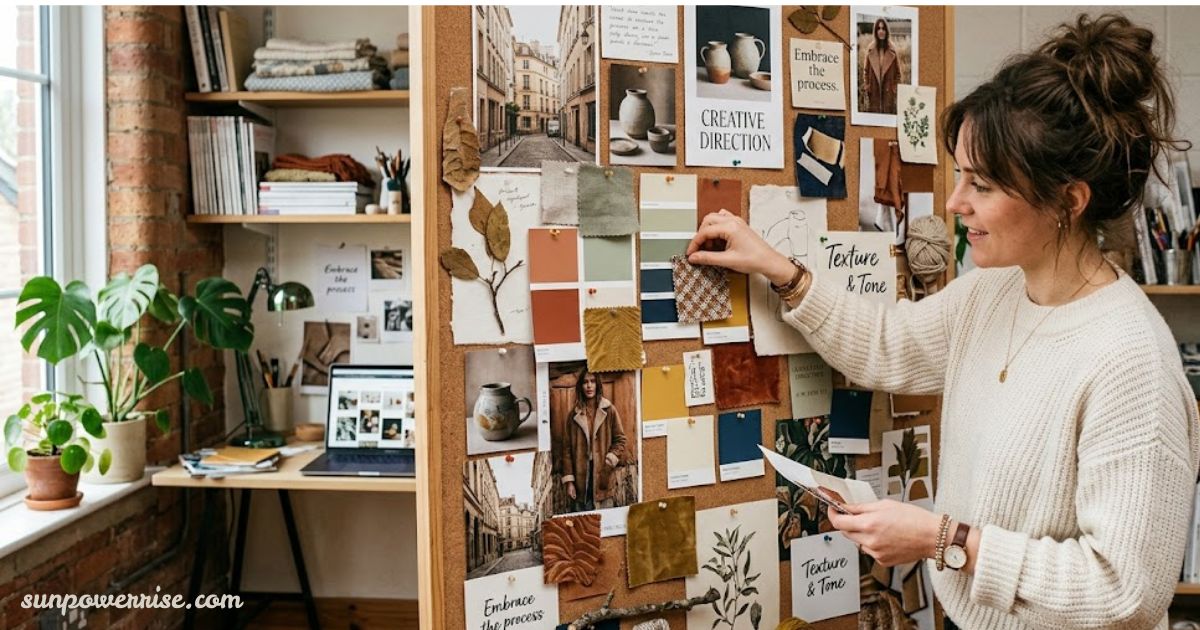
Ask any designer what is a mood board, and they will give you a simple answer: a mood board is a visual collage of images, text, colour palettes, and material samples used to convey the style, theme, or general feel of a project.
Instead of describing an idea in words, you assemble it, pinning fabric swatches, photos, typography, and colour chips together until the “vibe” you’re chasing becomes something you can actually point at.
A fashion mood board might lean on fabric and texture, while a travel mood board leans on locations and activities instead proof that there’s no single template for capturing an overall look.
What Is a Mood Board Used For
Once you know what a mood board is, the next question is what it’s actually for. There are many types, each suited to a different project or stage of life.
Couples planning weddings build a wedding mood board filled with venues, meals, outfits, and décor pulled from real scenes they loved.
A bedroom mood board turns a plain room into a cosy sanctuary by blending colour and linens into one comfortable space. And if you’re chasing bigger life changes, a lifestyle mood board becomes a collage of quotes and images that match where you want to be with where you actually are.
In the office, a professional mood board sometimes folded into a creative brief pulls together logos, taglines, and branding into a shared visual style guide from day one.
There’s also a use case that rarely gets mentioned outside of design circles: product and UX design. Before a single screen gets wireframed, product teams often build a mood board to agree on tone should this app feel playful or clinical, warm or minimal long before anyone opens Figma to build the real thing. It’s the same instinct as a fashion mood board, just aimed at pixels instead of fabric.
Who Actually Uses a Mood Board
Mood boards get associated with weddings and Pinterest, but the list of professionals who rely on them is much longer than that.
Graphic designers, interior designers, industrial designers, photographers, and UI/UX designers all use them to set a visual direction before real work starts. So do authors: a mood board can map out the tone of a scene or the imagined setting of a story just as easily as it can map out a kitchen renovation.
That last one surprises people. Writers don’t typically think of themselves as “board” people, but pinning together images, colour, and texture to nail the mood of a chapter works the same way it does for a designer nailing the mood of a room.
Why a Mood Board Guides Every Project
The real purpose of a mood board is to inspire and conceptualise to turn loose ideas into something you can take in at a glance. I’ve sat through client meetings where a single board said more than a hundred words ever could, getting everyone aligned on the creative vision before a single line of actual design work began. It becomes a touchstone you circle back to at every stage of a project.
Boards also work as a collaboration tool: a way to share, gather feedback, and get sign-off before committing real time and budget. Whether you’re convincing a partner about a kitchen renovation or presenting to a brand team, a board heads off misunderstandings before they become expensive ones.
There’s actual research behind this, not just designer intuition. A study published in the Journal of Business Research found that mood boards helped creative teams set the scene, coordinate activities, and keep different parts of a project aligned by giving everyone a shared point of reference to work from.
On top of coordination, a mood board protects brand identity by locking in personality points early, so the finished product stays true to what the team set out to build in the first place.
Essential Elements Every Mood Board Needs
What goes on the board depends entirely on the result you want, but a few things show up again and again:
Colour palettes to lock a shade for a room, a brand, or a collection.
Photos and inspirational images to guide you out of creative confusion when words fail.
Fabrics and textures especially useful for fashion or interior work, where texture carries as much meaning as colour.
Quotes or lyrics a personal mantra you riff on as the process moves forward.
Typography and tone matching text style can shift the whole feel of a collage.
Patterns, logos, and graphics a creative base that gives a personality-driven board its own shape.
How to Make an Effective Mood Board
Knowing what a mood board is is one thing; building a good one is another. Here’s the process, step by step:
Decide who it’s for. A personal mood board, a team ideation board, and a client-facing board all get built differently this single choice shapes everything after it.
Choose your starting point. Pick a ready-made template, or build from scratch using saved Pinterest images, Instagram posts, hoarded materials, and hearted quotes.
Gather without judging yet. Pull images, photos, and text into one workspace. Expect a few clashes and odd combinations before the pieces click that trial and error is normal, not a sign you’re doing it wrong.
Test colour and composition. Play with different colour schemes and layouts until the board actually matches your audience a personal board and a business pitch board should not look the same.
Layer in brand elements (for client work). Add logos, branding, and clear design values so the finished vision stays consistent.
Ship it. Print it, drop it into a presentation deck, pin it up physically, or share it digitally with your team.
What a Mood Board Actually Looks Like
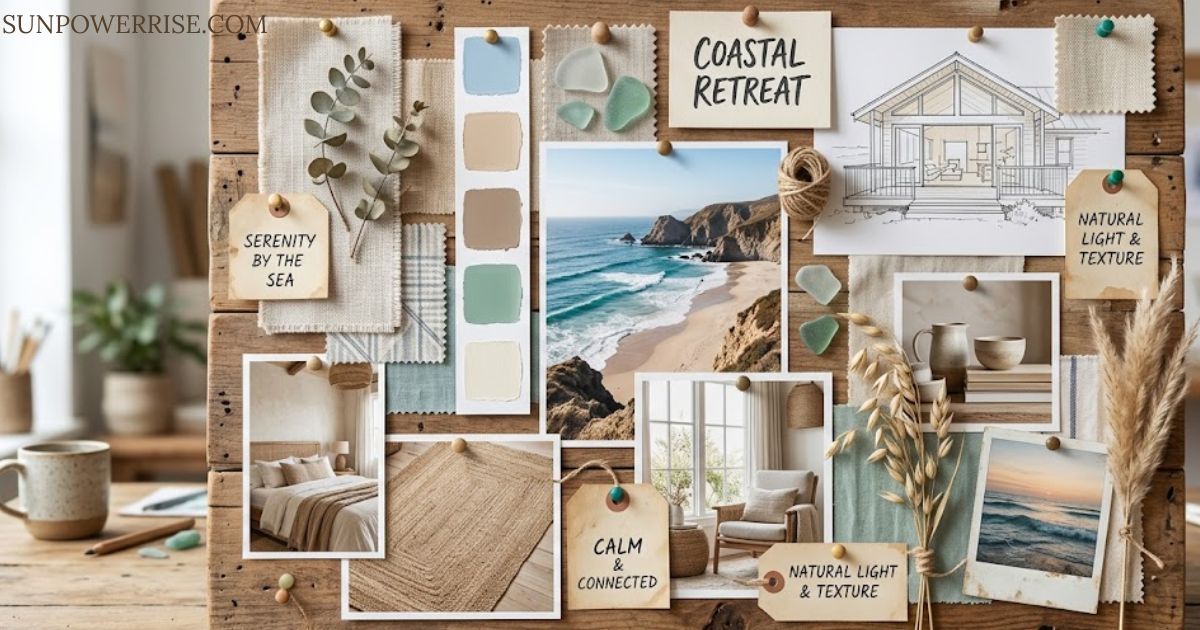
Picture images, materials, and text pinned together to capture an overall feeling that’s essentially what a mood board looks like in practice. It gives a theme a natural flow, turning scattered ideas into one clear picture while doubling as a running record of your research along the way.
Finding Inspiration
Before you touch a single material, settle on your theme it needs to involve colour in some way. Flip through magazines and books, watch films or music videos, or think back to a photo, a painting, or a place that’s always stayed with you. Any of these can feed real inspiration into a board.
Whether you build it physically or digitally, the goal stays the same: collect what moves you. That’s really what a mood board comes down to a personal record of your own inspiration.
Conclusion
At the end of the day,the honest answer to what is a mood board is that it is far more than a collage of random images it’s an insight-driven storytelling tool that carries a specific mood, theme, or trend.
A strong board stays intuitive and engaging, giving a clear visual snapshot of your research and ideas in one place. Whether you’re a trend forecaster, a brand strategist, a UX designer, or a couple planning a wedding, your board is never just decoration it’s a window into where the work is headed next.
FAQs
What is the purpose of moodboards?
A mood board’s purpose is to inspire and conceptualise your creative vision, helping you visualise an idea at a single glance before the real work begins.
How do I create a moodboard?
Gather images, materials, quotes, and colour palettes into one collection, then arrange them until the collage truly reflects your theme and vibe.
What is an example of a moodboard?
A wedding mood board full of venues, outfits, and décor, or a bedroom mood board blending colours and bed linens into a cosy sanctuary.
What are the four elements of a mood board?
Most boards lean on colour palettes, photos or inspirational images, textiles and textures, plus typography or quotes, the core elements that shape any strong visual representation.
Who uses a moodboard?
Designers, brand strategists, trend forecasters, photographers, and even couples planning weddings all use a mood board to guide their creative process.