

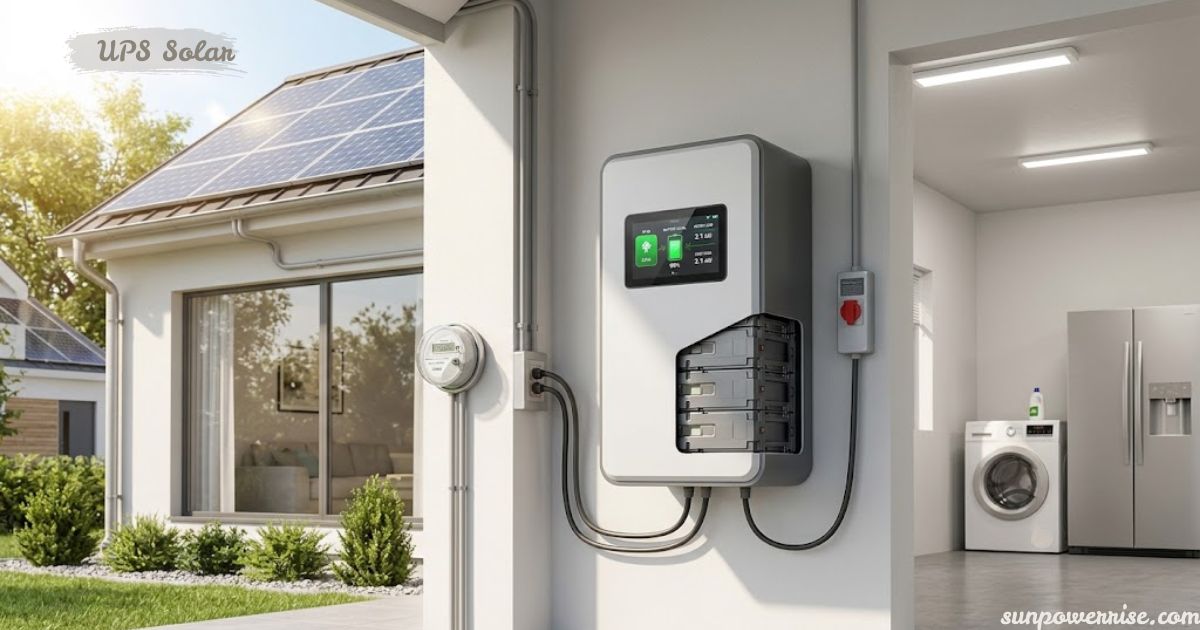
A UPS solar is essentially a smart backup system that stores solar energy in a battery and switches on the moment your power cuts out, keeping your home running without a single flicker. The first time a long power cut hit my area, I sat there in the dark and realised just how much I’d been taking reliable electricity for granted.
That night got me thinking about solar power, this incredibly generous, almost endless energy source that just sits above our roofs, soaking up sunlight every single day, waiting to be used.
Dual Benefits of UPS Solar
A good UPS solar does two jobs at once: it lets you charge your battery and save money at the same time. Instead of paying for electricity you don’t need, a solar-powered system turns sunlight into a real backup solution. There are broadly three types of solar systems worth knowing, and each one suits a different area and budget.
Types of Solar Systems & Off-Grid Benefits
You will usually hear about a DC system, an off-grid solar system, and an on-grid solar system, and I explain the differences in almost every video I make on this topic.
Among these, the offgrid solar power system is my personal favourite because it keeps working even during frequent power cuts. Many households pick this off-grid solar system simply because it does not depend on the main grid to function.
Versatility of Modern UPS Solar Units
When you go shopping for a unit, look closely at ranges like the Luminous NXG range, since this UPS solar is built with high-efficiency charge controllers that charge batteries faster and safer.
It can pull power from solar panels or from regular grid power, which makes it genuinely versatile for daily use. I have used similar appliances at home, and friends have installed the same at shops and banks with the same confidence.
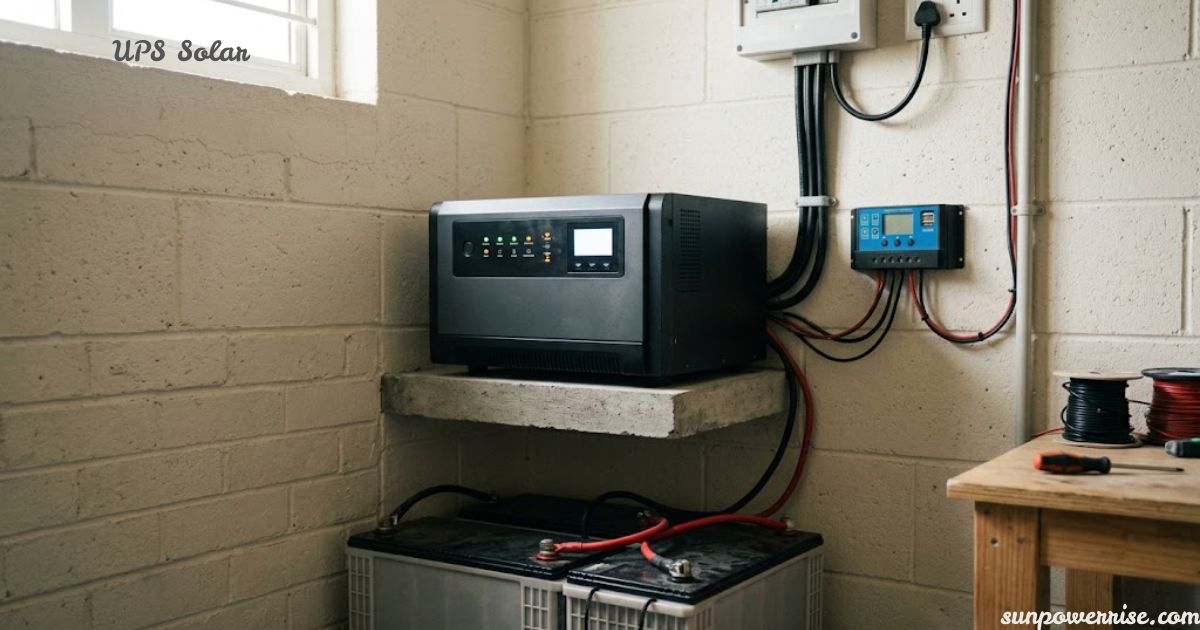
Pure Sine-Wave Safety and VA Ratings
A pure sine-wave UPS is safe for sensitive products such as a TV, personal computers, laptops, and refrigerators, along with regular lighting loads in every room. Before you buy, check the VA ratings carefully, because every user deserves a wide choice of VA modules to match their exact load. These small details decide whether the smart features of a product actually help you day to day.
Unlocking Hidden Desktop Backup Potential
Here is something most people never think about: a hidden power source could be sitting quietly on your desk right now inside a standard computer backup unit.
With a few tweaks, that ordinary box can become a real powerhouse built for long-running backup, not just a quick save when the power cuts out. I have watched my own work, a movie, and even my internet connection disappear in seconds, so I understand why people look for a proper backup plan.
How Solar Charging & Load Priority Works
An offgrid solar system works almost like an independent system, because it barely touches electricity coming from the Power Station. It quietly converts solar energy into usable power, runs the load in your house, and keeps charging the battery at the same time.
In this kind of off-grid solar system, the Mains and the solar charge controller are usually inbuilt into one single unit.
Built-In Solar Controller Function
That built-in solar charge controller lets you turn raw solar power into something practical: it will run the load, power your appliances, and switch to mains only when needed.
You can simply connect a solar panel to the setup and enjoy free solar power to the maximum. In my own setup, I paired a 300 W panel wired in parallel with the system, then chose to install a 150 ah or 1800 W battery alongside it.
Handling Surplus Solar Generation
Think of appliances like a fan, a bulb, or a TV running on nothing but free solar energy a smart solar home UPS handles this and can intelligently charge the battery in the background.
To explain this in detail, picture a solar off-grid system receiving solid sunlight: if the load only needs 200 watts out of the total supply, that is the easiest condition to manage. The leftover 100 watt simply tops up the battery without ever touching the main supply, which is exactly how you save on your electricity bill.
Managing Peak Load and Low Sunlight
Now picture a trickier moment where 200 W power barely matches 200 W appliances; here the entire energy goes straight to the load, so the battery stays neither charged nor discharged, and mains stays cut off completely.
On a cloudier day, only 100 W solar power might be available while demand stays higher, so the battery has to discharge slowly to keep things running. Even then, the system will charge battery reserves whenever sunlight allows, using every ray effectively and quietly increasing your savings on electricity bills.
Grid Isolation and Daily Cost Savings
A feature I genuinely admire is the Power saver function built into the NXG solar UPS, which relies on an intelligent solar optimisation technique to protect your batteries from strain.
Once charging is complete, it automatically cuts off dependence on grid power and keeps electricity flowing from your solar panels instead, maximising every bit of solar energy usage. Anyone tracking numbers will notice this can save roughly three units of electricity per day, which adds up to substantial money savings over the long run.
Battery Reserve, Charging Modes & Mains Backup
Setting Battery Reserve Levels
Every off-grid system handles mains differently depending on a handful of conditions, and the battery reserve setting decides most of it. Keep the reserve near 70%, and you get a genuinely beneficial setup, because that much reserve stays ready even when solar is unavailable.
This matters most when mains-unavailable situations combine with frequent power cut in your area, and you still want your appliances to run for a longer time.
Discharge Modes and Mains Bypass
During ordinary power cuts, that saved backup comes from a solar-charged battery, and you can also drop the reserve to 50% or 30% if outages are rare where you live.
In this discharge mode, mains power steps in only once the off-grid solar power system senses the load in your house needs help, running everything in a smooth bypass mode. Whenever solar power returns, the system will utilize it again to charge the battery, treating solar as the true power source.
Intelligent Charge Sharing and Priority
The core rule stays simple: the setup will run the load from one source at a time, and mains simply disconnects rather than working together with solar. For example, 100 watt arriving from the solar panel might not fully charge battery cells that need 180 W, so the remaining 80 watt comes from mains, and it does so efficiently without any risk of overcharge.
Industry folks call this intelligent charging sharing, and honestly, you will not find it in a normal off-grid UPS solar; you can flip a simple switch to control mains charging and save on your electricity bill whenever you like.
Fast Charging via I-Charge Mode
On the branded side, Fast charging becomes a lifesaver during long power cuts, since the I-Charge setting flips on a fast charging mode for charging batteries in a short time whenever grid power is present.
Just remember that turning this on quietly puts the regular power saver mode into a deactivated state, because the UPS now pulls a higher charging current straight from the grid; you simply activate it using the on-off switch at the back.
Eco Mode vs. UPS Mode Selection
There is also a choice between Eco mode and UPS mode, and the NXG solar UPS gives you exactly two modes so every user can match performance to their needs.
Pick UPS mode when running computers that need instant battery backup, since it reacts the moment mains voltage dips below roughly 180 volts.
Eco mode is more relaxed, accepting anywhere from 100 volts to 290 volts before switching at 110 volts, and you can flip between interchange modes just by holding the selection button for about 2 seconds.
FAQs
What is UPS in solar?
A UPS solar is a solar powered system that uses solar panels to charge a battery and supply backup power to your appliances, working much like an off-grid solar system with a built-in solar charge controller.
Are UPS Solar any good?
Yes, a good solar UPS genuinely helps you save money on your electricity bill while giving reliable backup power during power cuts, making it a smart, worry-free choice for most homes.
Can you use UPS with solar?
Absolutely, many solar UPS units are designed to run on both solar power and regular grid power, letting you charge batteries from the sun and switch to mains only when needed.
Which is better, an inverter or a UPS?
An inverter is built for steady, long-term DC power to AC power conversion, while a UPS focuses on quick battery backup during outages. A solar UPS actually combines the strengths of both.
What cannot be plugged into an UPS?
High-draw devices like a microwave or a space heater should never be plugged into a standard UPS, since they exceed its power limit and can cause it to overheat or fry.