

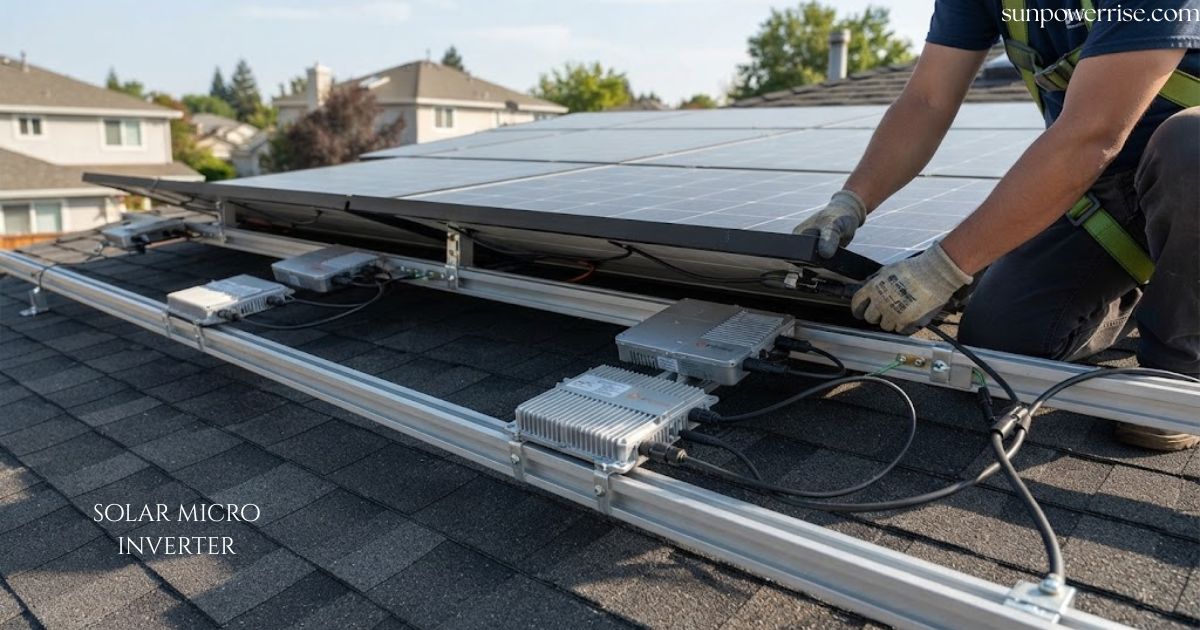
A solar micro inverter is best explained as one of those small boxes that sit quietly behind your panels and do a big job.
Every photovoltaic system relies on turning direct current into something your home can actually use, and that’s exactly where DC electricity meets AC power the module converts DC into alternating current right at the panel level, unlike a traditional string inverter that treats the whole array as one single entity.
I remember reading how researchers in Germany at the Fraunhofer Institute for Solar Energy Systems built the prototypes back in the 1980s, though the technology only reached the mainstream once Enphase launched its 2008 model.
Solar micro inverters
A microinverters setup usually connects to up to four panels, each with its own maximum power point tracking (MPPT), so a lower-performing panel or an underperforming panel on any solar panel array won’t drag down the rest, unlike a conventional string where every panel shares the same fate.
Your installer will fix these small inverters to the back of each panel, wiring the DC cables to the panels and running the AC cables to your consumer unit or fuse board, so the grid, your household appliances, and even commercial loads all draw clean AC power without any extra inverter in between.
This is the heart of MLPE, or module-level power electronics a rate of one inverter per panel that keeps the whole system running at full solar output, sending power straight to the main electrical panel in parallel rather than in a single chain.
How Do Micro Inverters Work
From my own experience installing panels on a shaded backyard shed, I learned fast how much tilt angles, roof orientations, and stray leaves or dirt near chimneys and trees can trigger real partial shading, and how nearby buildings add their own obstructions on top of uneven ageing and mismatched power ratings across different panel models.
Microinverters and string inverters both lean on Maximum Power Point Tracking, or MPPT, to push every solar panel toward its operating point, but a string system forces every panel in the chain to sit at the same optimal point as the worst-performing panel, running in series rather than parallel, never reaching its own maximum level.
Picture one individual panel hitting a peak power rating of 90% while its neighbours reach 95% a string inverter would flatten the whole string down to that lower number, while module-level MPPT lets each unit chase its own maximum capability regardless of direction or unavoidable shading.
When Are Micro Inverters Needed
Deciding whether micro inverters suit your project often comes down to your roof’s shape: dormers, skylights, and east-, south-, or west-facing panels all create different roof orientations, and add trees, chimneys, or nearby buildings into the mix and you’ve got real partial shading to deal with.
A small residential setup, a balcony system, or even a carport counts as a distributed solar installation, and these benefit hugely from panel-level monitoring, which speeds up fault identification and gives you module-level AC conversion without fuss.
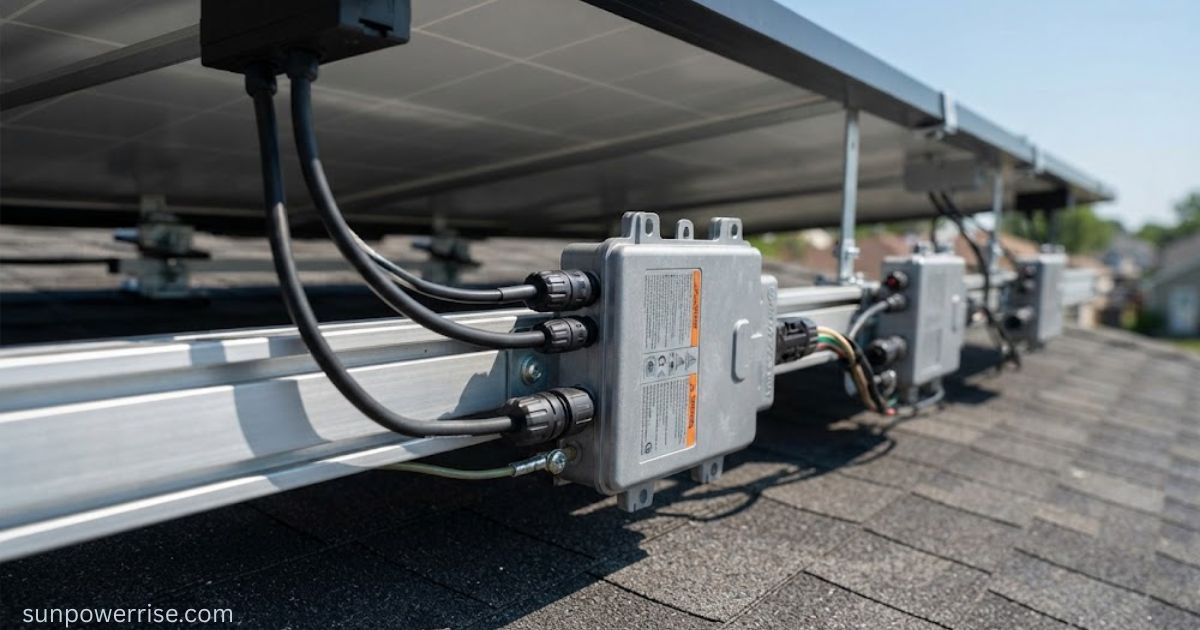
When your solar panel system has panels of different ratings and ages, or tricky installation conditions, microinverters are usually the best option, though a plain roof that stays unshaded with identical modules might do just fine on a string inverter system with a lower upfront cost.
Proving that not every roof actually needs a full solar panel micro inverter setup it all depends on performance, lifetime production, roof complexity, installation design, maintenance needs, future expansion plans, and equipment price.
Micro Inverters vs. String Inverters
Comparing brands makes the difference clearer: Solar Edge builds mppts into every individual panel, while Tigo relies on DC converters that push current up to match the strongest cell in a cell string, adjusting voltage so strings of solar optimizers feed DC power into one string inverter before it reaches the grid as AC.
That optimiser setup gives simpler installation than you might expect, but it still leans on a centralised inverter for the full conversion, creating dependency on that single central unit unlike a photovoltaic micro inverter, which handles AC conversion right at the panel level, converting DC to usable power without any centralised inverter in the loop.
Micro Inverters vs. Optimizers
Power optimisers and micro inverters both chase better energy yields during partial shading across varied orientations, but on rooftops with shading, damage, or a shaded panel, a solar micro inverter protects panel performance and overall output far better than one long string, because multiple panels stop depending on a single series the way older string inverters do, giving each solar panel its own real independence and efficiency.
Deciding Between Micro Inverters and Optimizers
If you’re planning battery storage with DC couple capability, optimisers win here, since the battery system already carries a hybrid inverter and you skip buying an extra inverter.
System size matters too, because a large solar setup above 10 to 15 kilowatts usually turns out cheaper with a string inverter, while micro inverters shine on smaller solar systems, and no matter your pick, reliability should guide you toward a trusted brand backed by a good warranty.
Advantages of Micro Inverter Solar System
A micro inverter solar system brings real perks any homeowner notices fast. Through the day, one side of the roof might sit in full sunlight while a roof face turned west or east stays partly shaded, so keeping every panel working independently protects power from the unshaded, better-performing modules even when another module deals with dirt or shade.
Micro inverters also hand homeowners, installers, and facility managers real panel-level monitoring with detailed visibility, turning troubleshooting into a quick task you can spot a connection fault, an equipment issue, or lower-than-expected output and go straight to the exact inspection area using live production data from smart micro inverter systems.
Growing homes love this setup too, since phased installations let a smaller system take on additional modules later for projects adding an EV charger, a heat pump, extra battery storage, or new electrical loads driving up energy use, all without replacing one central inverter.
In practice, this is exactly why so many homeowners now trust solar panel micro inverters over older setups for everyday peace of mind.
SolaX’s Microinverter Solutions
SolaX stands out among micro inverter manufacturers with a strong portfolio of smart micro inverters built for diverse energy needs, and these solutions fit neatly into both residential and commercial solar systems while offering genuinely superior performance. Pairing solar panels and micro inverters from a single trusted brand also makes future troubleshooting far simpler.
A few key highlights matter most: high efficiency through industry-leading conversion rates, user-friendly monitoring via panel-level monitoring that boosts solar output, and real-time data access through smart platforms that let users optimize performance whenever they want.
On the hardware side, safety by design keeps lower DC voltage levels in place for enhanced protection, while scalability through flexible expansion options handles growing energy demand, and long-term reliability and durability come backed by robust warranties plus real technical support for installers working on any of these photovoltaic micro inverter products.
How Much Do Microinverters Improve Output?
According to the National Renewable Energy Laboratory, MLPE technologies including microinverters and optimisers can cut solar output losses from partial shading by 25-35%, a figure that traces back to a 2016 study, since independent peer-reviewed studies measuring this exact impact in shady conditions have stayed rare in recent times.
A newer number from EcoFlow suggests systems can gain 5–25% more total energy across a year in shaded or mixed-orientation setups, which lines up with what I’ve watched happen on real rooftops. It’s a strong reminder that the right solar micro inverter choice pays off most when shade is unavoidable.
But Microinverters Don’t Always Help
Not every case calls for microinverters, and if their limited use won’t pay off, that extra expense isn’t worth it.
A 2021 study from Limoges University in France put this to the test: researchers and scientists compared 100 standard residential installations using microinverters against 100 more running string inverters, for 200 total solar panel systems, and found no significant winner between them, even when some had shaded panels or an unusual number of orientations.
This group reported that production data showed a nearly identical performance ratio across both kinds of installations, and the results held steady regardless of locations; still, the same study confirmed that microinverters carry a longer lifespan of nearly 25 years, while typical inverters need replacing after about 14 years, which is a real difference in long-term performance.
FAQs
What is the difference between a solar inverter and a micro inverter?
A string inverter treats every panel as one single entity and drops the whole string to the worst-performing panel, while a micro inverter gives each solar panel its own MPPT so it reaches its own maximum level independently.
What are the disadvantages of micro inverters?
They usually come with a higher upfront cost than a string inverter system, and since each module sits up on the rooftop, maintenance needs can mean climbing back up if one ever needs replacing — a small trade-off for that extra peace of mind.
Which micro inverters are best for solar panels?
Brands like Enphase and SolaX stand out for high efficiency, strong panel-level monitoring, and robust warranties, making them a trusted brand choice for most solar panel systems.
How long do solar microinverters last?
Most microinverters offer a longer lifespan of around 25 years, well beyond the 14 years typical of a string inverter before replacing becomes necessary.
How much does a 3kW micro inverter cost?
Pricing shifts with system size and brand, but for a smaller solar system around 3kW, expect a moderate equipment price compared to a large solar setup using optimizers.