

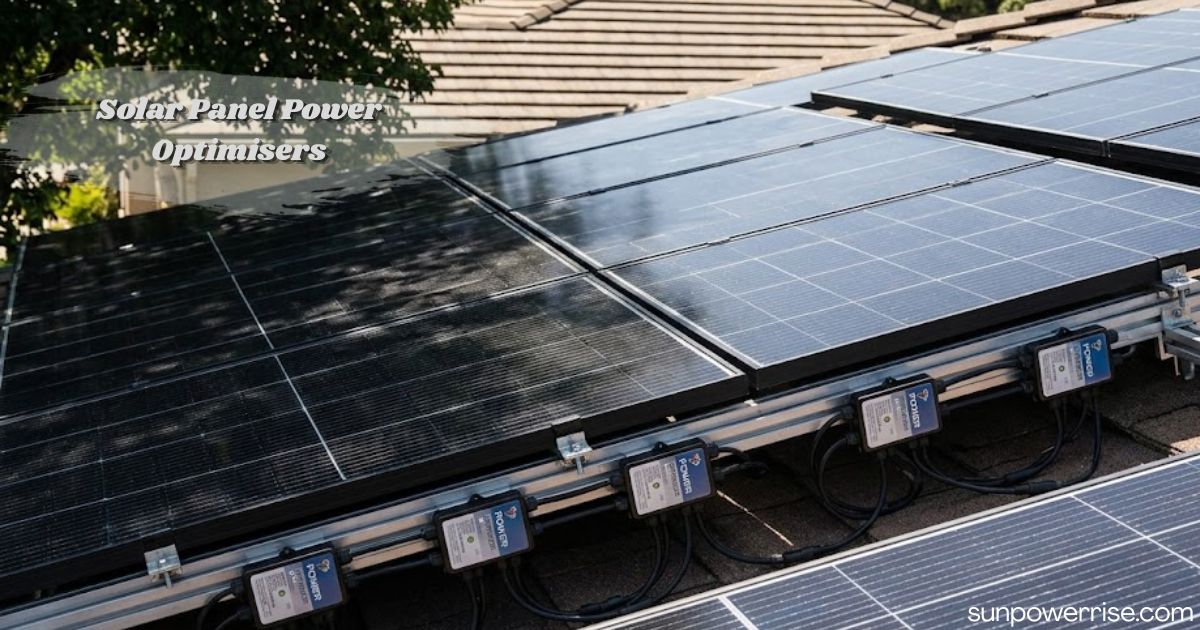
Homeowners across the UK ask me whether solar panel power optimisers are right for them, especially when roofs face multiple orientations or when shaded panels and partially shaded arrays create differing outputs that drag down electricity generation and blunt the performance boost from an otherwise healthy home setup.
This guide breaks down power optimisers and micro-inverters as a genuine game-changing solution: small devices that integrated systems build directly into solar setups to lift efficiency, boost effectiveness, guard against shading, and help every individual panel pull its weight toward a greener future, no matter which popular manufacturers you pick for your solar panel installation.
What Are Solar Panel Power Optimisers?
In simple terms, solar optimisers are small devices that sit on a solar panel system, or come integrated into the panel itself, to unlock the best performance from every device in your solar setups.
I remember replacing individual solar panels on a client’s roof where one shaded panel dragged everything down, and that is exactly the weak point a traditional solar power system suffers without help, since the lowest-performing panel controls the whole string.
Add an optimiser and it works to maximise energy production even when a panel sits partially shaded, giving your setup a genuine performance boost instead of a weak link.
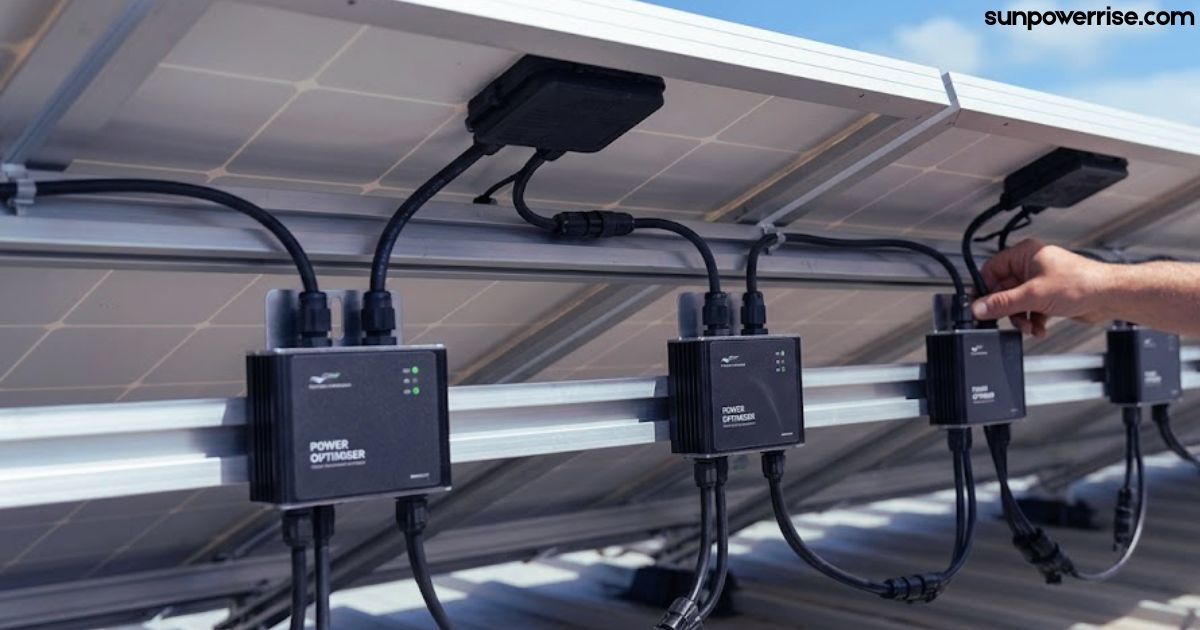
How Do Solar Panel Power Optimisers Work?
Each optimiser acts like a mini-DC-to-DC converter, constantly monitoring voltage and current so a panel reaches its maximum power point, or MPP, using the same MPPT, Maximum Power Point Tracking) logic that a string inverter setup uses for the whole string.
Picture a shaded panel under a passing cloud, blocked by a nearby tree, or dulled by everyday dust and dirt, and panel variations between unshaded panels start to drag the overall output and panel output down toward that weakest link.
An optimiser steps in to protect peak efficiency and efficiency across external conditions, keeping consistent output, higher power output, and energy output steady, and many apps now let you check solar setup performance and overall electricity from your phone, sometimes even showing a 50% dip the moment, it happens.
Benefits Of Solar Panel Power Optimisers
From what I’ve seen on real installs, increased efficiency and performance improvement bring down energy bills fast enough to shrink the investment cost, especially where a poorest performing panel used to hold back a whole string system or series system.
Optimisers also add flexibility and longevity, letting installers work around awkward roof structures, complex roof structures, orientation and panel mismatch, while flexible installation stops one degrade, or panel degradation, from dragging the rest down over time.
On the safety side, panel-level shutdown can isolate individual panels the moment a fault or overheating monitoring flags a problem, cutting the risk of electrical accidents, while real-time alerts let you shut down a system fast, and enhanced monitoring, monitoring capabilities and general oversight help you track performance, address issues and protect your energy output, on top of the everyday safety this setup provides.
Cost
In the UK market, solar panels fitted with optimisers typically cost between £40 and £150 per panel, and once you add installation costs, the initial cost, or upfront cost, of the whole job can feel off-putting at first glance.
The good news is that energy bill savings usually balance that spend over time, though not every one of these systems suits every roof, so compatibility issues can crop up. Before you commit, do your own research and speak to a trusted professional who can confirm your setup will actually work.
Microinverters (Comparison To Optimisers)
Unlike a central inverter or string inverter that turns direct current, or DC, into alternating current, or AC, for your whole home and the grid at one central point, a micro-inverter sits on each panel and every module, handling DC to AC conversion right there on the roof, at roof level, in a parallel connection rather than one single line.
This setup can lift higher system output by 5-25%, brings a longer lifespan and a warranty running 15-25 years against 5-10 years for standard gear, drops the need for bulky transformers, capacitors and cooling fans, and stops one fault from taking the whole array offline, though it still carries a 20-30% cost premium and a higher cost per kWp, since micro-inverters sit behind the panels and repair or access at roof level costs more.
On the plus side, arrays can mix different power ratings and still harvest full value from each one, expensive as AC solar panels with integrated micro-inverters might look upfront, since it becomes easier to expand the system or scale the system later, and MPPT keeps every module pulling its own weight, cutting long-term maintenance worries.
Manufacturers
Among popular brands, Enphase leads on micro-inverters, backed by a 20-year warranty and testing built to survive 100 years, with monitoring available through its Enlighten app on both web and mobile apps.
SolarEdge takes a different route as a combined inverter and optimiser system, wiring every panel in a string with a 25-year warranty on optimisers and a 12-year warranty on the inverter, with an extension to 25 available, and alerts built right in.
Tigo’s USP lies in selectively placed modules, a cheaper cost approach that still works with almost any compatible inverter and no compatibility issues, tracked through the Tigo SMART app to boost energy harvest, catch faults early and plan future maintenance before it becomes a bigger job.
Are Solar Panel Power Optimisers Worth It?
Whether upgrades suit an existing installation or a new installation depends on your specific circumstances, and homes with shaded panels usually see the clearest case for extra equipment like microinverters or optimisers.
Yes, overall cost rises upfront, yet most people I’ve spoken with call it a good investment once they see the long-term savings from preventable power losses avoided and a genuinely quicker return on investment.
Add the energy savings on top, and you get real peace of mind knowing panel performance stays heavy rain or shine, whatever external conditions your roof faces.
FAQs
Are optimisers worth it for solar panels?
Yes, solar panel power optimisers boost efficiency, cut energy bills, and bring real peace of mind, especially if your roof faces shading problems.
What does an optimiser do for solar panels?
An optimiser uses MPPT, or Maximum Power Point Tracking, to monitor voltage and current on each individual panel, lifting energy production even under partially shaded conditions.
Can you retrofit optimisers on solar panels?
Yes, but it’s an expensive installation, since a solar professional needs scaffolding, removing panels, refitting panels and replacing inverter gear on an existing system.
How much do solar panel power optimisers cost?
Expect £40 to £150 per panel in the UK market, plus installation costs, though energy bills savings often balance the upfront cost over time.
Do solar panel power optimisers work with any inverter?
Not always. Some, like Tigo, offer no compatibility issues with almost any compatible inverter, while others such as SolarEdge need their own matching string inverter setup.