

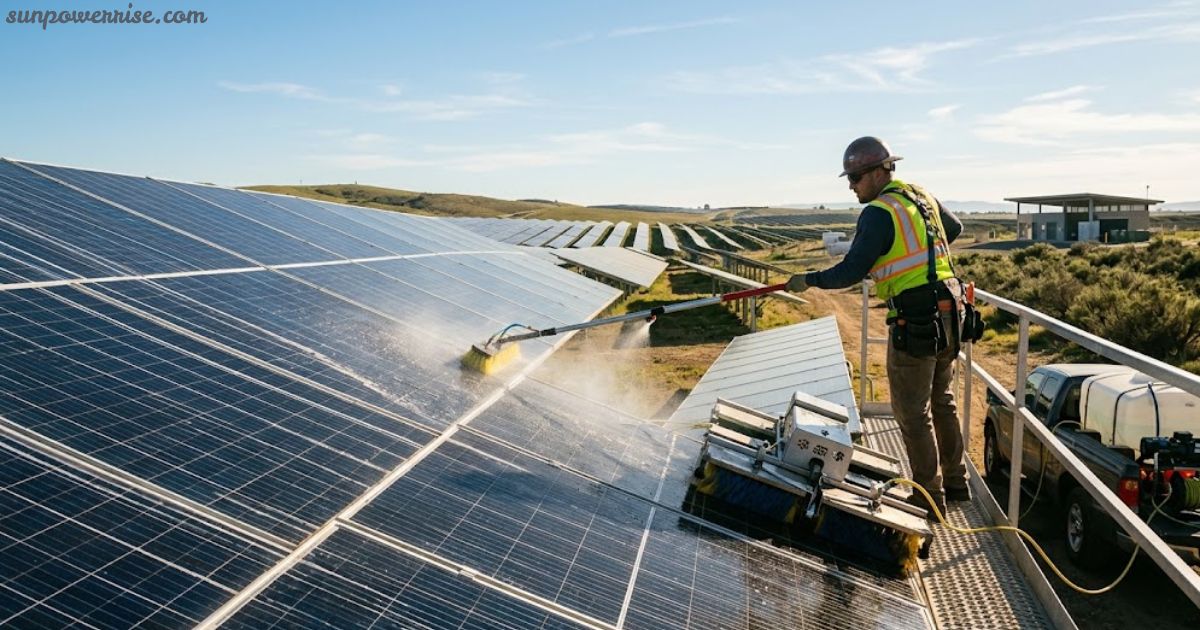
When people ask me about solar panel cleaning cost, the first thing I explain is that companies usually charge using a per-panel fee, often somewhere between £4 and £15, though a minimum charge applies for small jobs.
A water-fed pole reaching panels from the ground is far quicker than tackling a three-storey roof, which is why the per-panel rate shifts so much depending on access.
Over time, dust, soot, and bird droppings build up and reduce how much energy the system can generate, and panels near busy roads or farmland collect grime faster, pushing the higher costs toward the two-storey roof end of the scale rather than sitting near £100.
Solar Panel Cleaning Cost
So how much does solar panel cleaning cost in practice? Pricing for this job depends heavily on the size of the system and how each Property Type is built. A small bungalow or ground-mounted system with 6 to 10 panels usually costs around £50–£90, while a standard family home with 8 to 14 panels sits closer to £80–£150.
A large home with 12-16 panels typically pays £120–£180, and a very large roof holding 16-25 panels can reach £150–£250, especially if the property has an extended roof or a separate garage adding another access setups job.
On a Ground level or bungalow, expect roughly £2 per panel, whereas a Standard 2-storey roof with a Tall water-fed pole and extra rigging time climbs to £4-£8, and an Awkward, restricted, or 3-storey job needing a Height-access kit for a harder reach and more care can hit £8-£15 or the full £4-15 per panel range.
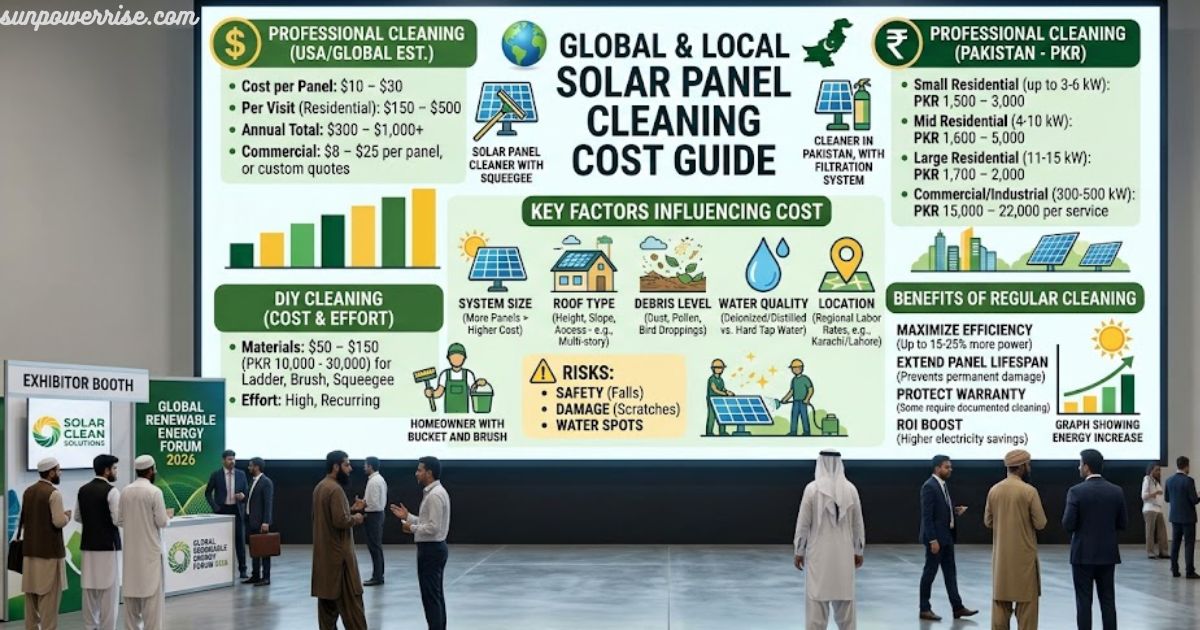
When Should You Clean Them?
I always tell people to check with their solar panel installer first, because not every roof needs the same attention. If you live somewhere with dry, dusty area conditions, or your roof sits near trees, expect lichen, bird droppings, and general dirt to gather faster than average.
Rooftop solar panels tend to stay cleaner naturally because rainfall washes across their angle, while ground-mounted panels often need more frequent attention since they sit flatter and collect more debris.
Watching for a visible build-up of grime, a dull, hazy layer, or a sudden drop in energy output showing up as higher bills are the clearest signs it is time to act.
Skipping maintenance requirements for years risks a costly repair, and considering that replacing panels can run between £2,500 and £8,500, while solar roof tiles made of glass can reach £7,000 to £14,000, a modest clean looks cheap by comparison.
Why Small Arrays Cost More Per Panel
Here is something most people do not expect: a smaller roof often costs more per panel, not less. A cleaner’s travel, the water filtration setup, and the pole rigging all take roughly the same amount of time whether there are 6 panels or 16 panels, so that fixed time gets folded into a call-out charge or minimum charge, often landing around £50-90.
That means a 6-panel array can end up costing £8-12 per panel, while a 16-panel array on the same street might only pay £4-5 per panel, simply because fewer panels carry the unavoidable setup cost on their own. This is not a markup designed to punish smaller homes; it is just basic math around how time gets divided across a job.
What Professional Cleaning Involves
A proper pure-water clean starts with an access assessment, checking whether a water-fed pole can safely reach every corner of the roof. From there, pure-water filtration takes over, using on-site filtering of mains water through reverse osmosis or deionising resin so dissolved minerals never leave behind spots on the glass.
The soft-brush reach-and-wash stage uses a non-abrasive brush head fitted to a telescopic pole, and since there is no pressure washing, the panels stay protected while getting properly cleaned.
A spot-free rinse follows, where the panels get flooded with pure water and left to dry streak-free, with no detergents, chemicals, or detergent residue left behind that might harm the anti-reflective coating or void a manufacturer warranty.
Working from the ground instead of the roof keeps everyone safer and avoids disturbing the DC wiring, which is why a good service page explains this method clearly before any professional shows up.
How to Clean Solar Panels: Step-by-Step Guide
For light dust, plain water from a hose pipe does the job, and if a jet of water reaches the panels from the ground, this stays a quick, easy process.
A deeper clean for stubborn dirt calls for a soft, long-handled brush or sponge to gently wipe the surface of the panels, always making sure you have safe access and know how to turn off the solar panel system beforehand.
Choosing cool weather matters more than people think, since hot solar panels cause water to evaporate too fast and leave streaks and residue behind; checking the instruction manual first avoids confusion.
Always look for damaged cabling and report it to your installer right away, since it creates an electric shock hazard, and avoid working at heights without proper training or equipment, calling a professional instead when needed. Using soap with a soft brush clears dirt, bird droppings, and debris effectively, and a final wash off with cool water finishes the job.
FAQs
Can I clean solar panels with washing up liquid?
Plain water with a soft brush or sponge works best here; skip the washing up liquid and other cleaning products, since they can leave residue on the panels that harms performance.
Can I stand on solar panels when cleaning them?
Never stand on solar panels while cleaning them, since they carry no real weight capacity for a person and can crack or break. Many panels also carry slippery coatings, which becomes especially dangerous at any real height.
Can I use a power washer on solar panels?
Skip the power washer entirely, since high-pressure water can force its way into seals and wiring, leading to water damage over time. A soft spray from a garden hosepipe cleans solar panels just as effectively without the risk.
How can I clean solar panels from the ground?
To clean from the ground, use a hosepipe with a jet that reaches comfortably, adding a long-handled brush for a thorough clean and standing on even ground to stay careful around nearby objects and surrounding obstacles.
How often should I have my solar panels cleaned?
Most solar panels in the UK only need cleaning every 12 to 18 months, though a dusty area, nearby trees, or heavy bird droppings may call for more frequent cleaning.
Is it worth having solar panels cleaned?
Yes, for most homeowners. A professional clean can restore lost efficiency and often pays for itself within a year, especially if output has dropped due to built-up dirt or debris.