

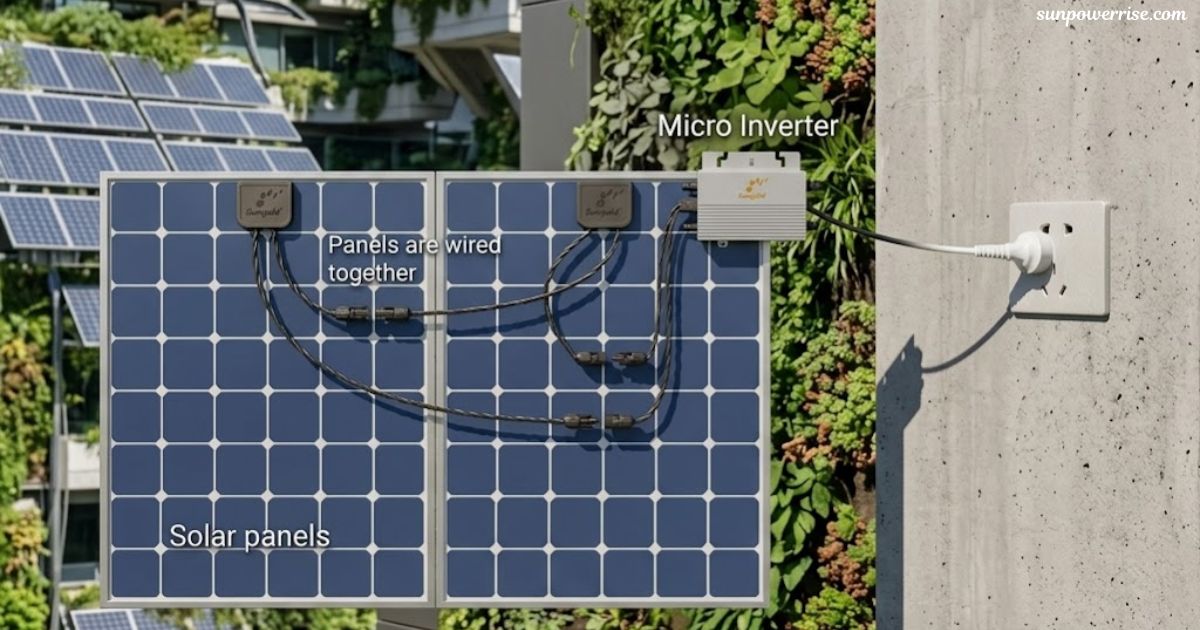
Plug in solar panels are small, self-install solar kits, usually one or two panels plus a micro-inverter, that you fix to a balcony, wall or garden and plug into an ordinary 3-pin socket.
Since 27 August 2026, they’ve been legal to buy and use in Great Britain without an electrician, provided the kit is on the approved register and capped at 800W of output. They won’t run your whole home, but the government puts the saving at up to £100 a year.
Are plug in solar panels legal in the UK?
Yes, in England, Scotland and Wales. Before late August the wiring rules only allowed generation that an electrician had hard-wired into your fuse board, so a plug-in kit was off the table. The updated rules removed that barrier for small kits. Northern Ireland has its own safety regulations, which haven’t been fully revised, so if you live there, wait.
Legal doesn’t mean anything goes, though. The kit has to meet a government product specification, and you have to install it within a short list of conditions.
The Rules
Buy a listed kit. The complete kit must appear on the Energy Networks Association’s G98 Type Test Register. If it isn’t on there, it isn’t legal to install; however, the product page describes it.
800W out, more panels in. The inverter can push no more than 800VA into your home. The panels themselves can add up to more, and the limit is 2,000W across four panels at most, with no more than two wired in series. The extra panel capacity helps the inverter hit its ceiling in dull light. It doesn’t let you export more.
A proper plug. The kit must come with a factory-moulded plug that can’t be rewired, fitted with a fuse of 5A or less.
One kit per home. You can’t link several kits together or spread them across different sockets. Straight into the wall. No extension leads and no multi-way adaptors. Check that the supplied cable actually reaches your socket before you buy.
Tell your network operator. You have 28 days after installation to notify your local network operator. It’s free, and you can switch on straight away without waiting for approval.
How plug in solar panels work
Sunlight hits the panel and produces direct current (DC). The micro-inverter, usually bolted to the back of the panel, converts it into the alternating current (AC) your home runs on. That power flows into your household wiring through the plug, and anything switched on at that moment uses the solar power first. The grid tops up the rest.
Two consequences catch people out: they only work in daylight. No sun, no output. They switch off in a power cut. A grid-tied inverter shuts down when the grid does, so a plug-in kit won’t keep your lights on.
How much do plug in solar panels generate and save?
A well-placed 800W kit should produce roughly 500 to 720 kWh a year. Panels standing on the ground or mounted at an angle do better than panels hung flat against a balcony rail. In pounds, the government estimate is £70 to £110 a year, and roughly up to a fifth of an average home’s electricity use. That’s a ceiling for good conditions, not a promise.
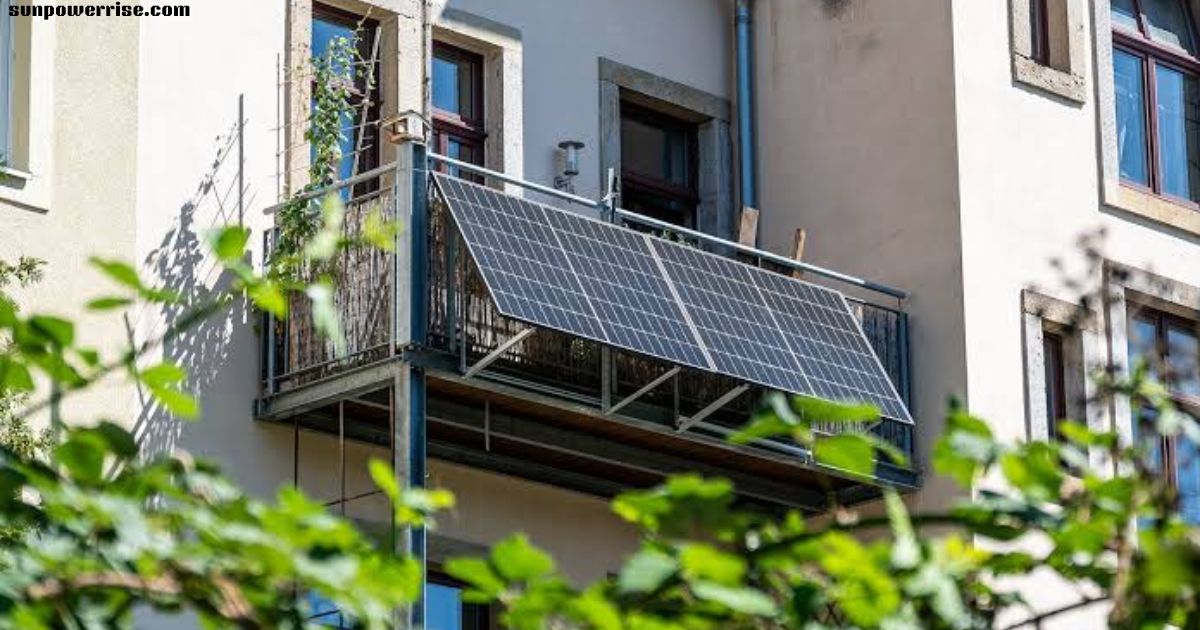
Spare power isn’t paid for. Only certified rooftop-style installations qualify for Smart Export Guarantee payments right now, so anything your home doesn’t use in the moment goes to the grid for nothing. That makes your daytime habits matter more than the panel’s size.
Watch the hidden costs. A pre-install electrical safety check can run £100 to £250, and a new outdoor socket about £150. Add those to a £450 kit, and you’re near £1,000, where the return can drop below what the same money would earn in a savings account.
Are they safe? Look at your fuse board first
Government testing found compliant kits can be used safely on UK wiring, but the engineering body IET has warned that some older homes may not cope well. The concern is the residual current device (RCD) in your fuse board, the switch that cuts power during a shock or fault. Some older types can be “blinded” by small DC leakage from an inverter, so they may not trip when they should. Type A or Type B devices handle this properly.
Homes rewired in roughly the last 15 years will usually be fine. If you have rewireable fuses, no RCD, or you can’t tell what you’ve got, pay for an electrical condition report (EICR) before plugging in. Landlords must have one at least every five years, and it’s sensible for owners to get one every ten. It’s also worth a quick call to your home insurer.
Planning permission, landlords and flats
Most houses can fit panels under permitted development, so you don’t need to apply. Exceptions include listed buildings and homes in conservation areas, National Parks, National Landscapes, the Broads and World Heritage Sites. The main limits are:
- Walls and balconies: panels can stick out no more than 0.4m, or 0.2m if the wall faces a road.
- Flat roofs: no more than 0.6m above the highest point.
- Ground-mounted: up to 9 square metres in total, with height limits that depend on how close you are to the boundary.
- Fire safety: don’t attach panels to anything timber, such as a wooden fence, balcony or clad wall. Kit instructions also warn against installing on certain cladding types (ACM, MCM and HPL).
If you’re unsure, ask your council for a certificate of lawfulness. In a flat, or a rented or leasehold home, get written permission from your landlord or freeholder before you drill or clamp anything to the building.
Where can you put plug in solar panels?
Common spots are a balcony railing, a sunny wall, a shed roof, a terrace or a patch of garden. Ideally, the panels face south, tilt at about 30 degrees and sit clear of shade. Vertical mounting on a railing gives up some output, so flats often accept a lower yield in exchange for having somewhere to put them at all.
Plan for the weight and size. A typical 400W panel is around 1.8m by 1.2m and can weigh close to 20kg, so you’ll want a helper and a fixing point that’s genuinely strong. Think about wind on a high balcony too.
The moment I first saw one running on a terrace, plugged into a normal socket with no fuss, it clicked for me how much easier this is than rooftop solar.
Plug-in solar vs rooftop solar vs DIY solar kits
|
Plug-in solar |
Rooftop solar |
|
|
Typical size |
Up to 800W output |
Around 4.6kW |
|
Estimated cost |
£400 to £500 |
Around £7,400 |
|
Estimated yearly saving |
£70 to £110 |
£605 to £675 |
|
Payback |
About 3.6 to 7.1 years |
About 10.9 to 12.2 years |
|
Warranty |
Typically 10 years |
Typically 25 years |
Rooftop solar wins on total lifetime savings, and it can feed a battery and earn export payments. Plug-in solar wins on upfront cost, speed, and being movable, which matters if you rent.
“DIY solar kits” are a different thing. They’re mostly off-grid sets for sheds, vans and backup power, and they need more technical knowledge. Our DIY solar panels covers when those make sense.
Batteries and selling power back
Plug-in batteries aren’t covered by the new rules. A legal plug-in device isn’t designed to draw power in for storage, so a battery must be permanently wired by a qualified electrician, and “plug-in ready” batteries remain off-limits for DIY use. British Gas says it’s working to make its Smart Export Guarantee tariff compatible with plug-in kits, but that isn’t something to count on yet.
Where to buy
More than 50 compliant kits were on the register in mid-September. Listed retailers include Argos, Screwfix and City Plumbing, with Octopus Energy expecting stock around the end of September. Prices run from roughly £450 to £900, depending on panel count and mounting hardware. Supermarket kits have been widely trailed, but I couldn’t confirm a compliant one on shelves as of mid-September. Our Aldi solar panels guide tracks that.
Whoever you buy from, check the exact model on the register and confirm the kit includes the right mounting hardware and a cable long enough to reach your socket.
FAQs
What are plug in solar panels?
Plug in solar panels are small, portable solar systems that connect directly into a standard 3-pin socket to generate renewable electricity for your home without professional installation.
Are plug in solar panels legal in the UK?
Currently they require a qualified electrician under G98 microgeneration rules, but the UK government has announced regulatory changes allowing systems under 800W to plug directly into domestic sockets from summer 2026.
How much electricity can plug-in solar panels generate?
A typical plug-in solar system generates between 200–500 kWh annually, covering roughly 10–20% of a standard UK household’s electricity use depending on positioning and sunlight exposure.
Can renters use plug-in solar panels?
Yes, plug-in solar panels are particularly well-suited to renters since they require no permanent modifications, are fully portable, and can be taken to a new home when you move.
How do plug-in solar panels differ from rooftop solar panels?
Plug-in solar panels are smaller, portable, and require no professional installation, whereas rooftop systems generate 6–8 times more electricity and need a qualified electrician to install permanently.