

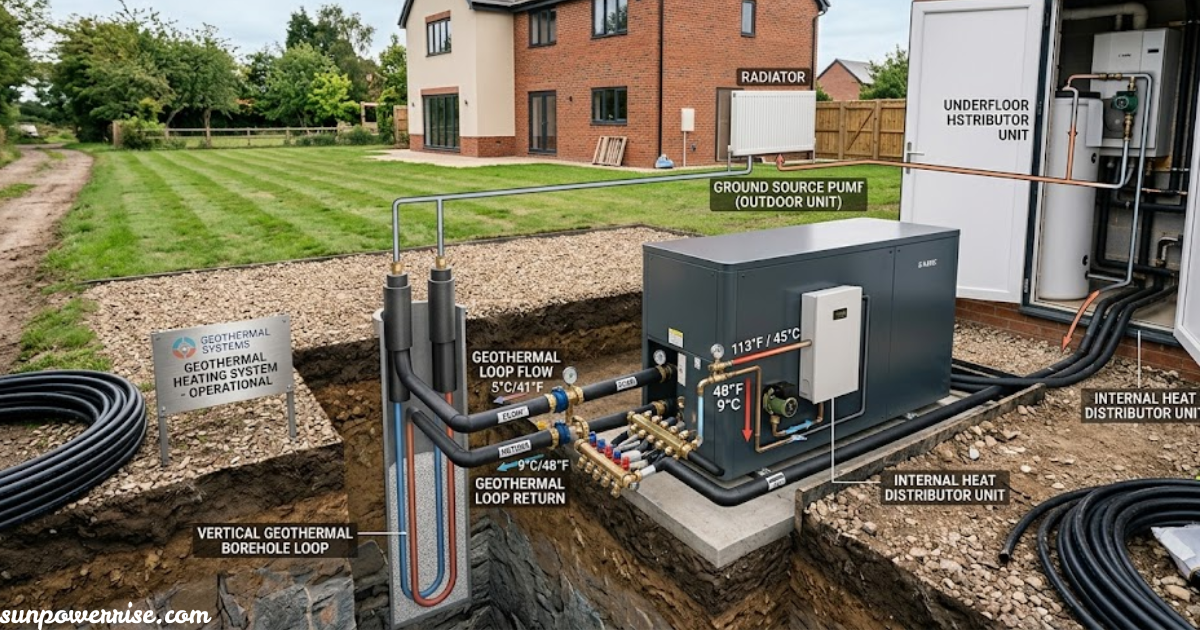
A ground source heat pump installation requires significantly more planning than a standard boiler replacement. To capture heat from the earth, the system relies on pipes buried in your garden.
Either laid horizontally in trenches or drilled vertically into deep boreholes. A ground source heat pump installation takes a Ground Source Heat Pump (GSHP), also called a geothermal heat pump
Homeowners across the UK must think about the space available for coils, the infrastructure needed underground, and whether they will keep traditional radiators or move to underfloor heating.
Getting Started With Ground Source Heat Pump Installation
Skilled installers, such as Groundtherm, offer full consultancy and design support for a residential home, working across Manchester, Cheshire, Cumbria, Lancashire, Merseyside, and the wider North West.
Initial costs for a typical installation sit between £18,000 and £35,000, which feels steep at first glance. Yet a well-planned system pays back through real energy savings, lower carbon emissions, and home comfort that lasts for decades.
Because the ground stays warm all year, heat pump technology like this runs in a cost-effective, low-maintenance, high-efficiency, and genuinely efficient way, with flexible finance options making the switch easier for many households. I’ve seen first-hand how a slow, careful start saves headaches later on site.
How A Ground Source Heat Pump Actually Works
Geothermal Heat Extraction
A Ground Source Heat Pump pulls geothermal energy from deep in the earth and turns it into steady hot water and warmth for the home.
Because the ground holds heat better than the shifting outdoor air temperature, a GSHP often beats air source heat pumps on system efficiency, and this heat pump system delivers low-cost warmth with a smaller carbon output.
Companies like Elite Renewables dig vertical boreholes or lay horizontal ground loops, filling them with liquid or pipes that carry heat from the underground heat store straight into the property.
Sustainability and Value
This whole setup can also run in reverse cooling mode, pulling heat out of the house in summer and storing it back in the earth for winter.
Trusted installation companies support self-sufficiency by cutting reliance on fossil fuels, and this heat-powered pump approach lowers environmental impact while boosting home efficiency and property value.
With grants like the Boiler Upgrade Scheme worth £7,500, plus custom installations, strong year-round performance, and true year-round reliability, families across the UK gain real peace of mind, a cleaner carbon footprint, better hot water production, and genuine renewable energy, clean energy, solar-ready, efficient comfort for life.
Why The Right Installer Makes All The Difference
Choosing the right ground source heat pump installer matters as much as the equipment itself. If you’re searching for ground source heat pump installers near me, it pays to check credentials before you commit.
Firms such as Elite and Groundtherm bring two decades of experience, technical expertise, and careful project management to every job, backed by a Triple Guarantee covering careful planning, expert installation, and ongoing service.
Their experienced team of professionals studies each property layout and insulation level before creating a bespoke system design; every design choice is tuned to airflow, heating zones, and climate control for balanced performance in every room.
This attention to detail, whether fitting a standard setup or a Heat Geek Open Loop, uses high-efficiency equipment from trusted brands to reach maximum efficiency across the whole efficient facility.
Vertical Or Horizontal: Picking Your Ground Loop
There are two main routes to choose from underground. A borehole or borehole system drills straight down, often between 15m and 100m, using a vertical loop system that suits a tight land area; the other option is a horizontal coil or ground loop system, where trenches are dug across the land to match your heating needs.
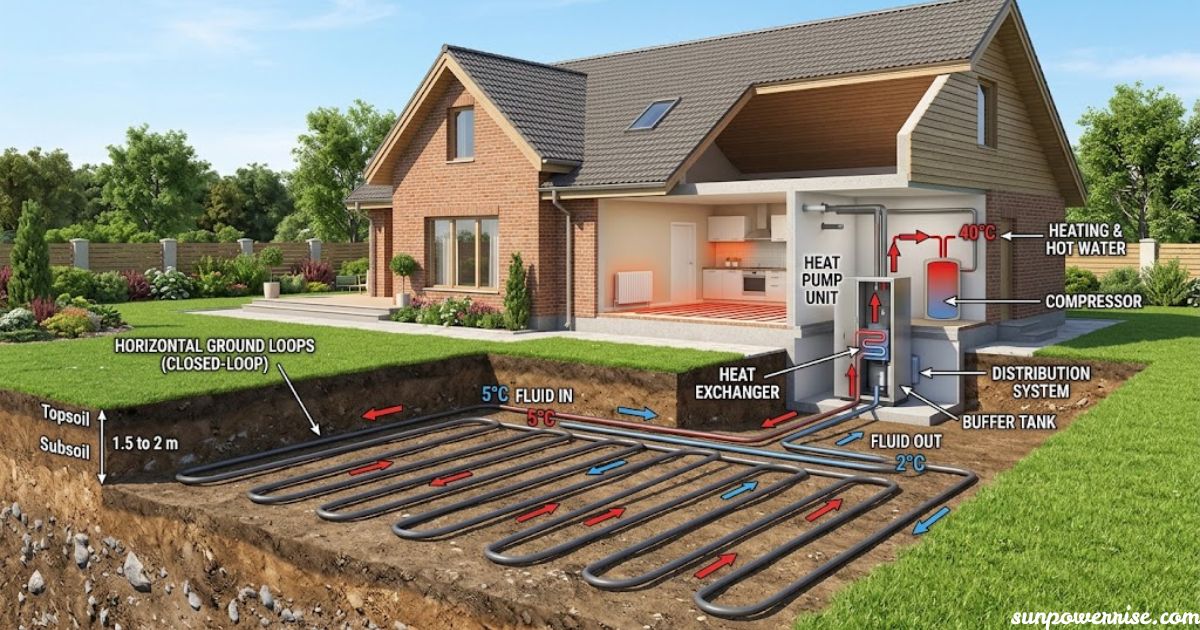
Good soil matters here: sandy and moist ground gives the best heat transfer, and this thermal conductivity decides how much piping you need.
For a 3-4 bedroom or four-bedroom house fitted with a 12-15kW to 15 kW system, expect to need roughly 600 square meters to 1,200 square meters, which works out at about 0.15 acres to 0.3 acres, based on a rule of 10m of trenches per kilowatt of heating load.
The insulation, plus the size and type of windows and doors, changes this figure too, and while planning permission rarely blocks the work, your installer still checks it.
As a working example, a home needing 150 meters of trench length may use 3-4 trenches spaced 1 meter apart, each around 100 meters long and 100 square meters in size, adding up to 400-600 square meters in total for the ground loops.
Step By Step: How Installation Happens On Site
Good work starts with an initial assessment, where engineers run a geological survey to check ground conditions, soil composition, and thermal properties, since clay and sandy ground behave differently under a heat loss calculation.
The team also checks orientation, window size, insulation, and confirms there are no gas lines, water pipes, or other obstructions in the way.
Before anyone can excavate, installers check local regulations, sort out permits, and, after solid planning, confirm the project counts as permitted development, though a listed building or conservation area may still need extra sign-off from the local council and environmental agencies.
System Design & Material Selection
Next comes the system design stage, where the loop system type is chosen to suit your garden, whether that means vertical loops, horizontal loops, or coils dropped into a nearby lake or pond.
Installers work out the loop configuration, loop length, and depth based on thermal conductivity, then pick the right pipe material and pipe diameter, usually high-density polyethylene (HDPE) pipe, to match your chosen heat pump type and energy supply source.
Ground Works & Pressure Testing
On site, a drilling rig bores the boreholes to the needed depth, fitting U-shaped pipes as it goes, while horizontal jobs mean digging trenches roughly 4-6 feet down and laying pipe in a coiled pattern or slinky pattern to save space.
Every joint runs through the manifold with no kinks or bends allowed, and a pressure test checks the connections for leaks before anything gets backfilled.
Indoor Unit & Fluid Installation
The heat pump unit itself usually sits in an outbuilding or lean-to, close to a mounting bracket and ready for integration with your distribution system, such as radiators or underfloor heating.
Loops get filled with a chemical solution to stop freezing and boost heat transfer efficiency, while refrigerants such as R410A or R134a move heat from the inlets and outlets into the cooling system and heating system.
Commissioning & Long-Term Maintenance
Once fitted, the whole setup must meet Microgeneration Certification Scheme (MCS) rules and Building regulations before system commissioning begins, which includes air removal, being flushed through, and fine adjustments to the control systems, thermostats, and system settings for smooth energy distribution and balanced heat distribution.
Ongoing maintenance follows the manufacturer’s maintenance schedule, with regular leaks inspection, performance monitoring, and monitoring of energy consumption and system performance to catch inefficiencies or irregularities early, keeping comfort, efficiency, and overall heat transfer running well for years, plus a final check for servicing needs too.
What A Ground Source Heat Pump Really Costs
Working out ground source heat pump installer cost is often the first question people ask, and the honest answer is that price depends on project specifics.
Across the UK market, the installation costs for a residential property sit between £18,000 and £35,000, covering the heat pump unit, ground loop system, and installation labor, and this range covers initial installation costs for most GSHPs.
Several things push the price up or down. Vertical loop systems cost more because three bore-holes often run about £5,000 each, while horizontal loop systems need more land area and space availability, spaced around 1-2 meters apart across 100 metres of ground.
Site conditions matter too rocky terrain and clay terrain slow the dig, and geothermal properties of the soil change how many boreholes or trenches you need.
Property size and heating requirements also count, since a bigger four-bedroom home needs more output, and planning and inspection, planning consent, plus central heating system changes like swapping radiators or widening pipework to 15mm diameter, can add to the bill.
FAQs
How much does it cost to install a ground source heat pump?
A typical ground source heat pump installation costs between £18,000 and £35,000 in the UK, covering the heat pump unit, ground loop system, and installation labor.
What are the downsides of ground source heat pumps?
High initial costs, the need for large land area or deep boreholes, and disruptive digging are the main drawbacks. It can feel like a big leap before the energy savings kick in.
Can I install my own ground source heat pump?
No, a ground source heat pump installation needs qualified installers to meet MCS standards and Building regulations, so DIY isn’t a safe or approved route.
What are the requirements for installing a ground source heat pump?
You’ll need enough space for coils or boreholes, a heat loss calculation, suitable soil conditions, and sign-off through planning permission and MCS-certified installers.
Do ground source heat pumps use a lot of electricity?
They use electricity to run the pump and compressor, but thanks to strong system efficiency, they produce far more heat output than the electricity they consume.