

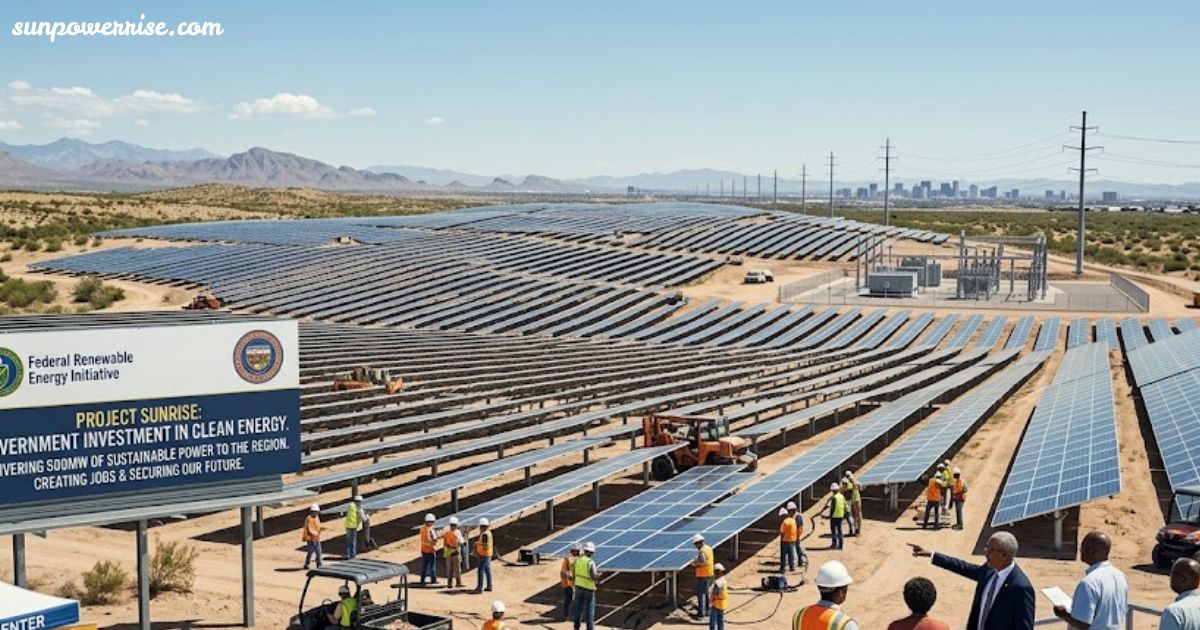
Britain’s push toward cleaner power hasn’t slowed down in 2026, and honestly, once you start digging into the numbers, you realise just how much government solar investment Britain 2026 is changing at once. Here’s a full walk through of where things stand, section by section.
Government Solar Investment Britain 2026
is Fresh government data puts the country close to 172,000 solar installations since the year began, confirming a genuine record deployment for rooftop solar nationwide solid proof that government solar investment Britain 2026 is translating into real rooftops, not just policy papers. July 2026 alone delivered 28,000 installations spread across homes, businesses, and larger-scale projects, making it the third-highest monthly total behind only March and June.
Of that July figure, 19,800 installations came from rooftop solar alone, working out to seven in ten installations for the month, or roughly one installation every two minutes somewhere in the country.
Southern and Eastern Growth
A fresh regional breakdown now shows growth in every UK nation and English region over the past 12 months. Southeast England led with 22,628 installations, pushing its 305,101 cumulative total up by a 14% increase, while the Southwest followed close behind with 17,539 installations and a 271,400 cumulative total, a 13% increase on the year.
East of England recorded 18,109 installations for a 241,195 cumulative total, up 15% increase, and the East Midlands added 15,981 installations toward a 182,606 cumulative total, a 17% increase.
Northern Regions and Plug-In Regulations
The Northwest contributed 15,927 installations and reached a 186,253 cumulative total, up 16%, while Wales posted an 18% increase and Scotland climbed 14%; the Northeast grew by 11% over the same period.
Much of this momentum follows new rules making plug-in solar panels legal across Great Britain, with big-name retailers including Currys, B&Q, Screwfix, and Amazon now stocking the kit.
Grid Generation Records and Daily Cost Savings
Solar Energy UK and the National Energy System Operator, or NESO, reported in August 2026 that solar supplied 14.4% of power generation across the grid in July, beating the earlier 12.4% previous record set in May and far above the 9.6% figure recorded back in July 2025.
Separately, Ember found in April 2026 that domestic solar and wind generation were helping Britain avoid around £7 million a day in energy costs, even as gas prices climbed due to the Middle East conflict.
Two Million Site Milestone and Plug-In Expansion
Government figures also confirmed the UK passed two million solar installations by March 2026, with 22.1GW installed across 2.003 million sites; that single month brought 27,000 new installations, the highest monthly deployment since 2012, and two-thirds of those were domestic rooftop PV.
The prior year, 2025, had already set records of its own, with the Microgeneration Certification Scheme, or MCS, logging 206,682 certified installations and marking a fifth consecutive annual increase, pushing the running total to 1.85 million total installations nationwide.
New plug-in solar rules introduced on 27 August 2026 now let households legally connect systems up to 800W, with retailers such as Argos and Lidl joining the rollout.
ECO4
Anyone who has looked closely at the Energy Company Obligation scheme knows it by its short name, ECO4, and understands why the countdown feels urgent this year.
The scheme sits under Ofgem, the energy regulator that pushes bigger energy suppliers like British Gas and Octopus to fund free solar panels for households that need them most.
With December 2026 marked as the closing point and 31st December 2026 repeated everywhere as the true end date, families were told February 15th was the real deadline if they wanted their application processed before the scheme became effectively dead.
The scale of this fourth wave obligation was never small: energy suppliers carried a 4 billion pounds commitment that delivered 50,000 solar installations across the country, and the process stayed refreshingly streamlined because one energy supplier handled almost everything.
Anyone earning above £31,000 in annual income fell outside the low-income bracket the government set for this support, which is why the scheme leaned so heavily on low-income households and vulnerable households living in the country’s most energy-poor homes.
Eligibility never rested on income alone; claimants needed one of several income-related benefits, including Universal Credit, Housing Benefit, Working Tax Credit, Child Tax Credits, Income Support, Pension Credit Guarantee, Pension Savings Credit, or the Income-related Employment and Support Allowance.
Warm Homes Plan
The Labour government built its successor scheme, known simply as the Warm Homes: Local Grant, to launch in April 2025 and tackle fuel poverty while cutting carbon emissions and pushing renewable energy adoption forward for lower-income households.
This scheme sits at the heart of government solar investment Britain 2026, since it channels far more public money into rooftop power than any scheme before it.
Qualifying homes could claim up to £15,000 toward energy-efficiency improvements, including solar panel installations, plus a separate payment for a low-carbon heating solution such as heat pumps.
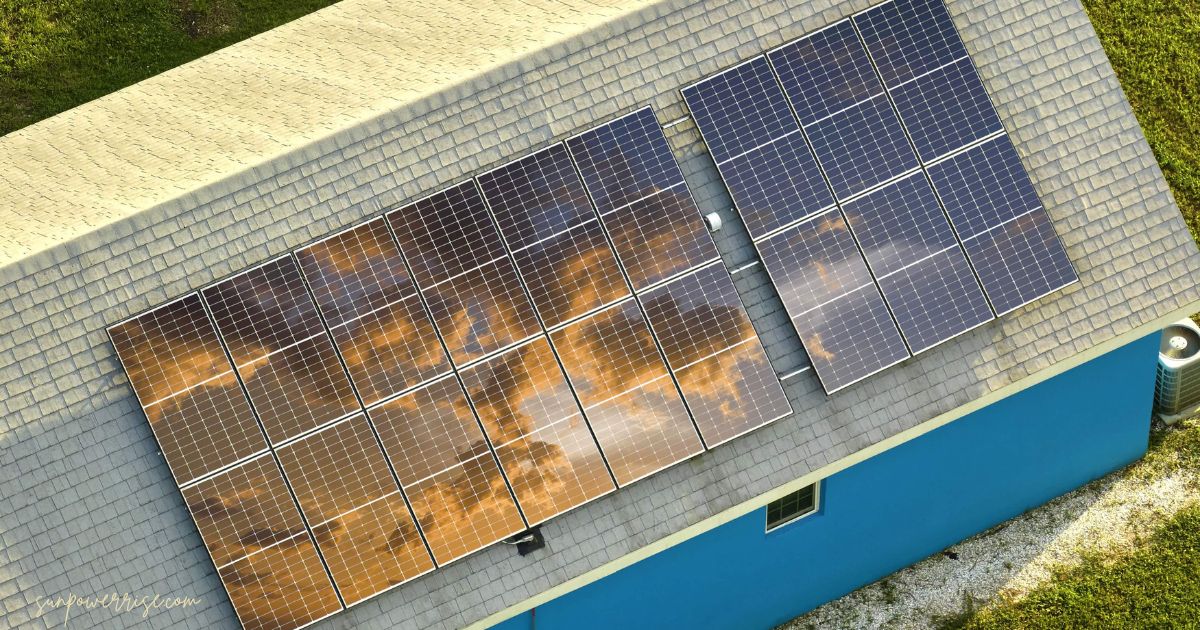
The offer covered England only, was restricted to eligible postcodes, and applied to anyone living in a privately owned home, whether that meant the applicant or their landlord.
Eligibility Criteria and Local Administration
Income mattered too: a combined gross annual income under £36,000, or receipt of Universal Credit or Child Benefits, opened the door, alongside a home holding an EPC rating somewhere between D and G.
Tenants could apply with landlord consent through the same eligibility checker, and because local authorities run the scheme locally, the rules stay flexible enough to bend for genuine hardship cases; installers and contractors get paid directly once work finishes.
The Wider £15 Billion Warm Homes Fund
Alongside the local grant is the wider Warm Homes Fund, launched in January 2026 with £15 billion to upgrade 5 million homes by 2030, making it the largest energy efficiency scheme in British history.
Homeowners of any income level can access low-interest loans and 0-interest loans to cover solar batteries and home insulation, though the budget, while huge, gets delivered through 278 local councils rather than a single body, leaving some applicants facing a fragmented, bureaucratic system.
Solar Becoming a Building Standard
Britain seems headed toward a fundamental shift in how homes generate their own energy, driven partly by a private members’ bill already gathering cross-party support in parliament.
If it passes, solar panels stop being treated as an optional renovation project and instead become a basic building standard required on every one of the country’s new homes, raising a fair question about whether a home without power generation should even count as incomplete housing going forward.
With old schemes closing, new schemes opening, and the technology itself edging toward becoming the standard choice, the whole energy landscape is asking every household to make a decision, and that leaves homeowners thinking hard about their place in Britain’s future.
Warm Homes Nest Scheme (Wales)
Over in Wales, the Welsh government runs its own Warm Homes Nest Scheme, open to households on means-tested benefits or otherwise counted among low-income households. Qualifying homes can receive 100% cost coverage toward a solar panel installation, and the scheme stays Ongoing with no fixed closing date.
The property usually needs an EPC rating of E or less, though that drops to D or less where the applicant or a household member has an eligible health condition.
Home Energy Grant and Loan Scheme (Scotland)
North of the border, the Scottish government offers its own Home Energy Grant and Loan Scheme in Scotland, aimed at self-builders and homeowners who meet certain conditions.
It provides loans worth up to £5,000, though closed applications now apply to standard solar panel support, leaving the scheme open only for solar thermal panels. Properties generally need an EPC rating between E–G, or D–G where an eligible health condition applies within the household.
The Great Solar Shake-Up
Britain’s 16-year story with solar support begins in 2010, during what many call the golden age of the feed-in tariff, before the Green Deal arrived and quickly became a failed initiative. From there, a run of ECO programs slowly expanded solar’s role across the housing stock, building toward the critical shift the country now sees in 2026.
Mapping this timeline shows a genuine massive shift in investment, with more than £32 billion committed over those 16 years, and the evolution stands out clearly once the green slice of the funding pie chart comes into view.
That slice belongs to the Warm Homes Plan, which stands as the single largest commitment to residential energy in UK history, and easily the clearest proof yet of how far government solar investment Britain 2026 has come from where it started.
FAQs
What are the UK government solar schemes for 2026?
Britain’s main 2026 schemes are ECO4, the Warm Homes Plan, 0% VAT on solar installations, and the Smart Export Guarantee.
What is the outlook for the solar market in 2026?
The outlook is strong, with UK solar installations nearing 172,000 and solar hitting a record 14.4% power generation share.
What Does the 2026 Government Solar Panel Scheme Offer?
The Warm Homes Plan offers up to £30,000 per household through 278 local councils, making it Britain’s largest energy efficiency scheme.
Who qualifies for free solar panels?
Low-income households earning under £31,000 and receiving income-related benefits like Universal Credit typically qualify for free solar panels.