

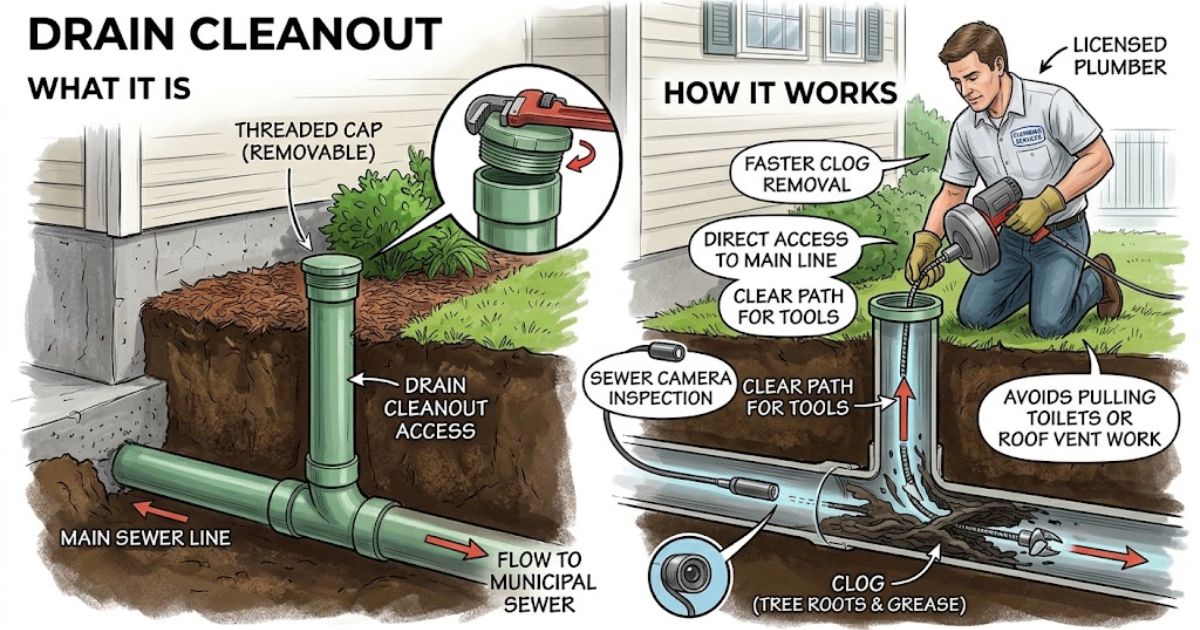
A drain cleanout gives you direct access to the sewer line without opening a wall or lifting a fixture. A plumber removes the cleanout cap, then clears a blockage or feeds a camera into the pipe. Think of it as a service entrance for your plumbing.
This guide draws on pages from TLC Plumbing, Sanyipace, Robins Plumbing, Arlinghaus, and VistaNestDaily. You will learn what the part does, where it sits, and how to judge a provider. Each brand lists its offerings on its own website, so confirm details there.
What Is a Drain Cleanout and How Does It Work?
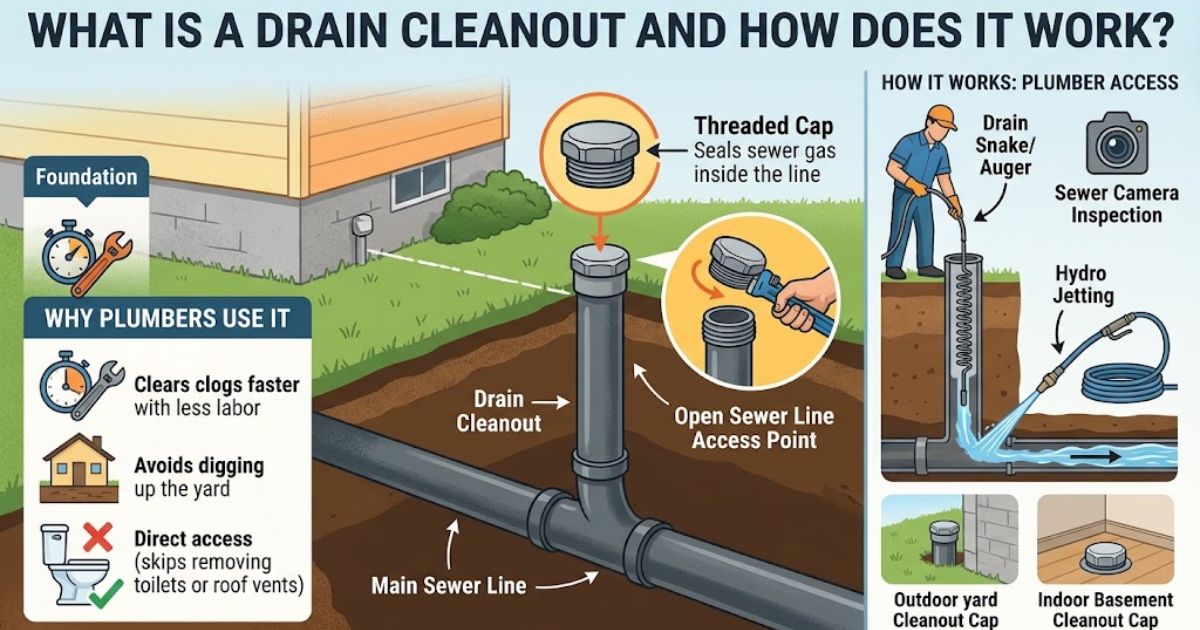
A drain cleanout is a capped pipe that connects to your main sewer line and rises to floor level or a few inches above the soil. The cap seals the pipe opening and holds sewer gas inside the line. When a plumber unscrews it, the open pipe becomes a sewer line access point for tools.
Most cleanouts use PVC pipe or ABS pipe, while older homes often have cast iron pipe topped with a threaded cap. A cleanout fitting joins the pipe section above ground to the drain line below, so the depth of the sewer system rarely matters. Plumbers call it a sewer cleanout, a sewer line cleanout, or a main drain cleanout, and homeowners may search for a cleanout drain or a plumbing drain cleanout, yet every name describes the same plumbing access point on the main drain line.
Why Do Plumbers Want a Cleanout on the Main Line?
Plumbers want a cleanout for sewer access because it lets them clear clogs faster and with less labor. Without one, they must reach the line through a toilet or a roof vent. The cleanout skips both routes and puts tools straight into the pipe.
TLC Plumbing says pulling a toilet takes longer and risks breaking an old bowl. Reaching the line from a roof vent costs more labor, and the equipment may fall short of the clog. Clog removal through a cleanout lets plumbers avoid digging up the yard and leave plumbing fixtures in place, which brings less invasive repairs, reduced labor time, and a chance to reduce plumbing repair costs.
Where Is a Drain Cleanout Usually Located?
Look for a capped pipe near the foundation, close to where the sewer leaves the house. Outside, a front yard cleanout or a backyard cleanout stands a few inches above the soil, often on the street side of the house. Inside, the cap sits low on a basement wall or floor.
Cold climates push builders indoors, so you may find a basement cleanout, a spot in the crawl space, or a cap in the utility room or garage wall. One outdoor cap may sit hidden under mulch beside the foundation wall. Homes on septic systems often have one between the house and the septic tank, while city-connected homes usually have one along the path toward the municipal sewer line.
What Problems Does a Drain Cleanout Help Solve?
A cleanout helps with any blockage in the main line, including a sewer backup, a recurring clog, or a stoppage that a plunger cannot reach. Tree roots, grease, and flushed items cause many of these problems. The cleanout gives tools a straight path to the trouble spot.
Tree root intrusion pushes into joints, while grease buildup and scale buildup narrow the pipe from the inside. Pipe corrosion, cracked pipes, pipe offsets, and a collapsed section also trap waste. Feminine hygiene products, toys flushed down drains, and any other foreign object blockage can stop the flow completely.
How Do You Know Your Main Line Needs Attention?
Multiple drains backing up at once point to the main line rather than a single fixture. Slow drainage throughout the house and gurgling sounds from fixtures add to the evidence. Call a plumber or a clogged drain service when two or more of these signs appear together.
Sewage odors indoors or outdoors, sewer gas near a floor drain, and standing water around a shower drain also matter. Water pooling near the cleanout cap tells you waste is pushing toward the surface. A typical Saturday call starts with a gurgling shower whenever the washing machine drains, and waiting invites sewage damage, property damage, and health issues.
What Tools Do Plumbers Run Through a Cleanout?
Plumbers run a drain snake, a drain auger, or a drain cable through the cleanout to break up a blockage. For grease, they switch to hydro jetting, which scours the pipe wall with a high-pressure water jet. A sewer camera then confirms the line runs clear and supports an accurate diagnosis.
Cable snaking suits a single clog or roots, while jetting services suit grease and scale. A camera inspection, also called a plumbing camera inspection or a sewer line inspection, gives real-time pipe inspection on a monitor, and a sewer scope inspection uses the same idea. A closet auger only reaches past the trap in a toilet bowl, and a garden hose flushes only minor debris, so neither replaces professional drain equipment.
Can You Open a Sewer Cleanout Yourself?
You can, but only when the pipe is quiet, so do not open when the line is full. If water backs up into a tub or floor drain, stop using water and call a plumber. Otherwise, wear gloves and eye protection, then loosen the cap slowly.
VistaNestDaily explains how to open a sewer cleanout, including a bucket and towels under the sewer cleanout cap and a quarter turn at a time with a wrench. Sewage flowing out of the cap means you stop and phone a drain technician or another plumbing professional, because DIY vs professional drain cleaning ends at a full line. Afterward, clean the threads, add thread-sealing tape to a threaded cap, and reseal the cap so no sewer gas leak starts.
Do Plumbing Codes Require a Cleanout?
Many modern codes require a cleanout on the main drain, but each city sets its own rules. The International Plumbing Code and the Uniform Plumbing Code serve as model codes that states and cities adopt or change. Your local building department tells you what applies to your address.
A plumbing code can set a code requirement for how many cleanouts a line needs and where they sit, and cleanout installation may need a permit. Older homes without a cleanout often predate those building codes, so plumbers reach the line through a toilet or roof vent. TLC Plumbing adds that a homeowner can request a drain-specific cleanout near a drain that keeps clogging.
How Does a Cleanout Protect Your Home and Its Value?
Robins Plumbing describes sewage escape in the yard as the better outcome, because backed-up sewage has to go somewhere. That outlet protects sanitation and hygiene because it helps keep the mess outside. It also helps prevent sewer backups because plumbers catch a developing blockage early.
Preventive maintenance pays off, since a routine sewer line inspection through the cleanout shows roots and grease before they close the pipe. During a home inspection, the inspector can run a camera down the line and show a buyer its condition, which can increase home value. TLC Plumbing states that it can warranty unclogging work when a cleanout is present, so ask every provider about a drain work warranty.
How Do You Care for a Cleanout Year to Year?
Keep the cleanout accessible, and avoid covering with landscaping, concrete, or a deck. Check the cap for damage or leaks each season, and monitor nearby tree roots. Homes with older pipes benefit from periodic sewer inspections, which catch trouble before it spreads.
A homeowner who trims shrubs and clears mulch twice a year spots a loose cap early. VistaNestDaily warns that a cleanout under a deck or patio blocks access, and a loose cap lets water or sewer gas escape. Those habits take minutes, while a buried cleanout turns a quick job into a dig.
What Repair and Service Options Can Providers Offer?
A provider that works on cleanouts usually offers drain cleaning services, sewer line cleaning, camera work, and repair or replacement. Each brand offers the services listed on its own website, so read those pages first. The details below come only from what each site states.
TLC Plumbing lists drain cleaning, drain repair and replacement, pipe bursting, pipe lining, hydro jetting, sewer line repair, sewer line replacement, septic service, cleanout installation, and same-day emergency drain response. Robins Plumbing lists drain cleaning, sewer camera inspection and locating, trenchless sewer repair, sewer and vent smoke test, sewer smell locating, backflow prevention, and jetting services. Arlinghaus lists drain cleaning, hydro jetting, trenchless sewer repair, sewer camera inspection, and sewer repair and replacement.
What Should You Look for in a Drain Cleanout Provider?
Look for a licensed plumber who offers camera inspection, cleans with both cable and jetting, and gives a written quote that names the pipe size, the cleanout location, and any digging or concrete work. Ask whether the drain cleaning service includes a camera pass, a warranty, and emergency drain service. Compare at least two providers before you decide.
Sanyipace sells sewer cameras and accessories, and VistaNestDaily publishes repair guides, so neither replaces a local plumbing professional. TLC Plumbing serves Albuquerque, Santa Fe, and Rio Rancho, Robins Plumbing serves the Phoenix area, and Arlinghaus serves northern Kentucky, Cincinnati, and southeast Indiana. Match the brand to your location, then confirm each service on its page before you request a visit.
What Do Homeowners Ask Most About Drain Cleanouts?
Homeowners keep returning to five questions about this part. The answers below cover what it is, where it sits, how to find it, whether codes require it, and how it differs from a vent. Each answer stands alone, so skip to the one you need.
What Is a Drain Cleanout?
A drain cleanout is a capped pipe on your main sewer line that gives plumbers a way in. It sits outside near the foundation or inside on a basement floor or wall. Plumbers open it to snake, jet, or camera the pipe without moving fixtures, while a french drain cleanout serves a separate groundwater drain.
Where Is My Drain Cleanout Located?
Start where the sewer leaves the house, usually on the side that faces the street or alley. Check the basement, crawl space, garage wall, and the yard along the foundation. Once you find it, marking the cleanout location in your notes saves minutes later.
How to Find the Main Drain Cleanout If You Have No Basement?
Look outside along the foundation wall on the street side, or inside a garage wall. A short vertical pipe with a round or square cap on a 3 or 4 inch line is your target, and many sewer cleanout caps carry a square or hex nut on the cap. Mulch or shrubs may hide it, so brush them aside.
Does a House Need a Cleanout?
Many modern codes require one on the main drain, but dates and rules vary by city. Older homes may have none, and plumbers then reach the line through a toilet or roof vent. Ask your local building department before you cut into any drain pipe.
What Is the Difference Between a Cleanout and a Vent?
A vent lets air into the plumbing system, while a cleanout is a sealed access point for cleaning the pipe. The difference between a cleanout and a vent matters during a clog, because a roof vent gives plumbers only a harder second route. A cleanout stays capped until a tool needs to go in.
Where Can You Find a Drain Cleanout Provider?
This website helps you find a provider for drain cleanout work by bringing the brands from this guide together in one place, so you can compare what each lists. Use the checklist above, match a brand to your location, and confirm each service on its page before you call. Visit this website when you are ready to compare, and you will leave with a short list of providers.