

Every morning I stand under a warm shower and think about how much energy it takes to make hot water. Most homes still make it by burning fossil fuels, and that habit pushes up running costs month after month. Domestic Hot Water, or DHW, covers our basic daily needs, from morning showers to washing dishes to a long soak on a winter evening.
DHW solar systems change that story by transforming ordinary sunlight into warm water. It sounds like futuristic technology, but it is accessible and popular with households today. Solar thermal energy is freely available, so a solar thermal system takes load off your main heat generator and brings real savings and comfort.
Some people also look at photovoltaics (PV) as one of the alternatives, and I cover that below. Many owners feel better about their conscience too, because sunlight costs nothing.
How DHW Solar Systems Work
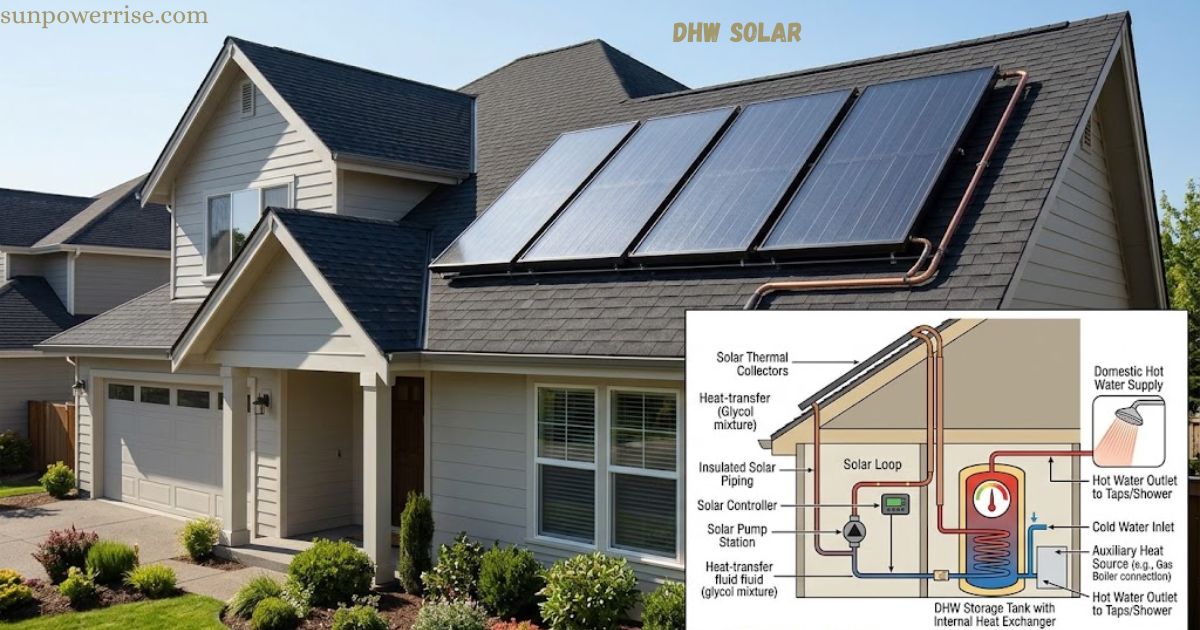
The process runs in three simple steps. In Step 1, Vitosol solar collectors on your rooftop catch the sun’s rays and solar radiation and turn them into usable heat. A solar absorber inside the collector grabs the heat energy, and this low-carbon heat is the heart of solar thermal systems. Both flat-plate solar collectors and evacuated tubes work this way.
In Step 2, solar fluid carries the thermal energy through pipes during heat transfer to the DHW cylinder, such as a Vitocell. In Step 3, the cylinder keeps stored hot water in an insulated tank until your building needs it at the draw-off points. The fluid cools, returns to the collectors, and the cycle starts again. When the sun is weak, your gas heating system or main heat generator steps in as central heating backup, so demand never goes unmet.
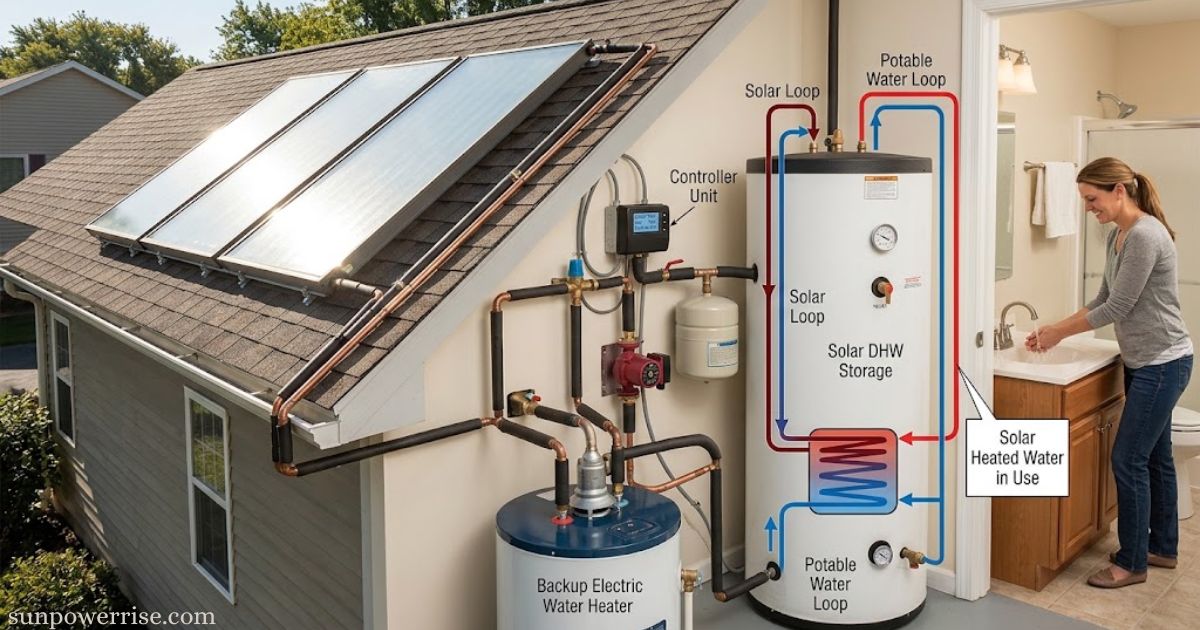
Unlike photovoltaic panels and PV modules, which make electricity, this system focuses on water heating. Its conversion efficiencies run several times higher, and its simplicity gives you warm water for bathing, cleaning and other household tasks. The catch is that mechanical components can suffer failure without regular maintenance, a lesson STEP learned in its projects. I keep an eye on DHW heating performance, and solar energy and sunlight do the rest.
Photovoltaics (PV) as an Alternative for DHW
Photovoltaics take a circuitous route to hot water. The solar cells in PV modules turn sunlight into electricity, while solar collectors in solar thermal systems make heat directly. That makes PV less efficient, yet the electricity can also feed other consumers, such as a heat pump, and a power storage unit or PV storage unit holds it for later.
A DHW heat pump like the Vitocal 262-A uses heat pump technology and takes its energy source from the environment. It draws on recirculation air, outdoor air, or extract air from an air distribution system. Your PV system can cover the electrical components that drive heat recovery. It also brings ventilation, which stops mould in basements.
Another option pairs an instantaneous water heater with a DHW cylinder. This decentralised DHW heating suits homes whose draw-off points sit far apart, because it cuts heat loss. The Vitotherm range offers electric instantaneous water heaters and wall mounted storage water heaters, and a PV storage unit keeps them running during sun not shining hours.
Professional Design for Optimum Demand Coverage
A well planned solar thermal system can supply about 60% of your DHW heating, and in the summer months it can reach 100%. Your main heat generator can then stay off, cutting heating costs and saving fossil resources. A control unit switches on the second heat generator when low solar radiation limits output, and central heating backup keeps things smooth.
Good system size and design decides how much demand coverage you actually get. I always say two things matter most: collector area size and cylinder capacity. Get those right and the clean solar energy on your roof works hard for you.
How Big Should Solar Collectors for DHW Be?
Your roof shapes the collector area size through its orientation, pitch and shading, and the type of solar collector matters too. Flat-plate collectors suit most family house roofs. Tube collectors give higher yields where limited space or non-optimum orientation holds you back.
For average DHW consumption of 50 litres per person, plan 1.0 to 1.5 square metres per person for flat plates and 0.8 to 1.0 square metres per person for tubes. I always tell friends to check shading twice, because one tall tree can undo a lot of good planning.
How Big Should the DHW Cylinder Be?
The number of people and occupants in your household set your DHW demand. Plan a cylinder volume of at least 50 litres per person, and add extra for appliances with high DHW consumption at the design stage. A DHW meter shows your actual demand, so it gives the best guide to the ideal size of the DHW cylinder. A Viessmann partner can run these numbers for you.
Why More Homes Are Turning to the Solar?
Homeowners like solar powered systems because they ease the monthly budget. Traditional water heating with electricity or gas often takes a large slice of it, while sunshine is an endlessly renewable free resource. The result is financial relief and long-term ease, and a sound investment in DHW solar.
Families keep their warm comfort and lower their energy consumption at the same time. Growing awareness of environmental responsibility also nudges more people toward this choice.
Wiser Future With DHW Solar
Modern convenience and mindful living meet in DHW solar. It cuts reliance on non-renewable energy, and it moves us toward a balanced tomorrow. Growing awareness will push more people to try it.
FAQs
Is it worth getting solar hot water?
Yes, for most households. A solar thermal system cuts your running costs and heating costs, and it can cover up to 60% of your DHW heating. It also gives you financial relief and a smaller environmental footprint.
What is DHW in a heating system?
DHW is Domestic Hot Water, the hot water your main heat generator or DHW cylinder supplies to your taps, morning showers and dishes. It covers your basic daily needs.
What is a disadvantage of a solar hot water system?
The mechanical components can suffer failure without regular maintenance. You also need a central heating backup for days with low solar radiation.
What is a hot water solar system?
It uses solar collectors on your roof to catch the sun’s rays and turn them into usable heat. Solar fluid then carries that thermal energy to an insulated tank that holds your stored hot water for later.
What does DHW stand for?
DHW stands for Domestic Hot Water, which is the warm water your home uses every day.
What is a good DHW temperature?
Most people keep the DHW cylinder at about 60°C to stay safe from bacteria, and they mix it down to around 50°C at the taps. That keeps your warm comfort without any scalding risk.