

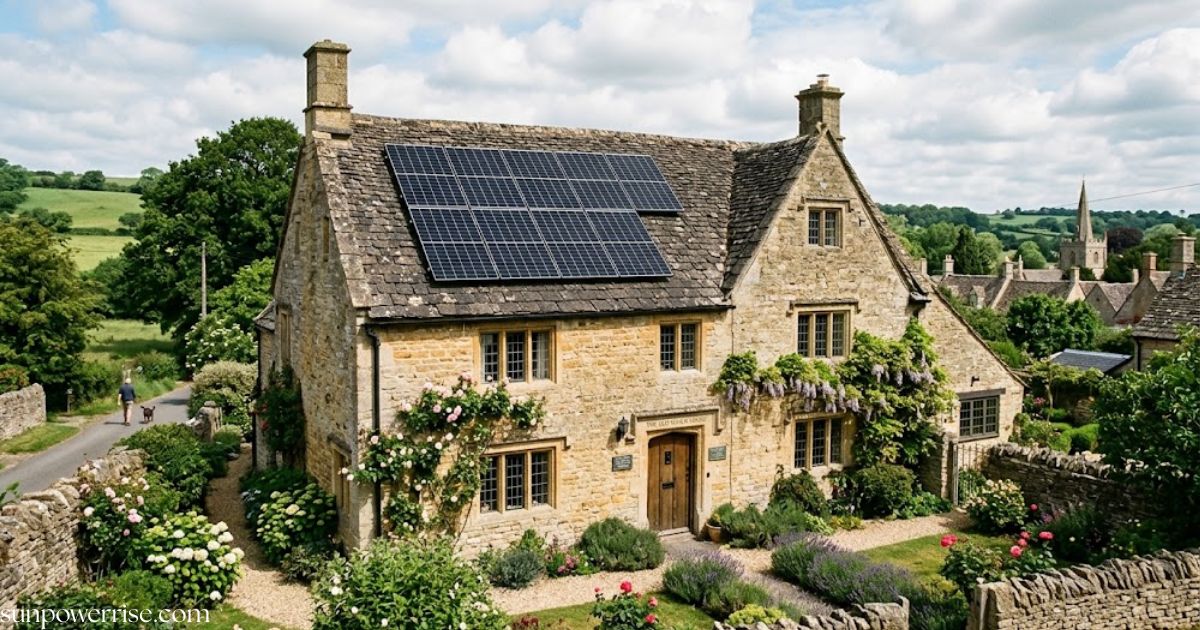
Solar panels on listed buildings are possible, but you must first obtain Listed Building Consent. Many homeowners ask me about this, and the answer depends on how well your design protects the home’s historic character. A listed status or a conservation area also removes the usual permitted development shortcut.
Solar Panels On Listed Buildings
Most houses use permitted development rights for a standard installation, yet a conservation area or a listed property removes that shortcut, and you may need planning permission as well.
The law is firm here. An unauthorised installation is a criminal offence, so nobody should start work without consent. Historic England backs the idea, and a spokesperson told Museums Journal in July 2024 that mitigating climate change and saving old buildings are compatible goals. About 370,000 listed buildings stood in England in November 2024, roughly 2% of the building stock.
A solar photovoltaic (PV) system can suit many of them if the team keeps it low-key. Smart design and discreet technology help, and the experts you hire matter a great deal. A prominent roof slope is usually off the table, so you look at less visible areas and get the panels fitted discreetly, so they never encroach on the appearance of the home.
Getting Listed Building Consent
Can you put solar panels on a listed building? Yes, you can, but only after your local planning authority grants Listed Building Consent. Work without it counts as a criminal offence, so always wait for approval before you start.
The hardest part is rarely the technology. It is the red tape. Listed Building Consent, or LBC, sits apart from a planning application and covers any work that could touch a home of special architectural interest or historic interest.
Your local planning authority makes the call. The local authority cares less about land use and more about your unique property, because LBC protects its historical soul. Your conservation officer wants proof that you respect the building’s character, and the process is about managing change, not stopping it, so handle each sensitive change with care.
The officers check the visual impact first. They review the colour, finish and arrangement of the panels, and they ask whether the aesthetics suit the existing structure.
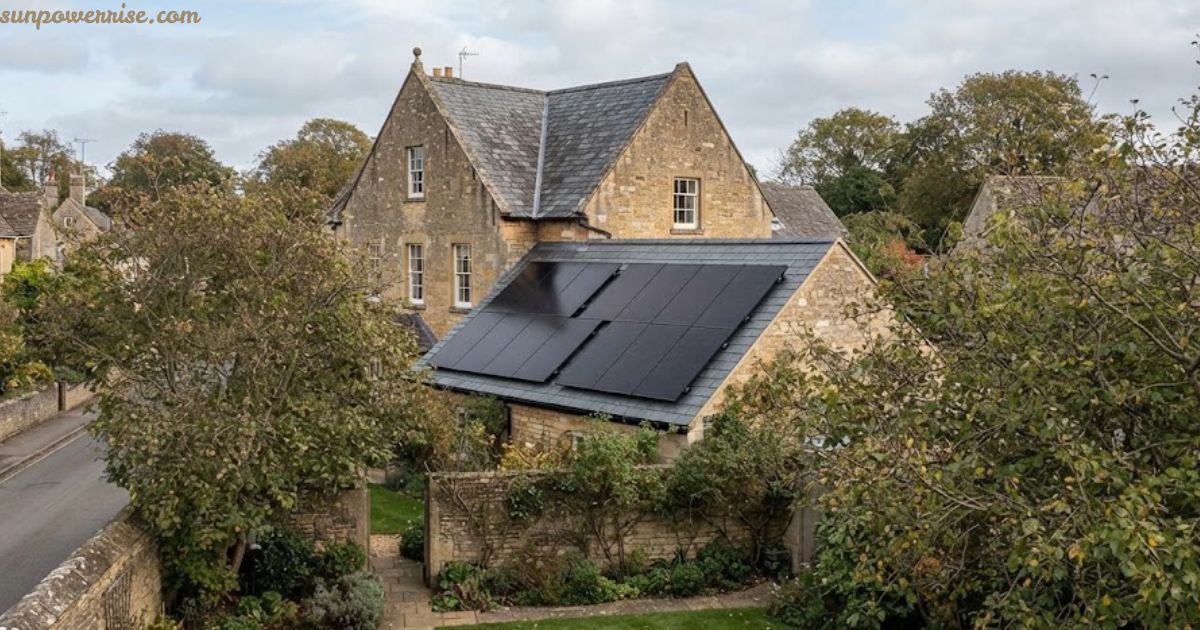
Historic England takes a helpful line on heritage buildings. In November 2023 it urged councils to approve solar installation and heat pump installations unless they cause unacceptable harm. Panels hidden from view usually pass, and so do roof slopes of less prominence. Aim for less visible roof slopes, keep the meter out of sight, and choose a reversible installation with non-permanent changes.
Process Of Application
An LBC application is no tick-box exercise. You need a methodical approach and an evidence-based case that feels watertight. A conservation architect is worth their weight in gold here, because they speak the language of planners and the local council. The work moves through three key stages.
First comes pre-application advice. You have an informal chat with the conservation officer, share your initial ideas, and hear their gut reaction and any specific concerns. That early feedback shapes the detailed design, where your team fixes the panel technology, the exact placement and the fixing methods, and writes the justification. Then the final design and the formal submission follow.
You can apply through the Planning Portal, or you can download forms from your local authority website. Your installer can also send it for you. It is usually free to apply, though fees may appear when the job joins other planning permission applications, such as an extension. A decision normally takes eight weeks, and some councils quote 6-8 weeks.
Benefits of Solar on Listed Buildings
Owners often search for solar panels listed building advice because their homes cost a lot to heat. Solar can cut energy bills by up to 70% and lower carbon emissions. Good planning keeps the roof safe and the heritage intact.
Listed homes are hard to heat. Many have poor insulation and outdated heating systems that burn fossil fuels, which bring high energy costs and a high carbon footprint. Energy efficiency is a real challenge for any heritage home, and owners feel it every winter.
Solar energy can reduce energy bills by up to 70%, so you save money and cut carbon emissions and your carbon footprint. You also lean less on grid electricity, especially expensive grid electricity, and you gain energy independence. Modern solar panels generate clean energy for 30 years with minimal maintenance.
What is a Listed Building?
A listed building appears on the Statutory List of Buildings of Special Architectural or Historical Interest. The UK has over 400,000 of them, from medieval cottages to Georgian townhouses. If you feel unsure about your home, check the National Heritage List for England.
Grade I vs Grade II Listed Building Requirements
The grading system has three levels: Grade I, Grade II*, and Grade II. Grade I means exceptional interest, like the Houses of Parliament and St. Paul’s Cathedral. Grade II* shows more than special interest, like Battersea Power Station and Shibden Hall in Yorkshire.
Grade II marks special interest, like Abbey Road Studios and Alexandra Palace, and it fits most homeowner cases. Only 2.5% of listed buildings are Grade I, 5.8% are Grade II*, and 91.7% are Grade II.
Real-World Examples
Searches for solar panels on listed buildings keep rising, and real projects show why. Chester Cathedral and King’s College Chapel both added panels with careful design and reversible fixings. Historic England supports this direction.
Georgian Terrace
A Grade II listed Georgian terrace in Richmond shows the approach well. The owner could not use the street-facing roof, because it defined the iconic front elevation, its symmetry and its roofline. The team chose integrated solar slates on a rear-facing roof slope, matched the colour and texture of the Welsh slates, and used photomontages to prove the public-facing character stayed intact.
The heritage statement relied on minimal intervention and complete reversibility. It showed that the fixings avoid historic timbers and protect the original fabric, so Listed Building Consent granted followed.
Victorian villa
A Victorian villa in Wimbledon sits in a conservation area in South West London, so the neighbourhood matters as much as the house. The complex roof had many gables and pitches, so the team ran a shading analysis to avoid mature trees and prominent chimneys.
They chose a side roof elevation, which stays visible but never dominates. A collaborative approach and a good architect beat planning hurdles, and these success stories prove that sensitive historic properties can go solar.
King’s College Chapel
King’s College Chapel at Cambridge University, a Grade-I listed building, added 497 solar panels in November 2023 during renovation work.
They will make 123,000 kWh and cover all its electricity needs. King’s Cross train station in London, another Grade I site, uses 1,392 solar panels, all custom-made glass laminate solar panels, across 2,300 square metres of glass roof. Installed in October 2012, they make 175,000 kWh and cut 100 tonnes of CO₂ in yearly CO₂ emissions.
FAQs
Does the 10 year rule apply to listed buildings?
No. Unlike ordinary planning enforcement, there is no time limit for unauthorised works to a listed building, so the local authority can act years later. Buyers should check that past alterations had Listed Building Consent.
What happens if you buy a property with solar panels?
You take over the solar panel system, so check whether the panels are owned outright or leased, and ask for the warranty and installation certificates. On a listed home, also confirm that Listed Building Consent was granted for the installation.
Why is it harder to sell a house with solar panels?
Leased panels and older systems can worry buyers and mortgage lenders, and some fear roof damage or repair costs. Owned panels with clear paperwork and a good warranty usually help the sale instead.
Can I put a new kitchen in a grade 2 listed building?
Often yes, but you need Listed Building Consent if the work affects original features, layout or historic fabric. A like-for-like swap of a modern kitchen may not need it, so ask your conservation officer before you start and protect the home you love.
What can you not do with a listed building?
You cannot alter, extend or demolish any part of it, inside or out, without Listed Building Consent. That covers original features such as windows, doors, roof materials and fireplaces, and breaking the rule is a criminal offence.