

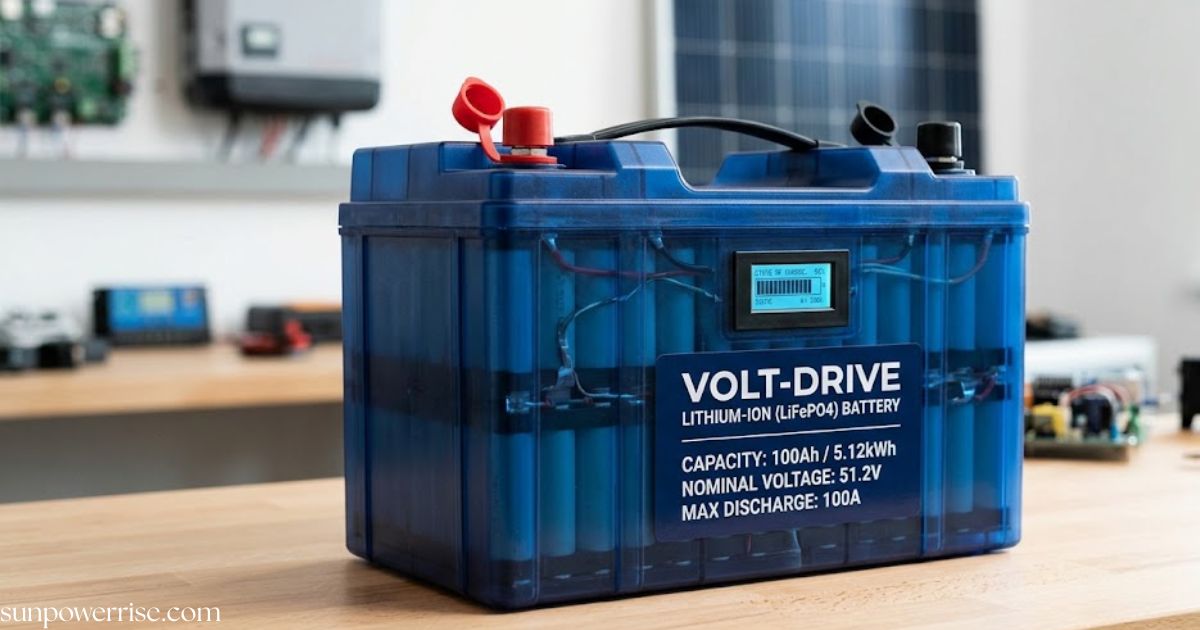
A lithium battery changes the game the moment you actually understand what it can do, and I got asked one too many times about switching power sources before I finally sat down to explain it properly.
What Is A Lithium Battery
What is a lithium battery, really, beyond the marketing buzzword? It’s a rechargeable cell built around lithium chemistry that stores far more energy per pound than older options, and comparing a lithium battery and a traditional lead acid setup side by side makes that obvious fast.
Most people make the same hidden mistake without realizing it they hear “lithium batteries” and assume every option performs the same, but the truth involves real price points, real weight differences, and a lot of confusion around battery options like AGM versus sealed lead acid batteries.
A smarter choice starts with a thorough understanding of what actually separates a best lithium battery from an average one not just marketing, but performance, size, state of charge, and how long your setup lasts before you’re spending money you didn’t plan for.
Temperature / Cold Weather Considerations
Cold weather changes everything about how a battery behaves, and this is one area where lithium batteries genuinely struggle compared to older technology. Sealed lead acid batteries handle freezing temperatures reasonably well because of their basic chemistry, but lithium cells should never be charged when they’re below freezing they can still discharge in cold conditions, just not take a charge safely.
If you live somewhere with harsh winters, don’t store your battery in a shed; move it to a warmer place instead, and consider a model with low-temperature protection or one that can heat itself when temps drop.
For optimal performance, keep lithium cells around 68°F (that’s 20°C for my metric readers), and whether you’re running AGM or lithium in colder climates, never set the battery straight on a concrete floor always slide an insulating barrier like a wooden board underneath first.
Size / Footprint
Here’s something that surprised me the first time I measured two batteries side by side: a 12V sealed lead acid unit rated at 200Ah measured roughly 20.5 inches by 9 inches by 9 inches, while a lithium iron phosphate battery with the same amp hours came in at just 11.5 inches by 10.5 inches by 8 inches.
That’s a noticeably smaller footprint for the exact same power rating, which matters more than people think when you’re trying to save space in a van, boat, or off-grid cabin. Once you actually compare the numbers, it’s obvious why lithium wins this round without much argument.
Weight
Lifting these lithium battery batteries side by side told me everything the spec sheet couldn’t. A sealed lead acid battery at the same amp-hour rating as a lithium battery is typically 2-3 times heavier, and you feel that difference the moment you try to install one in a tight compartment.
This is a big reason installers and travelers alike prefer lithium when weight is a real constraint, not just a nice-to-have.
Usable Capacity / Depth of Discharge
This is the part most sellers gloss over, and it’s arguably the most important number in the whole conversation.
Depth of discharge describes how much of a battery’s rated capacity you can safely use for sealed lead acid or AGM, going past 50% discharged risks permanent damage, meaning a 200Ah battery really only gives you 100Ah of usable power.
Lithium battery lithium iron phosphate cells flip that math entirely: they can be cycled down to 80-90% or more for the longest cycle life, which means you’re getting closer to the full capacity you actually paid for, instead of losing half of it to a safety margin.
Price
Sticker shock is real here, so let’s be honest about it. A 200Ah AGM battery runs around $400, while a 200Ah lithium battery especially LiFePO4 costs closer to $1,000, and that gap makes plenty of buyers hesitate before they replace their old setup.
But stretch that out over time: sealed lead acid typically lasts 3-5 years (maybe 7 years if you baby it), meaning you’ll buy it again 3-4 times over the same period a single lithium battery survives, since lithium routinely lasts 10-20 years.
Do the math on upfront cost versus long-term value, factor in colder climates where AGM still has an edge, and you’ll usually land on lithium as the cheaper option over its full lifespan.
5 Best Lithium Batteries
#5 High Sincere 12V 100Ah LiFePO4 Battery
The High Sincere 12V 100Ah LiFePO4 pack is built for people who need dependable power without the bulk think RVs, trolling motors, camping setups, and home energy storage.
At just 19.73 lb, it’s lightweight enough to carry with one hand, yet it delivers 2x energy compared to old lead acid batteries and holds up through 15,000 deep cycles, which is a serious number for anyone who cycles their battery daily.
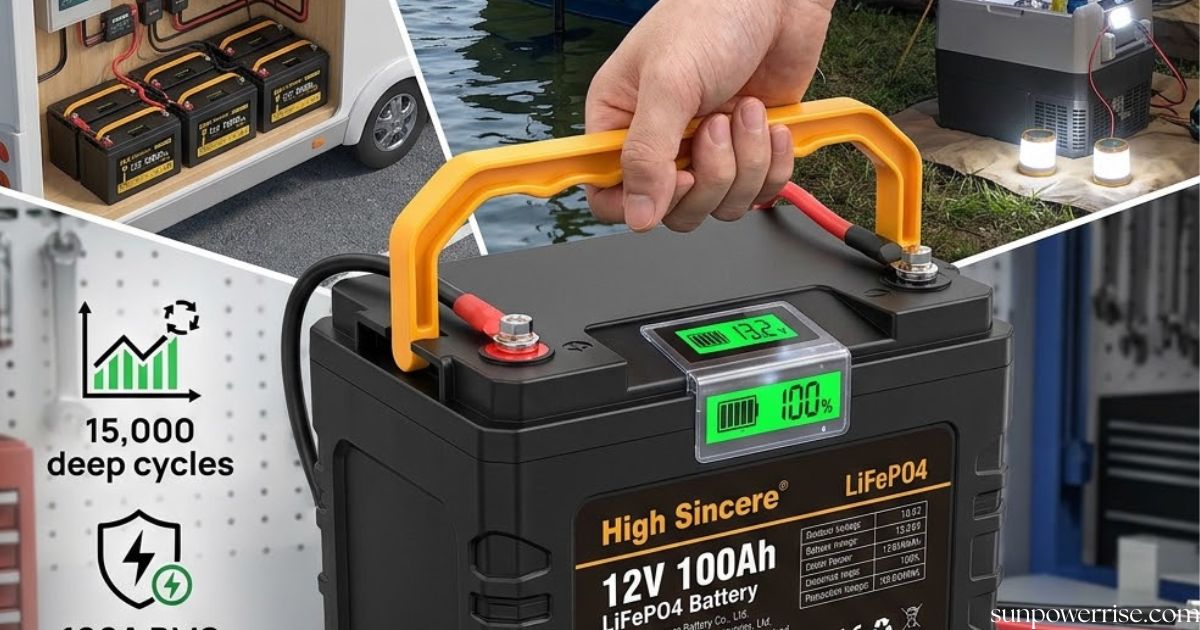
A 100A BMS guards against overcharge, over-discharge, and short circuits, while the LED display gives you real-time voltage and capacity readings, and with an expandable setup reaching 20.48 kWh in a compact Group 24 size, it’s a genuinely maintenance-free solution for consistent power.
#4 DC House 12V 165Ah LiFePO4 Battery
DC House built their 12V 165Ah LiFePO4 battery with boats, RVs, solar setups, and trolling motors in mind, and the flame-retardant metal shell shows they took safety seriously.
Weighing just 42 lb despite the power on tap, this lightweight unit pairs Bluetooth monitoring with app tracking for voltage, SOC, and faults, so you always know exactly what’s happening inside the pack.
Backed by low temperature protection, 10 years of expected durability, 15,000 cycles, and expandable capacity, it’s a genuinely high-performance option for anyone chasing long-term reliability.
#3 LiTime 12V 200Ah LiFePO4 Battery
LiTime’s 12V 200Ah LiFePO4 battery is one I’d point boaters and off-gridders toward without much hesitation, since it delivers 2560Wh of energy and 1280W load capacity from a body weighing only 41.6 lb a fraction of what old lead acid setups weigh.
EV-grade cells and IP65 waterproofing mean it holds up in marine environments and extreme conditions, while the 100A BMS, Bluetooth 5.0 monitoring, and low temp protection keep everything running safely behind the scenes. Rated for 15,000 cycles and a 10-year lifespan, this battery balances efficiency, durability, and value for anyone running solar setups off-grid.
#2 NOCO Lithium NLX31
NOCO’s NLX31 takes a different approach as a dual-purpose battery, meaning it handles both starting power and deep cycling in one 12V unit for automotive, marine, RV, and off-grid use.
It delivers 1,600A peak starting power alongside 120A deep cycle capacity, and the built-in BMS paired with rugged construction resists vibration, water, and dust better than most competitors in the same Group 31 footprint.
With faster charging a full recharge in just 2.4 hours up to 6,000 cycles, sturdy terminals, and lighter weight than lead acid batteries, it offers genuinely long-lasting reliability for demanding daily use.
#1 Vatra Power 48V 105Ah LiFePO4 Battery
Vatra Power’s 48V 105Ah LiFePO4 battery is aimed squarely at golf cart and automotive performance upgrades, built from Grade A cells to deliver 5.37 kWh of capacity and up to 10.24 kW output.
A smart 200A BMS works alongside an IP67, fire and shock-resistant metal case to keep things safe, while a touchscreen monitor and mobile app control let you manage everything from your phone, and 5.5 hour charging gets you back on the road fast.
Rated for 4,000+ cycles with zero maintenance, lighter weight than old alternatives, a 50 mile range, and stronger acceleration, it’s built for long-term durability and real value for anyone who wants safer operation.
Short Circuit Protection
This is the part I wish more people understood before wiring their own system, because lithium’s low internal resistance means a short circuit current can spike dramatically.
Estimate it by multiplying amp hour capacity by ten so a 12V, 100Ah battery could see up to 1,000 amps, and higher voltage levels raise the stakes further since an arc can jump across fuse contacts.
A standard mega fuse tops out around 2,000 amps at 32 volts, which isn’t enough for a 48 volt lithium battery that could hit 4,000 amps on a 24V 400Ah battery; that’s where CLASS T, NH fuses, MRBF, ANL, or Class D fuses come in, and even a 48V 100Ah server rack setup needs one of these upgraded fuses rather than something rated for old lead acid systems.
Battery-to-Battery (B2B) Charging
If you’ve ever charged a lead acid battery straight off your van or boat’s alternator, you probably used a battery isolator but that same setup can cause dangerously high currents with lithium because of its lower internal resistance.
A B2B charger, also known as a battery to battery charger, exists specifically to regulate current flow and keep charging safe, protecting your alternator and your new battery at the same time.
Disposal and End-of-Life Care
Eventually, every pack wears out, and knowing how to dispose of lithium batteries properly matters just as much as picking the right one to begin with.
Tossing a dead cell in the regular trash is a fire risk and an environmental mistake, so most people search how to dispose of lithium ion batteries the moment their pack stops holding a charge reliably.
If you’re asking yourself how do i dispose of lithium ion batteries safely, the short answer is to take them to a certified battery recycling center or a retailer drop-off point rather than a curbside bin many hardware and electronics stores accept old packs specifically for this reason, and proper recycling keeps valuable materials out of landfills while preventing thermal runaway during transport.
FAQs
What is the biggest drawback with lithium batteries?
The biggest worry is safety around short circuits and overcharge, since lithium’s low internal resistance can cause dangerously high currents if the wrong charger or fuses are used. That’s why a good BMS and proper charge controller settings matter so much.
What is the difference between a lithium battery and a regular battery?
A lithium battery is lightweight, offers full usable capacity, and lasts 10-20 years, while a sealed lead acid battery is heavier, loses half its capacity to depth of discharge limits, and typically only survives 3-5 years. It’s a big difference once you actually feel the weight in your hands.
Is there any danger to a lithium battery?
Yes, if you skip the right fuses, charge controller settings, or charge it below freezing, you risk short circuit current spikes and permanent damage. Treat it with a little respect and it’ll take care of you for years.
What is better than lithium battery?
Right now, nothing widely available beats lithium, especially LiFePO4, on cycle life, durability, and efficiency, solid-state batteries are promising but aren’t yet a real replacement on the market.