

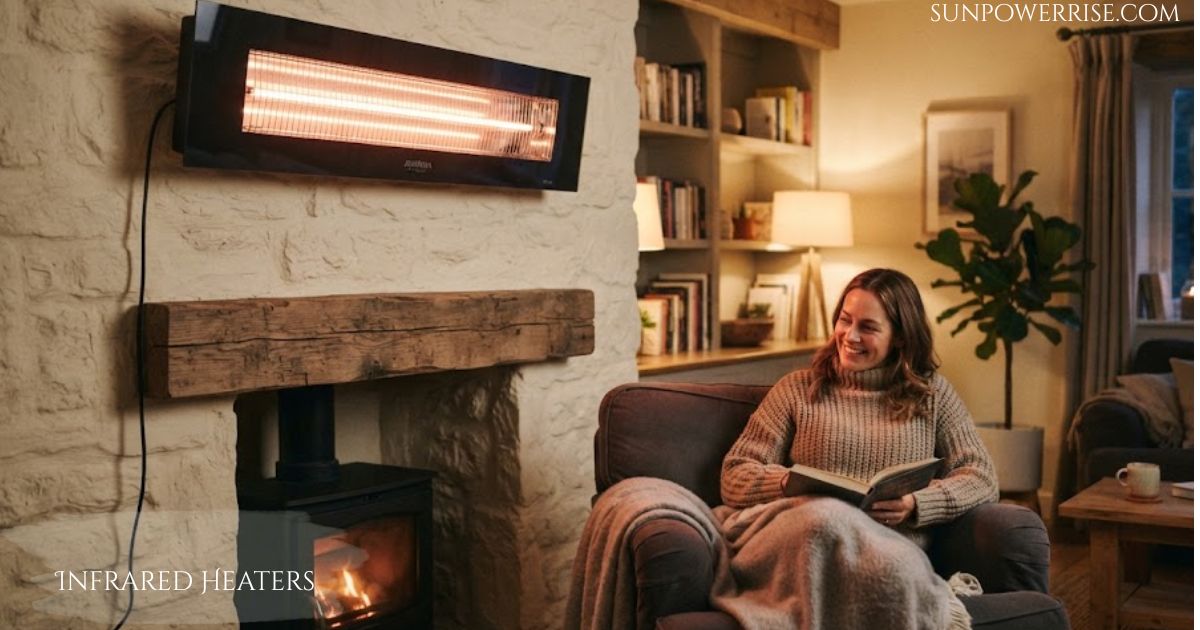
I still remember the first time I felt real, pleasant warmth wash over me from a small infrared heater at a friend’s workshop, and that curiosity is what pushed me to learn everything about infrared heating.
At its core, this is simply direct electric heating, and you find it everywhere from busy factories and shops to quiet offices, warehouses, and production halls. Homes use it too, usually through heating panels fixed to a wall or ceiling, though some units are free-standing and get wired into your electricity supply by a qualified electrician.
Manufacturers like Tansun have spent 40 years perfecting this concept of infrared heating, and today they are recognised as the UK’s leading manufacturer, having pioneered much of the innovative shortwave technology behind modern designs.
From mains-powered wall units to full heating applications designed for outside spaces, there really is a range of infrared heaters and types of infrared heating elements to match nearly every need, all built around one simple idea: warmth that feels like sunshine, delivered straight from the heating element itself.
How Infrared Heater Works
An electric heater built for infrared use often goes by another name, like a radiant heater or a thermal wave heater, and once you understand the difference, everything makes sense. A normal radiator works through convection, where it simply heats the air, and that warm air then circulates your rooms until the whole room feels cosy.
Infrared does something else entirely: instead of warming the air, it sends heat via radiation, radiating outwards and landing directly on objects, surfaces, furniture, and people in its path, so the feeling is more direct, more pleasant, and gently warming.
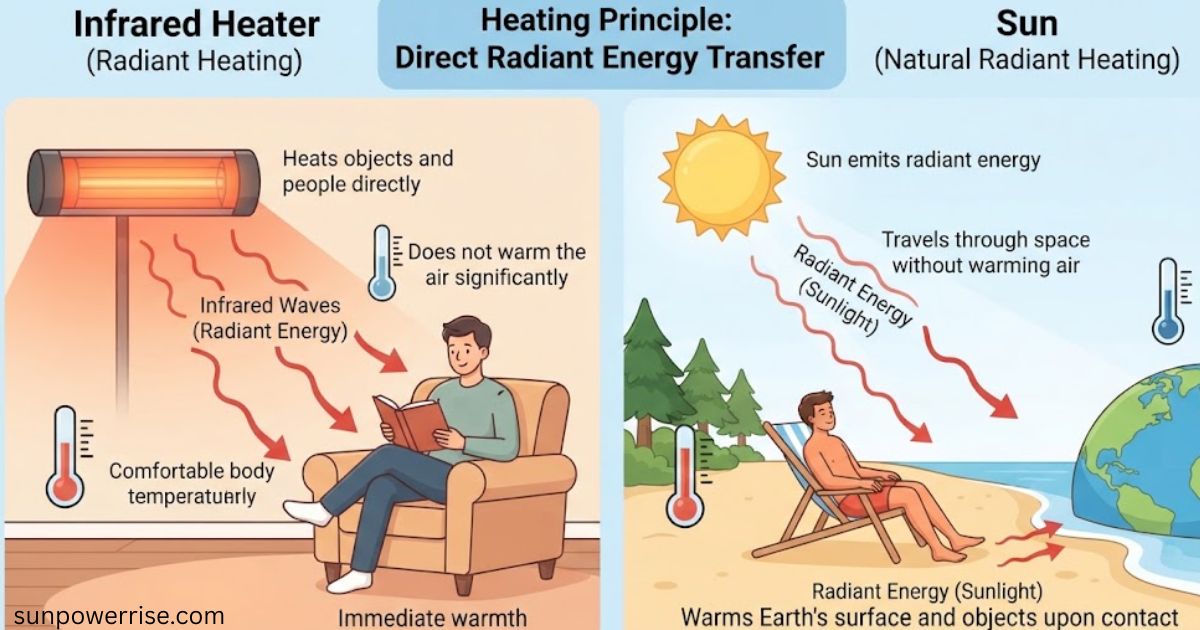
Think about standing in sunshine on a cold day your skin feels the warmth even though the air around you stays chilly, while stepping into the shade makes you cooler almost instantly, and that is exactly the sensation this kind of heating creates indoors.
Range of Infrared Heaters
Once you start comparing models, you quickly see how many shapes an infrared unit can take.
Icon Infrarot Range
The Icon Infrarot range gives you flat infrared radiators, only about 2.4 cm thick, that get mounted on walls or the ceiling for living spaces and working spaces, staying on quietly through the whole heating period.
Heat Wave Heaters
If you want something stronger, the Heat wave heaters bring a metal housing with a grid look and a genuinely powerful 2000-watt heating output.
Infrared Patio Heaters
The infrared patio heaters move that same idea outdoors, warming outdoor areas and private areas like a terrace or balcony, and even commercial areas such as covered beer gardens or smoking areas in deep winter. For smaller, gentler jobs, units built for bathrooms and changing tables get hung where warmth is needed selectively and irregularly, which matters when a baby does not want to freeze after bathing or changing.
Tansun Product Lineup
Tansun’s own lineup adds even more choice: the Rio family covers weatherproof infrared heaters for every season, complete with a safety guard as standard, from the compact 1.5kW Rio IP through the 2kW Rio Grande Single to the 3kW Rio Grande Double.
The Bahama range uses glare-reducing gold reflectors and low-glare lamps, sold as single or double units, while Eclipse heaters go further with zero-light ceramic infrared heaters built for no-glare heating, thanks to ceramic heating technology that delivers roughly 35% more energy efficiency than older near-infrared products. You can pick the Eclipse Double, the 2.25kW Eclipse Triple, or the Eclipse Quad.
Monaco and Monaco XL stay in the low-glare heaters family and suit large areas, working indoors and outdoors as single, double, or triple units up to 4.5kW, and the XL models stretch from 2.4kW to 4.8kW and 7.2kW.
The Riviera Elite stands as a free-standing aluminium heater with instantaneous warmth across roughly 35 square metres, a favourite for commercial restaurant settings, and it comes in several kilowatt configurations up to 6kW.
Sorrento is prized for its easy installation and aesthetics, available up to 4kW, while the Apollo suits big industrial areas and large open spaces, and Apollo Recess fits neatly into offices and reception areas. Smaller helpers round out the range: the Beaver gives portable spot heating, the Rio Ip suits parasols and domestic applications, Sorrento Ceramic offers no-glare ceramic medium wave comfort, and the Spotter works as a mobile heater built for emergency heating.
Advantages of Infrared Heating
Fast Reaction and Simple Installation
What sold me personally on infrared was how fast it reacts: press a switch (a simple touch of a button) and you feel immediate heat almost like an instant reward, since most panels reach peak performance in about 5 minutes, with no heating-up period required.
Installation stays simple too an easy installation usually means fixing the unit to a wall or ceiling and connecting it to a socket, and because it counts as easy to install and cost-effective, it works out less expensive to repair or replace than conventional heating systems.
Maintenance-Free and Allergy-Friendly
Day to day, it stays almost maintenance-free, needing only light dusting, wiping, or normal cleaning, and because there is no stirring up of dust or movement of air, it does not spread bacteria or viruses, which makes it genuinely hygienic and a relief for allergy sufferers.
The warmth itself feels different too, closer to pleasant direct warmth or the touch of the sun’s rays on your skin, and because the panels come in various designs and design elements, you can fold them into your interior planning without them looking like an appliance.
Targeted Comfort and Smart Integration
Because it only warms objects and people rather than the empty air, you avoid the problem of no overheated rooms, which does wonders for everyone’s well-being, and most units are now smart home compatible, so a turn-on command from your phone reaches a wall-hung or ceiling-mounted panel instantly.
Silent Operation and Zero Heat Loss
It also runs completely silent, with no noise, no pipework to install, and you simply plug in and go, choosing directional heat or spot heat for exact zones of a room or a whole warehouse, which keeps saving energy and costs down through no heat loss the panel warms everything in its path without losing heat to the surrounding air.
Maintenance
Old-fashioned radiators ask a lot from you, since you need to get them vented and cleaned again and again, and a chimney sweep still has to check heating system parts once a year. Infrared heaters simply eliminate most of that hassle, because they don’t need much maintenance at all and could last a long time with barely any attention.
Being IP rated and largely maintenance-free, they only ask for regular wiping to remove dust that might accumulate on top, and that fits neatly into the normal cleaning you already do around your rooms, alongside the zero pre-heating time you get every time you switch one on.
Is infrared heating safe?
Safety is the first thing most people ask me about, and thankfully infrared heaters tend to run cooler than you’d expect: surface temperatures stay lower than many other secondary heaters used in homes, which cuts the risk of burns.
Even so, a unit can still feel hotter than a standard radiator, usually staying under 100°C, so it is worth checking with a retailer or installer to confirm a model is suitable and safe for your space.
You can even save energy while staying warm enough, though a lower air temperature elsewhere in the room can bring condensation risks, dampness, and mould if you skip proper ventilation, so I always recommend keeping an eye on cold spots.
Designs
Some owners want their heater to disappear into the room, while others want it to shine as a feature, and infrared covers both tastes easily. The inconspicuous heaters in the range are infrared metal heaters, finished in elegant white and only 2.4 cm deep, which suits purist interior design styles perfectly and lets them heat rooms inconspicuously.
For anyone drawn to unusual designs, white textured metal radiators bring an elegant finish with a textured look that helps distribute heat more evenly across the panel.
Then there are the natural stone infrared appliances, a genuine eye-catcher and design element in any home, pairing innovative infrared technology with real natural stone in two colours, snow and sand, creating a modern combination that becomes a real highlight in your rooms while still giving off that familiar pleasant warmth.
A Comprehensive Range
Beyond the heaters themselves, a proper setup includes plenty of heater accessories, from controllers and time lag switches to simple bracketry for mounting. Between the ceiling heaters, low glare heaters, outdoor commercial heaters, and mobile heaters on offer, you get one of the most energy-efficient and cost-effective heating systems around, whether you call it infrared or by its older name, quartz heaters.
Conclusion
Taking everything together, infrared heaters offer an optimal solution for rooms used irregularly, for well-insulated new buildings, and for people with dust allergies who want cleaner air at home.
Anyone who loves the feel of sun’s rays on skin tends to end up really happy with this kind of warmth, and if you run on pure green electricity, whether you buy it or produces it themselves, this counts as a genuinely sustainable type of heating.
With such a wide range of different infrared heaters available for both private and commercial use, there is almost always a model that fits your exact space.
FAQs
Do infrared heaters drive up your electricity bill??
No, most infrared heaters use similar amounts of electricity to other panel heaters, typically 350 to 900 Watts per panel.
What are the downsides of infrared heaters?
Infrared heaters can bring higher operating costs, work poorly in poorly insulated houses, and get no government subsidies.
Why is infrared heating not popular in the UK?
Infrared heating runs on electricity, which costs four times as much as gas, so many stick with gas central heating instead.
Which is better, an electric heater or an infrared heater?
An infrared heater often wins for pleasant direct warmth and hygienic, dust-free heat, while a standard electric heater just heats the air.
Can I leave my infrared heater on all night?
Only if it’s installed professionally and designed for safe use during the night always unplug portable panels before bed.