

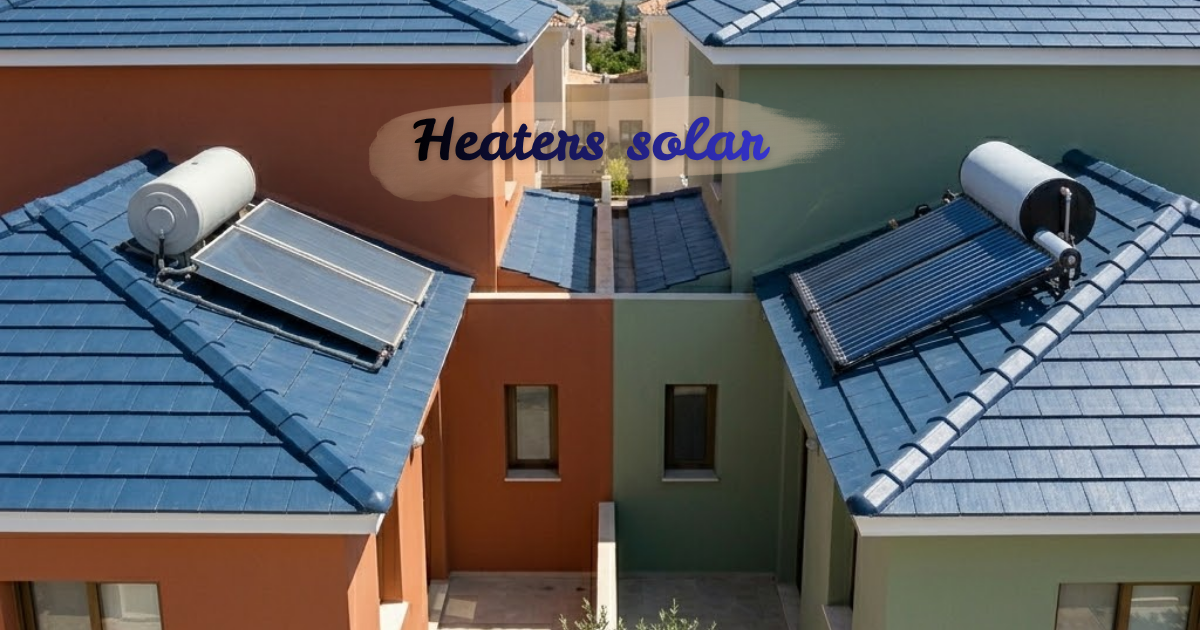
A heaters solar for a pool uses solar energy from the sun to warm pool water, reducing reliance on electricity and fossil fuels.
A solar heater is any system that uses collectors to capture energy from the sun and turn it directly into heat for a swimming pool, a home’s hot water supply, a greenhouse, or even the air inside a building. Instead of burning gas or drawing electricity to produce warmth, a solar heater lets sunlight do that work.
There are two broad ways this happens: passive systems, which move heated water using nothing but gravity and natural convection, and active systems, which use a pump to circulate water or fluid through the collectors.
It’s also worth separating heaters solar from solar PV panels early on. PV panels generate electricity, which could power an ordinary electric heater, while a solar thermal heater (the type covered on this page) produces heat directly, with no conversion to electricity in between.
How Heaters Solar Actually Work
Strip away the different names pool heater, water heater, space heater and the mechanism barely changes. Water or air is pushed through a dark collector, sunlight raises its temperature, and it’s carried to wherever the heat is needed.
In a pool system, the pool’s existing pump sends water through a filter and then through the solar collector before it flows back into the pool.
In a household hot water system, roof-mounted collectors heat a water-and-antifreeze mixture, which then transfers that heat into your hot water cylinder. Passive systems skip the pump altogether, relying on heated water naturally rising while cooler water sinks to keep circulation going on its own.
Do Solar Heaters Actually Work?
Yes but the honest answer comes with a few conditions worth understanding before you buy, rather than after. Real-world output depends mainly on three things:
- Sunlight. This is the dominant factor by far. Cloud cover doesn’t switch a solar heater off, but it does reduce what it can deliver on any given day.
- Wind. Often ignored in the sales pitch, wind strips heat away from exposed collectors even under clear skies, which is one reason rooftop systems sometimes underperform their summer estimates.
- Collector type versus climate. Unglazed collectors rugged rubber or plastic with no glass cover are the cheaper option and work fine in consistently warm climates, but their efficiency drops off quickly once temperatures fall. Glazed collectors, built with copper tubing under tempered glass, cost more but keep performing through colder, year-round conditions a more realistic choice for most of the UK.
For a typical UK household, that translates into a predictable seasonal pattern: solar heating can supply as much as 90% of hot water needs in summer, falling to roughly 25% in winter. That swing is exactly why nearly every UK solar heating installation runs alongside a backup boiler or immersion heater rather than trying to replace one outright.
One figure worth adding here: the U.S. Department of Energy estimates solar water heaters can lower a household’s water heating bill by 50–80%, depending on climate, system size, and household demand. That’s a wider and more honest range than the flat “half your bill” estimate you’ll often see quoted without a source.
Solar Pool Heaters
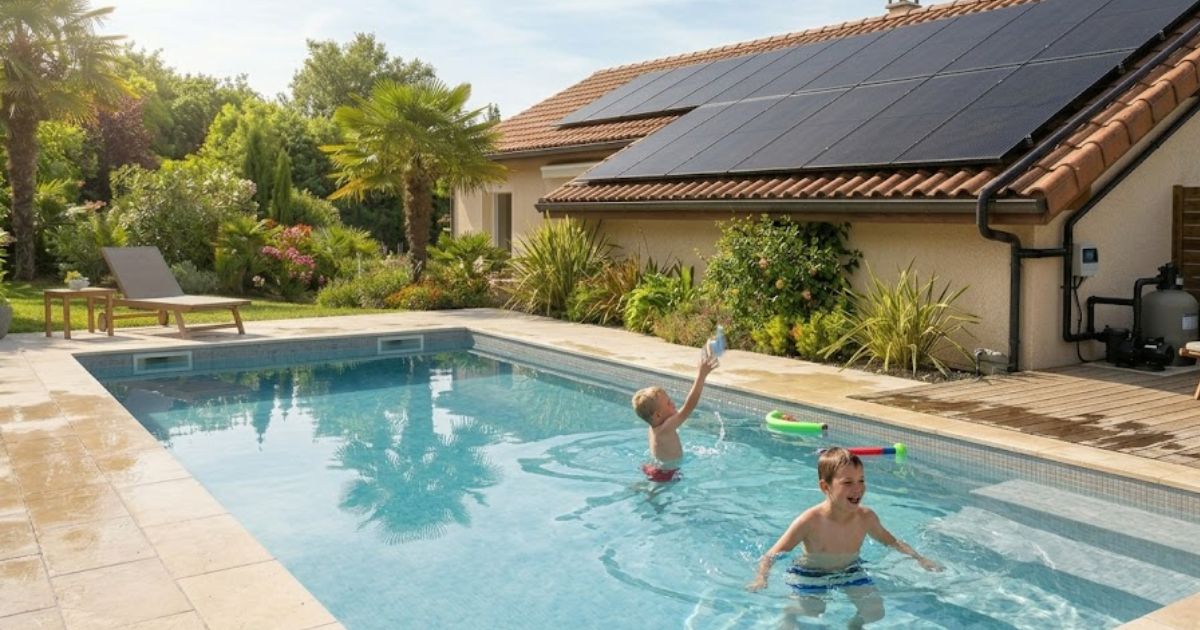
A solar pool heater warms swimming pool water by circulating it through collectors mounted on a roof or laid along a poolside surface, cutting the electricity or gas a conventional pool heater would otherwise use.
Floating and surface systems
They are usually the easiest entry point for above-ground pools. Rather than mounting anything, these units sit directly on the water’s surface, absorbing sunlight and passing heat straight into the pool no pipework, drilling, or scaffolding required. For homeowners who want to test solar heating without a full installation, this is typically where they start.
Budget-friendly options like Bestway’s solar pool heater have become popular in the UK largely because they connect into a pool’s existing pump system without needing a boiler or immersion backup. It won’t match a full solar thermal setup, but for smaller above-ground pools the electricity savings add up over a summer season.
In-ground pools
They hold far more water, so their collectors have to work harder which is why larger flat-plate collectors or evacuated tubes are more common here than the smaller floating units. Installation is usually less disruptive than it sounds, since the system ties into the pump and pipework you already have.
A detail worth knowing before you buy
Most homeowners who install a solar pool heater see it pay for itself in under seven years, with a well-installed system typically lasting 10–20 years and needing very little ongoing maintenance. That payback window matters more than the sticker price alone.
One low-cost tip that changes the numbers
Using a pool cover overnight can noticeably improve how much heat a solar system retains, since uncovered pools lose far more warmth after dark than covered ones. Pairing a solar heater with a simple cover is one of the cheapest ways to get closer to the system’s advertised performance.
For UK buyers, look for MCS-certified systems with solid product and workmanship warranties, and treat the “25% in winter, 90% in summer” pattern as the baseline expectation rather than a worst-case scenario.
Solar Space (Air) Heaters
This is a category most solar heater guides skip past, but it’s a genuinely different product from a water heater.
A solar space heater warms the air inside a building rather than water in a tank. It works on the same principle: collectors absorb solar energy and pass the heat along, but space heating systems typically need more collector area and larger storage capacity than a water heating setup of similar output.
Like water heaters, they come in passive form (heat gathered and circulated naturally, similar to how a greenhouse warms up) and active form (fans or pumps moving the heated air or fluid).
Well-designed solar space heating can cut a building’s heating costs substantially, though most local building codes still require a conventional backup system alongside it. Solar space heating supplements a home’s heating; it doesn’t replace it entirely.
Solar Greenhouse Heaters
A solar greenhouse heater converts sunlight into stored heat to keep a greenhouse warm without relying on grid electricity, which lowers both fuel bills and carbon footprint for growers.
This matters most in remote or off-grid settings, where reliable power for heating isn’t guaranteed. Using either photovoltaic panels or thermal collectors, these systems generate and store enough heat to hold a steady temperature with no grid connection needed for growers in rural parts of the UK, that independence can justify the upfront cost on its own.
Kits
Kits bundle the panels, storage heater, pipes, fluid, and controls into one system rather than requiring you to source everything separately. Most modern kits add Wi-Fi control and set-point temperature settings, along with the option to top up with off-peak electricity when sunlight runs short a feature that matters more during UK winters than most buyers expect going in.
Thermostat control lets the system regulate heat output automatically around a set-point temperature, preventing overheating in summer while maintaining warmth through cold nights.
Battery-equipped systems
It store surplus electricity generated during the day for use at night or during outages, giving continuous heat delivery even when the grid or sunlight isn’t available.
When comparing options for sale, weigh cost, system size, and collector type (evacuated tubes versus flat-plate) alongside the product warranty; reputable suppliers will also cover flush cycles and fluid-mix replacement, typically needed every five years.
Solar Water Heating Systems
A solar water heater uses roof-mounted collectors to warm a water-and-antifreeze mixture, which then transfers its heat into your hot water cylinder. As covered above, output swings with the seasons, with around 90% of hot water needs met in summer and closer to 25% in winter, with a backup boiler or immersion heater covering the gap.
A complete system has five main parts: the roof-mounted collectors, the hot water cylinder, a circulation pump, pipework, and a control panel. None of it is complicated once installed, but the installation itself should go through an MCS-certified contractor both for safety and to protect any grant eligibility. One maintenance detail people often miss: the system needs flushing and a fluid-mix replacement roughly every five years to stop performance quietly dropping off.
On pricing: a 200-litre system’s cost depends on cylinder capacity, collector type, and regional labour rates. A full UK household installation averages around £6,000, and it’s worth getting at least three quotes through the Microgeneration Certification Scheme (MCS) directory before committing, comparing not just price but workmanship guarantees and warranty length.
Panels and Collector Technology
A solar panel heater captures sunlight and transfers it as heat through liquid-filled pipes into a hot water cylinder or thermal store. Choosing between options comes down to roof orientation, available sun exposure, household hot water demand, and a choice between evacuated tubes and flat-plate collectors.
The distinction worth remembering: solar PV panels generate electricity, while solar thermal panels convert sunlight directly into heat. They’re designed to work alongside a boiler, immersion heater, or heat pump rather than replace one outright covering up to around 90% of hot water needs in summer and dropping to roughly 25% in winter, the same seasonal pattern that runs through every solar thermal application on this page.
The best options are MCS-certified, hold up well in cloudy weather, and come with solid workmanship and product warranties. Evacuated tubes tend to capture more energy in lower light, making them the more common choice for UK installations, while flat-plate collectors are often simpler to integrate into a standard roof.
On pricing across the UK
Panel and system prices vary by size, collector technology, and regional labour rates across England, Scotland, Wales, and Northern Ireland full installations averaging around £6,000.
Savings of roughly half of annual hot water costs are typical, which is what makes that upfront figure worthwhile over the system’s working life.
As with any major purchase, compare at least three quotes, check workmanship guarantees and annual service terms, and factor in the five-yearly fluid-mix replacement as part of the real long-term cost.
FAQs
Do solar-powered heaters work?
Yes, they capture sunlight through solar collectors and turn it into real, usable heat, cutting your reliance on gas or electricity. It’s quiet, dependable warmth straight from the sun.
What kind of heater can run on solar power?
Water heaters, pool heaters, space heaters, and greenhouse heaters can all run on solar energy, using either solar thermal panels or PV panels paired with an electric heater.
Can I run a heater off solar panels?
Yes, PV solar panels generate electricity that can power a standard electric heater, though a dedicated solar thermal system is usually more efficient for heating water or air directly.
What is the best solar-powered heater?
The right choice depends on your need: evacuated tube collectors suit colder climates best, while flat-plate collectors offer solid, budget-friendly efficiency for milder weather.
What is the cheapest way to heat your house in the winter?
A well-insulated home paired with passive solar heating and smart thermostat use is the most affordable route, small habits that bring real savings and cozy comfort.
Which solar heater is best for a home?
For most homes, an MCS-certified solar thermal system with glazed collectors offers the best balance of reliability, year-round performance, and long-term savings.