

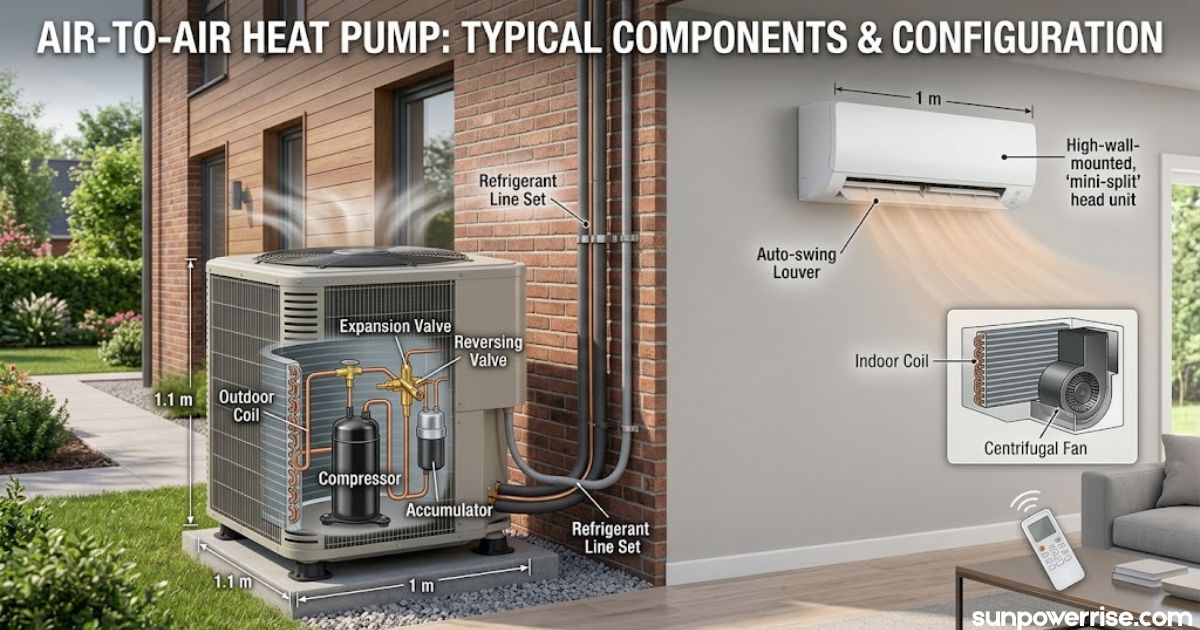
An air to air heat pump pulls energy from the outside air and moves it into your home, so it can both heat and cool the space depending on the season. In winter, it warms indoors, and once summer arrives, the same process gets reversed, keeping rooms nicely warm or pleasantly cool whenever needed.
This article walks through the benefits, typical installation costs, available grants, and why this energy-efficient technology, often called an air conditioner or air source heat pump, has become a smart way to reach the perfect temperature all year round, deliver maximum comfort, and even help with hot water, taps, and showering through an alternative option.
Air To Air Heat Pump
This kind of heating and cooling system runs on electricity, moving warmth between indoor air and outdoor air to either warm up or cool down your home, and it’s genuinely efficient; many models produce three times more energy than they actually consume.
Instead of sending that warmth into radiators or underfloor heating the way air-to-water systems do, it blows warm air or cool air directly through vents, keeping you comfortable from season to season without much fuss.
The idea isn’t new either: it grew popular back in the 1990s in Germany and Sweden, where cold winters pushed companies and countries to look beyond fossil fuels, and today it’s seen as a greener solution for both heating and cooling.
Mechanism
An outdoor unit sits quietly outside your property and connects to one or more indoor units; on cold days, it pulls in warmth that gets absorbed into a liquid, known as refrigerant, which turns into gas, gets compressed until it’s hotter, then travels inside where the heat is released to warm your home.
When the weather flips, the same setup transfers indoor air outward, releasing heat back into the outside air, though it’s worth remembering this exterior unit won’t give you hot water, so many people pair it with an air-to-water heat pump as a backup solution.
Because there’s no need for wet central heating, UK homes avoid the usual water flowing through pipes and pipework; instead, a high on-wall external unit links through a slim plastic channel along the room’s upper edges, which suits hotter climates too, since you can simply configure it for cooling as well as heating to get the required temperature with renewable heating.
Benefits Of Air To Air Heat Pumps
I’ve noticed that once people install one, the biggest win is staying comfortable without watching running costs climb, while also shrinking their environmental impact the stay cool side matters more each year as hotter summers roll in.
There’s a genuine lower carbon footprint compared with gas boilers or oil boilers, since it just needs electricity, and it massively reduces emissions while letting you connect to current system setups like solar panels for an even greener home.
It’s also perfect for smaller homes, because the outdoor units are usually smaller than air-to-water alternatives, which suits flats with limited outdoor space; add in optimum comfort from multiple indoor units letting you set different temperatures for warmer living spaces versus bedrooms, controlled from a remote control or app, and you get lower energy bills, a sustainable and cost-effective setup.
A wide range of styles including Daikin models that stay discreet in any interior, plus options suitable for smaller homes like the monobloc system, which works well for external installation where limited access or planning restrictions get in the way and yes, can be used for cooling too, though I’d try passive cooling methods like window shades and improved ventilation first to minimise energy use before your home overheats in summer; ask your installer about switching it on for comfortable temperatures, better energy costs, and a genuinely low carbon heating system with a smaller carbon footprint.
Challenges
These systems do get less efficient during extreme weather, particularly once temperatures drop near -10°C rare across the UK, but when it happens, they draw more electricity to generate energy.
They also give a lower heat supply than oil boilers or gas boilers, meaning lower levels of heat and a bit longer to reach the right temperature; there are extra costs too, since the total cost depends on the size of property, how many rooms need heating, and your current setup, and because they skip hot water and rarely suit an existing cylinder, you’ll likely need a separate solution.
In colder parts of the country, you might want backup heating or extra insulation, though these add-ons are usually offset by long-term savings on energy bills, and most people find the benefits outweigh drawbacks in milder climates just know the indoor units can run a touch noisier, often need new pipework for multiple indoor units, and don’t bring in fresh air since they simply recirculate existing air, so you’ll still need to ventilate house as you would with central heating.
Air-to-Air Heat Pump Alternatives for Your Home
If this style doesn’t quite fit, air-to-water heat pumps offer another route: they extract heat from the outside air and push it into water, which circulates through radiators or underfloor heating, making them a solid match for homes with central heating and a need for hot water. Ground source heat pumps are worth a look too, pulling warmth from the ground through buried pipes; they’re more efficient but tend to be more expensive to install, and they generally suit larger plots of land.
Air To Air Heat Pump Cost
Based on general research, prices run from around £1,900 for a single room up to about £3,700 for a three-bedroom semi-detached house, and you should budget for other costs like redecoration too. Unlike air source heat pumps and ground source heat pumps, there aren’t yet any government grant schemes for this type, but it still remains an affordable option for a smaller home or a flat.
Grants are available in the UK
Right now, the main support comes through ECO4, the Energy Company Obligation scheme, which covers any type of heat pump for low-income households; under ECO4 Flex, local authorities can refer private homes facing fuel poverty or low income toward energy efficiency improvements.
The bigger Boiler Upgrade Scheme, or BUS, offers up to £7,500 for air-to-water heat pumps and ground source heat pumps, but not for this type, though that’s shifting, since November 2025 brought a UK Government expansion adding a £2,500 grant for eligible households buying air-conditioning units, marking the first real government funding for this category.
Minister for Energy Consumers Martin McCluskey explained the change, noting that as heat pumps become more popular than ever and become the norm, flats and small homes without central heating deserve greater choice when upgrading property, and the scheme now covers homes in England and Wales.
Other Types Of Air To Air Heat Pumps
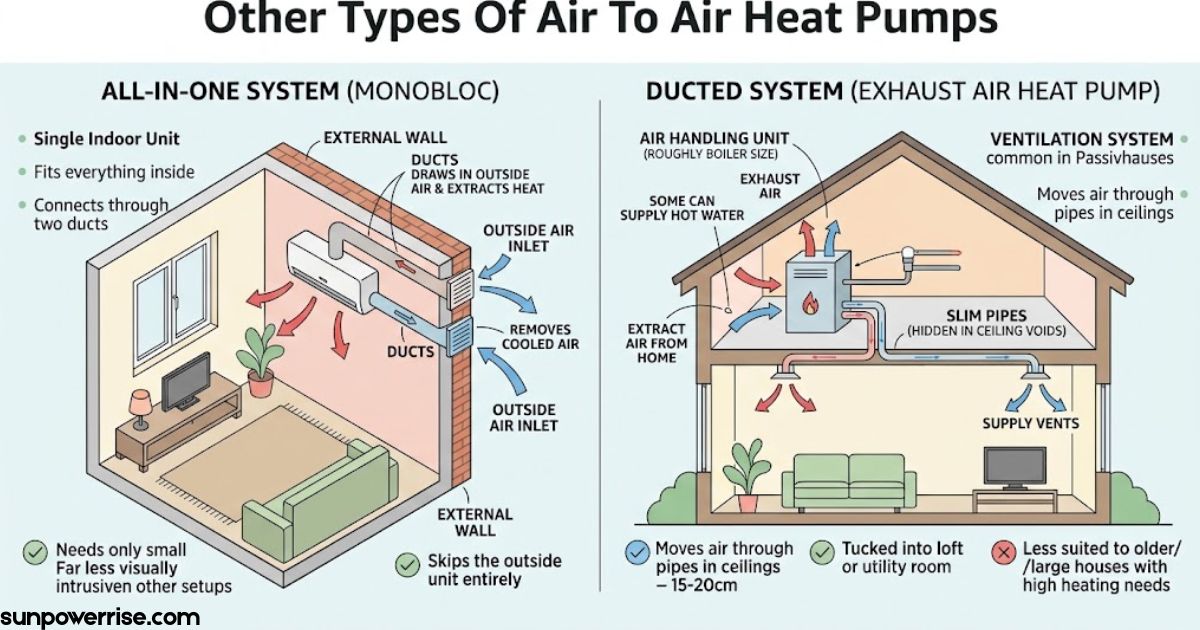
All-in-one systems, also called a monobloc system, skip the outside unit entirely by fitting everything into a single indoor unit, connecting through two ducts in the external wall: one that draws in outside air and extracts heat, and one that removes cooled air, needing only small holes around 15- 20 cm, far less visually intrusive than other setups.
Ducted systems, on the other hand, are ventilation systems common in energy efficient houses such as Passivhauses, sometimes known as exhaust air heat pumps since some can also supply hot water, though they’re less suited to older houses or larger houses with high heating needs; they move air through slim pipes hidden in ceiling voids, warmed by an air handling unit roughly boiler size, usually tucked into a loft or utility room.
Why we focus on air-to-water heat pumps at Hive
Hive has chosen to specialise in air-to-water systems rather than air to air heat pumps, mainly because they can cover the whole home and hot water together, giving a better fit for most UK homes.
They work efficiently through changing weather conditions, connect to existing radiators or underfloor heating, and stay eligible for the Boiler Upgrade Scheme, so the BUS grant makes them more affordable, accessible, and versatile for households moving toward low-carbon living.
Every quote includes a free home assessment, the system, installation, labour, a 5-year warranty, and they’ll even take your old boiler away to recycle.
Is an air to air heat pump suitable for my home?
It tends to work best in milder climates and across all different types of properties, though you’ll always need some outdoor space for the pump itself, and it can complement a conventional heating system without solving hot water on its own.
From what I’ve seen, it fits smaller properties, flats, and park homes especially well, and it’s far more common across Europe, where a warmer climate makes both cooling and heating genuinely useful; before deciding it’s suitable, ask whether you have somewhere suitable an area outside home, a wall, or ground near house with enough flow of air and think through how you’ll heat my water, whether through a hot water cylinder with an electric immersion heater, an electric shower, point of use water heaters.
FAQs
Is an air to air heat pump worth it?
For most smaller homes and flats, yes it brings real comfort all year round, keeps energy bills lower, and gives you that reassuring feeling of a greener home without a huge upfront hassle.
What is an air to air heat pump?
It’s an energy-efficient heating system and cooling system that pulls warmth from the outside air and blows warm air or cool air straight into your rooms through specially designed units.
What are the disadvantages of air-to-air heat pumps?
They can feel a bit noisier than other systems, become less efficient in extreme weather, and usually don’t provide hot water, so you’ll need a separate solution like an electric immersion heater. They also recirculate existing air rather than bringing in fresh air, meaning you’ll still need to ventilate the house properly.
What is the best brand of air-to-air heat pump?
Daikin is one of the most trusted names, known for stylish and discreet indoor units that fit almost any interior while staying reliably energy-efficient. That said, the “best” manufacturer really depends on your home’s size, budget, and heating needs; it’s worth comparing a few before you fall in love with one.