

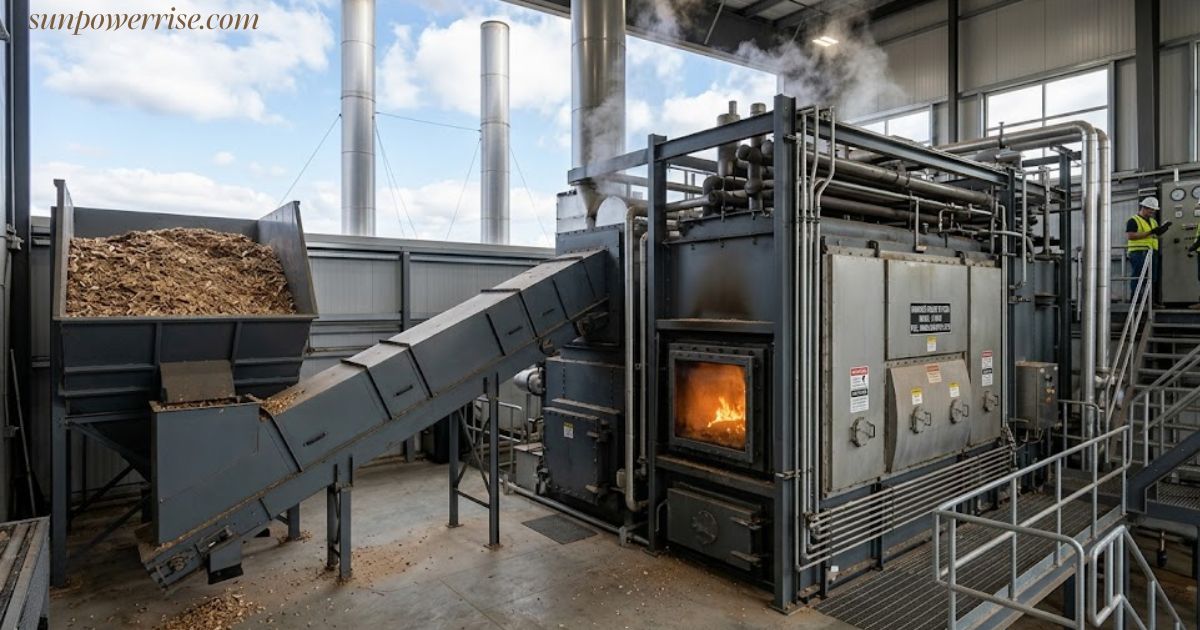
Biomass energy boilers give homes, businesses, and communities a real path toward greener ways of staying warm. Instead of burning coal, oil, or gas, these systems turn biological plant material and organic matter into steady heat and hot water.
At their core, biomass energy boilers rely on natural renewable materials such as wood, wood pellets, chips, wood chips, and logs, all of which count as plant material that nature keeps replacing, and every drop of water they warm moves through the property with ease.
For anyone weighing up sustainable options, the articles and menus across this guide walk through the details step by step, so you can make an informed decision that suits your own environmentally friendly heating solutions plan.
How Biomass Energy Boilers System Work
How Biomass Combustion Works
The operation of a biomass boiler is straightforward to understand. A single stove can heat a room by itself, and when connected to a back boiler, it also provides hot water for daily activities.
A complete biomass boiler, however, burns wood pellets, logs, or wood chips inside a combustion chamber. This fuel can be added manually, which involves direct involvement, or it can be supplied automatically through a system.
Heat Transfer and Distribution
Once the fuel is burned, the hot gases and air travel through a flue and into a heat exchanger. This device transfers heat from the fire to the water flowing through the home.
This heated water can be stored in a hot water cylinder or used in a hot water system, and the same loop can supply central heating, underfloor heating, and other heating systems all at once. Since the setup operates similarly to a traditional boiler, radiators throughout the house receive consistent and reliable heat without much effort.
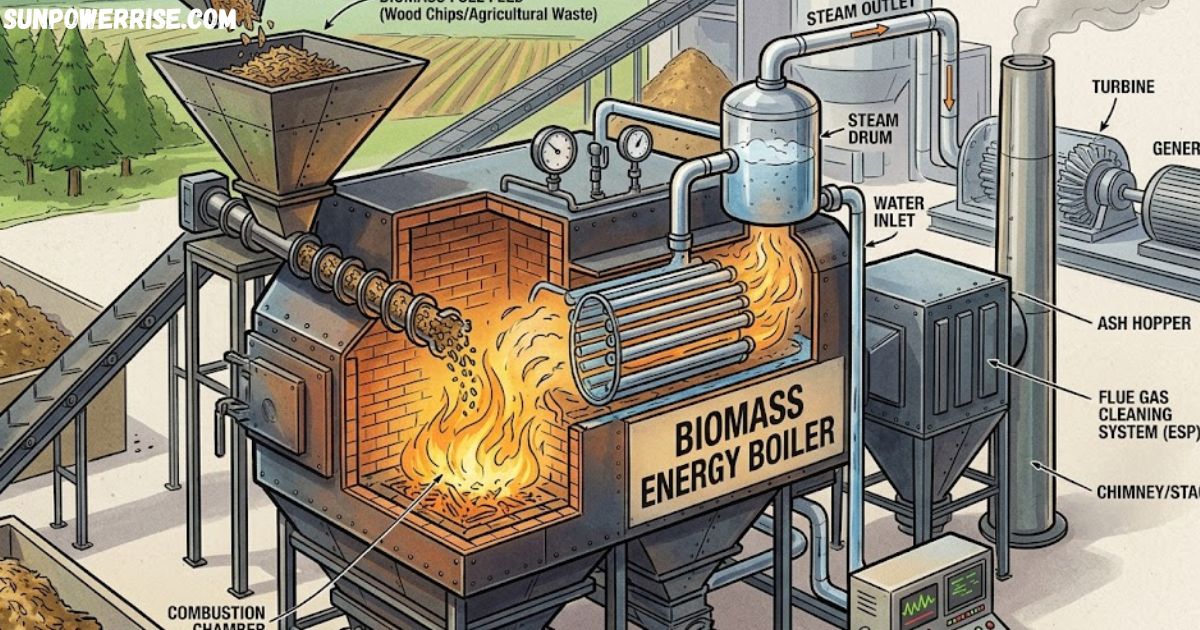
This renewable fuel method transforms common biomass fuels into everyday water heating and space heating, offering homes a familiar setup that runs on cleaner energy.
Types of Biomass Systems
When examining the different types of biomass boilers on the market, the range spans from a compact pellet boiler unit to fully automated systems designed for large-scale use.
Wood Pellet Boilers
A wood pellet boiler is often the preferred choice for homeowners because it is clean, efficient, and automated. The pellets come in a uniform size, making them easy to store and handle, which adds convenience compared to older wood boiler designs.
Wood Chip Boilers
Larger properties with high heating needs typically opt for wood chip boilers, as they can manage large fuel volumes and maintain a steady heat across wider areas with minimal effort.
Traditional Log Boilers
On the more traditional side, log boilers are suitable for those with a local supply of seasoned wood. Although these require manual loading of logs, this hands-on aspect is part of the experience, and they remain a cost-effective option for many households. Each of these biomass systems, whether called biomass heating systems or biomass energy boilers, consists of largely similar components.
Benefits and Drawbacks
A fair assessment of this technology should consider both its advantages and disadvantages, rather than just promoting it as a sales pitch. One of the clearest benefits is that biomass fuel is renewable.
Since trees absorb carbon dioxide as they grow, and the amount of carbon they absorb roughly balances the amount released when they are burned, this cycle is often described as carbon neutral.
Cost is naturally part of the discussion. The initial cost of a biomass boiler usually exceeds that of fossil fuel equipment, so the upfront expense can be substantial. Operating costs also depend on local fuel prices.
Nevertheless, many users appreciate the energy independence that comes from not relying on distant fossil fuel sources. This is why this section aims to provide a balanced view of the technology.
How Much Do Biomass Heating Systems Cost?
Calculating the cost of owning a biomass boiler involves considering two key figures: the initial cost and the yearly expenses.
Initial Installation & Equipment Costs
Initially, standard pellet stoves typically start at around £4,300, whereas automatically fed pellet boilers, once installed, usually range from £14,000 to £19,000, depending on the size of the system and how complex the installation is.
To put this into perspective, the overall cost of setting up a full biomass heating system can range from approximately £10,000 to £25,000, which represents a significant initial investment compared to a conventional or fossil fuel boiler.
Ongoing Fuel & Running Expenses
Once the system is in operation, fuel costs and availability greatly influence your annual expenditure. Wood pellets are a popular fuel choice, typically costing around £250 per tonne, which generally keeps your heating costs lower than oil or electricity for the same level of heating demand. However, fuel prices can fluctuate with the broader energy market, so it’s wise to monitor ongoing running costs each year.
Financial Incentives & Support
To help manage the financial aspect, there are various financing options and financial incentives available, including the Renewable Heat Incentive (RHI), which can provide returns for the energy you generate. This can transform a major purchase into a more manageable, long-term financial plan.
History of Biomass Heating Systems
Historical Origins of Biomass
Using biomass materials for warmth is a practice that dates back to the time humans first learned to control fire. Wood has always been the most commonly used fuel source, and it is still widely used today for heating, cooking, and other purposes. Over time, people found more ways to burn biomass effectively, and heat energy systems evolved into a full industry centred around biofuels.
Plant-Based Biofuel Categorization
Biofuels are generally categorised into two main types, with those made from plant matter being used in a variety of ways, such as producing fibres, powering industrial chemicals, and providing the second largest use of biomass today, after direct heating.
First-generation biofuels, such as bioethanol, come from crops like sugarcane and corn starch, showing how diverse and efficient a fuel source can be when using organic waste and plant materials.
Alternatives to Fossil Fuels
Modern units heat water for underfloor heating systems and radiators simultaneously, all while maintaining high energy efficiency and reducing carbon emissions. This combination of efficiency and low emissions is why biomass is now seen as a viable alternative to older fossil fuel heating systems that rely on gas and oil boilers.
Financial Benefits of Biomass Heating Systems
The financial benefits of biomass energy boilers are worth highlighting on their own. The Boiler Upgrade Scheme, often referred to as BUS, encourages homeowners, businesses, and public institutions to replace older, less efficient fossil fuel boilers with modern, clean-energy-efficient biomass energy boilers. This initiative aligns with larger global efforts aimed at combating climate change and promoting the adoption of renewable energy.
Biomass energy boilers are a genuine eco-friendly alternative to fossil fuel-based heating systems because they burn sustainable organic materials such as wood pellets, agricultural waste, and forestry residues to generate heat, instead of extracting carbon from the ground.
Biomass Boiler Efficiency
When comparing the efficiency of biomass energy boilers, one key point stands out: high-quality biomass boilers can achieve an efficiency of around 80-90% when properly installed and maintained, which is better than many traditional fossil fuel boilers.
The main factor affecting these efficiency levels is the type of fuel used, as not all biomass fuels burn in the same way or produce the same amount of usable heat.
District and Community Biomass Solutions
Large-scale heat distribution systems, sometimes called district heat networks, operate using centrally distributed and shared biomass to serve entire neighbourhoods at once.
When these networks are designed correctly, they operate efficiently and can be genuinely profitable in the long run, making community-wide heating a smart option beyond individual homes.
The Future of Biomass Energy
Looking ahead, the UK’s net-zero targets put renewable heating solutions like biomass energy boilers firmly in the spotlight. Biomass fuels offer a practical way to cut reliance on fossil fuels while still delivering the reliable heating and hot water that people need daily.
Because these fuels can often be sourced locally, they also strengthen rural economies and help build a genuinely sustainable energy supply chain for years to come.
FAQs
Are biomass energy boilers any good?
Yes, biomass energy boilers are a reliable and sustainable heating choice, offering efficient warmth while reducing your carbon footprint and energy bills.
What is a biomass boiler?
A biomass boiler is a heating system that burns organic materials like wood pellets or chips to generate renewable heat and hot water for your home.
Do I need planning permission for a biomass boiler?
In most cases, biomass energy boilers fall under permitted development, but planning permission may be required depending on your property type and location.
How often do I need to refill a biomass boiler?
Refill frequency depends on boiler size and usage, but most biomass systems need fuel topped up every few days to weeks for consistent heating.
What is the biggest problem with biomass?
The biggest challenge with biomass energy is fuel storage and supply consistency, since it demands space and reliable sourcing to keep heating uninterrupted.