

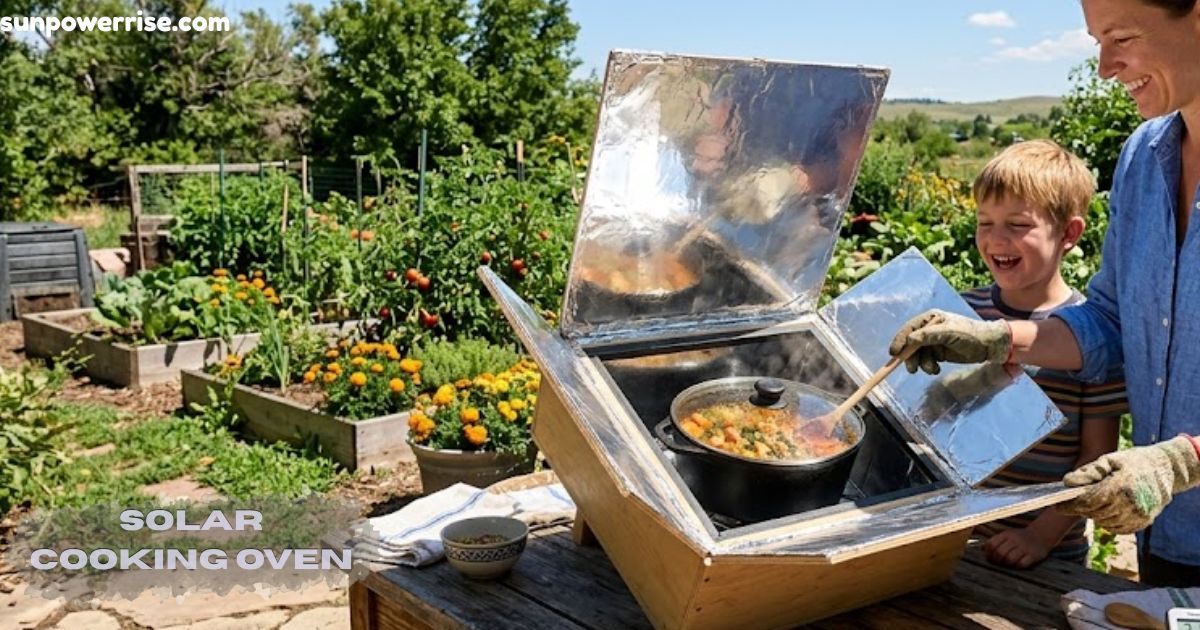
A solar cooking oven felt like pure magic the first time I used one, turning simple backyard sunlight into enough real cooking heat to bake, boil, or fry a meal completely off the grid.
People have leaned on this ancient practice for centuries, even millennia, and thanks to better reflector design over the last 100 years, today’s units concentrate sunlight and retain heat far more efficiently than anything our ancestors built.
Versatility of Solar Cooking Oven
What surprised me most is how many situations call for one of these ovens. Campers use them for camping, backpacking, hunting, and fishing, while preppers count on them for emergency preparedness and off-grid living, since a good dark pot and enough insulation can purify water or dry food with zero kitchen heat spilling into the house on hot days.
In the developing world, swapping wood fuel for the sun cuts deforestation, protects air quality, lowers carbon emissions, and trims household income spent on boiling drinking water, which makes the cost savings just as meaningful as the sustainable angle behind every fuel cost saved through travel-friendly solar cooking.
Types of Solar Cookers
Not every solar cooking oven works the same way, and once I learned the differences, choosing the right one became much easier.
Box Cookers
Box cookers are basically insulated boxes topped with a glass lid and surrounded by reflectors, reaching 194°F to 392°F (about 90°C to 200°C); they act like a conventional oven and can hold multiple pots and racks at once, which makes them the most common choice for home use.
Panel Cookers
Panel cookers, sometimes called reflective panel cookers, blend features of box- and dish-style units, run around 300°F (150°C), and stay lightweight thanks to foldable panels, so they suit anyone who wants a portable, budget-friendly setup.
Parabolic Cookers
Then there are the units built for serious heat. A parabolic cooker uses a dish-shaped reflector, much like a small satellite dish, to aim every ray of light at a single point, pushing temperatures past 400°F and making frying and broiling genuinely possible, though the steeper learning curve and higher price mean they demand more attention and patience.
Evacuated Tube Cookers
Evacuated tube cookers take a thermos-style approach with double-wall Pyrex glass and a vacuum between the layers, paired with a parabolic trough that can still hit 220ºC even during a UK winter, which is why I consider this the most modern and efficient design on the market, since heat can only escape through the tube mouth itself, the same idea used in some solar hot water systems.
Community and Industrial-Scale Systems
Scale it up even further, and you reach community-scale and industrial-scale cooking. Fixed installations can feed anywhere from 10 to 50 people or keep a small bakery running all day, and in India, arrays of Scheffler reflectors spanning 16 square metres auto-track the sun to flash water into steam, which gets piped straight to community kitchens producing tens of thousands of meals per day.
Benefits of Solar Cooking
Once you own the equipment, the ongoing fuel cost basically disappears, which matters a lot in places where household income gets swallowed up by cooking expenses.
I have also noticed my kitchen stays cooler on hot-climate days because there’s no indoor heat buildup, and since the whole process stays non-polluting and free of fossil fuels, cutting back on wood reliance helps with habitat protection, desertification reduction, carbon emission reduction, and better air quality, which naturally supports health benefits for everyone nearby.
Beyond the environmental side, these ovens are refreshingly mechanically simple, and that simplicity translates into real longevity and durability since there’s so little that can break.
Cooking low and slow, the way a slow cooker does, tends to bring out better flavour, and most people I’ve talked to genuinely notice a taste improvement compared to rushed stovetop meals.
On top of that, owning one builds resilience and self-reliance during emergencies, fuel shortages, or a sudden power outage or gas outage, and it becomes a natural companion for travel, camping, backpacking, hunting, and fishing trips.
Model Reviews
Haines 2.0 SunUp Solar Cooker
If you want the Best Overall pick, the Haines 2.0 SunUp Solar Cooker with its Dutch Oven Kit is hard to beat.
It reaches 375°F using adjustable panels that track sun exposure, brings a quart of water to a boil in about 40 minutes, and handles stews and slow cooking with ease, earning a 4.7 rating from over 125 Amazon ratings for being genuinely durable and portable across camping, emergencies, and backyard use.
Sunflair Portable Solar Cooking Oven Deluxe
For anyone chasing the Best Portability award, the Sunflair Portable Solar cooking oven Deluxe delivers real convenience.
Running at 285°F, it ships with a thermometer, baking trays, dehydration racks, an enamelware pot, silicon pots, and a carrying bag, all fitting into a 16 inches by 10 inches cooking area while the whole unit weighs just 1 pound and folds down to seat-cushion size; reviewers gave it a 4.0 out of 130 ratings, and its maker also funds clean cooking access programs abroad.
Sun Oven All American Sun Oven
Heavy users lean toward the Sun Oven All American Sun Oven, the Best Heavy-Duty option on the list.
It offers 400°F heat inside a 14-inch by 7-inch headspace that comfortably fits a Dutch oven, backed by a spill-proof levelator, a levelling leg, and a sturdy base, though its 23-pound weight and 24 x 15.5 x 20.5-inch frame (rated 4.4 by 150 reviewers) make it better suited to stationary cooking or basecamp cooking than a backpack.
SolCook All Season Solar Cooker
Budget shoppers should look at the Best Under $100 pick, the SolCook All Season Solar Cooker. It spans 17 inches, big enough for a whole turkey, uses articulating panels and a sighting system to chase the sun.
And while it’s missing a built-in thermometer and the quality of its baking trays could improve, it still earns a strong 4.5 from 220 owners and remains genuinely budget-friendly.
GoSun Solar Cooker
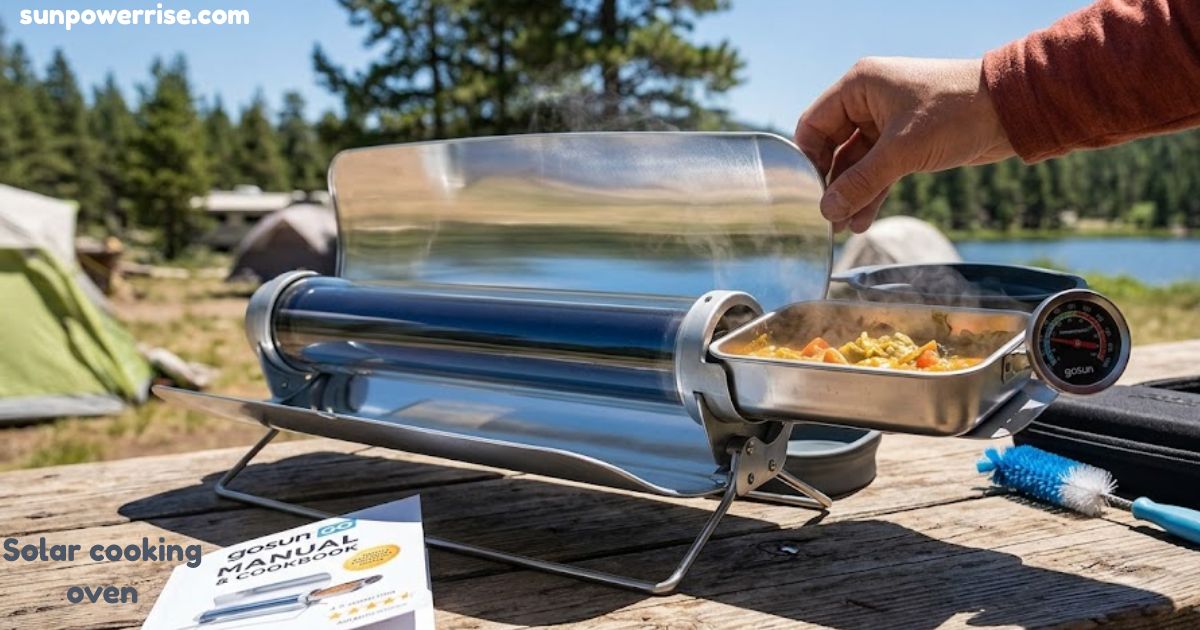
The GoSun earns the Best Compact Solar Stove title for good reason. It hits 550°F, weighs under 2 pounds, measures just 14.17 inches, and relies on patented technology built around multi-spectrum light absorption, though its capacity tops out at 13.5 ounces per batch.
The kit includes an evacuated glass tube oven, parabolic reflectors, an EVA frame, a stainless-steel cooking tray, the GoSun dial, silicone cooking pans, a stabilising stand, a cleaning brush, and a full manual and cookbook, which together helped it earn a 4.5 score from 250 Amazon ratings.
Tips for Operating the GoSun
Using one takes a little practice, and I learned this the hard way the first week I owned mine. Start with kickstand and tilt adjustment before you fully unzip the case, engage the prop stick to hold the reflectors open for stability, and never ignore the preheat warning, since leaving it in the sun with empty sun exposure can damage the tube.
The GoSun Dial helps with glare alignment against the target lines to nail your tilt angle, and a bit of rotation every 30 minutes keeps the cooking tray performing well as you load and unload food through the handle, being careful with the hot tray and avoiding overfilling; the included silicone cups make serving dishes and cleanup simple, and a two-handed squeeze solves any tray expansion sticking.
Boiling and Maintenance Setup
Switching to boiling mode changes the setup slightly. You move to the off position, then for boiling mode you attach the action stand, lock it through the bolt hole, and fit the silicone lid for heat retention before carefully handling the resulting hot water and pouring it out using the gear loop.
Cleaning afterwards just needs a paper towel or brush, plain water and soap, and air-dry time since it’s not dishwasher safe; wipe away food juices from the EVA case, buff out fingerprints with a microfiber cloth or glass cleaner, and if you enjoy add-ons, the universal action mount works with GoPro accessories on a rail, bike, boat, or tripod.
Solar Cooking History & Adoption Barriers
Solar cooking has lagged behind other renewable technologies, and honestly, the adoption lag comes down to a few stubborn reasons.
Many households still choose convenience over long-term sustainability or cost savings, and the simple fact of weather reliance puts some people off entirely.
In other regions, cultural barriers tied to gender roles shape who handles cooking roles versus who uses machinery or technology in the home, which slows adoption even where sunlight is abundant.
Safety
Treat a solar cooking oven exactly like any hot kitchen task, because the risks are just as real. There’s a genuine burn hazard and scald hazard from hot pots, plus a glass shatter risk if you drop a component, so during cloudy conditions or with low-powered cookers, always double-check that food temperature reaches at least 65ºC to confirm it’s fully heated through.
One hazard unique to this hobby is reflected sunlight, so treat the glare hazard seriously and keep sunglasses on for proper eye protection.
Integrated Cooking
Integrated cooking solves the obvious weak spot of relying only on sunshine. Pairing a solar cooking oven with a rocket stove and a retained heat cooker, sometimes called a haybox, means you’re covered on cloudy days, and the haybox alone can keep food hot for 4 hours to 5 hours, which helps you save fuel or free up solar cooker space for a second dish.
All while keeping the whole process fossil-fuel-free. It does ask for more weather planning and an early start with tending fires, but since box cookers and panel cookers cook so gently, the process stays genuinely forgiving, and unattended cooking is fine because food won’t burn while you step away.
FAQs
Do solar ovens actually work?
Yes, a solar oven genuinely works by using reflectors to concentrate sunlight onto a black pot, generating real heat to cook, bake, and boil food, even up to 400°F or higher.
How long do solar ovens take to cook?
Most meals take longer than in a conventional oven, often 1 to 3 hours for slow-cooking stews or meats, since solar cookers work best low and slow.
How much does a solar cooking oven cost?
Prices range widely, from budget-friendly panel cookers under $100 to premium box cookers or parabolic cookers costing several hundred dollars.
What is the best food to cook in a solar oven?
Stews, rice, root vegetables, and slow-cooked meats work beautifully, since solar ovens shine at low and slow cooking rather than quick meals.
Are solar cooking oven worth it?
For off-grid living, camping, or emergency preparedness, a solar cooker is absolutely worth it it’s fuel-free, sustainable, and builds real self-reliance.