

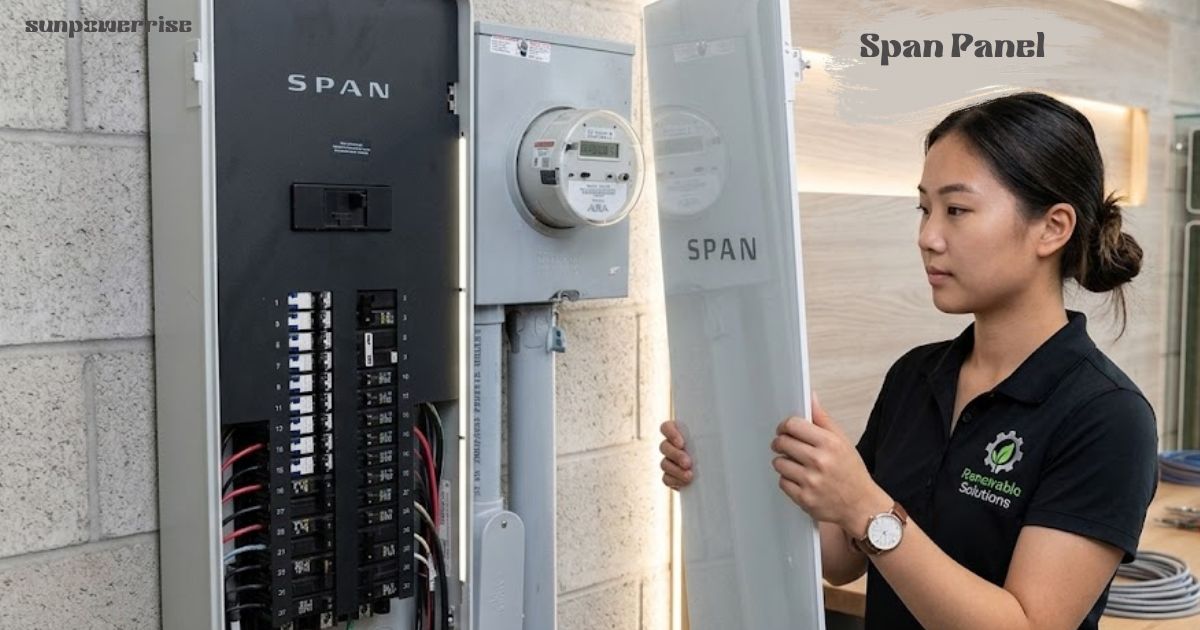
When people first hear about Span panel, they usually picture something out of a home improvement show, and honestly, that’s not far off. Companies like Jay Moody HVAC and Bardi frame it as an innovative technology that finally brings energy savings, visibility, and control into one place.
While EnergySage treats it more like a worthwhile investment worth comparing against a premium price tag before committing. The pitch across the board is the same: this smart electrical panel replaces the old gray box, adds transparency over your electricity use, and pushes your traditional panel toward real system modernization.
Reviewers openly discuss the installation costs, including horror stories north of $20k, and they don’t shy away from laying out pros and cons for homeowners weighing whether the jump is worth it.
Even so, the tone stays optimistic this is described as an industry-changing, energy management product meant to fix an electrical panel category that hasn’t changed much since your grandparents’ house, tackling everyday annoyances like a tripped surge protector or lights that flicker for no clear reason.
What Is A SPAN Panel?
At its core, a SPAN panel is an efficient replacement for the old fuse box, but calling it “just a panel” undersells what’s happening inside.
Instead of dumb metal switches, you get advanced sensors, a built-in computer, and programming protocols that work together to optimize power distribution in real time, which is why the NEC lists these units under Energy Management Systems rather than ordinary hardware.
The whole unit lives inside a sleek white enclosure; some call it a sleek modern replacement for the grey breaker box, and others compare it to the leap from flip cell phones to smartphones.
Where it gets interesting is the circuit-level control angle. Every circuit in your home circuit setup gets wired into the panel, and from there you can see, monitor, and individually control each one through a mobile app, no electrician visit required, just to check what’s drawing power.
This turns a once-intelligent hub-free box into something closer to a small piece of components-driven infrastructure, complete with circuit breakers that behave the same as before but now report back through SolarReviews-style dashboards.
The bigger promise is what this updated version of the breaker box unlocks for the whole home. Because it’s purpose-built for things like solar, batteries, and EV charging, a single SPAN Panel can handle up to 32 circuits, and you’re allowed multiple panels if your house needs more room to grow.
It gives you an intelligent, responsive, and genuinely useful window into managing home energy, offering real-time, monitored, controlled insight and energy insights that a standard panel simply cannot match, all built around a program designed to make efficient electricity use.
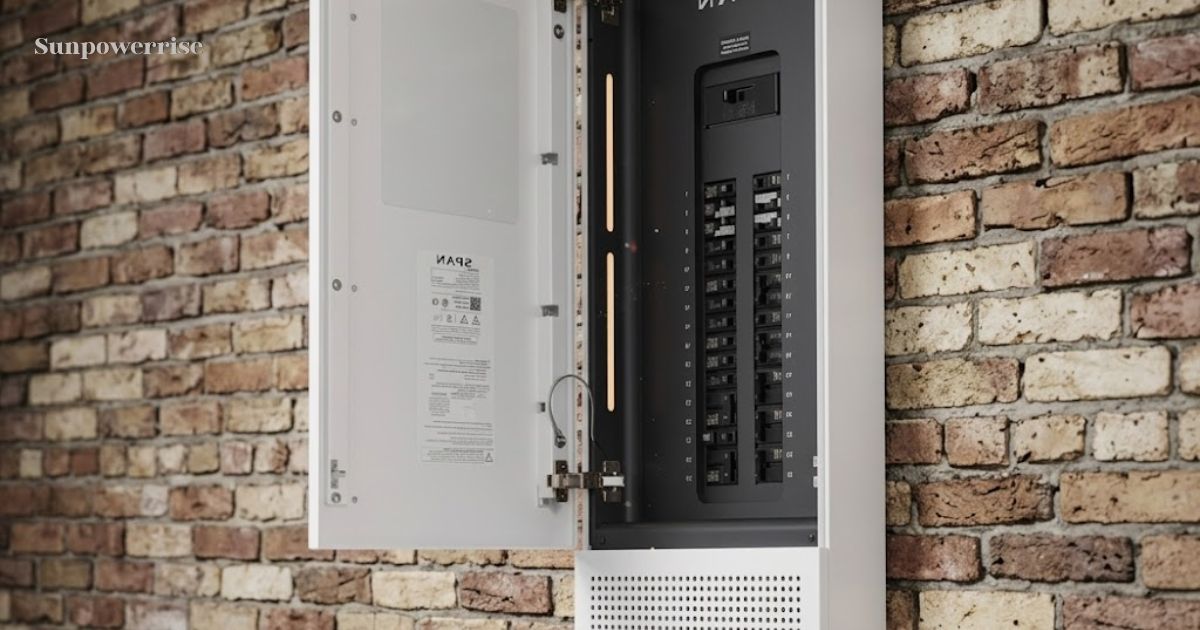
How SPAN Panels Differ From Traditional Panels
Here’s where the difference from a traditional panel really shows itself. A normal box only lets breakers trip for safety; there’s no remote access, no insight, nothing.
With span panel, you get a live view of every circuit, so you can shut off your downstairs lights, adjust the HVAC, or handle the kitchen outlets right from your phone, whether you do it manually or let the PowerUp analysis decide automatically based on your home’s actual electrical usage.
This matters most during an outage. Older setups need a separate sub-panel just to isolate essential circuits, since you can’t run a water heater circuit and everything else off limited backup power systems at once.
SPAN skips that entirely; its software can dynamically prioritize and shed loads across the areas of the home that matter, which eliminates the need for a separate backup sub-panel altogether.
Practically speaking, this means you can schedule things, check power usage from anywhere, and stop worrying about constant electrical use running up your bill through a phone app that’s connected over Wi-Fi.
Outlets like Wired have pointed out how much freedom this gives homeowners compared to a standard panel, and once you’ve used the SPAN app to turn circuits on or off remotely, going back to a plain traditional panel with nothing but manual breakers feels like a real step backwards into the smart home era.
Features Of SPAN Panels
This is the section where the panel really earns its price tag, so let’s go feature by feature. Real-Time Energy Monitoring gives you circuit-by-circuit energy monitoring, showing exactly how many watts each appliance pulls, which quickly turns into actionable energy insights and actionable insights you can use to save energy and trim energy usage monitoring across the whole house I noticed my own HVAC spikes the moment it kicked on, something I’d never have caught with a standard panel.
Connected Automation & Proactive Alerts
Smart Home Integration ties everything together through the Span Home mobile app, Amazon Alexa, and general voice assistant support, letting you fire off voice commands, set up an Alexa routine, or handle automation and scheduling for things like the oven or lighting without lifting a finger.
If something draws unusual power, you get notifications before it becomes a real problem, a small layer of safety most people don’t expect from an electrical panel.
Dynamic Load Management & Outage Resilience
Backup Power Management for Solar and Battery Systems is where the panel earns its keep during storms, working with Tesla Powerwall, Enphase IQ, SolarEdge Home Battery, and similar setups to replace critical circuits with true whole-home backup flexibility.
Instead of a fixed list, you get dynamic load management, the ability to prioritize circuits, run load-shedding for Not Essential or Nice to Have loads while protecting Must Have ones, and even squeeze more run time out of stored energy during a multi-day outage, all while helping you maximize self-use of solar production and manage dynamic EV charging based on available grid limits.
Scalable Grid Capacity & Cost Optimization
Future-Proof Capacity rounds things out with a 200-amp service rating, 32 controllable circuits, and a 225A bus that supports electrification projects like a gas stove swap.
An induction range top, or new heat pumps, plus compatibility with standard breakers from Eaton and Square D so electrician visits stay simple; if one panel isn’t enough, you can install multiple Span panels and scale up to 64 circuits or 400A service, avoiding a costly service upgrade while still adding a larger solar arrays, energy storage systems, or Mitsubishi mini-split systems.
Adding qualified contractor-friendly additional equipment and smart load management without touching the electrical rates you’re already locked into, and letting you cut power to the fridge, appliances, or car chargers.
Pros & Cons
No product is perfect, and SPAN is upfront about that. On the plus side, you get Granular Control, remote circuit control, Enhanced Backup Power Management, Smart Home Integration through apps and voice assistants like Alexa, Safety and Peace of Mind with real-time alerts and remote shutoff, plus real futureproofing through expansion, new appliances, solar, and EV charging.
On the downside, the high initial cost is real; this is significantly more expensive than a plain box, and the price tag can be a genuine barrier, especially with older homes that need additional electrical work or installation complexities before proper installation even starts. There’s also a hard 200A, 32-Circuit Limit per unit, so large homes with large critical loads running simultaneously may need multiple panels or multiple units to avoid feeling capped.
Then there’s the Reliance on App & Cloud issue: remote functionality depends on the internet and Span’s servers, though manual breakers still work if the connection drops, and questions remain about long-term support and Longevity and Compatibility with future integrations.
Installation and Cost Considerations
Let’s talk numbers, because this is usually the deciding factor. The upfront cost for a 200A panel sits around $3,500, compared to roughly $300 for the hardware of a basic 200A traditional panel a big gap on paper, but energy efficiency tax credits bring it back down, since a Span panel currently qualifies for a 30% federal tax credit up to $600, dropping the real price closer to $2,900 once you claim the credit.
Installation Costs are the wildcard. A straightforward scenario with a licensed electrician might run $2,000-$4,000 for labor, permitting, and minor materials, but jumping from 100A to 200A service, needing to relocate the panel, or adding a Span EV charger and EV charger at the same time can push costs far higher real real-world reports on Reddit mention quotes near $20,000 for a panel plus charger, and around $17,000 for two Span panels with a 400A service upgrade.
None of this replaces getting your own professional assessment. A certified installer is required to keep the warranty valid, and every home’s Purchase Price, Federal Tax Credit eligibility, and Traditional Panel Cost comparison will look a little different, so treat these figures sourced through outlets like SolarReviews as a starting point for your own quote, not a final answer, especially once you factor in installation costs that rise significantly with older wiring.
FAQs
Are span panels worth the money?
For most homeowners chasing real energy savings, solar, and backup power, this premium price tag is a worthwhile investment but if you just need a basic panel upgrade, it might not be your priority.
How much does a span panel cost?
The upfront cost for a 200A panel runs around $3,500, though installation costs can climb higher depending on your electrical setup and whether you need a service upgrade.
What does the span panel do?
It gives you circuit-level control, real-time energy monitoring, and smart home integration, letting you monitor and manage home energy right from your phone.
Who owns Span electrical panel?
Span is the company behind the Smart Panel, and it works with SPAN Authorized Installers like Jay Moody HVAC and Bardi for professional installation, no separate ownership confusion here, it’s their own innovative technology.
Can I install a span panel myself?
No, for safety and to keep your warranty valid, it needs a licensed electrician or certified installer, since proper installation really matters for this kind of electrical panel.