

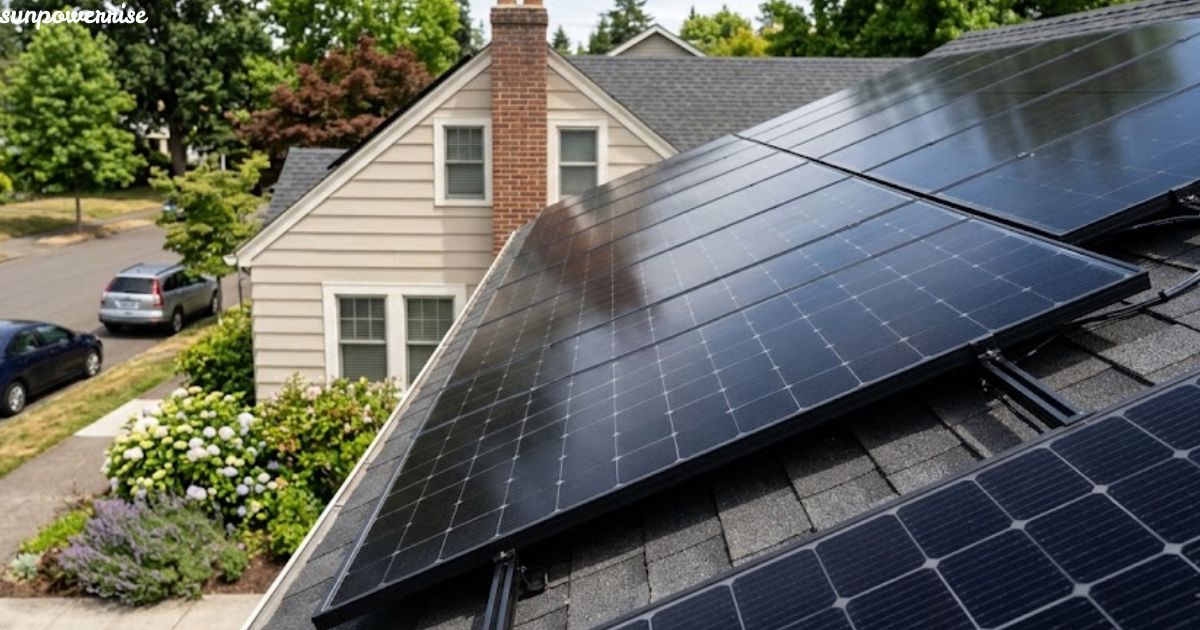
Buyers pick monocrystalline solar panel because it stays the most popular and efficient choice for any rooftop. It still gives you decent levels of efficiency in almost any weather conditions you can imagine.
That single fact shapes your whole solar power system because it touches the cost, the efficiency, the electricity generation, and the overall effectiveness of the setup you choose.
The International Energy Agency has tracked how monocrystalline solar panels pushed polycrystalline models off the shelf, which is exactly why you now see black solar panels climbing across rooftops all over the UK.
Each cell starts life as a single silicon crystal ingot, and that structure is the reason these panels post the best efficiency ratings, the longest lifespans, and the strongest power ratings among all photovoltaic PV systems on the market.
What Are Monocrystalline Solar Panels
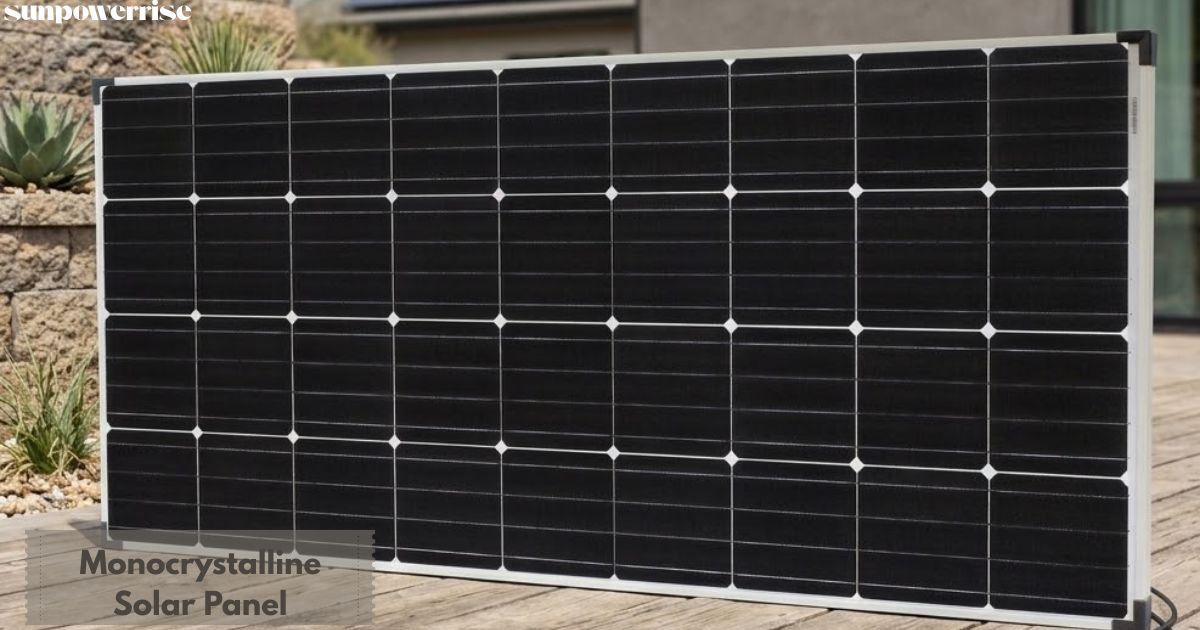
Single crystalline cells, such as the panels you can spot from across the street, because their deep black colour and rounded edges give them away instantly.
Manufacturers usually cut these cells into an octagonal shape, a square with rounded corners, or a semi-round form, and every one of them relies on a pure form of silicon, which happens to be the most efficient material for the conversion of sunlight into usable power.
Unmatched Performance
What surprised me early in my career is how space-efficient these cells really are; they occupy the least room of any silicon solar cell built with mainstream crystalline silicon solar panel technology.
Because workers trim the edges into octagons, installers can pack more cells into a single array, and that same single silicon crystal ingot structure lets electric current flow with far less resistance, giving these panels the highest efficiency ratings, longest lifespans, and best power ratings around.
The Key Differences
Where these two panel families really split apart is in material composition. A monocrystalline solar panel carries black-coloured cells cut from a single silicon crystal, giving it higher efficiency.
While a polycrystalline panel carries blue-coloured cells built from multiple silicon crystals fused, which tends to produce lower efficiency, all captured in one simple specification: colour separates black from blue, material separates single crystal silicon from multiple crystal silicon, and efficiency separates anything above >23% from anything under <20%.
Longevity, Heat Resistance, and Cost-Effectiveness
Longevity is where I always tell clients to pay attention. Manufacturers rank this as the longest-lasting solar cell technology on the market, with a life expectancy near half a century, and most manufacturers back that claim with warranties stretching 25 years, or half of the expected lifetime, while genuinely high-quality panels can run for 40 years.
These cells also shrug off high temperatures better than polycrystalline solar panels, and although they stay superior to nearly every alternative type, that performance carries a hefty price tag: they remain the most expensive option on the market, mostly because trimming all four sides creates real waste, and the higher quality materials plus the more complex manufacturing process justify the higher upfront cost.
Even so, most homeowners find the panels turn out to be cost-effective over the long run, since they stay more efficient and squeeze fewer panels onto limited roof space while still generating more energy.
Seamless Current and Structural Strength
The wafers that form each cell get their strength from that same single silicon crystal ingot, and the smoother electric current flow inside them is really the whole story behind why installers trust this manufacturing process and its high-quality materials so much, since it turns straightforward wafers into strong, dependable electricity flow and long-term effectiveness.
Manufacturing Process
The Czochralski Method and Ingot Growth
I once watched a factory tour where workers ran through the entire manufacturing process, starting with growing silicon ingots.
A crystal rod dips into molten silicon while it gets rotated and raised, gradually gathering layers of silicon into one single crystal ingot, in a step the industry calls the Czochralski process or the Czochralski method. Nothing about it looked automatic; it looked like patience turned into a machine.
Precision Slicing and Cell Assembly
From there, workers move into slicing ingots, cutting the block into wafers roughly 0.5 mm thick. Each wafer then goes through chemical etching, gets diffused, and receives an antireflection coating before technicians add metal contacts using thin strips of silver that get printed across the surface.
The wafers are then attached face down onto a clear pane of glass or plastic using adhesive, with a backsheet and protective backsheet layered on top, and finally a frame and junction box are fitted, complete with holes for grounding, before electrical testing confirms the panel meets its performance criteria for output under simulated sunlight.
Quartzite Refining and the Signature Black Finish
The raw material itself starts as extremely pure polysilicon, made by melting quartzite at extreme heat, then refined through the Siemens process.
Workers heat the resulting ingots to roughly 1,425°C while rotating them, letting a seed crystal pull slowly through the molten polysilicon to form that single silicon crystal ingot.
Final Module Assembly and Environmental Impact
That finished silicon crystal ingot becomes super-thin wafers, printed with conductive grid-like lines that carry the electric current, then attached to glass or plastic, protected by a backsheet, and framed.
The result is a set of high-efficiency photovoltaic modules that pull in sunlight, hand back clean electricity, and shrink carbon footprints, all while squeezing a high conversion rate and maximum power generation out of limited roof space, wrapped in that familiar sleek uniform black appearance.
Fragmented Structure of Polycrystalline Panels
Polycrystalline production runs differently, and it is worth knowing the contrast. It starts from multiple melted silicon crystals, poured into a mould, then cooled before slicing, producing blue-coloured cells with a fragmented crystal structure that raises electron movement resistance and lowers efficiency.
Even so, these multi-crystalline panels stay a genuinely cost-effective solution thanks to simpler techniques that cut down waste and production costs.
Advantages and Disadvantages
These panels count as renewable energy solutions built as high-efficiency photovoltaic modules that harvest sunlight, deliver clean electricity, and trim carbon footprints.
While their strong conversion rate lifts power output from whatever roof space you have, and their sleek, uniform black appearance simply looks better, though homeowners on a tight budget still lean toward polycrystalline alternatives.
Maximum Efficiency and Low-Light Performance
On the advantage side, higher efficiency sits between 18–23% for most residential models, beating polycrystalline panels outright, while strong space efficiency means fewer panels cover limited spaces, and greater durability usually comes backed by a 25-year warranty.
These panels also perform well through low-light conditions and cloudy conditions because a lower temperature coefficient keeps energy production consistent through seasonal temperature fluctuations, and most people still find that uniform black appearance genuinely aesthetically pleasing.
Upfront Costs, Shading Limits, and Material Waste
The trade-offs are real, too. Higher cost makes these the most expensive solar cells on the market, driven by that complex manufacturing process, which pushes them outside some buyers’ price range.
Add in sensitivity to higher temperatures, where rising temperature trims performance levels by a small loss, plus real sensitivity to shading, where shading across even a corner can drag down the entire system’s output, and a general fragility that leaves panels prone to damage, alongside the waste material left over once the silicon gets cut during manufacture.
System Specifications
Efficiency there sits between 15% and 23%, powered by a single-crystal silicon structure that lets electrons move freely, sharpening electricity flow and output, plus better performance through low-light and cloudy conditions thanks to favourable temperature coefficients, strong space efficiency, and clear aesthetic appeal.
Higher cost again shows up, priced near £1 to £1.50 per watt, alongside sensitivity to shading.
The Polycrystalline Trade-Off
Polycrystalline panels flip most of these points. Lower cost, near £0.90 to £1 per watt and being less sensitive to shading count as genuine wins, while lower efficiency between 13% and 20%, poorer performance through low-light conditions, and blunt aesthetic considerations around a blue hue and less uniform appearance count as the drawbacks.
It needs more roof space, wears a blue marbled appearance, runs a 25-35 year lifespan, uses recycled silicon, delivers lower power output around 240-300W, keeps that decent efficiency of 13-17%, withstands rough weather conditions with extended warranties, stays versatile across various installations, yet still shows a grainy texture.
The Best Monocrystalline Solar Panels
Honestly, the gap between the best monocrystalline solar panel is small. They compete closely on power, efficiency, appearance, and durability, and a genuine top-tier model gives you a mostly black panel with a power rating above 400W, efficiency past 21%, and a high level of output for 30-40 years, though product warranties still vary between brands.
Names like LONGi, JinkoSolar, AIKO, Canadian Solar, JA Solar, Trina, and Yingli keep showing up across lists of the most powerful solar panels and the most efficient solar panels, mostly built on TOPCon or back contact panels, with a handful of HJT models thrown in, including standouts like LONGi’s Hi-MO X10 Scientist and AIKO’s Neostar 1U+78 Dual-Glass, though what matters more than chasing the top spot is finding a model that makes financial sense for your own household.
FAQs
Which is better, monocrystalline or polycrystalline solar panels?
Monocrystalline solar panels win on efficiency, lifespan, and sleek black appearance, while polycrystalline panels stay the more budget-friendly option for larger roofs.
What are the disadvantages of monocrystalline panels?
They carry a higher cost, show real sensitivity to shading, and stay more fragile and prone to damage than other panel types.
Do monocrystalline solar panels need direct sunlight?
No, thanks to their lower temperature coefficient, they still deliver consistent energy production even in low-light conditions and cloudy conditions.
Which is better, monocrystalline or bifacial?
Bifacial panels can generate extra power by capturing reflected light on both sides, but standard monocrystalline solar panels remain simpler and more cost-effective for most rooftops.
How many watts is a monocrystalline solar panel?
Most monocrystalline solar panels range from 300W to 450W, with top-tier high-efficiency models exceeding 500W.