

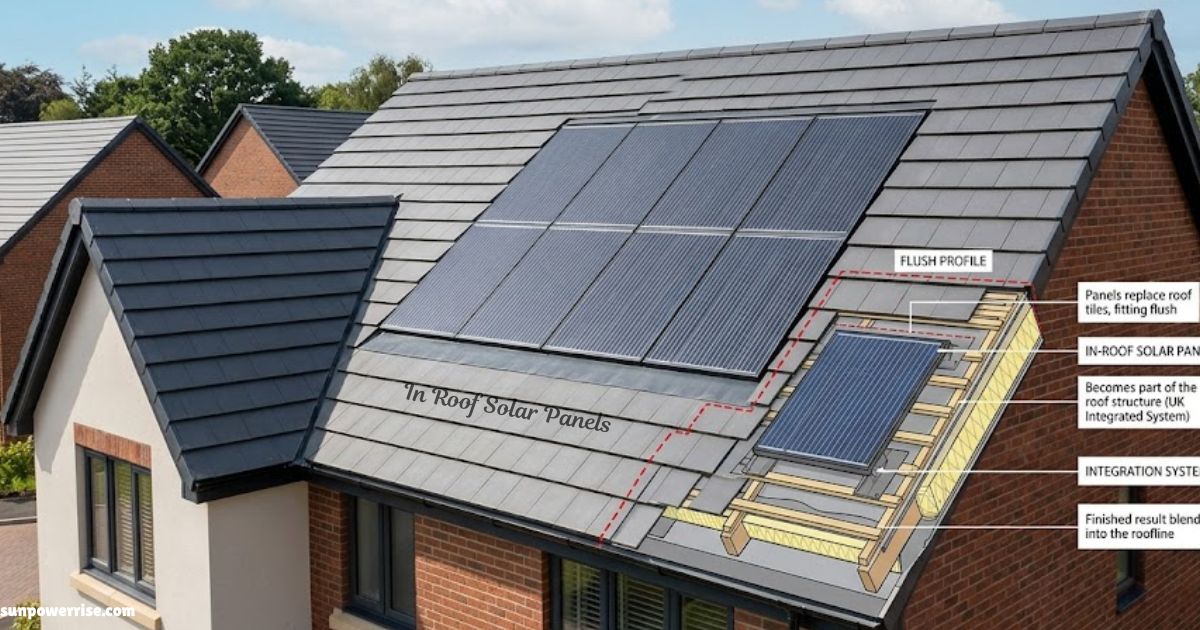
On the surface, in roof solar panels can seem like nothing more than a stylistic upgrade. But once you understand how they’re built and installed, it becomes much easier to weigh them against a conventional system.
What Are In Roof Solar Panels?
Rather than being mounted above your existing roof tiles (“integrated”) or in roof solar panels take the place of a section of your roof covering. They sit level with the surrounding tiles, becoming part of the roof’s surface rather than an addition bolted on top.
In the UK, this approach is officially classed as a roof-integrated system, since the panels function as part of the roof deck itself rather than sitting on a frame above it.
You may also see them described as roof-integrated photovoltaics (RIPV) or simply “integrated solar.” Whatever the name, the underlying job is identical to any solar panel: converting sunlight into usable electricity.
In-Roof vs. Standard Panels: Key Differences
Installation and Appearance
The most obvious difference is how each system is fitted. In roof solar panels are recessed into the roof structure, physically replacing tiles, while standard “on-roof” panels are fixed onto brackets above the existing tiles.
That distinction changes both the finished look and the complexity of the install. Integrated systems give a sleeker, lower-profile finish, but getting there takes more work because the panels effectively become part of the roof’s construction.
Temperature and Output
Airflow underneath the panels matters more than most people realise. Standard panels benefit from a ventilation gap that keeps them cooler, whereas integrated panels run somewhat warmer because they sit flush against the roof deck.
Regardless of which style you choose, both work on the same principle: sunlight hits the photovoltaic cells, which generate an electric current. The energy-generating technology doesn’t change only how the panels are mounted and how the finished roof looks.
How Installation Works
Assessment and Design
This is not a project for a DIY weekend. A qualified installer will always begin with a full structural survey of your roof to confirm it can support the system. From there, the panels and mounting components are matched to your roof type, the relevant tiles are removed from the installation area, and only then does fitting of the panels themselves begin.
Wiring and Testing
Once every component is fixed and weatherproofed, electricians complete the wiring and run full safety and performance checks before the system goes live.
It’s worth using an MCS-certified installer for this work, especially if your home is listed or sits within a conservation area, as additional planning restrictions may apply.
In one common method, tiles are stripped away, and the panels are fixed straight onto the roofing felt. Flashing is added around the edges to keep the area watertight, and mounting trays are attached to the roof battens to give the panels a firm base.
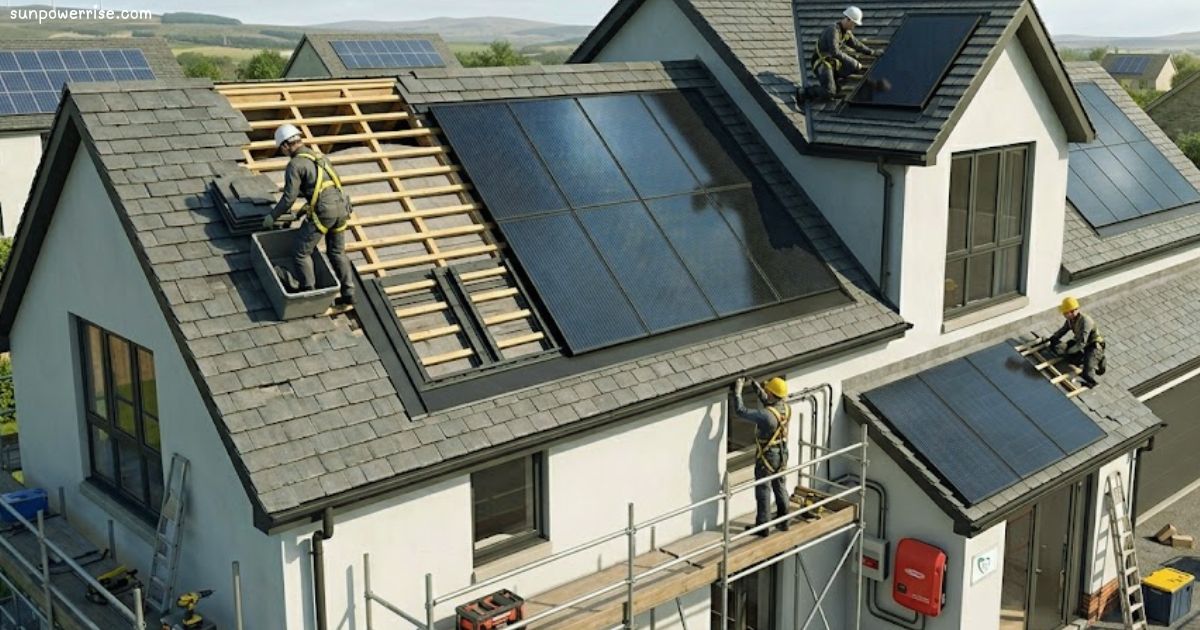
The panels then rest on these trays for a flush finish, with the original tiles or slates used to fill in any exposed gaps. The final step is connecting the array to an inverter and tying it into your home’s electrical supply.
Advantages of In-Roof Solar
Looks And Cost Efficiency
For many homeowners, appearance is the main draw: a flush roofline without visible panel frames or mounting rails.
If you’re already having your roof re-covered, integrating solar at the same time can work out more economically, since you skip the cost of separate bird-proofing and cut down on general disruption. Scaffolding that’s already up for the roofing job also means you often save on installation costs.
Practical, Low-Maintenance Design
Because there’s no gap beneath the panels, there’s nowhere for birds or pests to nest one less maintenance headache, and one less expense on bird guards.
Beyond the practical side, an integrated solar system still delivers the same core benefits as any solar setup: lower electricity bills, a smaller carbon footprint, and power for everything from household appliances to EV charging, adding up to a genuine mix of sustainability and long-term savings.
As Stuart Nicholson, Managing Director at Marley, has pointed out, integrated systems appeal to roofing contractors whose clients want solar without a complicated build, citing products such as the SolarTile, which is quick to fit, needs no specialist tools, and is light enough to handle safely on-site, sometimes allowing a full array to be completed within a single day.
Trade-Offs to Consider
No system is without compromise, and reduced efficiency is the main one here. Retrofitting integrated panels onto an existing roof usually costs more than fitting them during new construction, and warranties are often shorter than those offered on standard equipment.
Most estimates put integrated panels at around 5–10% less efficient than standard ones, which over time means smaller savings on your energy bills.
That gap comes down largely to heat: without a ventilation gap, panels run hotter, and hotter panels are less efficient. This is why fitting them as part of a new build, or alongside a full re-roof (such as during a loft conversion), tends to make far more financial sense than retrofitting them onto a roof that doesn’t otherwise need work.
When In-Roof Panels Make Sense
In-roof panels are typically the best fit for new-build projects, where the roof and solar array can be planned together from the outset with no compromises.
They also make sense if you’re already replacing your roof covering, since the tiles are coming off regardless; adding integration is a small extra step. Simple roof shapes with plenty of unshaded surface area are ideal candidates, and pairing the work with a complete re-roof often proves the most cost-effective route, since you’re renewing roofing materials throughout at the same time.
It’s still possible to add an integrated system without a full re-roof, though you may not get the full value the system is capable of offering.
When Standard Panels Are the Better Choice
If your existing roof is in good condition and doesn’t need replacing, a standard on-roof system is usually quicker to install and easier on the budget, with far less disruption involved.
Unless the flush, built-in appearance matters a great deal to you, there’s little reason to disturb a perfectly sound roof. For most homeowners, a standard system delivers nearly the same benefits with considerably less hassle.
Are In Roof Solar Panels Worth It?
Most people don’t need to work this out alone; a reputable installer will assess your roof, your plans, and your goals before recommending the right option.
If a roof replacement is already on the horizon, or you’re moving into a newly built home, integrating solar at that stage can end up cheaper than adding it later, while still giving you a tidy, flush finish.
That said, the efficiency trade-off is worth taking seriously, since it directly affects both your bill savings and any income from exporting surplus electricity.
Combined with a somewhat shorter operational lifespan due to limited airflow, the overall financial case for in roof solar panels is narrower than for a standard system, even once you factor in installation savings and the aesthetic appeal. In the end, the right choice comes down to your own priorities and savings goals; a solar provider can help you compare systems, including battery storage options, before you commit.
FAQs
Are integrated solar panels any good?
Yes, in roof solar panels deliver solid electricity output while sitting flush with your roofline, making them a genuinely smart choice for homeowners who care about both aesthetics and performance.
Is it possible to install solar panels directly into the roof structure?
Absolutely, roof-integrated photovoltaics replace your existing roof tiles or slates and sit directly onto the felt membrane, becoming a seamless part of your roof structure rather than an addition to it.
Is it worth getting solar panels on the roof?
If you are already planning a roof replacement or building a new home, combining it with solar PV is one of the most cost-effective decisions you can make, cutting energy costs and reducing your carbon footprint for years ahead.
Does having in roof solar panels affect the resale value of your home?
In most cases, solar panels actually add value to your property by offering buyers lower energy costs and free electricity, making your home more attractive rather than harder to sell.
How much do integrated solar panels cost?
A typical 4.5 kWp system with a 5kWh battery sits around £11,307, though final price depends on labour, existing roof coverings, and whether scaffolding is already in place for a new roof.