

A solar inverter is the device that converts the direct current (DC) electricity your solar panels produce into the alternating current (AC) electricity your home actually runs on.
Without it, the power your panels generate can’t run your appliances, charge a battery, or be exported to the grid it’s the one component that makes a solar PV system usable at all.
What Does a Solar Inverter Actually Do?
Converting DC to AC is the headline job, but a modern inverter is doing several things simultaneously whenever your panels are generating:
DC to AC conversion
Solar panels only ever produce DC electricity flowing in one direction. The inverter uses transistors to switch that flow back and forth thousands of times a second, which is what alternating current actually is.
Older inverters did this via a transformer; most modern units skip the transformer and handle it with power electronics instead, which makes them lighter and shaves off some of the energy losses that come from magnetisation and copper resistance.
Maximum Power Point Tracking (MPPT)
A panel’s ideal operating voltage shifts constantly with light levels, cloud cover, and temperature a panel actually performs better in bright, cold conditions than on a hot afternoon, even with the same sunlight.
MPPT is the inverter continuously hunting for the voltage/current combination that pulls the most usable power out of the panels at that exact moment, rather than running them at a fixed setting. Most decent inverters now run dual or multiple MPPT channels, so a south-facing string and an east-facing string can each be optimised independently instead of one dragging the other down.
Types of Solar Inverter
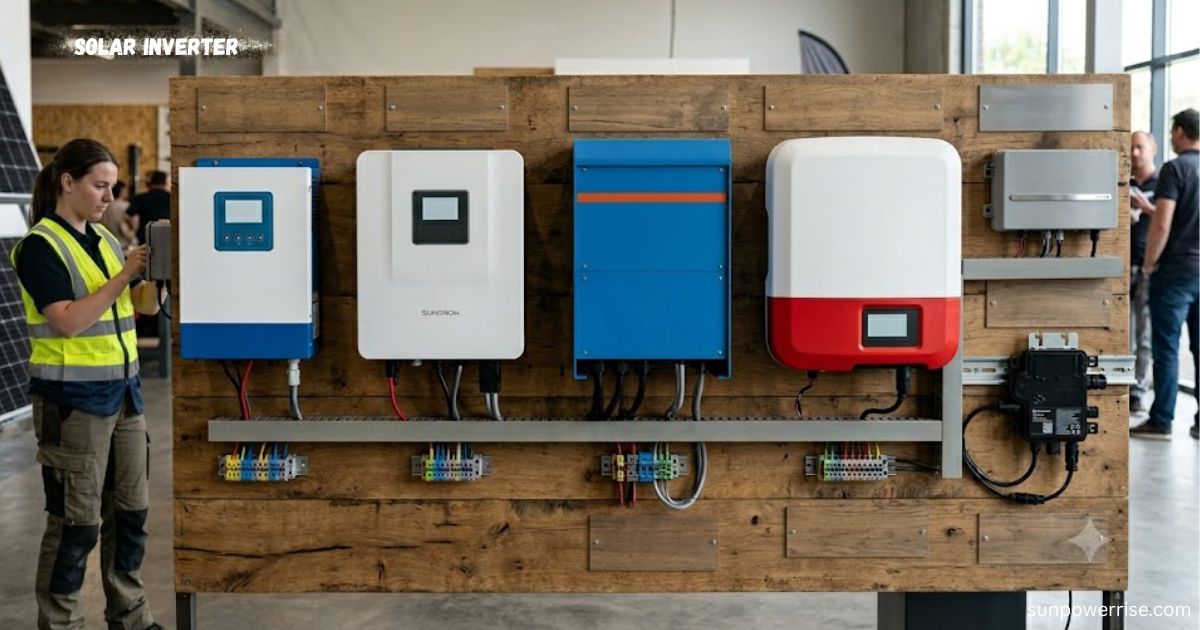
There are four types you’ll come across when specifying or buying a UK residential system, and none of them is universally “best” it depends on your roof and your plans for a battery.
String inverters
They are the standard fit for most UK homes: multiple panels are wired together in a series (“string”), typically 8 to 12 panels per string depending on the model, and one central unit handles the conversion for the whole group.
The catch is that if one panel underperforms a shadow from a chimney, a build-up of grime, a bit of overhanging branch every other panel on that string gets pulled down to match it. A well-designed install avoids this by routing shaded panels onto a separate string in the first place, rather than reaching for a more expensive inverter type to fix a design problem.
Microinverters
Microinverters sit at the panel level instead of centrally, so each panel converts its own DC to AC independently. One shaded or faulty panel no longer affects the rest of the array, and you get per-panel monitoring data as a side benefit. The trade-off is cost per watt, and because the units are mounted on the roof itself, a failure means a roof visit rather than a trip to the garage.
Hybrid inverters
They combine standard solar conversion with a built-in battery charge controller in one box. Before hybrid units existed, adding storage meant a second dedicated piece of equipment; now one unit handles power from both the panels and the battery.
How Much Does a Solar Inverter Cost in the UK?
|
Inverter type |
Typical UK price range |
|
String inverter |
£500 – £1,000 (unit only) |
|
Microinverter |
£100 – £150 per unit |
|
Hybrid inverter |
Higher than a standalone string inverter varies by battery capacity and brand |
|
Full string inverter setup (e.g. 12-panel system) |
Around £1,400 including associated components |
These figures are for the inverter itself, not the full installed system labour and the rest of the balance-of-system components sit on top. If your installer is quoting a full solar-and-battery package, the inverter cost is normally already folded into the headline price rather than billed separately, so it’s worth asking specifically which inverter is included and why, rather than treating it as a fixed line item.
What Size Solar Inverter Do You Need?
The rule of thumb installers use is that an inverter should be sized at roughly 80–90% of your solar panel system’s kWp rating. So a 10kWp panel array would typically pair with an 8kW or 9kW inverter undersizing slightly is intentional, since an inverter running at or near its full capacity operates more efficiently than one that’s oversized relative to the input it’s actually receiving.
A 5kW inverter, for example, generally suits a system in the region of 6kWp comfortably enough for around 15 panels at typical modern wattages.
There’s also a regulatory threshold that affects sizing decisions directly: once your inverter’s export capacity goes above 3.68kW, your installer has to submit a G99 application to your District Network Operator (DNO) before connecting, so the DNO can prepare the local grid for the extra export.
Where Should a Solar Inverter Be Installed?
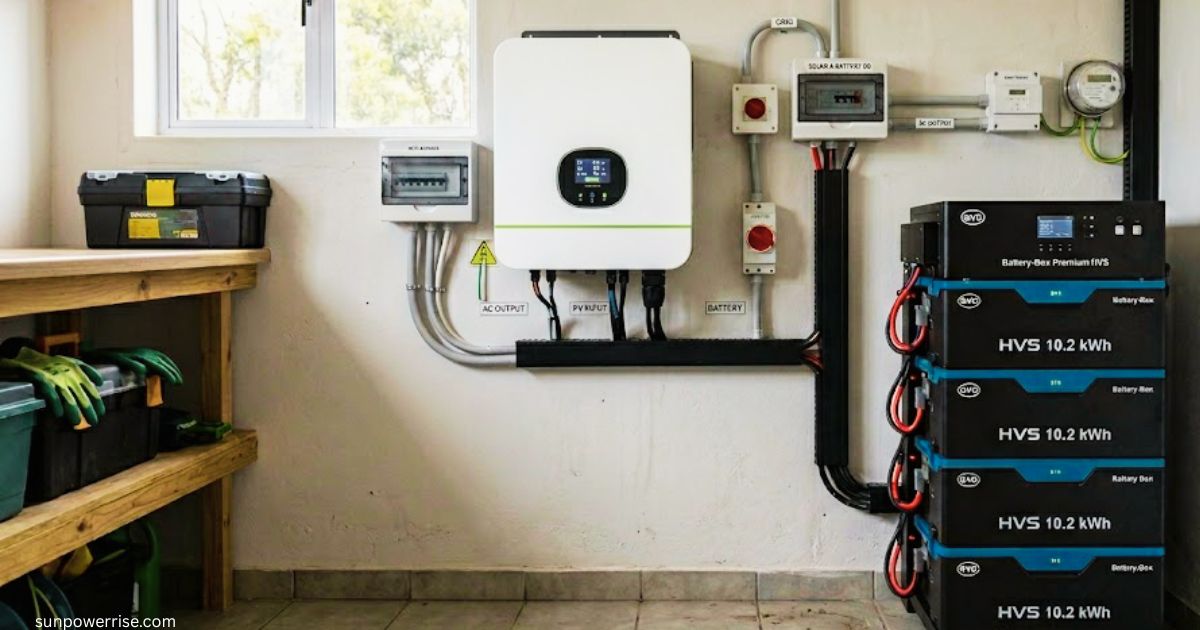
Placement affects both performance and longevity, and it’s worth checking rather than assuming your installer has it covered by default:
Close to your battery generally within one to two metres, to minimise cable losses. Within Wi-Fi range of your router, or with a hardwired internet connection, so it can report to its monitoring app.
Within roughly 50 metres of both your panels and your consumer unit (fuse board) beyond that, you start losing electricity to voltage drop along the cable run.
Ventilated and shaded, not in direct sun on an exterior wall heat is the main enemy of inverter longevity, and installations should follow the placement guidance in PAS 63100, the UK specification covering battery energy storage systems in dwellings.
FAQs
What does a solar inverter actually do?
It converts DC electricity from your solar panels into AC electricity that powers your home and exports to the grid. It is the brain of your entire solar PV system.
How long does a solar inverter last?
It typically lasts around 10 to 15 years before needing replacement, which is shorter than the lifespan of your solar panels.
How does a string inverter and a micro inverter vary?
A string inverter handles DC electricity from multiple solar panels at once, while a micro inverter converts DC to AC at each individual panel. Micro inverters perform better under shading but come at a higher cost.
What is the cost price of solar inverter in the UK?
A standard string inverter for a typical residential home costs between £500 and £1,000, while a 12-panel system inverter costs around £1,400.
Does a solar inverter act with a battery?
Yes. A hybrid inverter acts as both a solar inverter and a battery inverter, converting DC electricity from your solar panels and battery storage into usable AC electricity. It can also store surplus energy for use when your panels are not producing power