

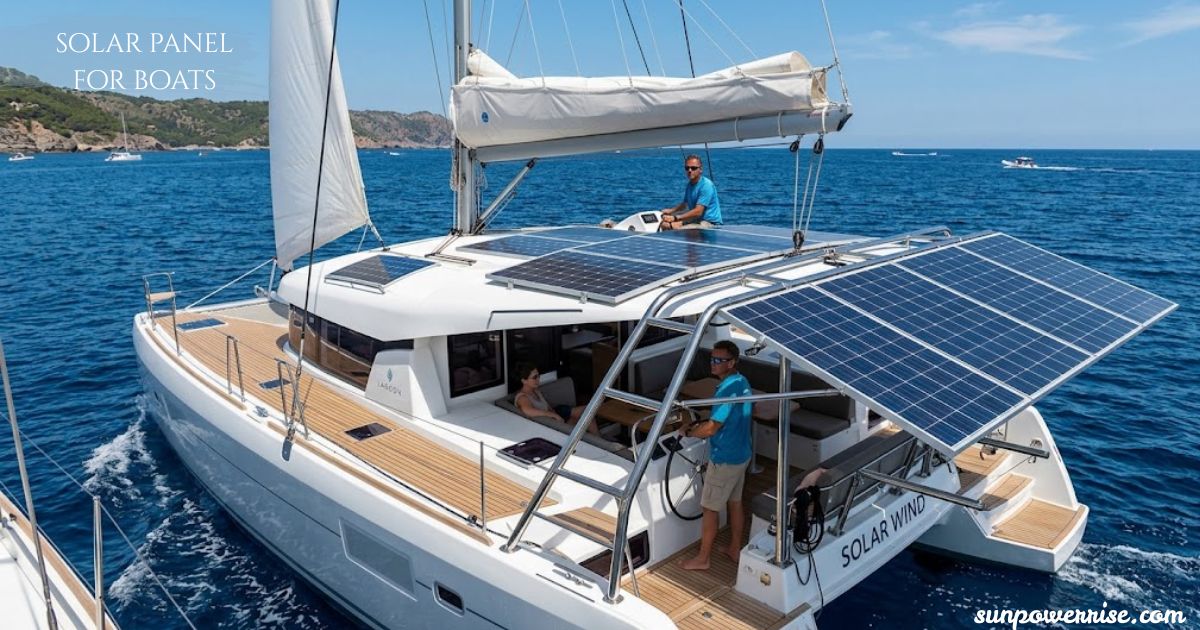
Installing solar panels for boats transformed my setup when I fitted my first solar system on a small fishing vessel years ago, changing how I think about energy independence on the water. Every boat owner wants a quiet, steady energy ride, and a good marine solar setup cuts down on engine hours without touching the fuel tank.
Boats need power for lights, pumps, and refrigeration, and a good marine solar setup handles all of that without adding noise to a peaceful anchorage.
Marine solar panels built for harsh marine conditions last longer and need low-maintenance care, which boosts productivity for anyone living aboard, whether on a narrowboat or a big yacht. I always weigh the pros and cons before I install a solar panel, because the wrong choice on a boat costs more than it does on land.
Once you understand these basics, choosing between marine solar systems and simple solar panels becomes easy, and battery storage stays steady, and your engine room stays quiet.
What Are Solar Panels for Boats?
A solar panel works on simple photovoltaic principles, turning sunlight into electrical energy you can actually use at sea.
I have watched this technology improve a lot over the years, and modern monocrystalline solar panels now handle saltwater exposure, constant vibration, and UV degradation far better than older models. Moisture ingress used to ruin cheap panels fast, but good build quality now keeps boat solar panels working through years of harsh conditions.
Boat owners use these panels mainly to top up onboard batteries, which then run everything from navigation electronics to small kitchen gear while anchored or moored.
A typical setup covers GPS, chart plotters, depth sounders, and autopilot systems, plus communication equipment like VHF radios, AIS transponders, and satellite devices. Lighting draws power too, so cabin lights, navigation lights, and anchor lights all pull from the same solar battery.
I have seen solar panels for canal boats, sailboats, motor yachts, fishing boats, and liveaboard vessels alike, since almost every hull type benefits from free power.
Solar panel types now reach efficiencies of 20-25% even in compact formats, which suits boats with limited deck space. This gain in solar energy output means fewer panels for the same power requirements, which saves both money and space.
Why Use Solar Power on a Boat?
Solar power solves a lot of problems for boat owners, and I noticed the biggest change the moment I switched from a noisy generator to quiet panels.
The benefits of solar panels show up fast: silent operation means no more generator noise ruining a calm evening in quiet coves. Cruising sailors and liveaboards both love this kind of energy independence, since it gives real freedom away from the dock.
Running engines just to keep batteries topped up wastes fuel and adds to your running costs, while solar panels handle the job for free.
Reduced fuel consumption matters most during extended periods at anchor, when you would otherwise burn fuel just for battery charge. Staying anchored or moored overnight no longer means listening to wind generators with wonky bearings next door.
Solar has almost no moving parts, so maintenance stays light, and a maintenance-free setup saves both time and expenses over the years.
A quick wiring check and a bit of cleaning cover most of the maintenance time you will ever need, unlike engines that demand constant connection checks. Marine solar gear also skips the automatic breakdowns that plague onboard systems built around moving machinery.
Types of Solar Panels for Boats
Marine panels come in different formats, and picking the right panel choice depends on your vessel types and installation requirements.
A flexible marine solar panel uses thin-film or monocrystalline cells built into flexible backing materials, so it bends easily across curved surfaces. I have mounted one myself on a bimini top, and this curved surface mounting trick works great on bimini tops and dodgers alike.
Lightweight construction keeps a typical 100W panel under 3kg, which barely changes windage or hull balance at all. This kind of panel sticks straight onto cabin roofs without extra frames or mounting hardware, giving a low profile look overall.
The trade-off is that flexible panels stay less structurally durable than rigid alternatives, so build quality varies a lot between manufacturers.
Flexible solar panels suit boats with curved mounting surfaces or limited space, especially where keeping weight down really matters. Performance and longevity both depend on the brand, so check reviews before buying, since not every panel handles years of sun the same way.
Rigid solar panels, on the other hand, hold solar cells inside aluminium frames with tempered glass fronts, much like the panels on a house roof.
This robust construction suits permanent installation and comes with higher efficiency than most flexible options. Good ventilation under the panel, through open airspace, keeps rigid panels cooler and running better over time.
How Much Solar Power Does a Boat Need?
Sizing a marine solar system starts with your energy consumption, and every boat has different energy requirements based on how it gets used.
Vessels built for occasional use need far less power than ones used for extended cruising or full-time liveaboard life. Before installing solar panels, work out your usage patterns, since every usage pattern shifts between weekend boating and daily cruising.
Start by checking watts on the packaging of every device, from a laptop to phone charging cables, since appliances list their draw right there.
Multiply that by appliance running time to get watt-hours per device, then add these up for your watt-hours, daily usage, and daily consumption totals. Small electronics barely register, but bigger loads add up fast across a full day.
A liveaboard catamaran with an onboard fridge shows this well: the fridge on a marine 12V system might draw 4 Amps and run for 12 hours, so the wattage calculation looks like amps times volts times hours.
Add a buffer for discharge, roughly 10-20%, since batteries never run at perfect output. That single fridge alone might need around 576 Wh, so a 700 Wh solar panel covers it with room to spare.
How to Install Solar Panels on a Boat
Installing a solar panel on a boat sounds hard at first, but it gets much easier once you plan the layout properly. On my own sailing yacht, I fixed a solid monocrystalline panel onto a metal frame above the dingy davits, and that spot works perfectly. Even large vessels need careful planning, since deck space stays limited no matter the size of the hull.
Fitting solar panels for narrow boats usually involves flexible panels that bend around the contours of a long upper deck space, while catamarans often mix solid solar panels with flexible solar panels across the hardtop, port hull, and starboard hull. The right type of panel really depends on your boat’s shape and how much room you have to work with.
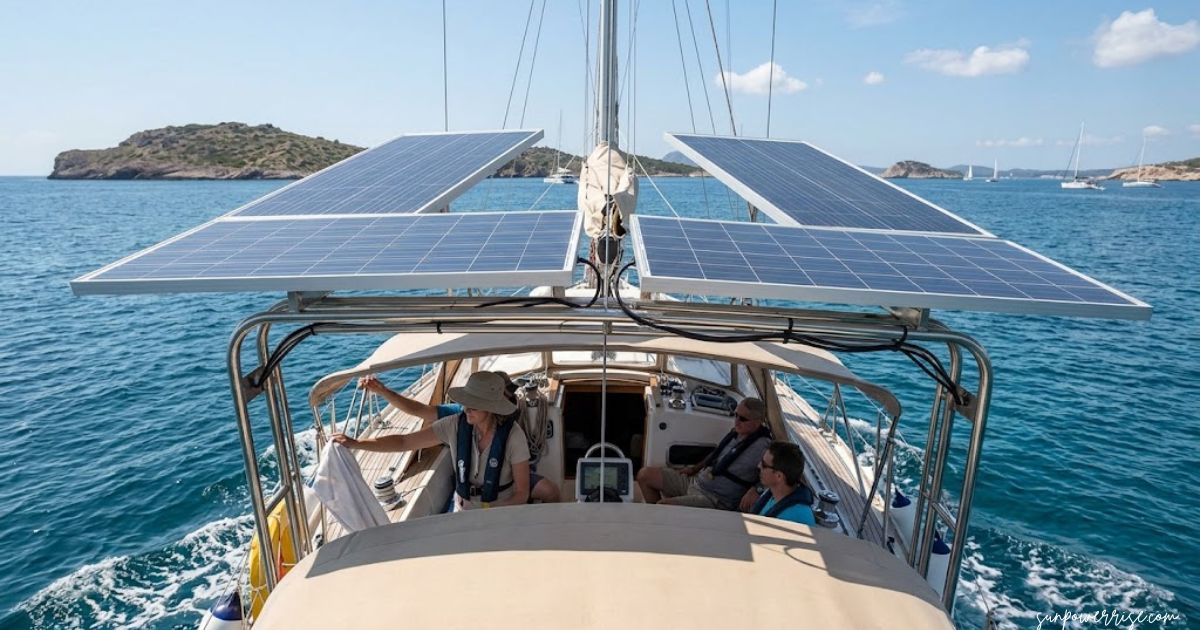
Some walked on panels let you skip the space problem entirely, as long as you check for a proper non-slip coating first. Loose connectors turn into real tripping hazards fast, so tuck cables away neatly before heading out for solar at sea.
Pros and Cons of Solar Panels for Boats
Freedom from Shore Power
You do not need a fully electric boat to enjoy the perks of solar, since even a small panel or two brings real value to any boat battery setup.
Staying tied to shore power the whole time is not required either, and heading into open water with just small solar panels still keeps your appliances running fine. Environmentally friendly power like this keeps every environment cleaner, one quiet anchorage at a time.
Essential Offshore Emergency Power
Even a modest setup can save your VHF radio, navigation panel, or a simple anchor light during an emergency, and that difference can matter between comfort and real-life and death situations offshore. On powerboats and yachts alike, an energy source that works without shore ties feels priceless once you are truly offshore.
Low Maintenance and Extended Engine Lifespan
On the plus side, minimal maintenance keeps things easy, since a damp cloth wipes away debris and clears most solar panels in minutes. Longevity runs high too, with many monocrystalline panels lasting 25 years or more before efficiency starts to fade.
Your engine gets a break as well, since you spend less time topping up the battery through the motor, which stretches engine life further.
Silent Battery Protection and Green Energy
Batteries also benefit, since solar charge controllers stop them from going flat or suffering overcharging, both of which shorten battery health fast.
The whole setup stays silent and noiseless, perfect for a quiet anchorage, and it produces 100% clean energy, or green energy, straight from the sun’s energy.
This cuts your carbon footprint and gives real peace of mind during any emergencies out on the water, especially with lights, chart plotter, and other gear staying powered through sunlight absorption.
Upfront Costs and Installation Complexity
On the downside, panels, a charge controller, cables, and maybe an inverter all add up in price, and the whole project can feel expensive fast. You might need an electrician to help with installing solar panels, especially figuring out wire gauge and amperes, which gets complicated if maths is not your strong point.
Panel Quality Variations and Deck Space Challenges
Longevity also varies a lot, since good monocrystalline panels last for decades, while cheaper types fade after three to five years without much warning. Location poses its own challenge too, since finding space that respects vessel operation and crew safety while still catching enough sun takes real thought and careful boat’s solar panels planning.
An off-grid energy source also helps recover from a dead battery faster than you would expect, since even a small trickle keeps essential electronics alive. Overall, the light maintenance this system demands makes it one of the smartest upgrades you can give any boat.
Best Boat Solar Panels Available Right Now
Giosolar 1,000W Flexible Solar Panel Kit
When evaluating the best solar panels for boats uk sailors rely on Giosolar, which makes one of the most powerful setups I have tested: a 1,000W flexible solar panel kit built from the Giostar package of ten 100W panels, delivering nearly a kilowatt, close to what a one-bedroom house uses.
These panels stay abrasion-resistant, anti-rust, and dust proof, with junction boxes fully sealed and waterproof against spray and rain. The material itself is light, thin, and flexible, and it survives being bent up to 30 degrees without cracking, which shows real advanced technology at work.
Eco-Worthy Monocrystalline Solar Panel Kit
Eco-worthy sells a solid solar panel kit built around a monocrystalline type panel, grown from a single silicon crystal of high purity through a careful ingot process.
It ships with an LCD control unit and four Z brackets, priced at £113.99 through eBay, though it only carries a one year warranty and needs a flat surface or frame since it stays a rigid panel.
PV Logic 20W Flexi Solar Panel
PV Logic brings a 20W Flexi solar panel, a proper semi-flexible solar panel, through Force 4 Chandlery, paired with a dual battery solar charge controller and a six-layer laminate finish that keeps it fully waterproof.
Its dimpled top surface stays self healing if someone steps on it, and the PWM charging system, run by its own controller, stays gentle and battery-lifetime friendly, all for £149.95, complete with LED battery-status indicators and 4 metres of cable.
FAQs
What type of solar panel is best for boats?
Semi-flexible monocrystalline solar panels are best for boats because their lightweight, low-profile design contours easily to curved decks while delivering high energy efficiency and saltwater resistance.
What size solar panel do I need to charge a boat battery?
A 100W to 200W solar panel paired with an MPPT charge controller easily maintains a standard 12V 100Ah marine battery for everyday onboard power needs and total peace of mind.
How can I install solar panels on my boat?
Secure marine-grade panels to an unshaded bimini, cabin roof, or davit arch using marine adhesive or mounting brackets, then route tinned copper wiring through a weatherproof deck fitting to your charge controller and battery bank.
What is the best solar panel for a boat battery?
A high-efficiency monocrystalline panel with UV degradation protection and an IP68 waterproof rating is best for consistent, silent solar charging out on the open water.
Will a solar panel charge a boat battery?
Yes, a solar panel reliably charges a boat battery by converting sunlight into electrical current through a solar regulator to prevent overcharging and preserve battery lifespan.