

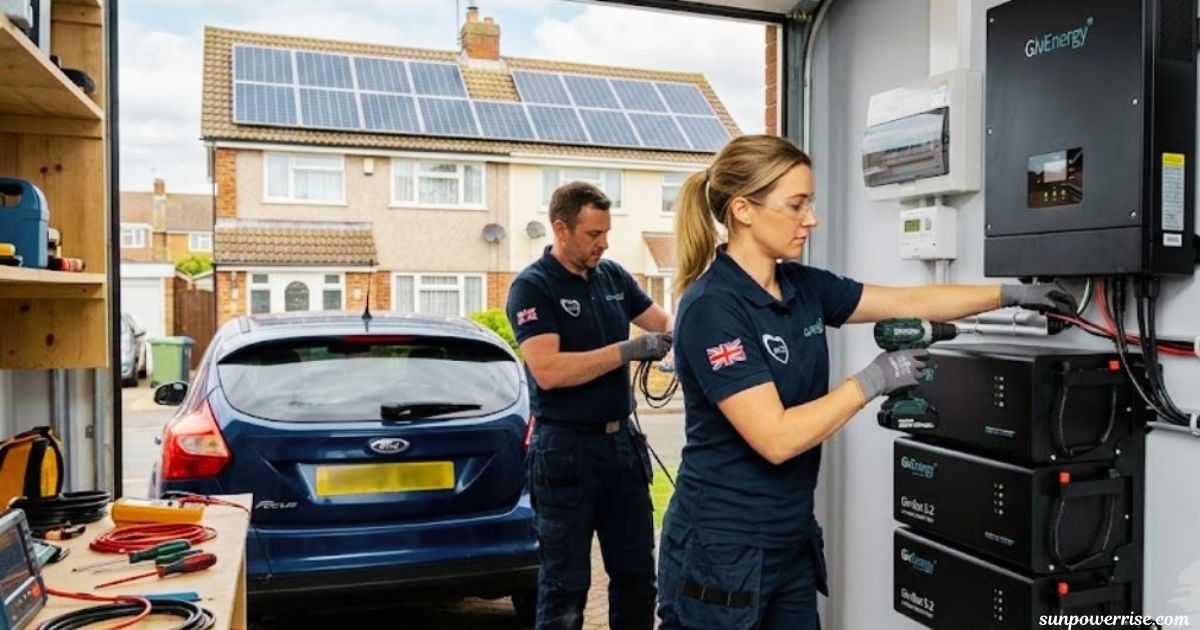
A pv panel battery is a rechargeable storage unit that sits alongside your solar panels and holds onto the electricity they generate during the day, so you can use it later in the evening, overnight, or during a power cut instead of losing it back to the grid. Pair decent-sized storage with a sensible tariff and most households can cover a large share of their evening demand from power their own roof made hours earlier.
I’ve spoken with plenty of homeowners looking into a battery because they want more control over their energy, whether they already have solar panels or are planning a fresh install. The goal is almost always the same: catch that surplus daytime energy and put it to work after the sun goes down.
This guide walks through how home batteries work, what they cost in the UK right now, how to size and locate one correctly, and the install process step by step covering a typical 2026 retrofit or new-build setup, so you can budget realistically and ask your installer the right questions.
What Does a PV Panel Battery Cost in the UK?
Pricing varies a lot by size and brand. As a rough guide: smaller batteries (2-5kWh) tend to land around £2,000-£6,000 fitted, while the larger systems many UK homes actually need (9-15kWh) run closer to £6,000-£10,000+ once installation is included. A typical household system, hardware and labour combined, often starts around £5,000. Get itemised quotes hardware, inverter, labour and any consumer-unit upgrades should all be broken out separately so you’re comparing like for like.
What Are Home Batteries, and What Do They Actually Save You?
A home battery is a storage device that banks spare electricity and releases it back as usable power whenever you need it. Without one, most households only use a modest share of the solar power they generate roughly 25-30% because the rest gets exported the moment it’s produced.
Add a battery and that self-consumption figure can realistically climb to 60-80%, since the surplus is held back for your own evening use instead of being sent straight to the grid.
Plenty of households also charge their battery from a cheap overnight tariff, so even on a dull winter day you’re running the house on low-rate electricity rather than paying peak prices.
How Batteries Work With Solar Panels
During daylight your panels usually generate more than the house needs. That surplus charges the battery first; only once it’s full does anything spill over to export. When generation drops off in the evening, the system automatically switches to drawing from the battery before it touches grid electricity.
Using your own stored power is nearly always worth more than exporting it, because what you’d pay to buy electricity back is typically higher than what you’d earn selling it through the Smart Export Guarantee (SEG) the scheme that pays homeowners for surplus power sent to the grid. That gap is exactly why storing power for your own use usually beats exporting it outright, though SEG payments are still worth claiming for whatever genuinely spills over once your battery’s full.
Financial Help for Adding Batteries to Your Home
Home battery installations currently qualify for 0% VAT until 31 March 2027, whether fitted alongside solar or installed as a standalone system. Beyond that, the Warm Homes: Local Grant supports eligible low-income households in privately owned homes through local authorities, with full details on GOV.UK, and the Warm Homes: Social Housing Fund helps landlords upgrade tenants’ homes with measures including solar worth checking if you’re renting.
Choosing the Right Location
Since PAS 63100:2024 fire safety guidance came into force, batteries can no longer sit in ventilated spaces like lofts, bedrooms, stairwells or small cupboards. Utility rooms, garages and purpose-built external units remain the safest bets, with proper fire ratings, ventilation and a mounting surface that can handle the weight.
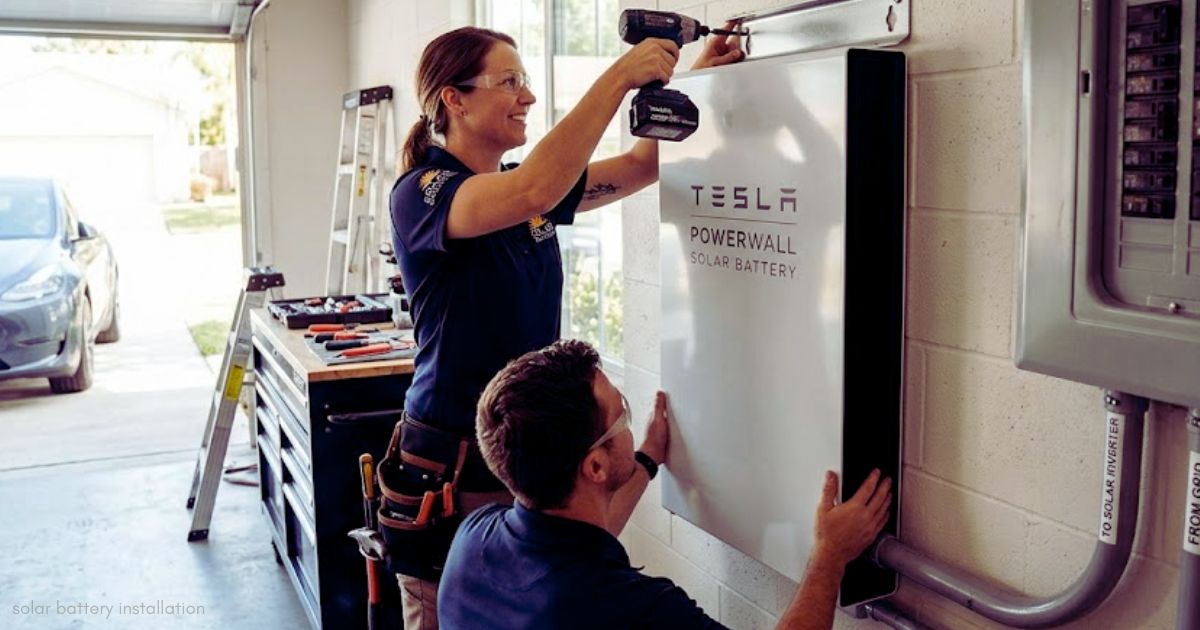
From experience, a garage or outside wall tends to hold the most consistent temperature, cuts theft risk, and keeps things tidy against a fireproof wall away from a parked car though a utility room or garden room works fine too, provided it doesn’t block an escape route. Small, enclosed installs usually need a fire alarm, which a good installer will fit as standard. If a loft really is your only option, it needs a strong gable-end wall and must be wall-fixed throughout, since a fault could otherwise burn straight through wooden joists.
Initial Assessment and Sizing
A certified installer should review your electricity use, solar output, and priorities bill savings, backup power, or full independence before recommending a size. Most UK homes land between 5kWh and 15kWh. For context, the average UK home uses around 2,700kWh of electricity a year, so your actual usage (check your smart meter data) matters far more than picking the biggest battery on the shelf.
You’ll also choose between AC-coupled systems, which retrofit neatly onto an existing solar setup, and DC-coupled systems, which suit new installs and lose slightly less energy in conversion.
Can You Have a Battery Without Solar Panels?
Yes a standalone battery charges from the grid instead of panels, usually on a cheap overnight tariff, then discharges during expensive peak hours. It won’t cut your carbon footprint the way a solar-charged battery does, but it can still meaningfully reduce your bill if you’re on the right time-of-use tariff.
Which Battery Brands Are Worth Looking At?
Trusted names include Growatt, Tesla Powerwall, GivEnergy, Enphase and Fox ESS. Fox ESS tends to suit homeowners after solid value and easy scalability; GivEnergy and Growatt offer flexible, modular setups if you expect to expand later (EV charger, heat pump); and the Tesla Powerwall 3 is the premium all-in-one option, with 13.5kWh capacity and a built-in inverter, aimed at households wanting maximum capacity and smart-app control in one box. Compare usable capacity (not just rated capacity), warranty length, round-trip efficiency and local installer support rather than price alone.
Type of Batteries
Most modern systems use lithium-ion, including lithium iron phosphate (LiFePO₄) variants, which manage charge and discharge through reversible chemical reactions. It’s simple, well-proven engineering, and it’s why lithium chemistries have become the default for home storage lead-acid is cheaper but bulkier, less efficient, and shorter-lived by comparison.
A battery’s lifespan depends heavily on its number of charge cycles. Most last 10-15 years, but don’t expect a sudden cutoff capacity fades gradually, and a battery might still be working after a decade while only holding 70-80% of its original capacity.
Battery Mounting and Installation
A qualified electrician handles the fitting: mounting on a fire-safe point, wiring into your solar system, sorting the grid connection, and running a full system test. This involves MCBs, RCDs, circuit protection and isolation switches, all compliant with BS 7671, plus clear system labelling for future servicing.
Choose an MCS-certified installer with proven PAS 63100 experience. Physically, wall-mounted or solid-base units need roughly 30cm clearance and matching inverter spacing; ground-mounted batteries usually sit on a concrete slab, pinned and bracketed for stability. Loft batteries must always be wall-fixed, and installers use galvanised steel brackets fitted to a genuinely strong wall never a stud wall or breeze blocks.
Adding a Cover
Some homeowners fit a wooden enclosure for extra insulation, weatherproofing or aesthetics. Stick to the manufacturer’s spacing guidelines so you don’t shorten battery life or void the warranty, and remove it in summer, especially in a south-facing spot that gets constant sun to avoid overheating. Never cover the inverter itself; it relies on convection cooling to stay efficient.
Connection to the Inverter
Keeping the battery close to the inverter minimises electricity loss. A DC-coupled battery sits between the panels and inverter; an AC-coupled battery connects through the fuse box. DC systems use positive and negative cables for charging and discharging, with a Cat 6 Ethernet link handling communication between components, while an earth terminal keeps the whole connection safe.
Commissioning and Ongoing Monitoring
Commissioning confirms the internet connection and app access through your inverter manufacturer’s platform. Installers typically connect a dongle to your household Wi-Fi and upload system details panel, inverter and battery specs so you can track generation, storage and exports from day one. Ask your installer what ongoing monitoring and support is included, and get warranty terms for the battery and inverter in writing before you sign.
Is a PV Panel Battery Worth It?
It usually comes down to your evening electricity use, how much solar surplus you generate, and whether you’ve got access to a cheap overnight tariff. Homes empty during the day storing solar for evening use tend to see the best payback. Before requesting quotes, pull your smart meter data, confirm your export rate, and ask installers for usable capacity, backup limits, SEG eligibility and a full itemised cost breakdown that’s the fastest way to compare offers properly.
FAQs
What is a PV panel battery?
A PV panel battery stores the solar energy generated by photovoltaic panels for use when sunlight is unavailable.
How long does a solar battery last?
Most solar batteries last between 10–15 years, depending on the type and usage cycles.
What size battery do I need for my solar system?
Battery size depends on your daily energy consumption and how many days of backup power you need.
Can a solar battery power my home at night?
Yes, a properly sized solar battery can supply stored daytime energy to run your home through the night.
What types of batteries are used with PV panels?
The most common types are lithium-ion, lead-acid, and lithium iron phosphate (LiFePO₄) batteries.