

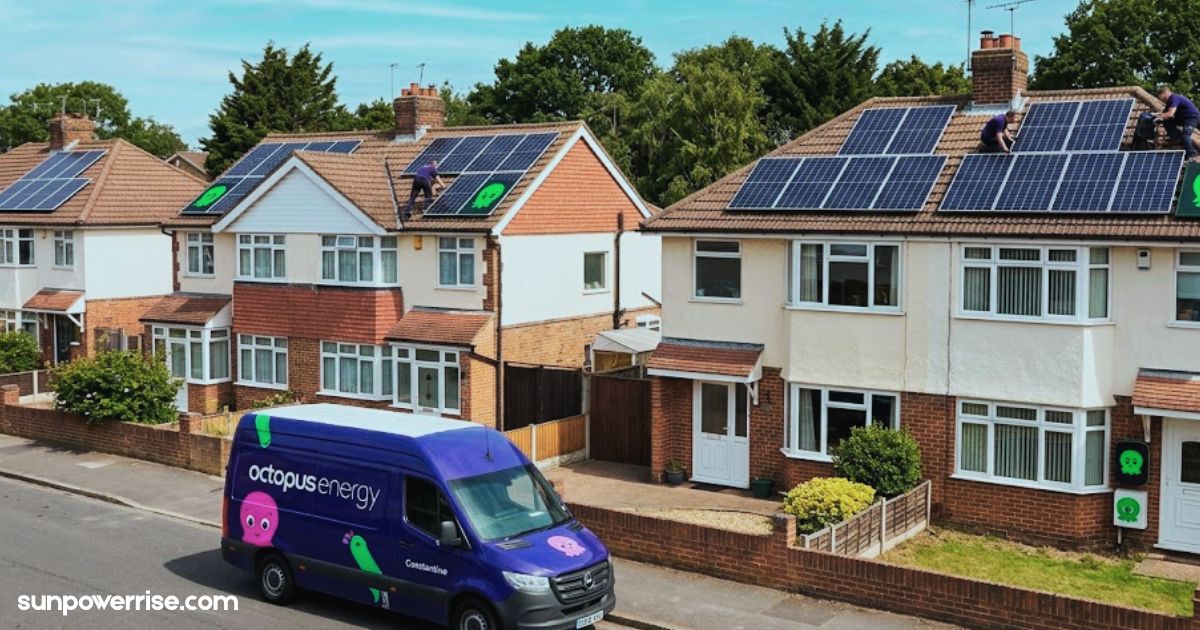
Installing octopus solar panels is a dream come true for a homeowner who spent years thinking about switching to solar before finally leaping with Octopus Energy. Having always dreamed of living a solar-powered life, they jumped at the opportunity without hesitation once it arose.
Their home now runs on a mix of battery power and energy storage, resulting in a setup they never imagined they would have. Beyond the environmental benefits, it was also a smart financial move..
Every household considering going green should know that with the right setup, you can power your home, lower your bills, and even increase property value over time, all while you earn extra cash by selling back what you don’t use.
The sun gives us free energy every single day, and clever systems know how to capture it. Choosing a solar smart tariff can help unlock the best savings and let you generate free energy for years to come.
Customer Satisfaction About Octopus Solar Panels
Many customers have wanted Octopus solar panels for a long time before they can actually afford the switch, and once they’re installed, most find themselves checking the amount saved on their bill every so often.
It’s a small habit, but it’s a satisfying one, a simple reminder of how much sense the decision made. Watching savings grow, month after month, tends to become genuinely rewarding, and it’s proof that solar isn’t just good for the planet; it’s good for the wallet too.
Customer Testimonial – Why People Choose Solar
For most customers, the prime motivation for going solar is simple: they want to generate free energy straight from the sun. It’s rarely just about the panels, though the idea of having a battery to store energy at a cheaper rate often seals the deal.
Many choose Synth Solar from the Octopus trusted partners list because the company stands out as one of the most responsive and flexible on the list.
Customers also value the accessible information Synth Solar provides, which makes the whole decision far easier to understand. Right after installation, most people start noticing savings even during winter, when the sun isn’t shining as strongly as it does in summer.
Homeowners often look forward to seeing their savings grow even further once the warmer months arrive, all thanks to the free energy sitting right above their roof.
Installer Partnership – Synth Solar & Octopus
Tom Elvage, co-founder of Synth Solar, explains that the company’s mission is to help people reduce the cost of electricity through smart monitoring services, battery storage, and solar energy.
He says working with Octopus felt like an obvious choice, since the team has long admired Octopus’s customer excellence and their approach to customer service. Every customer interaction, he adds, should be as smooth as possible.
When working with each customer, Tom’s team digs into the numbers and details to work out the exact generation potential for their property. Many customers ask for a copy of the spreadsheet the team uses to map everything out.
The support from Synth Solar stays strong throughout, with the team always reachable by email or telephone. Customers consistently find them responsive, especially whenever questions come up about the software.
Octopus, for its part, does its homework to make sure it’s choosing the right partner. That careful vetting is exactly why Synth Solar is proud to call itself a trusted partner.
Installation Process
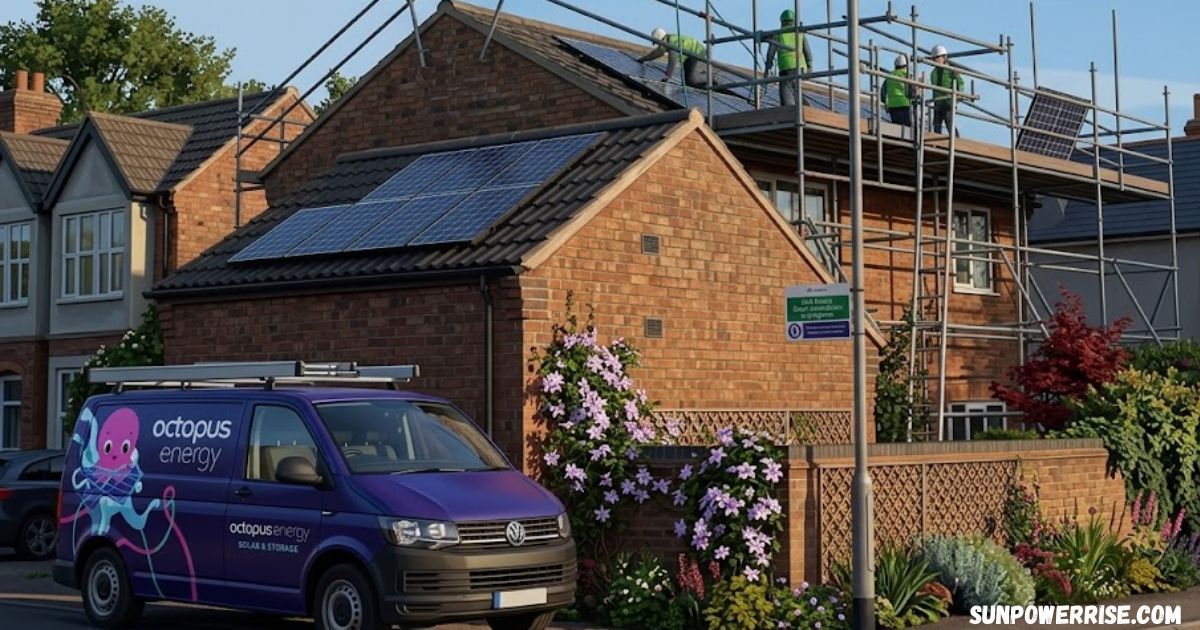
Every installation starts outside the home, where the crew puts up scaffolding to get safe access to the roof, all in the name of clean energy for the household. The scaffolders usually finish this part in under a day, and they don’t even need to step inside.
Once that’s done, the team returns to install the solar panels and battery, a job that usually takes 2 to 4 days, depending on how many panels you’re having fitted.
The exact timeline gets confirmed earlier, during the survey and quote stage, so there are no surprises. Fitting the inverter and sorting out the wiring means the team also has to come inside, and yes, there’s some drilling involved.
The electricity in the house gets switched off for an hour or two during this stage, but you’ll always know beforehand when it’s happening.
To keep things tidy, workers wear overshoes or cover the carpets while they’re indoors. Once finished, they clear away all the waste and rubbish, aiming to recycle up to 95% of it.
After everything is tested, the system starts generating electricity right away, and you’re left with a meter, a fuse box, and the inverter.
The team walks you through the controls and shows you how to monitor usage across the whole system. Once the installers leave, the customer care team steps in to finalise details.
If you want to sell excess electricity back to the grid, you’ll need approval from the district network operator. That go-ahead can take a couple of weeks, after which Octopus talks you through its export tariffs so you’re ready to earn.
From that point on, you’re officially part of the Octopus Energy family, and Octopus is proud to welcome every household into what feels like a genuine renewable energy revolution.
Installation Costs
There’s no one-size-fits-all answer when it comes to installation costs, since everything depends on how many panels you choose and whether you add battery storage.
According to the Energy Saving Trust, an average solar panel system costs around £7,000, while battery storage adds roughly £5,000 to £8,000 on top. At Octopus, the most popular system right now includes 10 panels and a 5 kWh battery, priced at about £10,000.
You can explore all these figures on the website with no commitment, and you don’t have to pay everything upfront. Octopus also offers flexible finance options to spread the cost. That way, going solar feels achievable no matter your budget.
Savings & Tariffs
With a solar and battery system, customers can save 99% on their electricity bills by switching to the intelligent Octopus Flux tariff.
A regular household usually spends close to £1,093 annually on electricity, by comparison. A home with 10 solar panels and a 5 kWh battery on that same tariff pays as little as £14 instead.
That’s not a small tweak; it’s a significant reduction in energy bills that most people would barely believe possible. It also means you’re far less exposed to unpredictable electricity costs, which is a real comfort as prices keep shifting year to year.
Payback Period
Beyond just saving money on electricity bills, selling energy back to the grid helps you recoup the cost of your whole system even faster.
This is what’s known as the payback period, and it depends heavily on the number of solar panels you install and the amount of energy you actually use. Most households see a typical payback period of 10 to 12 years, though this varies with your energy tariff and installation costs.
If you want a rough number for your own home, you can get an estimated quote on the website in just a few minutes. It’s a simple way to see whether the investment lines up with your goals.
Selling Energy Back to the Grid
One of the best perks of solar is getting paid for energy you don’t use, simply by exporting it back to the grid.
How much you earn depends entirely on your energy tariff; some plans offer a flat rate, while smart tariffs like Octopus Flux and Intelligent Octopus Flux price your energy according to the real-time demands of the grid.
Pair that with a battery, and you can boost savings by timing your exporting of energy for moments of high demand. It’s a smart way to earn more, and it’s also greener, since more solar on the grid means less reliance on fossil fuel power stations.
System & Support
Octopus solar panels system comes with everything a home needs, from sleek solar panels to a great range of batteries.
The team will help you design a system that fits your roof and your lifestyle, guiding you through installation and offering 24/7 aftercare long after the crew has packed up.
If you’ve been on the fence, now is a genuinely good time to invest. Smart tech like this doesn’t just help the planet; it can also increase the value of a home, making it a decision that pays off in more ways than one.
FAQs
Are Octopus solar panels worth it?
For most homes, yes. The installation costs pay off through real savings and a shorter payback period, especially when paired with a solar smart tariff.
How much are Octopus solar panels?
A popular solar system with 10 panels and a 5 kWh battery costs around £10,000, though finance options can spread that cost.
How long does it take to install Octopus solar panels?
Most installations take 2 to 4 days, depending on the number of panels and whether a battery is included.
Can I sell excess solar energy back to the grid with Octopus?
Yes, with approval from your district network operator, you can sell excess electricity back to the grid through Octopus’s export tariffs.
Do Octopus solar panels come with a warranty or aftercare?
Yes, every system includes 24/7 aftercare, giving customers ongoing support long after installation is complete.