

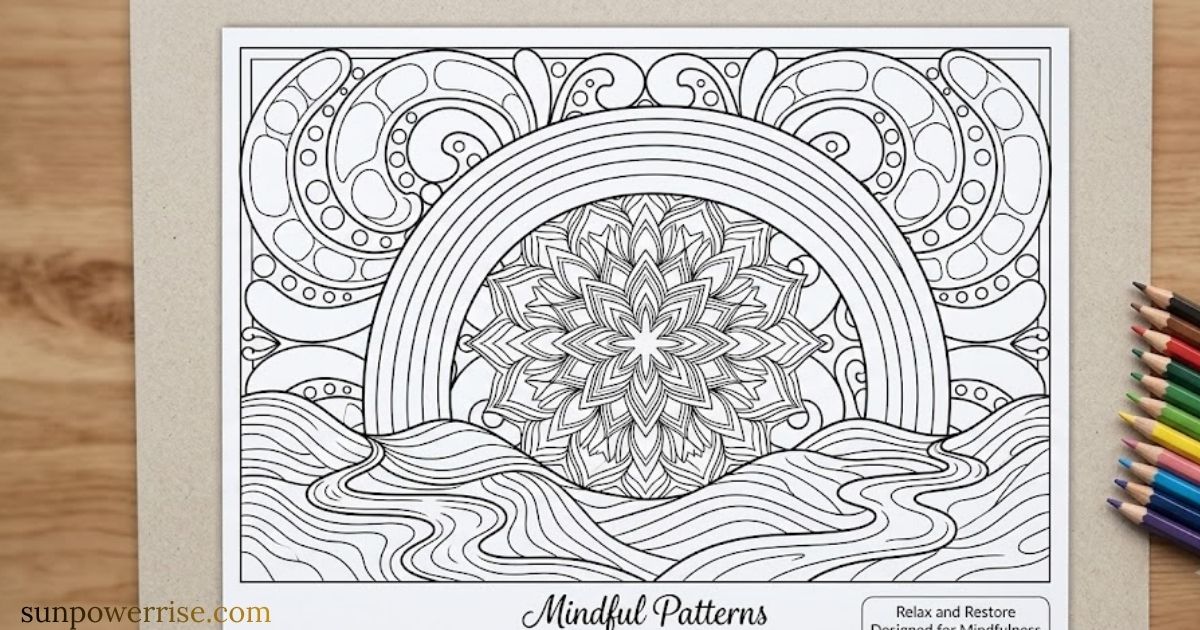
I still remember getting a colouring book as a birthday gift, or being handed a colouring sheet and crayons at a restaurant table while I waited for food. This is really what people mean by mindful colouring.
I would spend ages staying inside the lines, picking each colour with care, and letting my creativity turn a blank page into a finished picture. Looking back, I now understand this simple activity was actually a form of mindfulness.
It really is a formal mindfulness practice, though it can feel hard to start, and that is why informal mindfulness activities like colouring fit so easily into everyday situations.
What Is Mindful Colouring?
At its heart, it is the simple act of holding a pencil or coloured pencil, choosing a shade from a set of colours, and filling in a design or pattern with full awareness.
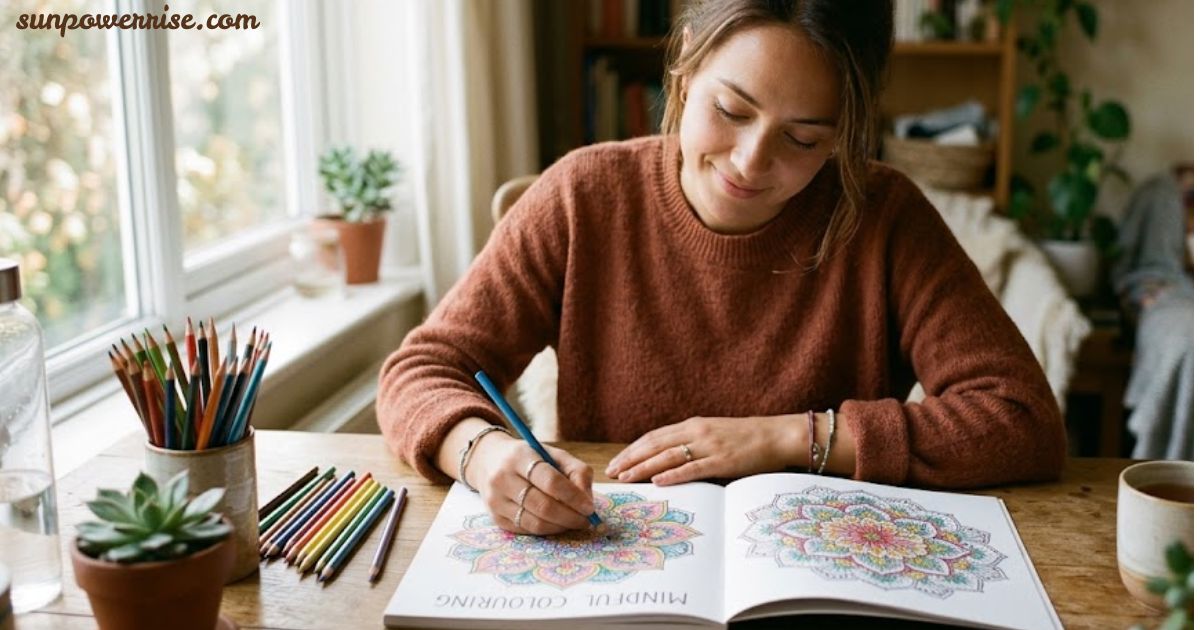
Unlike a formal practice built around watching the breath, this activity asks you to notice the weight of the pencil in your hand, the way each colour sits on the paper, and how your mood shifts as the picture takes shape.
It works much like meditation, because you let go of thoughts about the past or worries about the future, and you bring your concentration and attention back to the task in front of you, pulled straight into the present moment.
Real mindfulness grows out of curiosity, openness, and acceptance, and every stroke of colour becomes a small step toward better feelings and stronger emotional wellbeing, and I notice my own focus sharpen every time I pick up a pencil this way.
Benefits of Mindful Colouring
Many people think colouring is only for children, yet it is also a healthy technique that helps adults manage stress. As a form of art therapy, it trains your attention on your surroundings and your emotions, sharpening focus while easing anxiety and depression and quieting unhelpful thoughts and hard feelings.
Today there are countless mindfulness colouring books and apps that make this creativity easy to reach, and swapping your phone or TV screens for a colouring page before bedtime can improve your sleep, since it cuts down on blue light exposure late at night.
The research backs this up: a study from the University of the West of England compared 20 minutes of reading against 20 minutes of colouring and found that colouring lifted mood and calmed the mind more effectively, while also working as a mental exercise for the brain, calling on both the logical and creative sides of the cerebral cortex, and steadily building coordination, motor skills, and vision along the way.
Top Tips to Start Mindful Colouring
If you want to start, pick whatever suits you best, whether that is a set of colouring pens, a colouring book, a single colouring sheet, a mindfulness colouring printable you keep in a drawer, or a mindful colouring app on your phone.
Keep your tools ready to grab, and if you use an app, carry a portable charger so a low battery never cuts your session short, whether you colour in the morning, the afternoon, or the evening.
Set up your environment to help you relax by clearing away distractions, playing soft music, and wearing comfortable clothing that helps you settle into your surroundings, and as you colour, pay attention to the rhythm of your breathing, letting a few slow deep breaths guide you through the whole session.
What if Mindful Colouring Doesn’t Work for Me?
Mindful colouring does not suit everyone, and that is completely fine, since plenty of other techniques can support your wellbeing. You could go for a walk, try a guided meditation or a mindfulness recording such as one from Headspace, an app the NHS often recommends, or settle in with a chapter of a good book.
Some people prefer to put on music from a favourite artist or album, call a friend or family member on the phone, or simply sit with a person they trust for a chat, and some even try out a healthy recipe in the kitchen instead.
Whichever path you choose, you can find free downloads of colouring sheets, including a handy mindfulness colouring printable, if you decide to give this one more try.
Staying Mindful
Picking up a pencil is not enough on its own; staying present through the whole session of colouring is what truly matters.
Let your thoughts, judgements, opinions, and preferences simply exist, and meet them with compassion, gentle awareness, and non-judgement, then guide your mind back to the shades and tones in front of you, along with the weight of the pencil in your hand.
Writing a few prompts nearby can help, reminding you that this tactile activity is really an act of self-expression, a break from technology, and a way to notice how a certain colour makes you feel a particular emotion. There is no wrong way to fill in a shape, because this art is only ever about honest self-expression.
How can I use these mindfulness colouring sheets?
Teachers can use these mindfulness colouring sheets in plenty of ways, whether as a calm lesson starter for children, a soothing plenary task after a busy activity, or a quiet option during wet play.
Colouring works the logical and creative sides of the brain together, so it doubles as a gentle mental exercise that also builds coordination, keeping the cerebral cortex active.
This set includes 18 different designs, ranging from playful cacti to bold lions and detailed abstract patterns, so just print the colouring pages, hand out some pencils, and let the class get started.
Even more mindfulness resources
Any teacher looking to go further can try the Mindful Movement Lesson Pack, which takes a scientific look at mindfulness and shows pupils how mindful movement can release stress stored in the body.
The Crawfish Colouring Sheet features a crustacean and works well as the base for a classroom discussion about pollution, since the British crawfish cannot survive in polluted waters.
For KS2 pupils aged 7-11, the Yoga and Wellbeing Video Lesson on Meditation guides children through meditation, breathwork, and yoga poses alongside Miriam, and it can be paused and replayed whenever needed. For more ideas, our full range of Children’s Mindfulness resources offers plenty of themed, ready-made options to explore.
FAQs
What is mindful colouring?
It is the simple act of filling in a picture with full awareness, letting each colour and pencil stroke pull your attention into the present moment. It turns an ordinary activity into a quiet form of mindfulness.
What is the mindful colouring exercise?
It’s a gentle mental exercise where you focus on the weight of the pencil, the shade you choose, and your breathing, rather than rushing to finish the design. This steady practice helps calm anxiety and stress in a way that feels natural, almost like coming home to yourself.
What is an example of colouring for mindfulness?
A simple example is sitting with a colouring sheet or mindfulness colouring printable, playing soft music, and slowly working through an abstract pattern while noticing your mood and feelings as they shift.
What are some tips for mindful colouring?
Pick a colouring book, colouring sheet, or mindful colouring app, clear away distractions, wear comfortable clothing, and take slow deep breaths as you colour. Small routines like this can turn a stressful evening into a moment of real rest.
What are the benefits of mindful colouring?
It can ease anxiety and depression, sharpen focus, improve sleep, and support motor skills and coordination, all while giving the brain a gentle mental exercise. For many people, it becomes a small, comforting ritual they look forward to.