

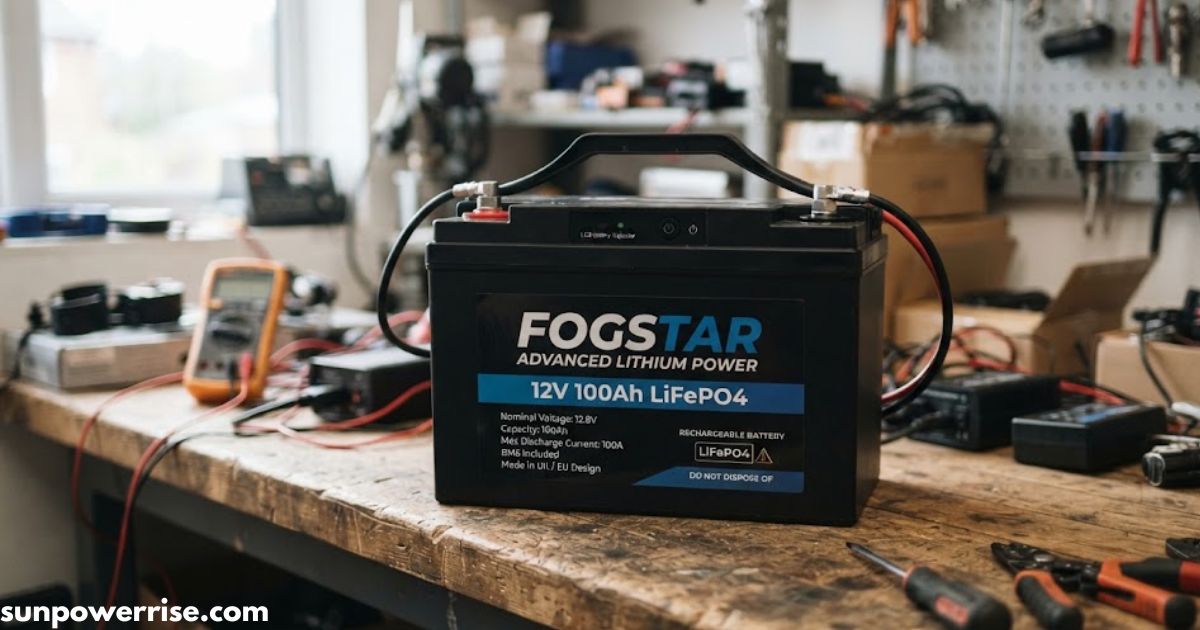
A Fogstar battery stands out as one of the biggest names when people talk about home power storage, and the Fogstar Energy 32 kWh unit proves why.
Fogstar Battery
This single-unit battery weighs 230 kilos, yet it packs in 32,154 watt-hours of usable capacity thanks to Konex cells paired with a 300-amp BMS. Owners get 8,000 cycles at 91% depth of discharge, plus fire suppression and cell heating built in for the coldest temperatures. Every purchase comes with a 6-year warranty and 10 years of customer support, so you are covered either way.
Alongside the flagship battery, FoxEss Energy brings its own outdoor solution to the table. The outdoor server rack battery cabinet holds up to eight batteries, reaching 41 kWh of storage, and it is IP56 rated to handle all weather without complaint. Buyers can pick the option of a black door or a white door, both finished with a gloss black textured paint finish that looks sharp outside any home.
Meanwhile, Foxtar batteries now work smoothly with Volta and off-grid inverters, and getting there only takes a handful of steps to set up proper BMS communication between the two devices. Whether you choose the server rack batteries setup or the 32 kWh unit on its own, every Fogstar battery in the range shares one goal: dependable performance you don’t have to think twice about.
Setup & Communication Instructions
Initial Hardware Setup
Setting up a Fogstar battery is simpler than it looks once you know the order of things. Start with the breaker off, connect the positive and negative terminals, and fit the terminal covers with the cutout facing up.
Communication and Port Connections
Plug the communication cable into the CAN port, never into the parallel battery communication ports, and pick the right protocol for your inverter on the battery screen. Keep a spare cable on hand too, just in case you need one during the process.
Volta and Inverter Configuration
For Volta and off-grid setups specifically, open the main menu on the Fogstar battery and make a protocol change to RS485 and Pylon; the Voltaicon protocol rolls out a little later, so RS485 and Pylon cover you for now. Head to the inverter menu next, go into settings, then advanced settings, and choose battery pylon tech among the other protocols listed there.
Custom Wiring and Final Verification
Grab an Ethernet communication cable for this part: the inverter side needs a straight connection on pin three and pin five, while the battery side connects pin one and pin seven. Get these steps right, and you won’t see errors or warning messages on either device, which means communication is established cleanly between both units.
Torque bolts to 13 Newton meters so nothing works loose over time, and once the battery screen shows no alarms, you know the whole thing is wired correctly.
Product Specifications (Fogstar 32 kWh)
Once you know the specs, it helps to look around the outside of the 32 kWh battery to see how everything comes together in real life, and honestly, seeing this Fogstar battery up close changes how you think about its size and build.
Exterior & Build Features (Fogstar 32 kWh)
Despite its weight, this Fogstar battery moves around easily on built-in casters, and once it’s in place, wind-out rubber feet keep the battery locked in place so it won’t shift. Strong removable handles make lifting it into position far less of a struggle than you’d expect from something this size.
On top sits the power switch, status LEDs, and a touchscreen running a home screen that shows cell voltages, temperatures, capacity, BMS serial number, protocol, and alarms, giving you every reading and stats you need at a glance.
Round the back, a 375 amp breaker sits next to M8 terminals, RS485 parallel connections, and a CAN RS485 inverter connection, along with an Earth connection point wired to your consumer unit or inverter. Add active cooling through a built-in fan, and this Fogstar battery keeps itself running cool and steady no matter how hard it works.
Cabinet Interior & Construction (FoxEss Outdoor Cabinet)
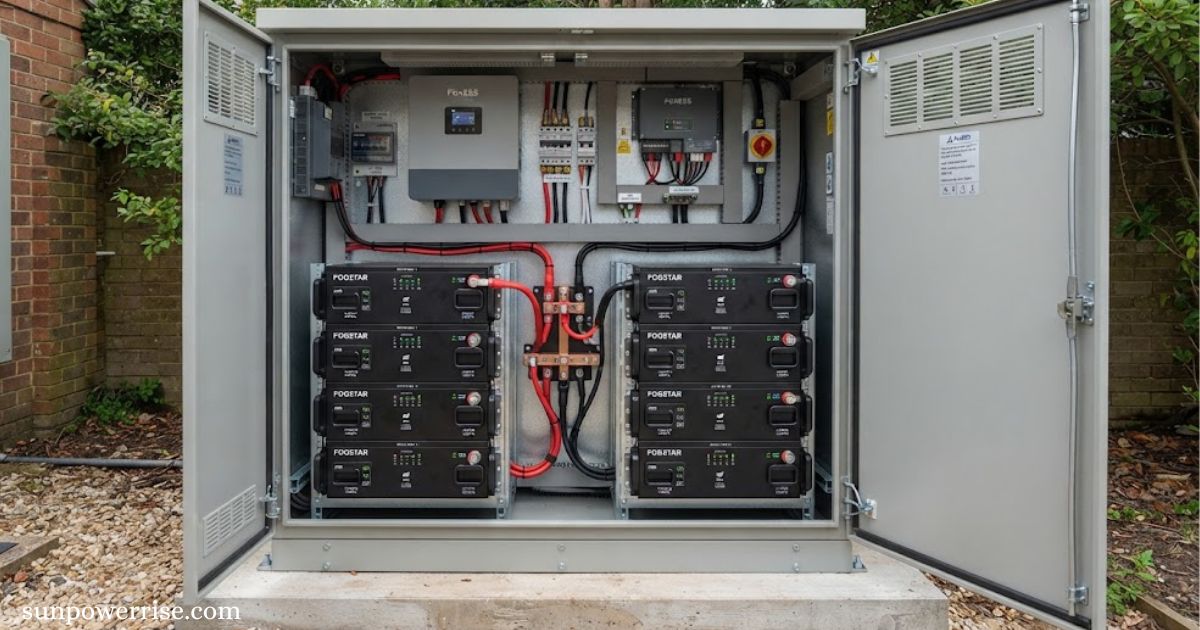
Solid Copper Bus Bars and Cabinet Protection
Inside the cabinet, integrated bus bars made from 6 by 30 mil solid copper handle the current properly, and these are genuine solid copper bus bars, never copper coated steel. The insulated positive and negative bus bars sit safely tucked away, protected by a door with a three-point locking mechanism that presses against a weather-tight seal to stop any water getting in.
Ventilation and Condensation Control
Air vents on the sides let the cabinet breathe, cutting down heat build-up and helping with condensation reduction, while the slate of cabinet design and short overhang at the back keep an air gap open, which lowers condensation even further and stops moisture reaching the wall or building behind it. If needed, a flashing can be fitted into that gap too, for extra weatherproofing.
Cable Management and Expansion Ports
At the top of cabinet, waterproof glands let you feed positive battery cables and negative battery cables through, and there is an inverter communication plug inside plus a matching communication port with a cover on the outside. These ports sit on both sides of cabinet, which gives you installation flexibility and makes stacked cabinets possible side by side for anyone building out a bigger Fogstar battery setup.
Do you include cables?
Yes, every Fogstar battery order comes with cables included. You get 1.5 m of 95 mil cable fitted with M8 terminal lugs, along with the owner’s manual, a battery parallel communication cable, an 1.8 m PC communication cable, and a spare pair of terminal bolts just in case.
Important installation points to note
One thing worth knowing before you start with your Fogstar battery installation: the glands on the side of cabinet take a 95 mil cable, but not the terminals themselves, so always feed the cable through first and fit the terminals afterwards, never the other way round. Once you insert top rack battery, the ports inside become inaccessible, so connect your communication cable and battery cables before that top battery goes in, or you’ll end up doing the job twice.
FAQs
Are Fogstar batteries any good?
Yes, a Fogstar battery delivers reliable capacity, strong BMS protection, and a 6-year warranty, making it a trusted choice for home power storage.
What is the average lifespan of a Fogstar battery?
A Fogstar battery typically lasts through 8,000 cycles at 91% depth of discharge, giving you many years of dependable service.
Who sells Fogstar batteries?
Fogstar sells its batteries directly through its own official website, along with select approved solar and battery installers.
Who makes Fogstar batteries?
Fogstar Energy designs and builds its own batteries, pairing Konex cells with an in-house BMS for UK-focused quality.
How are Fogstar batteries so cheap?
Fogstar keeps prices low by selling direct-to-customer, cutting out middlemen while still offering solid warranty and customer support.