

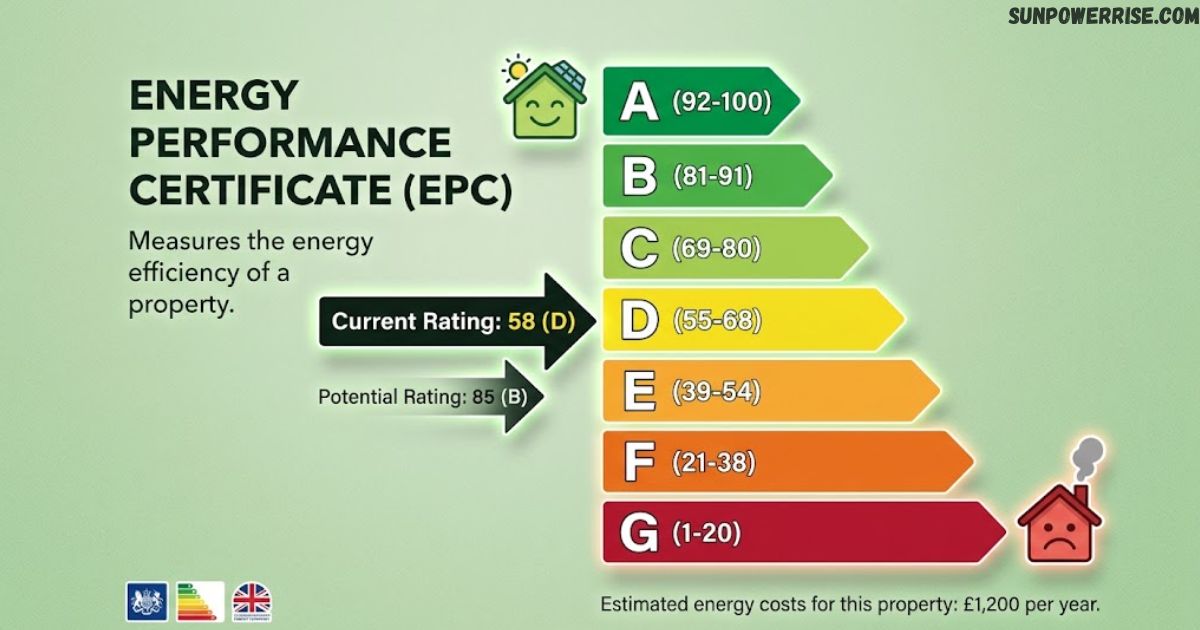
An EPC, short for Energy Performance Certificate, gives every building an EPC rating, a rudimentary rating of what it costs to heat and light. The scale runs from A, the most efficient, down to G, the least efficient. A certificate lasts 10 years, so it stays valid for 10 years and works for any comparison between buildings.
When I bought my first buy-to-let property, the rating sat at D, and I raised it to C. The government plans new rules for 2025 that make landlords reach C before they welcome new tenants. This matters for all your properties, because theoretical energy efficiency now shapes property value.
A weak EPC result hurts fast. A lower property value, high energy bills, and difficulty in selling or renting all follow a poor home rating. A high running cost pushes tenants away, while better energy efficiency helps you save money.
What Is an EPC Rating?
A certified energy assessor carries out the assessment and writes a report for you. The report shows your current EPC rating and lists areas that need improvement. It also gives recommendations for changes that lift energy efficiency in your home or building.
Those changes cut running costs and help you reduce carbon emissions too. An EPC points the way to lower running costs and lower carbon emissions at the same time. I treat the report as a shopping list for the work ahead.
Why EPC Ratings Matter
My mortgage broker told me that some mortgage companies will offer better rates to landlords with EPC ratings above C. A strong EPC rating helps you save money on energy bills every month. Good EPC upgrades also increase value of home for the long run.
A sustainable building earns higher rent and stays longer occupied, because tenants like low bills. I now see C as the minimum worth chasing. Every home I own gains from that mindset.
EPC Regulations and Minimum Standards (MEES)
Minimum Energy Efficiency Standards, known as MEES, are government benchmarks that set a timeline for privately rented buildings in the UK. All non-domestic buildings needed an E rating by April 2023, and the target EPC rating moves to C in 2027 and B in 2030. The 2023 EPC deadline has passed, and 87% of offices still need upgrading to reach B.
Landlords who fail to comply risk a fine and may be unable to lease their space. For homes, the government plans new rules in 2025 that ask for C when new tenants move into properties. I check these dates often, because they change how I plan my budget.
The EPC Assessment and Assessors
The assessor checks your insulation and draught proofing, your heating system with its boiler, radiators and thermostat, your hot water system, and your lighting. He also checks your windows, including their size, type and glazing. The report then gives recommendations with cost and savings, plus a list of things to do to your current EPC rating.
Before I started, I did some research on my road and area. One of the other houses had an EPC rating of C, so I knew my house could reach C too, which made it achievable. I tracked down the same assessor, because he knew the property type well. I always speak to a certified energy assessor before major changes to energy systems.
How to Improve Your EPC Rating
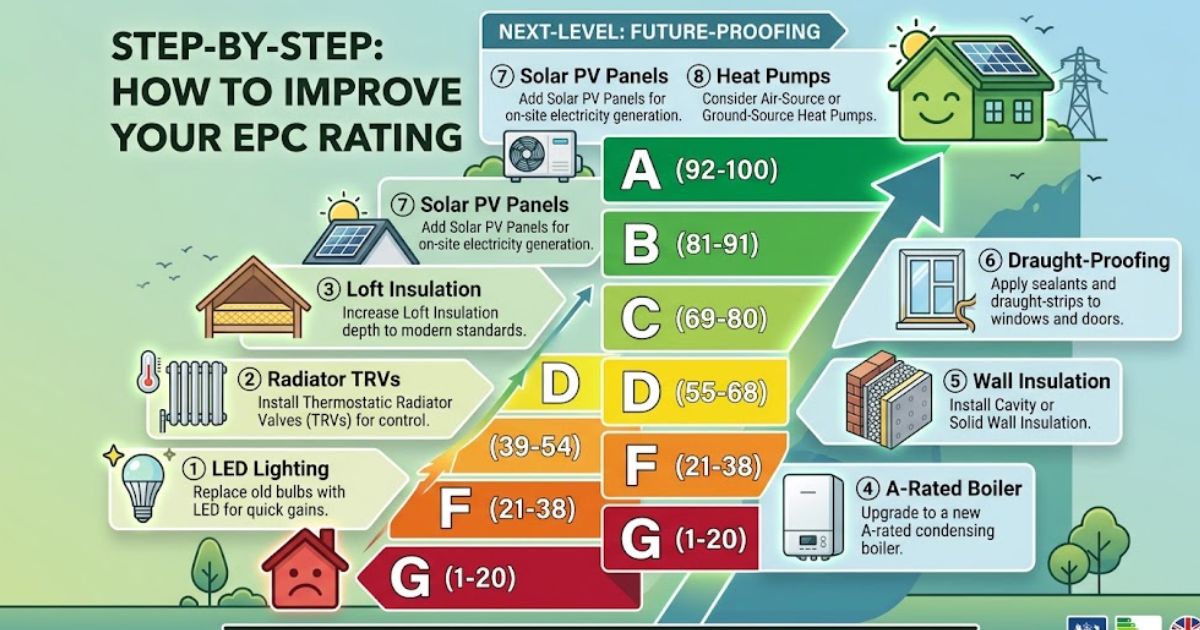
The government website lists effective ways to lift your EPC rating. First, reduce energy consumption with roof insulation, wall insulation, improved glazing, smart lighting and smart heating systems. Then add solar panels and heat pumps for extra gains.
I did three main things: new radiator valves, a new boiler, and loft insulation. You can finance a new boiler and pay from cash flow, while loft insulation stays cheap. These upgrades gave me the biggest jump for the least stress.
Insulation
When we arrived, the loft held sporadic insulation, only 100 mm deep. After the rewire, the electricians moved things around, so we tidied the old layer and topped up to 300 mm. We left space around the sides for airflow, and that was the key thing that took the property from D to C.
The material cost £150, and we fitted ourselves the whole job. It was a dirty job, but it did not take long. Whether you choose roof insulation, wall insulation, or insulating your home room by room, start with the loft insulation to lift your EPC score fast.
5b. Boiler and Heating System
Our old boiler was over 20 years old, showed heavy wear and tear, and sounded noisy. With the cost of living and the energy crisis in mind, I knew potential tenants would check the age of boiler and its efficiency. We chose a Worcester Bosch Greenstar 30i for its longevity, and it comes with a guarantee.
British Gas offered us zero percent interest over three years at a competitive price. Upgrading to a more energy efficient model felt like a smart move for us. The new boiler paid us back in comfort straight away.
Radiator Valves and Radiator Panels
We changed the radiator valves on both sides of each unit. Before, there was no temperature control: it was zero or 100, on or off, which is not efficient for tenants. Our plumber recommended TRVs, which carry a guarantee and feel robust.
They also give a perception of a high quality finish, and now tenants pick their own levels of heat. In my experience, reflective radiator panels also reflect heat back into the room.
Windows and Glazing
Old windows let heat escape, so I always look at the glazing first. Double glazed windows keep warmth in and noise out. Improved glazing also lifts your EPC rating and makes the house feel better.
Lighting and Appliances
Swap your bulbs for energy efficient lighting and add smart lighting where it fits. Choose modern appliances such as washing machines, refrigerators and dishwashers. Pair them with better heating systems and your bills drop further.
Renewable Heating and Energy
New technologies can push your rating higher. Heat pumps work well, and both air source heat pumps and ground source heat pumps suit many homes. Solar panels and biomass boilers also count as renewable heating options.
A certificate stays valid for 10 years, making comparisons between buildings easy and linking theoretical energy efficiency to property value. Research your road and area, and book the same assessor if you can, so the target stays achievable. Each landlord can also use financing, such as a new boiler on zero percent interest over three years, paid from cash flow.
FAQs
What does EPC stand for?
EPC stands for Energy Performance Certificates. It gives a building a rating from A, the most efficient, to G, the least efficient. The rating shows how much it costs to run your home and how good its energy efficiency is.
How long does an EPC stay valid?
An EPC stays valid for 10 years. During that time you can use it for a comparison between buildings. Check the current EPC rating before you sell or rent, because buyers and new tenants will ask for it.
What EPC rating do landlords need?
Under MEES, non-domestic buildings needed an E rating by April 2023. The target EPC rating moves to C in 2027 and B in 2030. For homes, the government plans new rules in 2025 that ask landlords to reach C when new tenants move in.
What happens if a landlord fails to meet the standard?
A landlord who fails to comply risks a fine. They may also be unable to lease the property. I check the dates often, because a missed deadline costs real money.
What is the cheapest way to improve an EPC rating?
Loft insulation is the cheapest fix. We spent about £150 and fitted ourselves the whole job, taking the layer from 100 mm to 300 mm. Radiator valves and a new boiler also help, and you can finance the boiler and pay from cash flow.
Is spray foam insulation a good way to raise an EPC rating?
I would avoid spray foam insulation. It can cause condensation in the roof space and may need work to the roof later. Some brokers will not lend on houses that have it, so it can hurt your property value.