

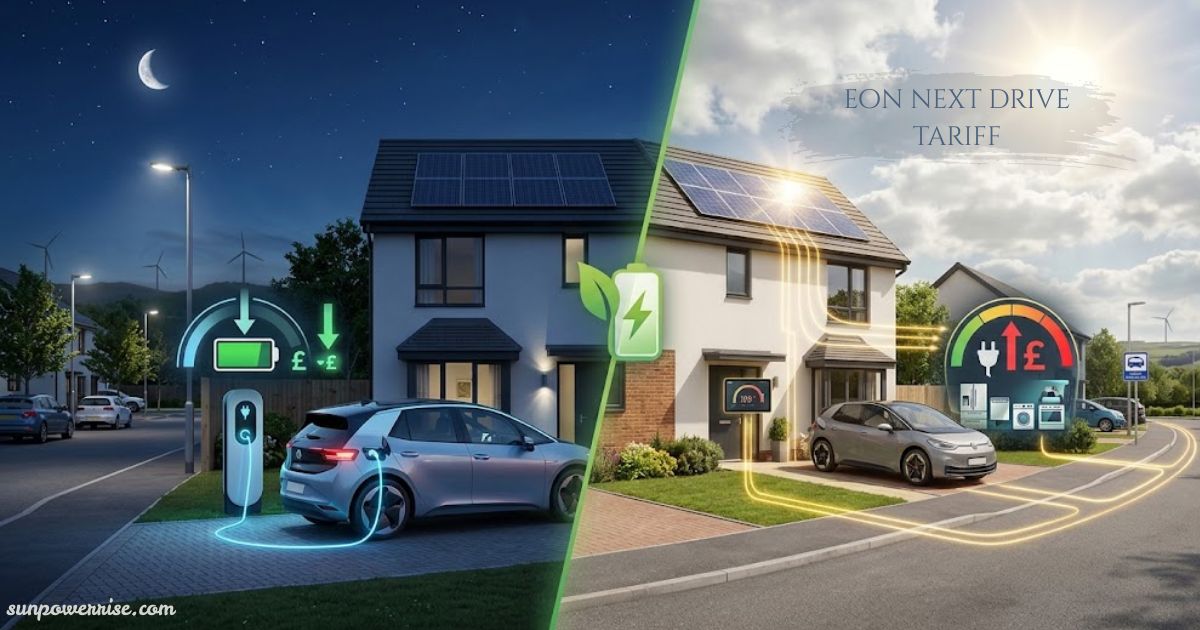
I have spent time comparing energy tariffs for friends who recently switched to electric cars, and the EON Next Drive tariff always comes up in conversation. A smart home EV charger paired with Next Drive Smart turns overnight charging into something that costs mere pence instead of pounds, and that beats relying on public charging during the day.
Switching your electric car onto a proper EV charging tariff changes the whole home charging experience, because you stop paying standard electricity rates for every unit you use.
As part of our ongoing eon next drive tariff review, we looked at the best EV tariffs in the UK, checked the market tariffs, and found that cheap electricity running for six daily hours at 7.5p per kWh genuinely helps cut energy suppliers’ bills, boosts cost savings, supports the wider push toward EV adoption, and improves home running efficiency and energy efficiency.
This guide walks through everything worth knowing about the E.ON EV energy tariff, written the way I would explain it over a cup of tea.
What is the EON Next Drive Tariff (Rates)
The fixed off-peak rate on the eon next drive tariff runs at either 8p or 9p per kWh depending on which version you pick, and this cheaper charging window lasts from 12am through 6am, giving you a proper off-peak window to run the washing machine, tumble dryer, and dishwasher alongside your car.
Every unit during this stretch comes from Yorkshire wind farms, giving you renewable electricity, while the standing charge sits at a flat 60p per day and the rate table shows peak pricing near 27.76p in Birmingham or 28.64p nationwide.
Our EV charging cost calculator helps you work out real savings across 36 hours of weekly off-peak access, and comparing this against the standard electricity price shows exactly why this nationwide rate appeals to high-consumption appliance owners across the UK.
What is E.ON Next Drive
E.ON sits among the major energy suppliers in Europe, known as a leading player with a sustainable edge in the energy market, and it has built Next Drive as a proper time-of-use tariff for any household running an electric vehicle.
Charging between 12am and 6am brings the rate down, while on-peak hours push it back up toward 28.64p per kWh, and this current version, called E.ON Next Drive Fixed V10, sits inside a new generation of import tariff options that replaced older deals like Economy 7 or a basic fixed tariff.
Homes with solar panels should pair this with an export tariff, since location and the price cap from July 2025 both affect what you pay, and this charging edge makes the electric car game far easier for the average UK driver reducing their electricity consumption.
What Do You Need
Before signing up, you need a working smart meter that reports usage every 30 minutes, and E.ON offers free installation if you do not already own one, since a supplier stays legally obliged to fit one at no extra cost.
You also need a smart EV charging point at home, though only Zappi connects with the Next Drive Smart version specifically, alongside any make or any model of electric car since the tariff never restricts you to a particular brand.
Becoming an E.ON Next customer for your electricity supply means grabbing a quote on the E.ON website, paying by monthly direct debit, and building this compatible charging ecosystem at home before your first off-peak session begins.
Charger Requirements
Nobody needs to buy E.ON EV chargers specifically, since the market already offers smart home chargers with tariff integration that plug straight into this system, unlike some charging manufacturer partnerships run by rival suppliers.
This means the best home EV chargers available today, regardless of brand, count as valid home EV charger compatibility for the eon next drive tariff. Choosing no specific charger requirement gives drivers real freedom, and that flexibility remains one of the more underrated perks of this whole setup.
How It Works
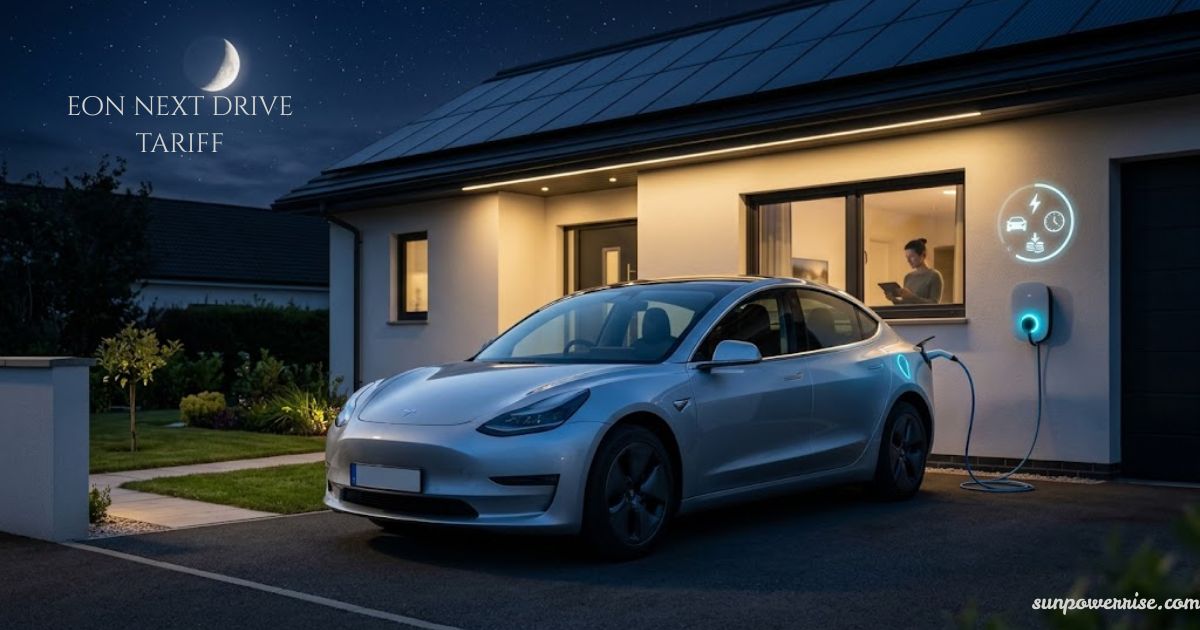
Once you set your ready by time and battery preferences inside the E.ON Next Home app, the Car Connect feature manages smart charging automatically, checking your battery charge status and adjusting weekly usage without you lifting a finger.
Certain EV makes and EV models need a separate EV manufacturer app instead, so running the eligibility checker first confirms whether your smart chargers actually talk to the grid communication system, which schedules cheapest times and even squeezes in extra cheap slots during the day.
The smart meter tracks everything so charging finishes fully topped up, a storage battery owner can also export electricity back to the grid, and this whole automated system keeps overnight charging simple from start charging to finish charging.
Renewable Energy
E.ON claims 100 percent renewable electricity on this tariff even though the grid itself only carries 51 percent renewable power, and it bridges that gap by buying REGO certificates through a scheme run by Ofgem.
Each certificate covers one megawatt hour, or MWh, of grid electricity, letting E.ON offset emissions by matching customer usage with entirely renewable input sourced partly from Yorkshire wind farms.
This system, called Renewable Energy Guarantees of Origin, means every unit pulled from the grid gets matched by a renewable sources contribution somewhere else in the country.
Is It Worth It
Compared with rivals like Intelligent Octopus Go, Good Energy EV tariff, So Energy EV tariff, British Gas EV tariff, and Utility Warehouse EV tariff, pricing between 7.5p, 8p, 8.5p, and 9p per kWh puts the eon next drive tariff firmly in the running, especially with no exit fees and fixed energy prices locked for a full year.
An average electric vehicle using 2118kWh a year covers roughly 7000 miles, costing £732 on standard electricity prices but dropping to £378 on off-peak hours, saving £355, and a 7kW EV charger pulls 36kWh across the window, enough for 51 percent battery or about 119 miles, meaning charging every six days suffices for most drivers, or three times per week on a three-pin socket.
Add a 4.6kWp solar panel system with a 5.2kWh battery, using 3400kWh per year at UK average consumption, and households save £1395 per year total, combining £1040 savings from the battery with £663 savings and £377 per year earned exporting 65 percent solar export through E.ON Next Export Exclusive at 16.5p per kWh, all while checking the July 2025 price cap, national average of 26.11p, and regional differences by region before settling on a firm charging schedule.
Faqs
What’s the E.ON Next Drive EV tariff?
This simpler version charges 9p per kWh during the same off-peak window between 12am and 6am, making the Next Drive EV tariff an easy pick for anyone wanting lower bills without extra smart features.
Is there a specific charger I need for the E.ON car charging tariff?
No, the market offers plenty of smart home chargers with tariff integration, so no specific charger applies, and even the best home EV chargers work fine without needing dedicated E.ON EV chargers.
Should I know anything else about E.ON’s EV tariffs?
Beyond cheaper charging, you get no exit fees for switching energy providers, plus fixed energy prices locked for a full year, protecting you from sudden penalties if you decide to switch tariffs later.
Are there always cheaper rates with the E.ON Next Drive EV tariffs?
Not quite, since on-peak hours revert to standard electricity prices around the national average of 26.11p per kWh, though this shifts by region, so planning a smart charging schedule around the off-peak charging window still beats public charging points even at 8p or 9p.
How can you sign up for E.ON Next Drive?
Getting started needs a quote online, your home address, phone number, and basic details, followed by setting up a direct debit, choosing a tariff start date, accepting terms and conditions, and temporarily sitting on Next Flex, the standard variable import tariff, during the sign-up process while your smart meter connects, with EV ownership required throughout.