

External wall insulation cost was the first thing I explained to a client in Milton Keynes who asked me why her lounge felt like a fridge even with the heating cranked up. The answer was hiding in her walls. Once we talked through external wall insulation, the numbers, and the payback, she went ahead with the work, and she has not looked back since.
This guide walks through everything I tell homeowners when they ask me about external wall insulation cost, written the way I’d explain it over a cup of tea.
What is External Wall Insulation Cost?
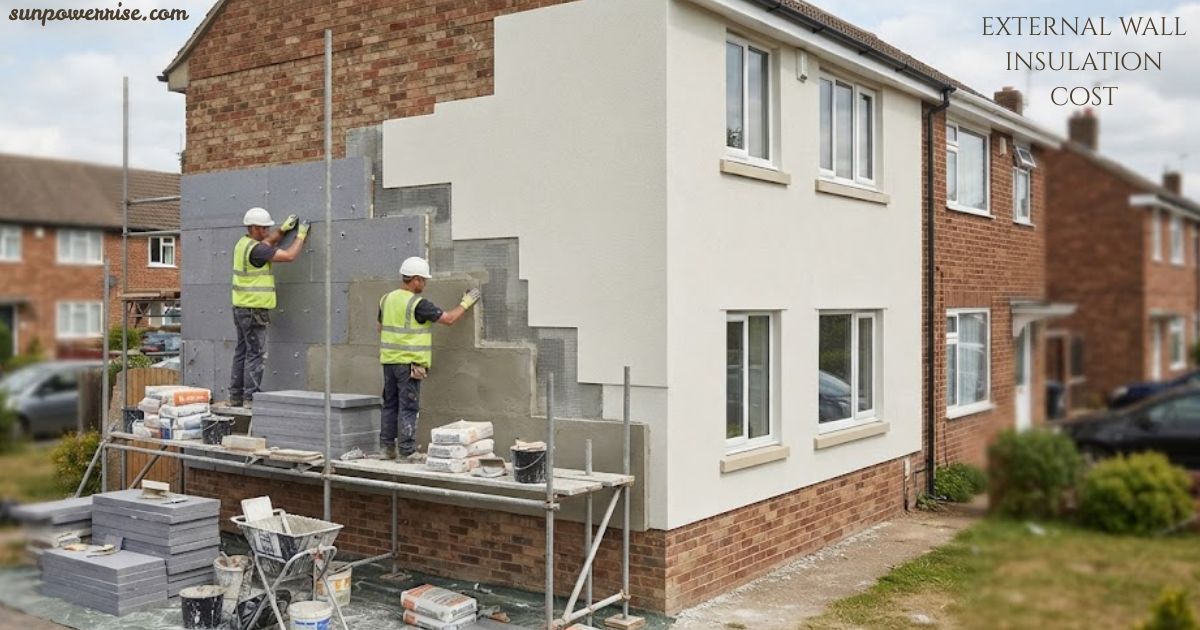
Think of external wall insulation as giving your house a warm coat instead of letting it shiver through winter. A professional fits insulating boards onto the property’s exterior walls, then finishes them with a cladding finish or a decorative render finish, which can include silicone render for a smart, modern look.
This step starts with cleaning and preparing the walls, then moves on to installing a thermal barrier, adding mesh reinforcement and a base coat, and finally applying an insulated or protective render on top, which also acts as a protective barrier against UK weather.
Older homes lose a lot of warmth because they were never built with modern energy bills in mind, and this is exactly why older homes benefit so much once this energy-saving upgrade goes in. Heat loss through uninsulated walls can run as high as 35%, and stopping that loss is the whole point of the job.
How External Wall Insulation Works
Here’s the part most people find genuinely interesting: insulation boards made from EPS, mineral wool, or phenolic foam get fixed straight onto the solid walls of the building, and this stops heat escaping through brick that has no cavities for conventional insulation.
Once those boards are rendered, the whole wall becomes a weatherproof seal, which keeps the warmth in during winter and keeps things pleasant through summer heatwaves too. It’s a two-way system that works for solid wall insulation across UK homes just as well in July as it does in January.
Homes built before the 1920s almost always fall into this category, since they simply have no gap in the brick for conventional insulation methods, so an exterior wall upgrade is often the only realistic route to stable room temperatures.
Average Cost of External Wall Insulation
Let’s talk numbers, because that’s usually why you’re here: the cost of external wall insulation is the question every homeowner leads with.
In 2025, external wall insulation cost UK figures typically sit between £90 to £140 per sq mtr, and this wider external wall insulation cost per m2 uk range, roughly £90-£150 per m², covers most jobs once you add scaffolding and finish.
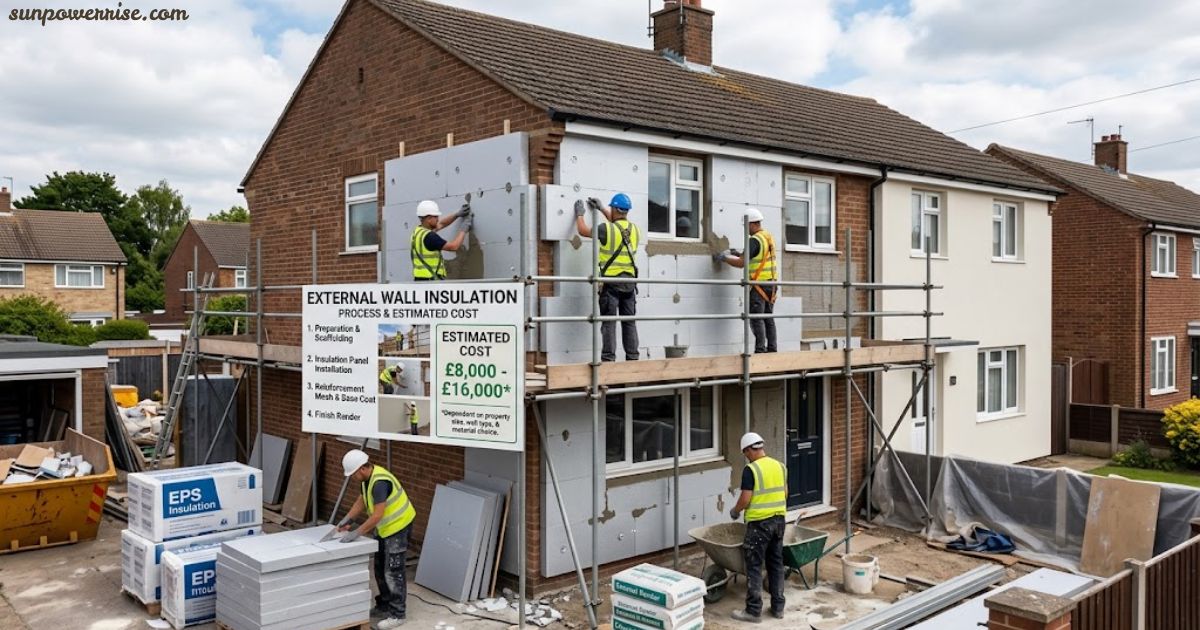
Property type plays a big role in the final bill: a small terraced house (60–80 m²) often lands around £6,000-£9,000 or £6,000–£10,000, a semi-detached house (90–110 m²) sits between £8,000 and £15,000 or £9,000–£14,000, and a full detached house (120–160 m²) can reach £14,000–£22,000, £15,000-£25,000, or even £18,000-£30,000 for larger, more detailed jobs, while a flat/apartment (30–50 m²) is usually the cheapest, at roughly £3,000–£6,000.
The final price you’re quoted depends on the type of render chosen, whether that’s acrylic render, silicone render, or premium finishes like brick slips , along with the insulation material used, the property access, and your location.
What Factors Affecting the Cost of External Wall Insulation?
No two houses price up the same, and that’s down to a handful of clear factors. Size of home and total wall area matter first larger properties need more material and more labour, so an additional 10 m² can add up to £1,300 to the bill, and property size stays the single biggest driver of total costs.
Type of insulation material is the second big lever: EPS, or Expanded Polystyrene, costs around £90–£100/m² and stays the most cost-effective choice, mineral wool runs £100–£120/m² with better fire performance and sound performance, and phenolic boards sit at £120–£140/m², using thinner, premium boards to reach better U-values.
Thicker boards cost a little more but improve performance, and choosing silicone render over acrylic brings water resistance, self-cleaning, breathability, and being long-lasting and tough, even though it’s pricier upfront and turns out durable and low on maintenance over time.
Benefits of External Wall Insulation
The upside is where this whole conversation gets exciting for most homeowners. A well insulated property delivers a genuinely warmer home, fewer draughts, and no more cold spots, and typical energy bill reduction falls between £200 and £700 a year depending on home size and fuel type.
That kind of heating bills saving also eases the cost of living, and because UK energy regulations keep tightening, a stronger EPC rating helps a home buy, sell, or rent far more easily.
Buyers, landlords, and tenants increasingly favour energy-efficient homes, which lifts overall property value, and this investment brings a welcome maintenance frequency reduction too, since a well-rendered wall needs far less upkeep than tired old brickwork.
Grants and Funding
This is the section that changes minds fastest, because financial support genuinely closes the gap between wanting the work done and actually affording it.
Without any help, a full external insulation install typically runs between £9,000 and £20,000, but the ECO4 scheme, running until 31 December 2026, offers eligible households those on qualifying benefits or with income under £31,000 the chance at zero upfront cost, cutting bills by 40–100% for a few thousand pounds where a grant applies. From 2027, the Warm Homes Local Grant, worth up to £15,000, takes over from ECO4 funding.
ECO4 eligibility runs highest in towns carrying real fuel poverty, and places like Wisbech, where 65–75% of homes D-G sit on poor ratings, Great Yarmouth, with 19.4% fuel poverty, plus Lowestoft and March, all show this clearly.
Across England, only around 5% of the 8.9 million pre-1945 solid-wall homes have any insulation installed at all, which tells you how much room for improvement remains.
How to Reduce the Cost of External Wall Insulation
Bringing the price down is entirely possible if you plan properly. Start by checking insulation grants and local council schemes, since government programmes like ECO4 and the Great British Insulation Scheme can cover most or all costs for qualifying properties, and services such as Eco Insulation offer free quotes and advice for comparing costs across providers.
Pairing the job with loft insulation, new windows, or a high-performance heating system can also unlock additional support or bulk discounts that a single job alone wouldn’t qualify for.
Always insist on a right installer carrying TrustMark or PAS 2030-accredited installer status, since this protects warranty validity and gives real peace of mind. Getting multiple quotes before signing anything is the single best habit I recommend to every homeowner weighing up this installation cost.
Cost Comparison – External vs Internal Wall Insulation
Homeowners often ask how this stacks up against the alternative, so it’s worth a straight comparison. External wall insulation costs more upfront, typically £90–£150 per m², against internal insulation at roughly £60–£100 per m², yet it delivers superior performance, upgraded home appearance, and keeps every inch of internal space intact inside the household.
Internal insulation may look cheaper on paper, but it eats into room sizes and proves genuinely disruptive if a household is living through the works day to day. For most UK homes, especially where solid wall insulation is the goal, going external remains the stronger long-term option for comfort, efficiency, and lasting property value.
FAQs
Can I get external wall insulation for free?
Yes, through ECO4 funding or the Great British Insulation Scheme, eligible households on qualifying benefits or income under £31,000 can get external wall insulation at zero upfront cost.
Is external wall insulation a good idea?
It’s one of the smartest upgrades you can make it cuts heat loss, lowers energy bills, boosts your EPC rating, and finally gives an older home the warm, cosy feel it deserves.
Do I need permission for external wall insulation?
Most homes don’t need planning permission, but if your property is listed or sits in a conservation area, check with your local council first.
Is it hard to sell a house with cavity wall insulation?
Not usually. Well-installed cavity wall insulation with proper records in place tends to help a sale by improving the EPC rating, rather than hurting it.
What is the cheapest way to insulate exterior walls?
Choosing standard EPS boards with a simple acrylic render keeps costs down, and applying for a grant can make it even more cost-effective.
How much of a grant do you get for external wall insulation?
Through ECO4 or GBIS, eligible households can have 40–100% of the cost covered, sometimes reaching zero upfront cost for those who qualify.