

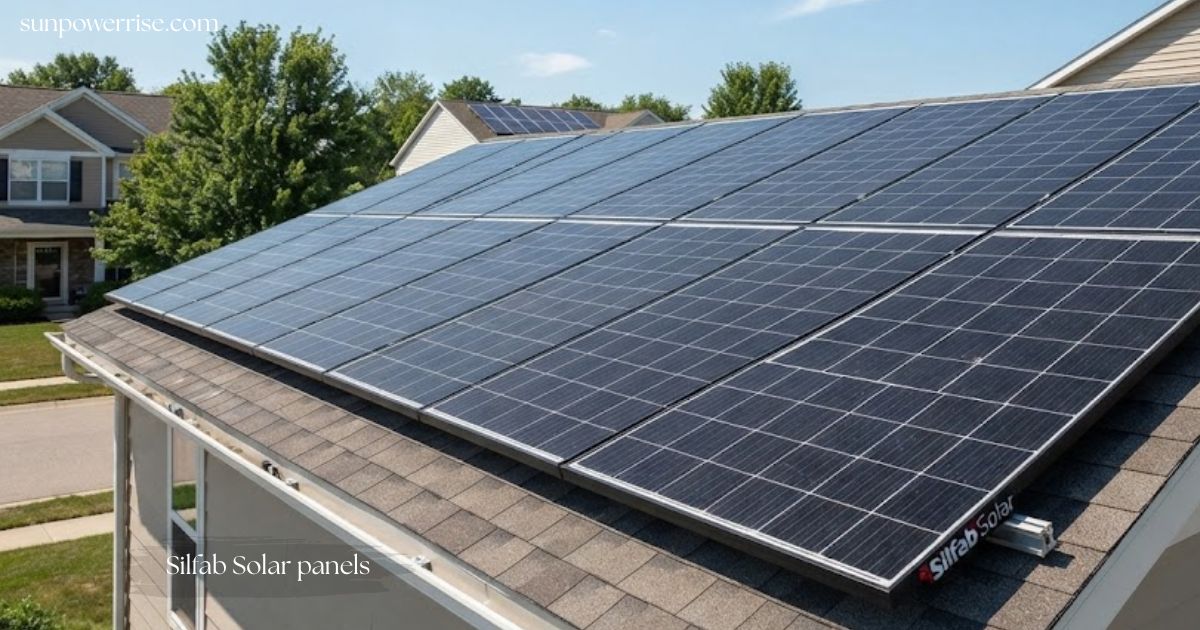
Silfab solar panels are photovoltaic modules made by Silfab Solar, a company that designs and builds solar panels for homes and businesses.
They convert sunlight into electricity using solar cells arranged inside a protective frame, usually made from monocrystalline cell technology, which is known for high efficiency and a clean, all-black look on the roof.
Silfab manufactures many of its panels in North America, which sets it apart from competitors who rely mostly on overseas manufacturing. I have spent years walking rooftops with installers, and every time a homeowner asks me which panel to trust, the name Silfab solar panels comes up fast.
Where The Story Starts About Silfab solar panels
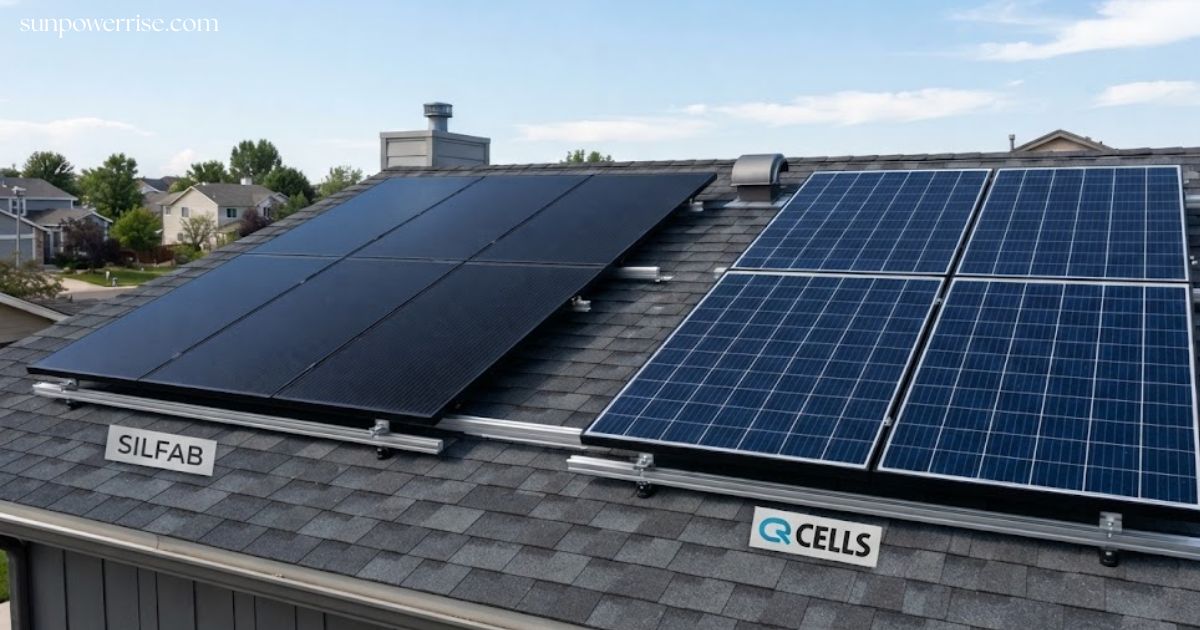
My friend Warren from the Solar Energy Channel, along with his co-host Larry, once sat down to give an honest overview of Silfab solar panels, comparing the SIL 380 BK and Silfab Elite models against Hanwha’s Q Cell panels for customers who want real answers before buying.
At the same kind of event, Joe Oria from Solar Surge travelled to Anaheim, California, for the international solar conference RE+, where he spoke with Devon Wright about the new Silfab Prime 440W panel, a high-efficiency monocrystalline solar panel built for both residential and commercial installations.
Every solar panel review of this brand keeps circling back to the same details, a sleek, all-black design, solid power output near 380 Watts, and a modern appearance that makes the brand a name worth trusting.
Warranty Coverage That Actually Lasts
When it comes to protection, Silfab backs its residential product with a solid 25-year product warranty, while Hanwha’s coverage can run anywhere from 12 years up to 25 years depending on the model chosen.
Silfab goes further with a 30-year production warranty that promises 82.6% of power output remains after 30 years, compared to Hanwha’s guarantee of 86% at 25 years, and this warrantied product also covers defects in materials and workmanship for true peace of mind.
Anyone who wants a panel made in America with long-term protection and strong performance warranties, including a straightforward 25-year warranty against failure and output holding near 90%, will find this brand hard to beat.
Efficiency Numbers Worth Watching
On the efficiency side, the all black Silfab 370 sits close to the Hanwha 400 in real-world output, and both panels land somewhere between 20% and 22% in overall efficiencies depending on conditions.
The newer cell architecture uses an N-type cell design, which pushes module efficiency up to 22.6%, improves the temperature coefficient, and keeps the physical footprint smaller while still reaching higher wattage than older panels.
Because degradation rates matter over decades, an upgraded degradation rate of only 3% annual gives buyers more confidence that their investment keeps producing power year after year.
Manufacturing, US Locations, And Domestic Content
Silfab and Q Cells both hold a global presence, with Silfab running manufacturing facilities across Canada and adding new US locations, while Q Cells still leans on South Korea and is putting fresh capital into Georgia to grow domestic manufacturing.
Silfab’s biggest move is a new cell manufacturing plant in South Carolina spanning 800,000 sq ft, meant to be operational soon and shipping modules and cells for both residential and commercial buyers.
Thanks to the Inflation Reduction Act, also called the IRA, any inverter, racking, or module counted as domestic content can push the ITC from 30% up to 40%, unlocking an extra 10% savings that applies more to lease and PPA deals than to a simple United States homeowner purchase, and these incentives reward manufacturers who use raw materials sourced from North American free trade partners.
Cost And Pricing Reality
Both brands offer a similar cost between their commercial product and residential product lines, since each company builds an all-black product to match customer taste.
Silfab manages to hold flat pricing even while other brands raise prices, partly because it avoids some tariffs that hit competing imports, and partly because of a manufacturer credit tied to the IRA credit for domestic production. This mix gives the brand a real edge in competitive pricing, letting it stay affordable without cutting corners on quality.
Looks That Fit The Roof
Many residential solar customers want their panels to blend smoothly into their roofs, and this brand answers that wish with a sleek, all-black aesthetic built around a black backsheet and matching frame.
This design gives a uniform look that stands out compared to older blue solar panels many homeowners remember from years past. The result is a modern appearance that feels less like equipment and more like a natural part of the roof itself.
Tier One Status Versus Hanwha Q Cells
Hanwha Q Cells counts as a larger manufacturer with deep roots in South Korea, while Silfab still runs as a smaller manufacturer based mostly out of Canada.
Even so, this brand holds status as a tier one manufacturer, meaning banks trust its financial position enough to keep lending money for solar projects that use its panels. This tier one label matters because it shows the company stands on solid ground, no matter its size compared to bigger rivals.
Stock And Availability
Right now, product availability plays a huge role in which solar brand a homeowner ends up choosing.
Both brands work hard to keep steady availability, but supply can shift fast depending on demand and shipping schedules. Anyone shopping for panels should ask their installer directly about current stock before making a final decision.
Cell Technology And Module Layout
The newer cell technology relies on the M10 wafer, a size that became far more common across the industry over the next 12 months to 18 months after its release.
The panel uses a 108 half-cell layout with compact dimensions near 44.5 inches wide, which keeps the panel efficient without making it bulky, and this smart layout helps boost overall efficiency without adding extra weight.
Power class started at 430 and moved up to 440 by Q2 of the following year, proving that smarter design can raise output without needing a bigger panel.
Pairing With A Home Energy System
Homeowners pairing these panels with a full energy management system often turn to the Generac PowerCell 2, which brings solar power, whole-house backup, and generator support together on a single platform.
This unit relies on an AC coupled architecture, which makes installation and retrofitting battery storage into existing solar homes much simpler than older setups. With intelligent load control built in, families gain smoother power management no matter how their energy needs change throughout the day.
What We Liked
Owners and reviewers keep praising the same strengths: the panels stay durable and weatherproof through tough seasons, and their sleek appearance gives homes a modern touch.
High efficiency ratings mean more usable power from the same roof space, which many buyers see as the biggest win. On top of that, the 25-year warranty adds a strong safety net that few other brands can match.
Built To Take A Beating
Built to handle harsh weather conditions, these panels combine a sturdy aluminum frame with tempered glass that resists hail, strong winds, and heavy snow without cracking.
An IP68-rated junction box keeps the internal wiring waterproof and protected from dust and debris, so moisture never becomes a hidden problem. This level of protection means the panels keep working reliably no matter what the sky throws at them.
A Bigger Footprint On The Roof
With dimensions of 79.4 inches by 39.4 inches, these larger panels can cover more roof area per unit than smaller competitors. Because of this bigger footprint, homeowners often need fewer panels to reach their target power output, which lowers overall installation costs.
This larger size also creates less visual impact on the roof since fewer individual panels are needed to fill the same space.
Who Should Choose This Brand
These panels suit homeowners who care about a modern appearance and a sleek appearance on their roof, along with strong efficiency numbers that actually hold up over time.
They also make sense for anyone living where harsh weather conditions are common, since the build quality handles rough seasons well. Buyers focused on long-term performance rather than the lowest price tag tend to walk away the happiest with this brand.
Final Verdict
In the end, this brand earns its reputation through a mix of aesthetics, durability, and efficiency that few rivals match at the same price point.
Yes, the panels can feel heavyweight and installation cost may run a bit higher than cheaper brands, but the payoff shows up in long-term performance. Backed by a solid 25-year warranty, this remains a smart pick for anyone planning to stay in their home for decades.
FAQs
Are Silfab solar panels any good?
Yes, Silfab solar panels offer strong efficiency, a solid 25-year warranty, and a sleek all-black design that homeowners genuinely love.
Are Silfab solar panels top tier?
Silfab holds status as a tier one manufacturer, meaning banks trust its financial position enough to fund solar projects using its panels.
How much do Silfab solar panels cost?
Silfab offers competitive pricing with flat pricing on most models, staying affordable compared to other residential and commercial brands.
What brand has the best quality solar panels?
Silfab solar panels rank among the best thanks to high efficiency, durable builds, and long-term performance you can rely on.
How long do Silfab solar panels last?
With a 25-year warranty and up to 30 years of guaranteed power output, these panels are built to last for decades of worry-free energy.