

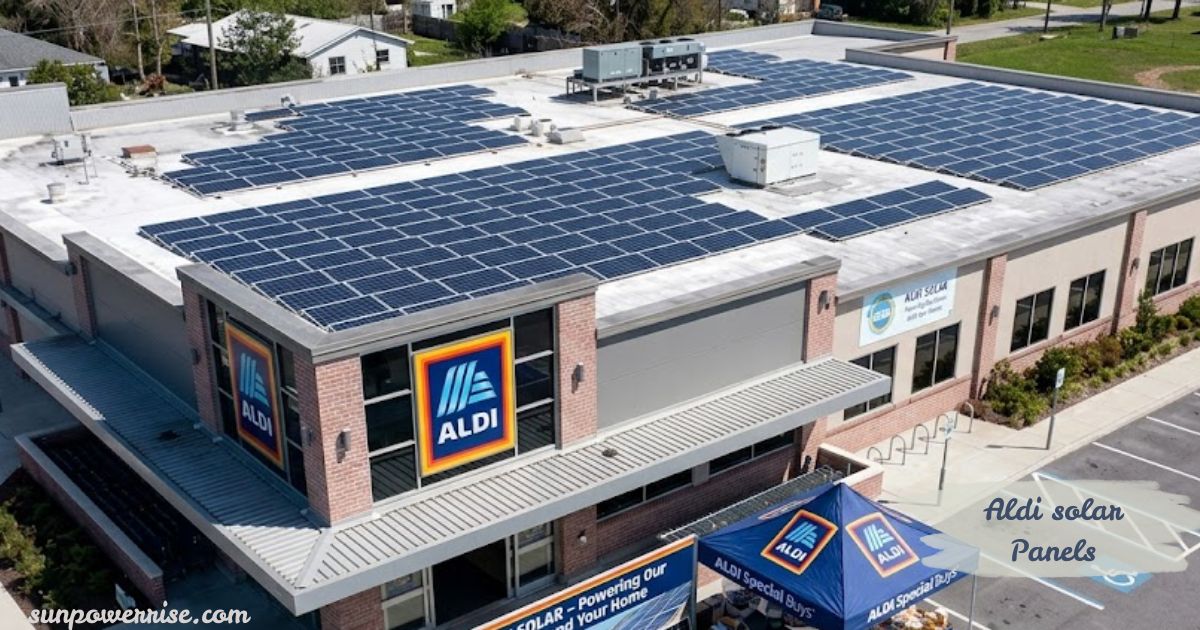
Aldi solar panels are the panels Aldi installs on its own UK store roofs to generate renewable electricity for its operations not a product Aldi sells to shoppers.
As of September 2026, Aldi UK does not sell plug-in or rooftop solar kits to consumers, unlike Lidl, which has been named as a government retail partner for the new plug-in solar scheme. If you’ve landed here because you’ve seen panels on an Aldi roof and assumed you could buy a matching kit at the checkout, you’re thinking of two completely different things, and this guide untangles both.
Two Searches, One Confused Query About Aldi Solar Panels
I get asked about this a lot, and I always start the same way: people search “Aldi solar panels” for two very different reasons, and most articles blur them together. Some readers want a cheap plug-in kit to plug into an outdoor socket alongside their weekly shop. Others just want to know why the supermarket itself is covered in panels.
My own curiosity started the same way: I noticed solar arrays on an Aldi UK roof and assumed I could buy the same kit inside. I was wrong on both counts, and this guide covers the full, current picture.
What Actually Changed On 27 August 2026
Here’s the part that’s moved fast, and where a lot of guides on this topic (including earlier versions of this one) have gone stale. Plug-in solar became legally sellable in the UK on 27 August 2026, once the government’s Interim Product Specification came into force. That specification sets out what “compliant” actually means: proper fire and electrical safety standards, rules on where panels can and can’t go (timber balconies and certain cladding types are restricted), and a requirement to register the system with your local network operator.
Crucially, the products themselves aren’t new. EcoFlow, Hoymiles and others have sold similar kits into Europe for years. What changed is that a UK-compliant version can now legally be wired into a standard socket without falling into a regulatory grey area.
Who’s Actually Selling Them Right Now?
As of mid-September, six retailers have compliant kits live: Argos (UKSOL kits from £599), Amazon (Modular Solar panels from £465), Octopus Energy (from £450 for a single-panel kit with app monitoring), Very (UKSOL bundles from £599 to £999), Screwfix (a PowerXpress 800W bifacial kit at £669), and City Plumbing (prices from £432 up to around £950, with the widest range).
Delivery windows vary some ship within days, others are quoting into November for popular bundles so it’s worth checking stock before assuming next-day delivery like you’d get on most Amazon orders.
Who’s Expected Soon And Where Aldi Sits
When the plug-in solar scheme was first floated back in March 2026, the government said it had been in talks with a handful of retailers about bringing the tech to market “within months.” The names attached to that conversation were B&Q, British Gas, Currys, Lidl, Sainsbury’s and Wickes.
Aldi wasn’t named then, and it isn’t on either list now not the six retailers already selling kits, and not the six expected to follow. That’s a meaningfully different position from Lidl, which was explicitly called out as the government’s supermarket partner from the start. If Aldi does enter this market, there’s currently no public signal of when or how.
Aldi’s Rooftop Solar Rollout (A Completely Separate Story)
Here’s where the confusion usually comes from. Aldi is the UK’s fourth-largest supermarket chain, and away from consumer products, it’s quietly become one of the country’s busiest installers of rooftop solar just not for anything you can buy. Over 470 stores already carry panels, with another 62 joining by the end of 2025 as part of an £8.4 million investment.
A second, separate tranche adds £7.7 million more: 41 stores get 144kWp systems before the end of this year, with 49 more following in 2026. Jonathan Neale, Aldi UK’s managing director of national real estate, has said the rollout now covers more branches than originally planned, including sites in Stratford-upon-Avon, Maghull, Northampton and Wrexham, with each store expected to generate around 30% of its own annual energy needs from sunlight.
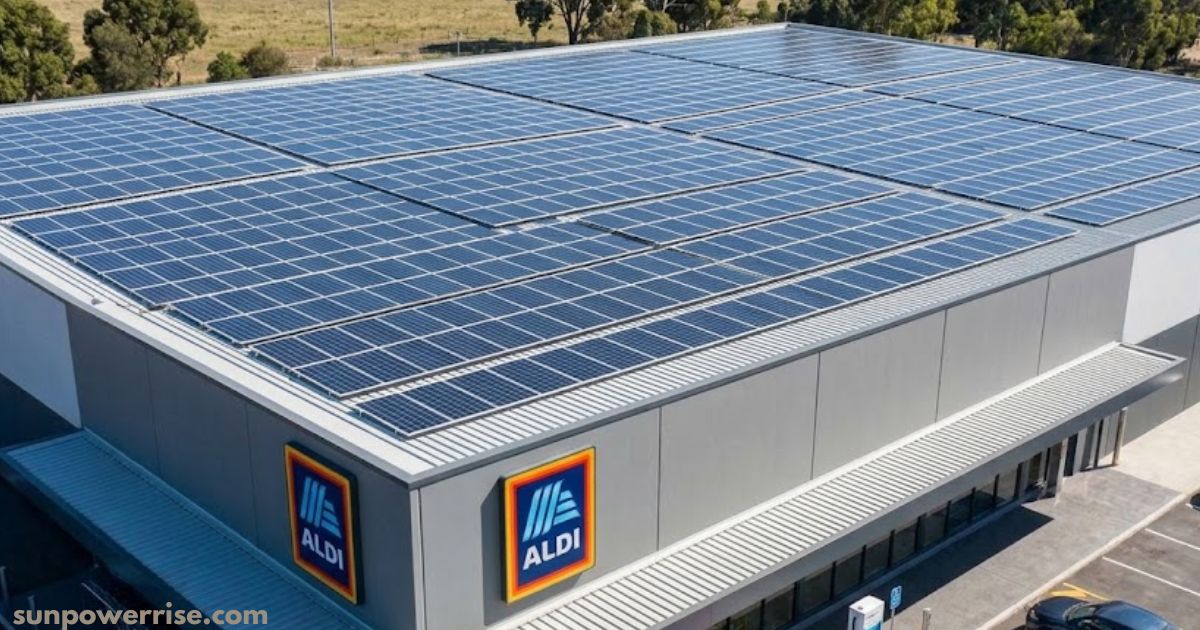
This sits inside a wider £300 million refit programme covering things like efficient fridge and chiller doors and lower-carbon refrigerants, and it’s paired with other efficiency moves: around 30% of Aldi’s owned HGV fleet has switched to hydrotreated vegetable oil, and newer stores are cutting per-site energy use by roughly 20%. None of this, though, has any connection to a product you could put on your own house.
Why Everyone Searches “Aldi Solar Panels” Anyway
The expectation comes from abroad. Shoppers in Germany, Austria and the Netherlands have been able to buy balcony solar kits off supermarket shelves for years. Aldi Nord runs them as rotating Specialbuys, and Lidl Germany sells its own version under the Parkside brand. When the UK government confirmed in March 2026 that plug-in solar would be legalised, a lot of people assumed British supermarkets would follow the German pattern immediately. So far, only Lidl has.
What To Buy Now If You’re Not Waiting
You don’t have to wait on any supermarket. Beyond the six retailers above, EcoFlow remains the most established name in this space, selling directly through its UK site a bare 800W PowerStream micro-inverter runs about £209, a single 400W panel around £299, and a full 800W kit with two panels lands between £699 and £899. Hoymiles covers the DIY end from roughly £270, Anker SOLIX adds a built-in battery from £600–£800, and Zendure focuses on smart tariff optimisation around £500–£700.
Is It Worth Waiting For A Supermarket Deal?
Run the numbers before you sit tight for a promotional price. At typical UK electricity rates of roughly 24–39p per kWh, an 800W system earns somewhere between £144 and £192 a year in savings. Wait six months hoping for a £100 discount, and you’ve likely given up £70–£95 of generation in the meantime; the net saving shrinks to almost nothing once you account for the delay itself.
The Verdict
Don’t wait on Aldi specifically; there’s no indication it’s even in the pipeline, let alone close to launch. If you want a kit today, buy from one of the six retailers already selling compliant stock, with EcoFlow, UKSOL and Hoymiles hardware among the most established options. If you’re set on a supermarket purchase, Lidl is the one actually named by the government, though it hasn’t given a launch date yet either.
FAQs
Are ALDI solar panels any good?
In Germany, ALDI’s balcony solar kits have generally earned decent reviews for affordability, though a Solovoltaik micro-inverter recall raised some safety concerns.
What solar panels does ALDI use?
ALDI Germany’s kits typically include 2 panels rated 175–350W each, paired with a 600W micro-inverter for grid-feed output.
How do ALDI plug-in solar panels work?
They’re simple “plug-and-play” balcony systems. You mount the panels, plug the inverter into a wall socket, and it feeds solar power directly into your home’s electrical circuit.
What solar packages does ALDI solar offer?
ALDI’s German Specialbuys promotions offer balcony kits priced around €199–€399 (roughly £170–£340), bundling panels, inverter, and mounting hardware.
Are ALDI solar panels available in the UK?
No, as of September 2026, ALDI does not sell plug-in solar kits in the UK; Lidl, Amazon, and EcoFlow are the confirmed rollout partners instead. A bit of a letdown if you were hoping to grab one locally