

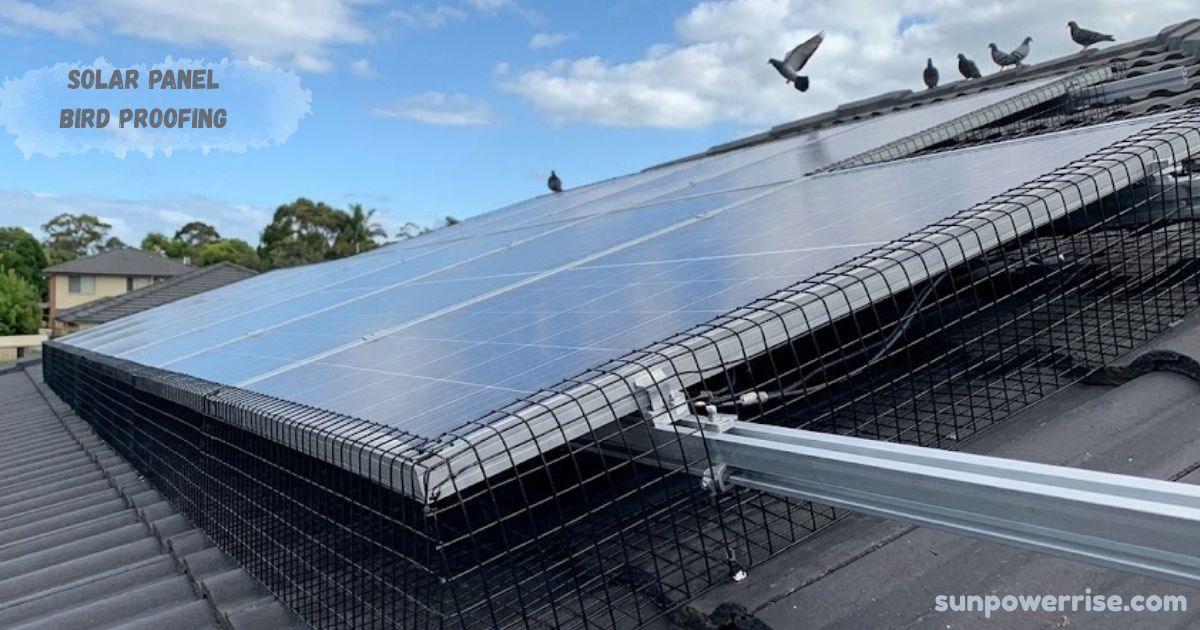
When people invest in solar panels, solar panel bird proofing is rarely the first thing on their mind. Yet across the UK, millions of households now face an odd problem: pigeons and other birds treat rooftop arrays like a cosy hotel.
This is where solar panel bird proofing comes in, and understanding the importance of bird-proofing early can save real money down the line.
This guide walks through securing your solar investment, covering key steps, long-term maintenance, cleaning costs, ad-hoc maintenance, regional differences across the UK, a full budget breakdown, and a closing FAQ, so costs, efficiency, and warmth-seeking bird behaviour all make sense before deciding on a plan.
What Is Solar Panel Bird Proofing
So what actually is bird-proofing? In simple terms, it means fitting a barrier or deterrent that keeps birds off a rooftop without harming birds in the process, so a system stays bird-proof for years. Birds are drawn to panels for two reasons: the warmth underneath and the shiny surfaces on top, which create a kind of water resemblance that some species find hard to resist.
Pigeons in particular love the nesting spots found beneath panel surfaces, since the space offers cover from predators and bad weather conditions.
Energy Losses and Roof Damage Risks
Left alone, this cosy setup causes real trouble. Acidic bird droppings eat into the surface, leading to corrosion and lowering sunlight absorption by anywhere from 46.42% to 89.18% in the worst cases.
Even a light film of mess can cut output power by 15% to 25%, and some studies on solar PV cells show a fall in power production as steep as 23.8%.
Beyond the loss in energy output, physical damage builds up slowly, and structural problems can appear in gutters and roof joints, sometimes turning into full water damage if debris blocks the flow of rainwater.
Proofing Solutions, Costs, and Long-Term Value
Fitting mesh barriers, bird spikes, or solar skirts protects the protected space under a system and helps keep sunlight reaching the solar energy system properly.
Yes, there are upfront costs, generally between £300 and £700, but this is far cheaper than repairing or replacing panels later, and it keeps maintenance costs down for homeowners long after installation.
Good protection preserves panel effectiveness and gives peace of mind that roof damage and nesting problems won’t creep back.
Bird-Proofing Options
Homeowners budgeting for a rooftop system should treat pigeon-proofing as part of routine upkeep rather than an afterthought.
The types of solar panel bird proofing on the market include bird mesh, mesh barriers, netting, spikes, solar skirts, and electric repellents, each offering different long-term protection depending on system size and roof accessibility.
Physical barriers stop birds reaching the protected space underneath panels, while other considerations, such as local bird species and roof shape, affect which option suits a particular solar array.
Methods and Types of Solar Panel Bird Proofing
There’s more than one way to stop birds settling in, and most bird-proofing methods fall into two camps: physical barriers and deterrents.
On the barrier side, bird mesh and wire mesh guards finished with a PVC layer attach using universal clips, forming a UV-stabilised mesh shield that blocks roosting while still allowing airflow underneath.
Netting covers wider areas and works well against larger birds, while bird spikes made from stainless steel create an uncomfortable landing on ledges, turning them into a poor landing surface for anything trying to perch.
Aesthetic Options and Angled Guards
For a neater finish, solar panel skirts use corner pieces to build a protective perimeter around the whole array, giving a strong aesthetic appeal without visible gaps.
Specialised systems combine several of these ideas for full nesting deterrence, and angled sheeting creates a sliding surface that many smaller birds simply can’t grip onto.
Visual, Acoustic, and Decoy Deterrents
On the deterrent side, reflective tape and other reflective objects flash and move, unsettling birds before they land, while ultrasonic devices and sound emitters produce high-frequency sounds and inaudible sounds that people can’t hear but birds dislike.
Predator decoys, including fake owls and fake hawks, add a natural scare factor, and decoys work best alongside a physical barrier rather than alone.
Choosing the Right Strategy
Choosing between these depends on the bird species in the area, the roof’s suitability, and how much durability and weather resistance the household needs.
Barrier methods generally score higher on effectiveness and longevity. However, they can involve expensive materials and a touch of cost variance.
At the same time, deterrents keep the roof’s aesthetic tidy but need regular maintenance to stay useful, since birds get used to sound and light tricks over time and mesh guards left with gaps stop doing their job. A good discreet solution usually blends both approaches for lasting results.
Cost of Pigeon and Solar Panel Bird Proofing
Cost is naturally a big part of the conversation. A basic setup can start from £50 per panel, while a full cost comparison across a system might range from £300 to £1,000, depending on smaller installations versus larger arrays.
Pricing for pigeon proofing varies a lot, so it helps to get a straight quote before committing. A simple roll of mesh typically costs between £50 and £100, a pack of spikes runs around £25, and bird netting sits between £150 and £200.
On the pricier end, electric bird repellents can reach £500 per unit, so a proper cost comparison across options matters before choosing a protection level that suits the budget.
System Size and Coverage Pricing
Across the UK, over 1.4 million households now own solar panels, and pricing often follows system proportions. For a standard 430W system, a 2kWp setup with five panels costs around £250, a 3kWp array roughly £350, a 4kWp system about £500, and a 5kWp array near £600.
Wire mesh guards cost from £10 to £30 depending on length, anti-roosting measures sit near £25, and ultrasonic devices land between £100 and £300.
Angled sheeting avoids some material costs but can raise the installation cost, and a square meter of coverage using mesh runs roughly £50 to £100, meaning a small job might total £600 in total when the whole roof is covered.
Factors Influencing Installation and Labour Costs
Several factors push the installation cost up or down: the size of the solar panel array, the complexity of the job, the quality of mesh or materials chosen, and whether the property has a steep roof or complex roof shape.
Larger systems need more time and more materials, which raises labour costs, and labour costs for mesh installation or general spikes work can range from £220 to £300 per day. Location within the UK matters too, since regional pricing shifts with competition among professional services in each area, and roof accessibility can add extra charges when scaffolding or special equipment is needed.
Retrofitting Costs and Long-Term Value
Beyond the initial job, budget for minor repairs costing a few hundred pounds, or worse, displaced electrical components priced from £500 to £1000.
Remodelling an existing system for bird-proofing after the fact usually costs more than including it during the initial solar system installation, so professional installation from the start tends to bring better long-term savings. Some providers, such as ESOLAR, offer full packages from as low as £395, covering the whole job regardless of the system’s age.
Maintenance of Bird Proofing
Even after installation, a bit of upkeep keeps everything working well. A proper roof inspection should look for loose shingles, gaps, or cracks that count as access points for birds, with sealing applied wherever needed.
Trimming trees and cutting back foliage near the roofline removes nearby roosting spots, making the whole area less inviting.
The gutter system deserves attention too, since debris and leaves cause blockages, and blocked gutters lead to water pooling, which creates ideal conditions for birds to settle in.
Regular checking and cleaning of solar panels to remove dirt, dust, and general bird droppings buildup keeps output steady, and catching any buildup early stops small problems turning into big ones.
DIY vs Professional Installation
Every homeowner faces a choice between doing it themselves or calling in help. Fitting mesh guards or bird spikes alone can bring real cost savings, and many people manage it fine, though DIY methods don’t always match the durability or thoroughness of trained work.
Experts bring skilled installation, the right equipment, and a timely completion that a first attempt rarely matches.
They also set up more efficient measures overall, which gives genuine peace of mind. Choosing professional installation usually means a higher professional standard and stronger installation quality, backed by real expertise and a smooth process from quote to finish.
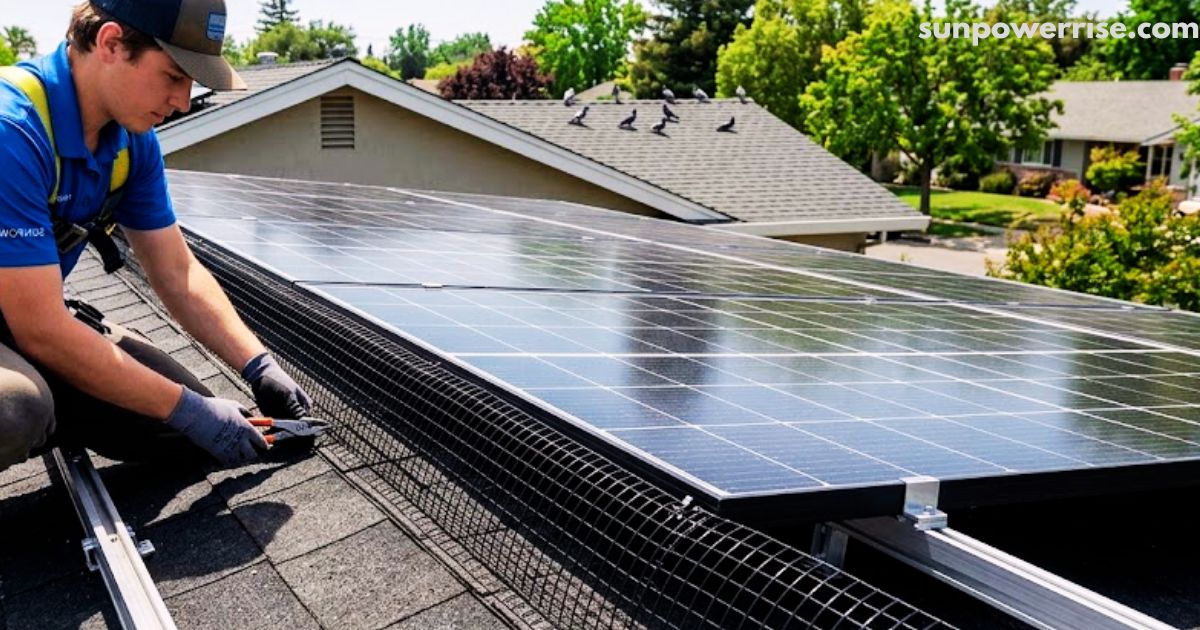
DIY solutions work out cost-effective for smaller jobs, whereas professional pigeon-proofing services suit bigger roofs or more stubborn perching problems.
Without a proper plan, some panels need full replacement, since a 30% drop in output is common on badly soiled arrays, and the right system size decision determines how much material a roof needs covered.
Solar Panel Bird Proofing Across the UK Regions
Bird problems don’t look the same across the country, and regional requirements shift with local wildlife. In Scotland, gulls and pigeons cause trouble at around 150 affected sites, mostly in rural areas with higher numbers of solar installations. Northern England deals mainly with starlings, affecting close to 120 sites across both urban locations and semi-rural locations.
Over in the Midlands, jackdaws and rooks are the main culprits at roughly 100 sites, since diverse habitats near solar farms attract a wider mix of birds. Southern England sees the highest numbers, with around 200 sites troubled by sparrows and blackbirds, largely because central areas carry long-standing pigeon problems alongside dense housing.
Wales faces magpies and crows at about 80 sites, tied to strong solar panel adoption across rural regions. Northern Ireland has the smallest count, near 60 sites, where swallows and house martins cause bird interference mostly among smaller-scale installations.
FAQs
How long does bird-proofing last?
Good quality mesh and metal spikes can last as long as the panels themselves, often decades, with basic upkeep.
Can I fit bird-proofing after my panels are already installed?
Yes, though fitting it later usually costs more than including it during the original solar installation.
Is bird proofing necessary for solar panels?
Yes, solar panel bird proofing prevents nesting, droppings, and wiring damage that can reduce solar panel efficiency and lead to costly repairs.
How much does solar panel bird proofing cost?
Bird proofing costs typically range from £150–£300 for a standard home solar panel system, depending on roof size and mesh type.
How to get rid of pigeons under solar panels in the UK?
Fit bird-proofing mesh and remove existing nests, professional pigeon-proofing services are widely available across the UK.