

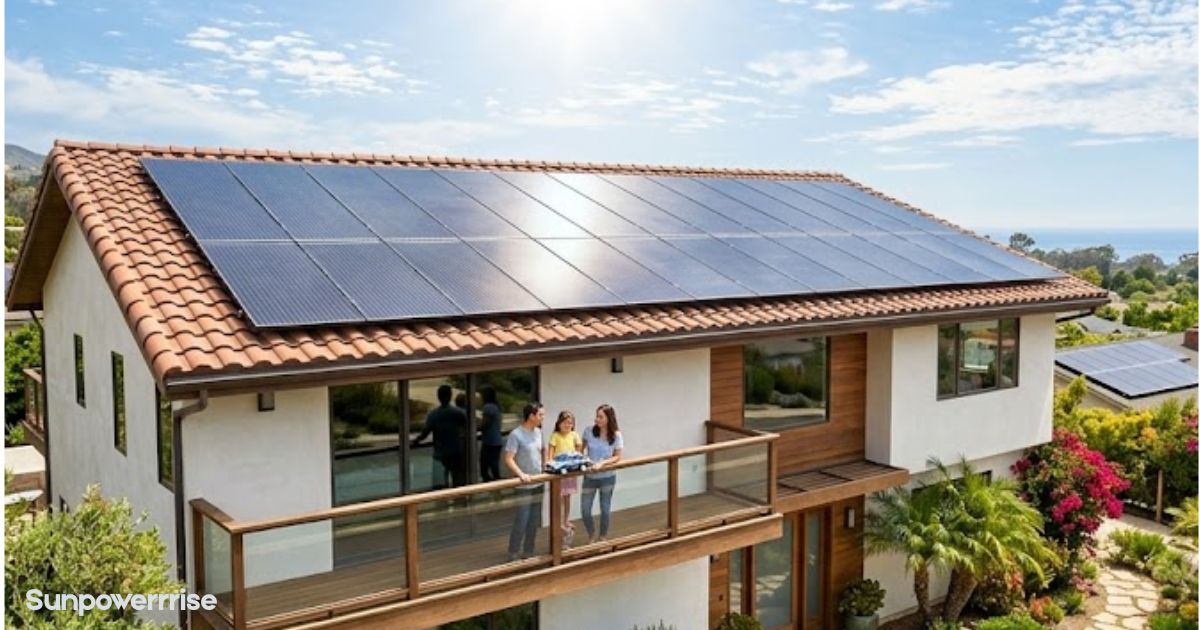
The sun’s core undergoes hydrogen fusion to release an unfathomable amount of energy, highlighting why understanding solar power benefits and drawbacks is essential, as it provides a steady radiation we call solar energy.
As one of our most sustainable resources, this plentiful energy is captured and converted into usable forms like electricity and heat.
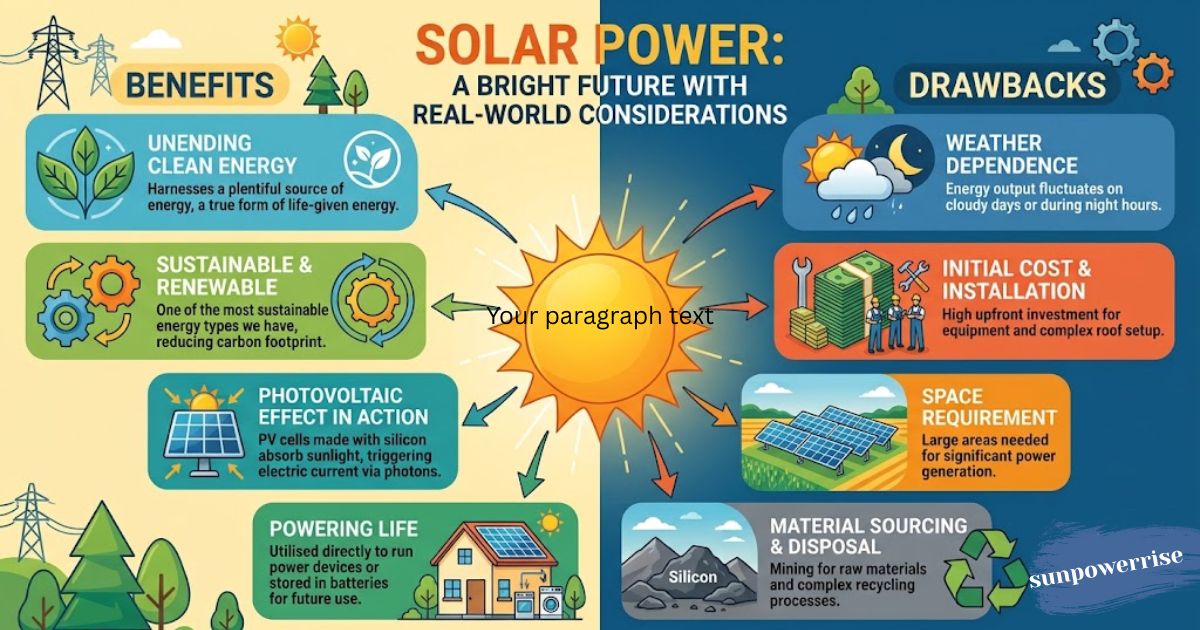
Specifically, photovoltaic (PV) cells use semiconductor materials like silicon to absorb sunlight, triggering the photovoltaic effect where photons produce an electric current that can power devices directly or be stored in batteries for future use.
Global and Personal View Of Solar Power Benefits and Drawbacks
The rapid rise of green energy indicates that renewables will drive 95% of global power capacity growth through 2026, with solar alone accounting for over half of that expansion.
Weighing this shift requires assessing solar power benefits and drawbacks from both a global perspective analyzing emission reductions versus critics’ pollution concerns, and an individual viewpoint regarding the practicalities of rooftop panel investments.
This comprehensive guide walks through both sides of the coin, checking every profit claim to reveal the true environmental and financial picture.
Benefits of Solar Energy
Environmental Relief and Energy Independence
Switching to solar cuts our reliance on fossil fuels and plays a real part in mitigating climate change, and I like that it also builds energy independence because a household in America that goes solar can drop its average annual carbon footprint by roughly 25 percent.
These systems are renewable and sustainable, harnessing sunlight as a long-lasting resource, and they stay environmentally friendly since they run without much greenhouse gas emissions or air pollution, letting individuals and communities generate electricity on their own terms rather than depending fully on a distant utility.
Over time, homeowners see long-term cost savings on electricity bills once the initial installation costs are paid off, and the wider solar industry keeps creating jobs that feed into economic development, all while these systems stay scalable enough to fit countless applications and earn their reputation as the energy of the future.
Unmatched Versatility, Safety, and Historic Affordability
Panels are genuinely safe for humans, unlike fossil fuel plants that carry known health risks for nearby towns, and because panels stay silent, unlike noisy wind turbines, living near them feels far more comfortable.
Sunlight itself is close to unlimited, which puts solar ahead of nuclear reactors and other sources tied to limited material, and because sunlight availability touches nearly every corner of the planet, countries no longer need to lean on fuel supplies from outside partners.
Solar was historically expensive, with 1956 prices reaching about $1825 for one watt of solar capacity, and even 10 years ago, a megawatt-hour cost over $350, but today it can run as low as $20, and the IEA now calls solar the cheapest source of energy in history thanks to its low cost and versatility, letting almost anyone install it at home or business.
Low Maintenance, Long Lifespan, and Financial Incentives
I also appreciate that solar needs no maintenance worth mentioning once it is running, easing our dependence on non-renewable resources that keep depleting year after year, and panels can last up to 30 years without major repairs since they hold no moving parts to wear out.
Owners often see a strong return on investment, since excess power can be sold back to energy companies for credits whenever a home stays tied to the grid, and panels keep producing even on cloudy days, which helps people save money on their energy bills through this renewable energy resource and the investment it represents.
Incentive tax programs sweeten the deal further, though they can expire or shift every couple of years, so anyone weighing the numbers should check current rates before reducing reliance on the grid becomes a locked-in plan.
Drawbacks of Solar Energy
Weather Dependency, Land Footprint, and Initial Financial Barriers
No source is perfect, and solar is reliant on sunlight, so shifting weather conditions mean homes often need backup power sources or extra energy storage to keep a continuous supply running through the night.
There is also a significant upfront investment involved, and even with declining prices, that first bill can end up deterring adoption for many families, especially once you factor in the ample land requirements that large-scale solar installations need, which raises real problems in densely populated areas and stirs up visual concerns among neighbors.
Building the materials for these systems creates some waste generation during solar panel production, though the long-term environmental benefits tend to outweigh that cost, provided we keep investing in efficient energy storage systems and grid upgrades to properly handle increasing solar energy generation.
Manufacturing Waste, Recycling Deficits, and Avian Safety Concerns
It is fair to say solar is not completely clean, because manufacturing panels involves toxic chemicals, and in some regions, waste still gets dumped into the environment since disposing of old panels has not been fully streamlined as an industry-wide process.
Panels are mostly glass, plastic, and aluminum, and while they can be recycled, the return is often only about three dollars per panel, which explains why recycling has not caught on everywhere.
There is also the odd but real issue of birds that crash into solar panels, with solar farms in the U.S. linked to 100,000 to 150,000 birds in bird deaths each year, though the toll from wind turbines runs five times higher than that, and both stay far below the 15 to 25 million birds that die from fossil fuel plants through collisions, electrocution, and poisoning each year.
Heavy Maintenance Demands and Modest Energy Conversion Rates
Cleaning brings its own cost, since researchers at MIT found that people use over 10 billion gallons of water a year just cleaning solar panels worldwide, which is enough for the yearly needs of 2 million people.
And because that water has to be filtered before use, filtering alone can eat up about 10 percent of the operating costs tied to solar installations; newer dust magnets may ease this low efficiency issue going forward.
Most modern panels convert only around 23 percent of the sunlight they receive into usable electricity, which leaves a fairly large land footprint, since one megawatt of solar power can call for 5 to 10 acres of land.
Roughly the size of several football fields, though that is still smaller than the space wind farms need with their turbines spaced apart; nuclear power and gas plants, by contrast, need even less unused space, though placing panels on roofs or water bodies helps ease that pressure.
The True Cost of Battery Storage and Complex Residential Planning
The biggest sticking point remains that solar is a variable source of power tied to external circumstances, so once the sun sets, there are no sunlight hours left to draw from, and while batteries solve that gap, they stay expensive and add to overall installation costs.
Engineers rely on solar irradiance maps for production prediction, and even under clouds, some solar radiation still reaches the ground during daylight, keeping the system alive if not at full strength. Initial costs climb further once you add a battery to store energy through the night, and because those large batteries take up real space, some homeowners dislike the aesthetic, calling panels unattractive on their property, especially if the local climate stays consistently cloudy for long stretches.
It is also worth noting that panel production, transportation, and installation still generate some greenhouse gases, so nothing about solar is fully pollution-free, and between the high upfront costs that still strain an average family, being weather and light dependent based on your region
And how much sunlight it sees throughout the year, dealing with rainy days and cloudier days, and needing professional installation because of the hassle of planning for space needed, shade level, and orientation around your house, going solar takes real homework before signing anything.
Applications
Beyond rooftops, analyzing solar power benefits and drawbacks becomes clear when looking at solar power plants built as large-scale installations that feed straight into the electricity grid, while smaller rooftop installations give homes on-site electricity and lower utility bills without needing a giant setup.
It also covers solar water heating for domestic use, industrial use, and pool use, plus off-grid systems in remote areas that rely on standalone solar systems paired with battery storage for lighting and appliances, and even makes its way into vehicles, where panels support the main power source to extend range on the road.
Conclusion
Even with these trade-offs, evaluating solar power benefits and drawbacks shows that steady technology advancements, decreasing costs, and supported policies are addressing challenges across most of what I have covered here, and solar power still plays a vital role in the global transition toward a sustainable energy future and clean energy future for everyone.
Looking back at this full list of advantages and disadvantages, it is easy to see why the idea has become so trendy and why it has developed so quickly, and if you care about energy efficiency and sustainability at home, it is worth checking the latest renewable energy options in your area before you decide.
FAQs
What are the biggest benefits of solar power?
Solar power lowers your electricity bills, cuts reliance on fossil fuels, and reduces greenhouse gas emissions. It also needs little maintenance and can last up to 30 years.
What are the main drawbacks of solar power?
The biggest drawbacks are the high upfront installation cost and the fact that panels only work when the sun is out. Cloudy regions and nighttime use often require battery backup, which adds to the expense.
Is solar power really eco-friendly if panels create waste?
Yes, solar power stays far cleaner than fossil fuels overall. Panel waste is relatively minimal, and most materials like glass, aluminum, and silicon can be recycled at the end of a panel’s life.
How much money can solar panels actually save?
Savings vary by location and sunlight, but many homeowners see lower monthly electricity bills and can earn credits for excess power sold back to the grid. Tax incentives can also reduce the initial cost significantly.
Is solar power a good long-term investment?
For most homeowners, yes. Even with a large upfront cost, long-term savings, incentives, and rising energy prices usually make solar pay for itself over time.