

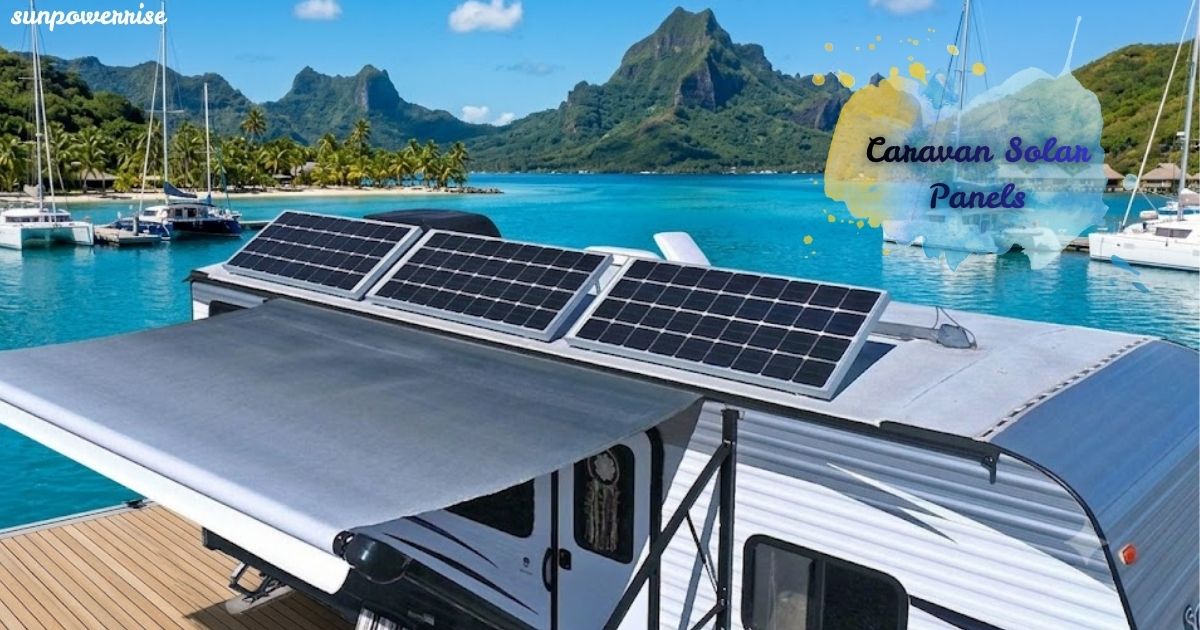
Caravan solar panels convert sunlight into 12V power for your leisure battery, letting you run lights, water pumps, phone chargers and small appliances without an electric hook-up.
A typical UK setup ranges from a 50W panel for basic lighting and charging up to 150–200W+ for running a fridge, TV or laptop off-grid, and most kits cost somewhere between £70 and a few hundred pounds depending on wattage and panel type. Once installed, a well-placed panel can keep a leisure battery topped up for a decade or more with almost no running cost.
We have personally seen how a well-planned solar power generation setup transforms the whole camping experience, cutting ties with crowded campsites and opening up beautiful greenfield locations instead.
How Do Caravan Solar Panels Work?
The science behind a caravan solar panel starts with the photoelectric effect, a property found in materials like silicon that releases electrons when struck by light.
Each solar cell catches those free electrons and channels them into a usable electric current, which then travels toward your battery for controlled release whenever you need it.
Even on cloudy days, this process keeps ticking along and continues to generate electricity, just at a slightly reduced rate compared to brighter sunlight heavy, persistent cloud cover can cut a panel’s output by more than half, which is worth knowing before you plan a week entirely off solar.
Smart Regulation With MPPT Controllers
From the charge controller, regulated DC power flows into your van battery, keeping everything topped up whether the caravan is parked on a sunny roof pitch or tucked away in storage.
MPPT (Maximum Power Point Tracking) controllers handle varying light conditions far better than basic PWM units, squeezing every usable watt out of the panel at any given moment worth the extra cost if your pitch gets patchy sun through the day.
Once stored, that energy powers your lights, water pumps, phone chargers, and TVs, with a wattmeter giving you a live read of power, voltage, and how much charge your system is generating at any time.
Wiring, Fuses, and Real-World Response
Connecting the system is straightforward: run a positive and negative feed from the solar panel into the controller, then another positive and negative pair from the controller to the battery, and add a load connection for any direct devices.
A 5-amp fuse between the panel and the battery compartment protects the whole setup, and the battery terminals need a solid, clean connection to keep resistance low.
When our own 50W panel in a suitcase configuration was connected this way, the voltage jumped from 13.15 volts at rest to 13.73 volts the moment the panel hit daylight, proving just how immediately the system responds and 99% of the solar kits we’ve handled arrive with a controller already included, so this isn’t something you usually need to source separately.
Protecting The Battery From Voltage Spikes
The solar panel can push voltage anywhere from 0 volts to around 20 volts, depending on conditions, which is exactly why a constant-voltage, stable, regulated supply matters so much for safe charging.
Without a controller to regulate and control the current, your battery would receive erratic power and suffer long-term damage to its capacity.
The blocking diode built into most controllers also stops any reverse flow back through the panel at night, while a separate alarm and tracker setup, complete with a web portal showing live battery condition, gives you complete confidence that your caravan is safe and your battery stays in good working order.
Weighing The Benefits And Drawbacks Of Caravan Solar Panels
Cutting The Cord For Ultimate Freedom
Ditching the 230V hook-up at campsites cuts your running costs in the medium term and hands you genuine freedom to explore pitches and greenfield locations that other caravanners simply cannot reach.
You become a truly self-contained camper, with your leisure batteries staying topped up through alternative sources rather than a cable plugged into a bollard.
Keeping your battery charged during storage is another major win, especially when you factor in the cost of replacing a battery that has been left flat all winter, most leisure batteries are only good for around five years even with careful use, so a solar trickle-charge during long lay-ups genuinely extends that lifespan.
Powering Remote Pitches And Vital Security
One of the biggest practical wins we have seen from going solar is the off-grid capability it unlocks, pitching at remote locations without needing an electric hook-up, whether that means wild camping or staying at a quiet CL with access to lighting, charging points, water pumps, and low-power appliances.
Spring and summer are the prime seasons for topping up, with long daylight hours doing most of the heavy lifting, but even a freestanding panel angled correctly in winter keeps security systems alive.
We personally rely on solar to keep our alarm and tracker systems running during long storage periods because a flat battery does not just kill your power; it can void your insurance and leave your van far more vulnerable while unattended.
Managing Weather Limits And Theft Risks
The weather remains the biggest wild card, and winter caravanning or extended cloudy periods will see energy production drop noticeably. As a rough guide, expect roughly a quarter of a panel’s summer output on a grey winter’s day, even with several hours of daylight.
Overcast conditions reduce output significantly, which risks undercharging your battery if you rely on solar alone during a poor week.
Roof space constraints, the risk of theft or vandalism targeting portable panels, the need for occasional cleaning when stored near trees, and the reality that opportunist theft targets unattended equipment are all factors worth weighing carefully before you commit to a freestanding panel setup.
Fixed Solar Panels Versus Portable Models
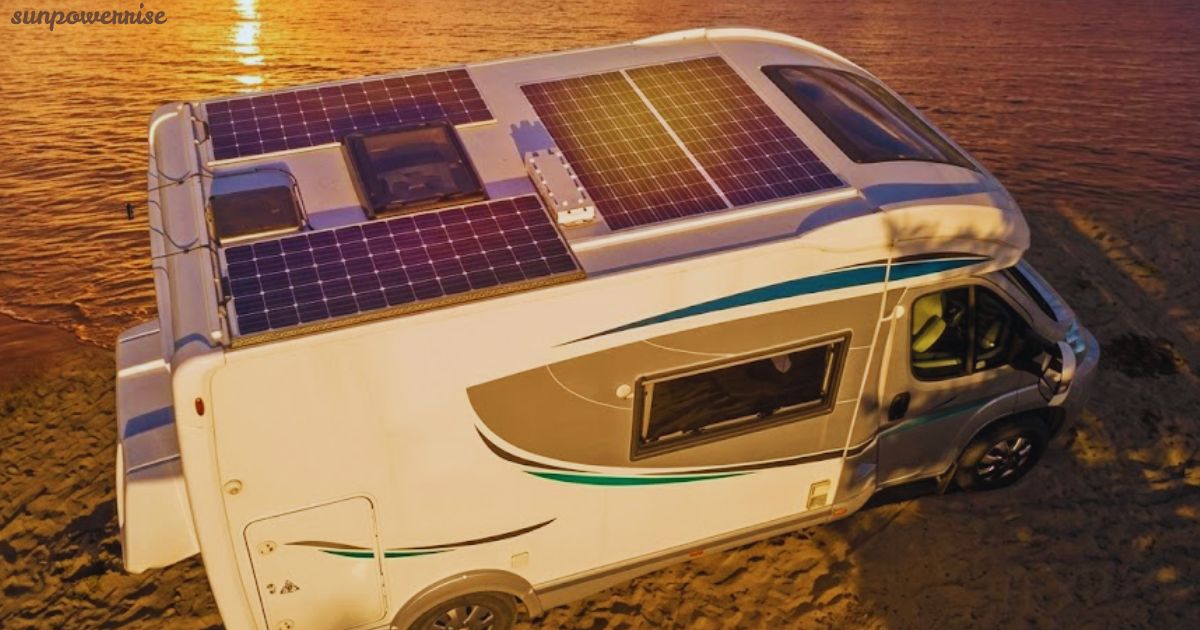
A permanently fixed panel on your caravan roof requires no setup time on arrival; simply park up, and your leisure battery starts receiving charge straight away through the connectors already wired in.
The downside is that once permanently secured with a fixing kit, the panel sits at whatever angle your roof dictates, which means it cannot track the arc of the sun through the day the way a repositioned portable unit can.
Always check before drilling that no satellite dish or TV aerial will cast a shade line across the panel during peak sunlight hours, and confirm the installation method will not void your water ingress warranty.
If your roof genuinely has no free space left, a portable power station paired with a foldable panel is worth considering as an alternative to a roof install altogether, you lose the “set and forget” convenience, but gain a battery you can also use away from the van entirely.
What to Look for When Buying Caravan Solar Panels
Powering Your Lifestyle: Wattage Matters
Power output measured in watts (W) tells you how much electricity the panel produces under ideal conditions, and getting this number right for your lifestyle is the most important buying decision you will make.
As a rough starting rule: a touring caravan generally needs a minimum of around 40W just to maintain the battery between uses, while a larger motorhome with more onboard electrics is better served starting from 80W.
A panel in the 50W to 80W range handles the basics comfortably — LED lighting and phone charging — while stepping up to 100W or 150W opens the door to small appliances and proper leisure battery health across short trips.
Anyone planning regular off-grid stays and needing to run laptops, TVs, and water pumps should be looking at 150W to 200W or beyond, because undersizing your panel means you will never put a meaningful charge back into the battery fast enough to keep pace with your multiple devices.
Working out your own number
Add up the wattage of what you actually run, a 12V TV might draw around 40-50W, a water pump 30-50W, LED lighting only a few watts each multiply each by the hours you use it daily, and total the watt-hours. That figure, divided by your expected hours of usable daylight, is roughly the panel size you need. Add 20% on top to cover cloudy days.
Placement, Build Quality, And Support
Sun exposure matters as much as panel size, so avoid positions shaded by roof features like AC units or satellite dishes, and on campsites, keep your van away from trees and buildings that block light.
Permanent roof mounting is convenient but locks the angle, while a portable panel that you can swing east before bed starts charging from first light in summer, which can add three to four hours of extra charge time daily.
Always check build quality, confirm the waterproof rating reaches IP65, look for UV-resistant and solidly constructed materials, and target brands offering a 10-year warranty or longer.
Buying from a reputable dealer at an event like the NEC show beats rolling the dice on a false economy online purchase every time, and solid after-sales service is worth every penny when you need peace of mind on the road.
What It’ll Actually Cost You
As a broad guide, expect to pay from around £70 for a small 30–50W panel up to several hundred pounds for a 150–200W+ system, with regulators typically adding another £15–£70 depending on quality and whether it’s MPPT or PWM.
FAQs About Caravan Solar Panels
What size solar panel do I need for a caravan?
A panel between 100W and 150W suits most caravanners, covering LED lighting, water pumps, and leisure battery top-ups across regular trips.
Do caravan solar panels work in winter or on cloudy days?
Yes, caravan solar panels still generate electricity in overcast conditions and winter months, but output drops significantly compared to bright summer days.
Do I need a charge controller with my caravan solar panels?
Absolutely, a charge controller regulates voltage and current flowing into your leisure battery, preventing dangerous over-charging and long-term damage.
Can caravan solar panels run mains appliances?
Not directly. You need an inverter to convert DC power from your leisure battery into 230V Alternating Current (AC) before running standard mains devices.
What is the difference between MPPT and PWM charge controllers?
MPPT controllers extract more usable energy from the panel in varying light conditions, making them more efficient than basic PWM units, especially for larger systems.
Can I leave a solar panel connected to my caravan during storage?
Yes ,a connected solar panel will trickle-charge your leisure battery throughout storage, keeping your alarm, tracker, and security systems fully operational.