

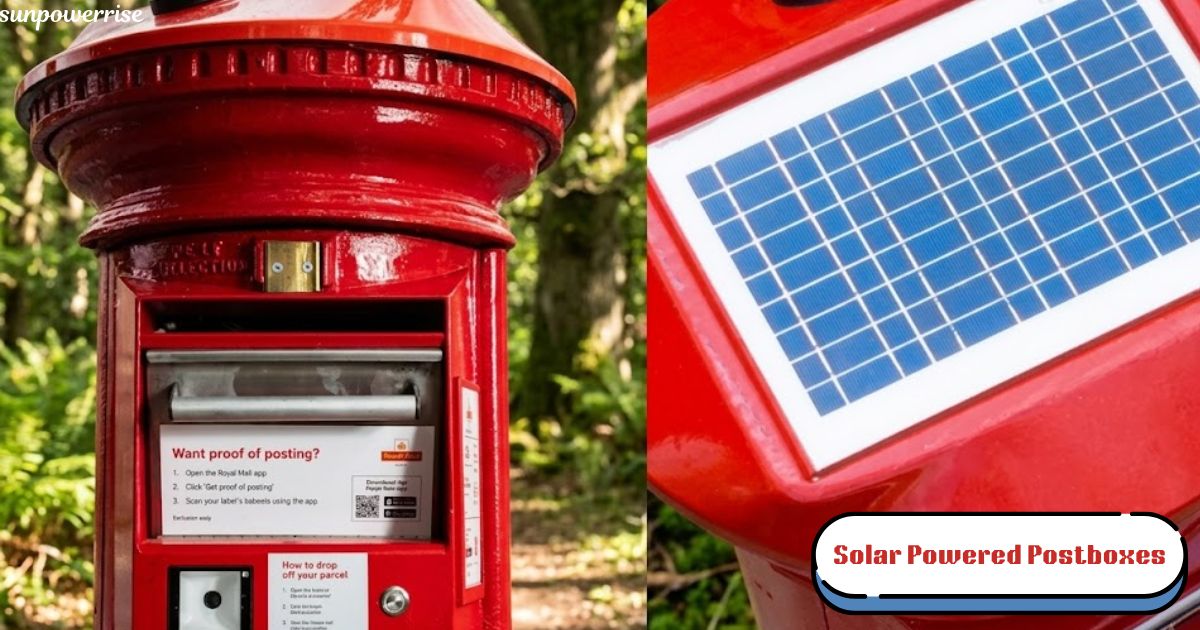
Solar powered postboxes are part of the modern transformation taking place across the UK, and walking past a Royal Mail postbox every morning, most of us never imagined these iconic red pillar boxes would ever change.
Yet here we are, witnessing the biggest redesign in Royal Mail’s 175-year history, and honestly, it feels long overdue.
The BBC reported that Royal Mail faced serious pressure after being fined for missing letter delivery targets, and that pressure clearly pushed them toward bold action.
A Historic First: Parcels Meet the Solar Powered Postboxes
Royal Mail is now rolling out 3,500 solar powered postboxes right across the UK, each fitted with a digitally-activated drawer built specifically to handle small parcels.
This move comes directly from a trial run back in April across Cambridgeshire and Hertfordshire, where the new boxes proved they could genuinely meet growing parcel services demand.
The postal service had not touched its core design since its inception, making this moment truly historic for Britain’s streets.
Solar Power Meets Soaring Demand
Back in 2024, the global temperature hit 1.55°C above pre-industrial level, according to the World Meteorological Organization, making the need for clean energy more urgent than ever.
The World Economic Forum confirmed that solar energy had become far more affordable and efficient, establishing it as one of the most accessible forms of renewable power available today.
Royal Mail’s pilot launched in 2025 was built around exactly this thinking, making sending, returning, and collecting parcels far more convenient for everyday people.
Fighting for Market Share in Major Cities
After a successful pilot in Hertfordshire and Cambridgeshire, Royal Mail announced the full rollout would begin in major cities including Edinburgh, Nottingham, Sheffield, and Manchester.
The company, acquired by a Czech billionaire back in December, now faces fierce competition from rival delivery companies eating into its market share.
This ambitious expansion shows Royal Mail is fighting back hard, using green innovation as both a sustainability move and a smart online shopping response to modern delivery needs.
How the New Design Works
How It Works: The Tech Inside the Drawer
The redesigned solar powered postboxes features a built-in bar code scanner that customers scan using the Royal Mail app, which then opens a drop-down drawer large enough to accommodate items that simply do not fit through the traditional postbox slot.
Each box also keeps a separate slot for letters, meaning the familiar posting experience stays intact while the new drawer handles parcel up to the size of a shoe box. Having personally tested similar smart parcel systems before,
I can say that this kind of seamless send and return setup genuinely removes friction from the whole process.
Form Meets Function: Preserving a Classic Icon
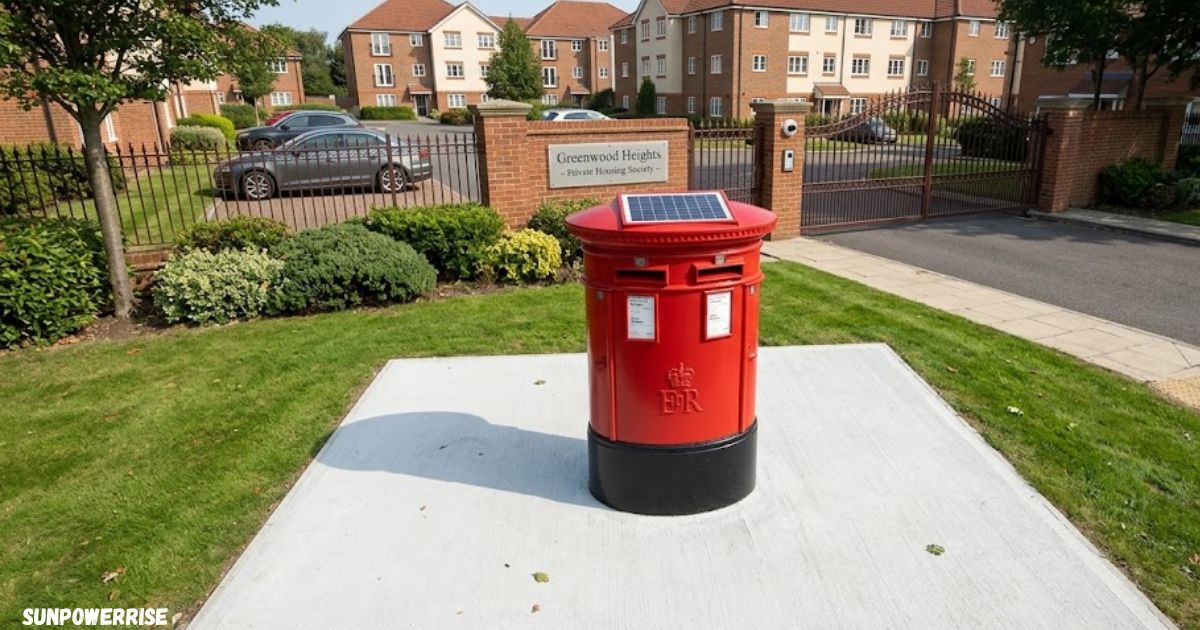
The solar panel sits on top of each solar powered postboxes, positioned due south for optimal sunlight, directly powers both the scanner and the drop-down drawer without needing any external wiring or grid connection.
During the trial, two designs were tested in the pilot, with one version featuring a fully black round lid, but Royal Mail ultimately decided that keeping the top red stayed truer to the brand.
The winning design uses a grid of dark solar panels set on a white rectangle, giving it a modern look while preserving the classic British postbox identity.
Modern Delivery Network: Convenience on Every Corner
With 115,000 postboxes spread across the UK, sitting within half a mile of 98% of all addresses, this network of upgraded boxes becomes the most convenient parcel drop-off points in the entire country.
Customers gain full proof of posting and tracking through the app, bringing Royal Mail’s service in line with modern online shopping expectations.
This three redesigns approach, combining the bar code, the drawer, and the panel-facing makeover, represents a genuine digitally-activated leap forward for a 175-year-old institution.
Why the Solar Panels Are Important
Driving the Global Renewable Shift
The IEA has confirmed that Solar PV is on track to become the largest renewable energy source by 2029, and Royal Mail’s decision to embed this technology directly into its postboxes puts the company right at the front of that shift.
The beauty of modular technology is that it scales effortlessly, working just as well powering large plants as it does running a single postbox on a quiet street, and that flexibility makes it ideal for a nationwide rollout.
I have always believed that the smartest clean energy solutions are the ones hiding in plain sight, and these solar powered postboxes prove exactly that point.
Clean, Grid-Free Infrastructure
Every upgraded postbox now runs on 100% clean electricity, completely free from grid energy reliance, which is a genuinely impressive achievement for infrastructure at this scale.
Solar panels are not only easy to install and quick to install, but they also offer a significantly cheaper alternative to traditional fossil fuel power technology, according to the World Economic Forum.
Matt Gower, Head of ESG at Royal Mail, confirmed the company put enormous effort into its environment strategy to maintain its position as the UK’s greenest parcel operator.
A Sustainable Future for National Delivery
The commitment to renewable, clean, electricity-powered infrastructure signals a real shift in how Royal Mail thinks about sustainability and delivery at a national level.
Making the boxes fully independent from energy reliance on the grid means reduced operating costs and a lower carbon footprint simultaneously.
Both affordable and efficient, solar power proves itself once again as the most accessible technology for powering Royal Mail postboxes across the country.
What Else Is Royal Mail Doing to Contribute to Sustainability Aims?
Slashing Fleet Emissions Through Electrification
Royal Mail’s 2024-25 Environmental, Social and Governance ESG Report laid out clear commitments and measurable progress, firmly positioning the company among the UK’s leading green delivery providers at a time when environmental accountability matters more than ever.
The company achieved a remarkable 25% reduction in overall GHG emissions, deploying around 7,000 electric vans and ensuring 31% of its entire delivery fleet now produces zero emissions.
Scaling Up Bio fuels and Green Infrastructure
Royal Mail also made the switch to bio-fuel, saving an estimated 44,000 tons of CO₂e in the process, which represents a serious and measurable cut to its carbon output.
The company now powers its entire estate with 100% renewable electricity, rolling out LED lighting and water saving technologies across multiple sites to reduce consumption further.
These steps form part of a much wider ESG commitments framework that covers fleet electrification, green infrastructure, and long-term carbon reduction goals.
Meeting Broad ESG and Net-Zero Commitments
Alistair Cochrane, CEO of Royal Mail, stated proudly that the company’s sustainability progress had once again exceeded expectations. Three years into the Steps to Zero journey, Royal Mail is firmly on course to become the UK’s greenest delivery company for both parcels and letters, targeting net zero by 2040.
Consistently hitting targets year after year proves that Royal Mail’s clean energy vision and emissions reduction environment strategy are deeply embedded into how the business actually operates day to day.
Roll out & Market Context
Adapting to the E-Commerce Boom
Jack Clarkson, managing director of Out of Home and Commercial Excellence at Royal Mail, made it clear that the explosion of online shopping has transformed what customers expect from a postal network, and the new solar powered postboxes answer that demand head on.
Click-and-collect services have surged in popularity, with convenience stores, supermarkets, and petrol stations all now offering send-and-delivery options, creating a crowded but exciting space for Royal Mail to compete in.
The roll out over the next few months targets major cities including Edinburgh, Nottingham, Sheffield, and Manchester, giving urban customers faster access to the upgraded network.
Leveraging Infrastructure in a Price-Competitive Market
With 115,000 postboxes already embedded within the UK’s infrastructure, Royal Mail holds a natural advantage over rivals when it comes to sheer convenient access, sitting within half a mile of nearly every home in the country.
However, competitors like Evri and Yodel continue offering cheaper delivery rates, and rivals are not standing still while Royal Mail innovates.
The pressure to shore up its share of the market is real, and the new boxes, each accepting any parcel with a Royal Mail label that fits, represent a direct bid to recapture volume lost to competition.
Survival and Evolution in a Shifting Landscape
The rise of solar powered postboxes reflects how the broader delivery business landscape is shifting fast, as seen when Denmark shut down its entire Post Nord letter deliveries service, signalling that traditional postal models face an existential challenge.
Royal Mail has already moved to deliver second-class letters on every other weekday rather than daily, dropping Saturdays entirely as part of wider cost cuts.
The rise of self-operated lockers in newsagents and other locations, combined with the proliferation of parcel send-and-deliver services, confirms that the market is evolving fast, and Royal Mail is clearly determined to evolve with it.
FAQs Related to Solar Powered Postboxes
What are solar powered postboxes?
Solar powered postboxes are upgraded Royal Mail pillar boxes fitted with solar panels and a digitally-activated drawer that allows customers to deposit small parcels.
How many solar powered postboxes is Royal Mail installing?
Royal Mail is rolling out 3,500 solar powered postboxes across the UK over the next few months.
Which cities will get the solar powered postboxes first?
The new boxes will first appear in Edinburgh, Nottingham, Sheffield, and Manchester following the successful pilot in Hertfordshire and Cambridgeshire.
How does the solar powered postbox work?
Customers scan a bar code via the Royal Mail app, which opens a drop-down drawer large enough to accept parcels up to the size of a shoe box.
Why did Royal Mail choose solar power for the new postboxes?
Solar energy is affordable, efficient, and provides 100% clean electricity, making the postboxes fully independent from the grid at no ongoing energy cost.